Mahindra 4550 vs Mahindra 2638

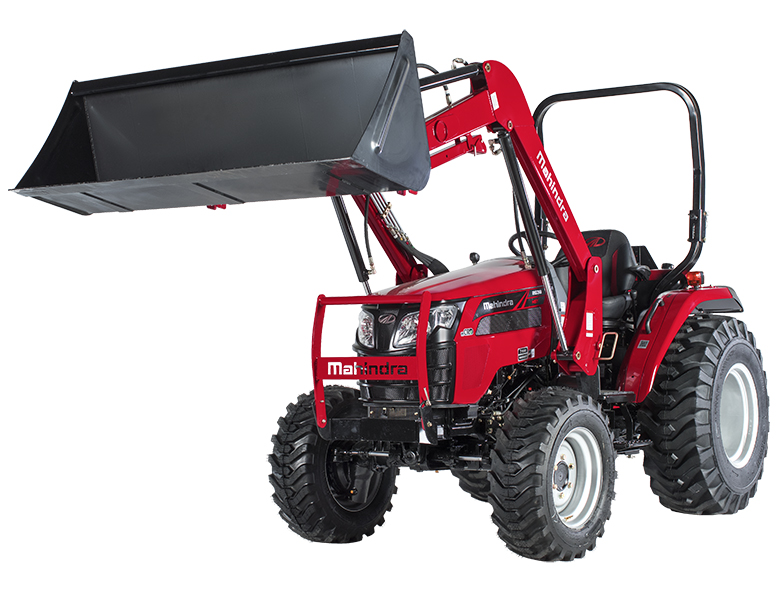
Quick take: The Mahindra 4550 costs $2,000 less; the Mahindra 4550 has more engine power (48 vs 37.4 hp); the Mahindra 4550 has more loader lift (2,866 vs 1,634 lbs).
| Spec | Mahindra 4550 | Mahindra 2638 |
|---|---|---|
| Price | $27,500 | $29,500 |
| Rating | 4.2★ (290) | 4.5★ (270) |
| Category | Utility | Compact |
| Transmission | Gear | Hydrostatic |
| Engine HP | 48 hp | 37.4 hp |
| PTO HP | 38 hp | 31 hp |
| Loader Lift | 2866 lbs | 1634 lbs |
| 3-Point Lift | 3527 lbs | 2646 lbs |
| Hydraulic Flow | 8.7 GPM | 7.6 GPM |
| Drive | 4WD | 4WD |
| Engine | Mahindra | Mahindra |
| Weight | 5192 lbs | 3130 lbs |
| Fuel Tank | 16 gal | 9 gal |
| 4WD | Yes | Yes |
| Loader | Yes | Yes |
| Cab | No | No |
| Hydrostatic | No | Yes |
| Power steering | Yes | Yes |
| Cruise control | No | Yes |
| Warranty | 5 yr powertrain | 7 yr powertrain |
Pros & cons
Mahindra 4550
- ✓At 5,192 lbs it's remarkably heavy for a 48 HP tractor, giving outstanding traction, stability, and pulling power
- ✓The 3,527 lb 3-point lift and 2,866 lb loader capacity are genuinely big-tractor numbers for the price
- ✓The mCRD engine meets emissions without a DPF, so owners avoid the regen hassle entirely
- ✓It's priced well below a comparable Deere or Kubota utility while matching or beating the lift specs
- ✓The heavy cast-iron construction gives it a rugged, old-school workhorse feel owners appreciate
- ✓38 PTO HP runs big rotary cutters, tillers, and hay tools with authority
- ✓The large 16-gallon fuel tank keeps it working through very long days
- ✓Mahindra is the world's largest tractor maker, so the company and parts supply are stable
- ✗The dealer network is thin versus Kubota and Deere, so warranty and service can mean a long drive
- ✗The 8-speed sliding-mesh (not synchro) gear transmission is dated and requires stopping to shift ranges smoothly
- ✗Only 8.7 GPM hydraulic flow makes loader cycles slow for such a heavy machine
- ✗Resale value trails the Japanese brands significantly
- ✗Fit and finish is a step below Kubota and Deere, with cheaper components noted by owners
- ✗The heavy weight requires a serious truck and trailer to transport
- ✗Parts availability, while improving, still frustrates some owners with longer waits
- ✗The sliding-mesh transmission and heft make it less nimble and beginner-friendly than an HST tractor
Mahindra 2638
- ✓No DPF and no regen cycles - the 2.7L mCRD engine meets Tier 4 without the filter that plagues low-hour owners of Kubota and Deere compacts
- ✓Huge 2.7L displacement for a 37 HP tractor means diesel-locomotive torque at low RPM - it lugs through heavy tiller and bush hog work without bogging
- ✓2,646 lb three-point lift is the strongest in its size class, comfortably handling implements that max out an L3901
- ✓7-year powertrain warranty is the longest of any major brand except Yanmar
- ✓Built like a tank - heavy cast frame and axles that owners describe as a size class above the competition in sheer metal
- ✓Typically thousands cheaper than an equivalent Kubota Grand L or Deere 3R once you spec loaders on both
- ✓Cruise control and telescoping 3-point lower links come standard
- ✓Simple mechanical everything means shade-tree maintenance is easy - owners praise how serviceable it is versus emissions-heavy rivals
- ✗Hydraulic flow is only 7.6 GPM to the rear, so loader and implement response is slower than a Kioti or Kubota running 10+ GPM
- ✗Loader lift of 1,634 lbs at the pin trails the class leaders despite the tractor's own heavy build
- ✗Dealer quality varies wildly - Mahindra dealers range from excellent to tractors-as-a-sideline, and support depends heavily on which one you get
- ✗Resale value is weaker than Kubota and Deere, a consistent theme in used listings
- ✗The naturally aspirated engine is loud and a bit smoky on cold starts compared to modern common-rail turbos
- ✗At 3,130 lbs bare (more loaded) it's heavy on turf and will leave marks a lighter compact wouldn't
- ✗HST models whine noticeably at speed, a common complaint on owner forums
- ✗Parts availability outside the dealer network is thinner than for Kubota, where aftermarket support is everywhere