Mahindra · Compact

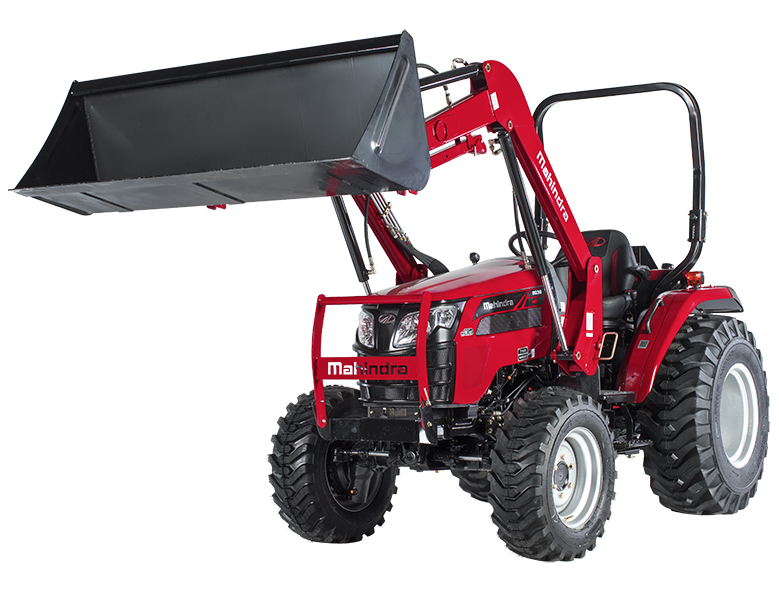
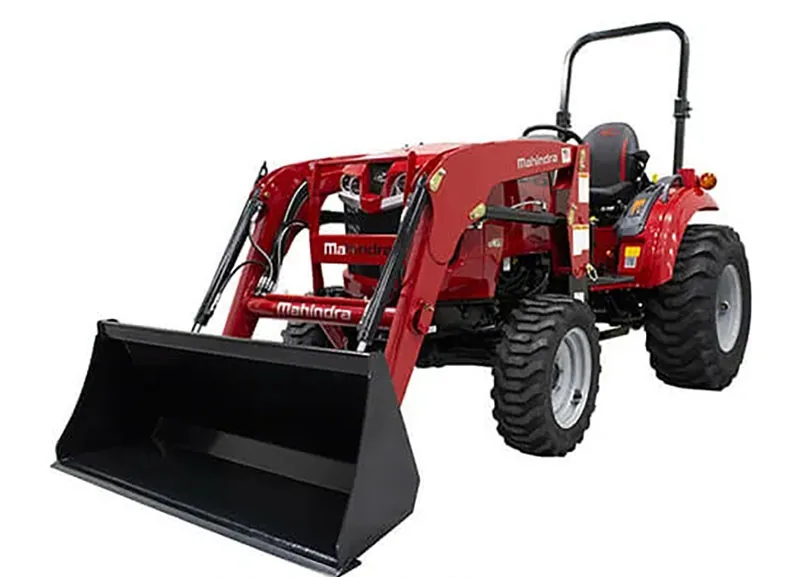
Mahindra 2638

~$26,313

MSRP, base build

No longer in production

No longer built. The maker sells the Mahindra 2126 in its place. See the Mahindra 2126 The specs and owner reports below still describe this machine, and used ones trade steadily — but a dealer cannot order you a new one.

Mahindra 2638
Compact
37.4 hp engine · 31 PTO−17% to the shaft

A 2.7-litre mCRD engine with no DPF and a 2,646 lb hitch let this punch well past its 37 hp rating. Mahindra has retired the 2600 series in favour of the 2100, leaving the series brochure as the only maker document that still describes it.

Engine
37.4 hp
PTO
31 hp
Loader lift
1,634 lbs
3-pt lift
2,646 lbs

1.18 PTO hp per $1,000 of list price

As published by the maker

Specifications

Size class
Compact
Transmission
Hydrostatic
Engine
Mahindra
Engine hp
37.4 hp
PTO hp
31 hp
Drive
4WD
Loader lift
1,634 lbs
Three-point lift
2,646 lbs
Hydraulic flow
7.6 GPM
Fuel tank
9 gal
Weight
3,130 lbs
Warranty
7 yr powertrain
4WD
Yes
Cab
Open station
Turbo
No
Cruise control
Yes

On the price: The maker's own published starting figure for the base build. A dealer adds a loader, a deck and freight on top.

Lift figures are the maker's and are quoted at whichever point the maker chose; the about page explains why two loaders with the same number do not lift the same pallet.

Comes with

4WDHydrostaticFront LoaderPower SteeringCruise ControlDiesel

From owner discussion and long-term write-ups

What owners say

What they like

  • No DPF and no regen cycles - the 2.7L mCRD engine meets Tier 4 without the filter that plagues low-hour owners of Kubota and Deere compacts
  • Huge 2.7L displacement for a 37 HP tractor means diesel-locomotive torque at low RPM - it lugs through heavy tiller and bush hog work without bogging
  • 2,646 lb three-point lift is the strongest in its size class, comfortably handling implements that max out an L3901
  • 7-year powertrain warranty is the longest of any major brand except Yanmar
  • Typically thousands cheaper than an equivalent Kubota Grand L or Deere 3R once you spec loaders on both
  • Cruise control and telescoping 3-point lower links come standard
  • Simple mechanical everything means shade-tree maintenance is easy - owners praise how serviceable it is versus emissions-heavy rivals

What they complain about

  • Hydraulic flow is only 7.6 GPM to the rear, so loader and implement response is slower than a Kioti or Kubota running 10+ GPM
  • Loader lift of 1,634 lbs at the pin trails the class leaders despite the tractor's own heavy build
  • Dealer quality varies wildly - Mahindra dealers range from excellent to tractors-as-a-sideline, and support depends heavily on which one you get
  • Resale value is weaker than Kubota and Deere, a consistent theme in used listings
  • The naturally aspirated engine is loud and a bit smoky on cold starts compared to modern common-rail turbos
  • At 3,130 lbs bare (more loaded) it's heavy on turf and will leave marks a lighter compact wouldn't
  • The hydrostatic models whine audibly at transport speed

Gathered from owner reports

What owners report

Owners buy the 2638 for two reasons and both come up repeatedly: it has no particulate filter or regeneration cycle to think about, and the nearest dealer sells it. One owner describes simply putting diesel in and going, with no thought given to emissions management; another chose it over a Kubota that was further away and significantly more expensive, and over a Deere whose prices would have forced him down a size. The reliability reports are quietly good — five hundred hours without an issue for one owner, and a 2023 bought new whose only fault was a leaking radiator overflow bottle that the dealer replaced under warranty within days. Smaller problems in the file are a slow fuel leak at the pre-filter, a three-point that operates erratically, and a rear PTO lever pin that sheared off after a lift arm rammed it.

Where owners disagree is power, and the disagreement is really about what you are doing with it. Two separate owners say they would buy 50 hp or more if they were choosing again — one on 24 acres of Texas hill country found it simply could not pull cedar out of the ground and now cuts and grinds stumps instead. But another owner with a grapple has spent three years picking up big cedar trees with no trouble at all. The distinction is between lifting and moving heavy material, which it does well, and dragging rooted trees out of the ground, which it will not. One sensible addition owners mention is a heavy-duty skid plate to protect the hydraulic lines underneath.

What comes up favourably

  • No particulate filter and no regeneration cycle at this power level, which owners describe as a genuine relief rather than a spec-sheet detail
  • With a grapple it handles serious material — one owner has spent three years moving big cedar trees with no trouble and rates the setup very heavy duty
  • Reliability reports hold up: one owner at 500 hours has had no issues, and a 2023 bought new had only a leaking radiator overflow bottle, replaced under warranty within days of the call
  • It is a lot of tractor for the money and owners chose it on dealer proximity and price, with one finding the nearest Kubota both much further away and significantly dearer for the same size

What comes up as a complaint

  • Two owners independently say they would buy 50 hp or more if choosing again, and one on 24 acres of Texas hill country found it unable to pull cedar out of the ground at all
  • The hydraulic lines run exposed underneath and owners add a heavy-duty skid plate to protect them
  • Small leaks and hydraulic niggles turn up — a slow fuel leak at the pre-filter and a three-point that operates erratically are both reported
  • The rear PTO lever pin is vulnerable: one owner's sheared off entirely after a lift arm caught it, and he could not extract the remains even after welding a bolt to it

Questions worth asking

Is it enough tractor for clearing land?
It depends what clearing means. For picking up, carrying and stacking heavy material it is well liked — one owner has moved big cedar trees with a grapple for three years without trouble. For pulling rooted trees out of the ground it is not enough, and the owner who tried on 24 acres of hill country now fells them and grinds the stumps instead, and says you want 50 hp or more, or a skid steer, for that work. Two owners in total say they would buy more power if choosing again.
Does it really have no regeneration cycle?
Owners confirm it, and they raise it unprompted as one of the reasons they bought it. The way one puts it is that he has given no thought at all to managing emissions on this machine — diesel goes in and he goes to work. For owners who do short, intermittent chores rather than long runs under load, that removes the most common frustration with modern compact tractors at this power level.
How is Mahindra's parts and service reputation in practice?
The reputation is worse than the reports. Owners acknowledge there is a lot of concern about parts availability around the brand, and then describe warranty parts arriving within days and dealerships close enough to matter. The honest summary from the evidence is that these owners chose the tractor because their dealer was good and nearby, and that is what has made the ownership work — which is exactly the advice they give the next buyer.
What is a used one worth?
The two data points here frame it well: a 2019 with 500 hours and a backhoe was offered at $20,000, against a comparable new machine with a backhoe at $36,000 on 0% financing. A 2021 with only 56 hours and the 50-hour service done came up for sale too, with its owner expecting a dealer trade-in offer well below a private sale. If you are buying used, the backhoe and the completed first service are worth real money in that comparison.

Summarised from public owner discussion, not from testing. Nothing here was measured by this site, and a report that recurs is not the same as a defect rate.

Cross-shopped against

Line the Mahindra 2638 up

Same brand or same size, nearest in price

Related tractors

More from Mahindra →
Mahindra 1635
~$25,659dealer list, not MSRP
Compact

Mahindra

Mahindra 1635

36.2 hp engine · 27.6 PTO−24% to the shaft
Loader
1,830 lbs
3-pt
1,720 lbs
Trans
Shuttle
Drive
4WD

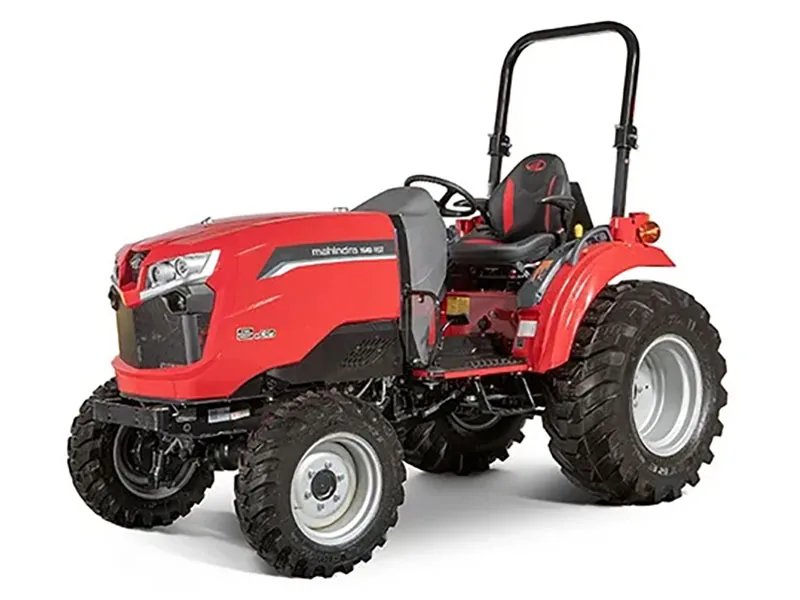
Middle rung of the 1600 series, and the point where Mahindra stops publishing a price: the series figure belongs to the 1626, so this one is priced off dealer books at about $25,659 for the 8F/8R synchro shuttle. A three-range HST runs roughly $2,500 more, and a heated cab is offered only on the HST.

Spec sheet & owner notes
Mahindra 1640
~$28,885dealer list, not MSRP
Compact

Mahindra

Mahindra 1640

38.7 hp engine · 29.9 PTO−23% to the shaft
Loader
1,830 lbs
3-pt
1,720 lbs
Trans
Shuttle
Drive
4WD

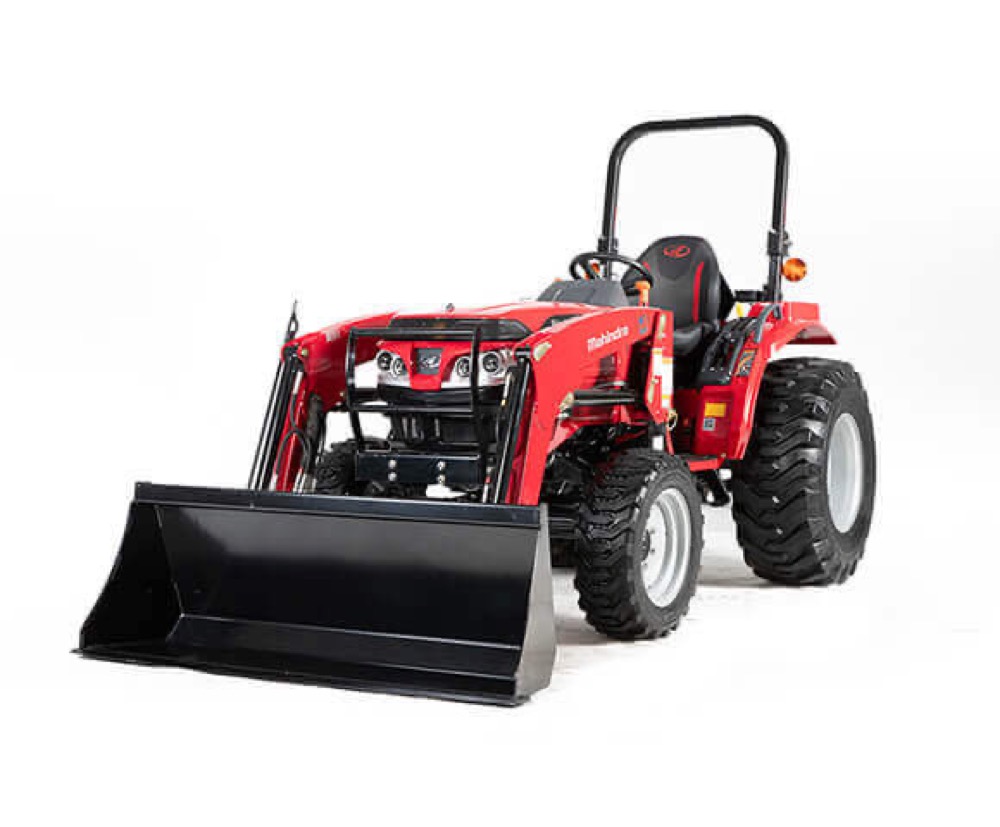
Four cylinders instead of three is the real story at the top of the 1600 series - 166.7 cu in turning slower, for 38.7 hp and 29.9 at the PTO. Dealer books put the base synchro shuttle near $28,885; the HST is about $31,191 and is the only way to get the cab.

Spec sheet & owner notes
Mahindra 1626
~$22,769series starting price
Compact

Mahindra

Mahindra 1626

25.9 hp engine · 19 PTO−27% to the shaft
Loader
1,830 lbs
3-pt
1,720 lbs
Trans
Hydrostatic
Drive
4WD

At 24.7 hp the 1626 is a compact tractor with a Mahindra 3-cylinder diesel and class-leading loader lift for the money, backed by a long warranty. It targets value buyers who want more loader muscle and coverage than the premium brands offer at the price.

Spec sheet & owner notes