Mahindra · Compact

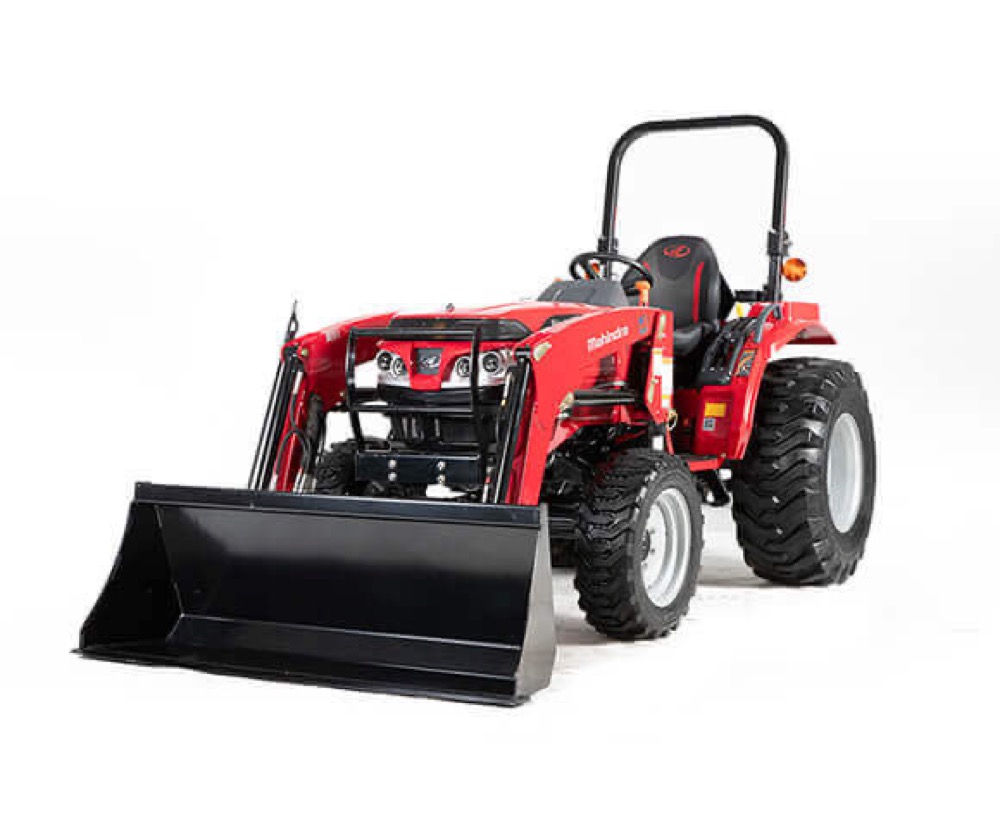
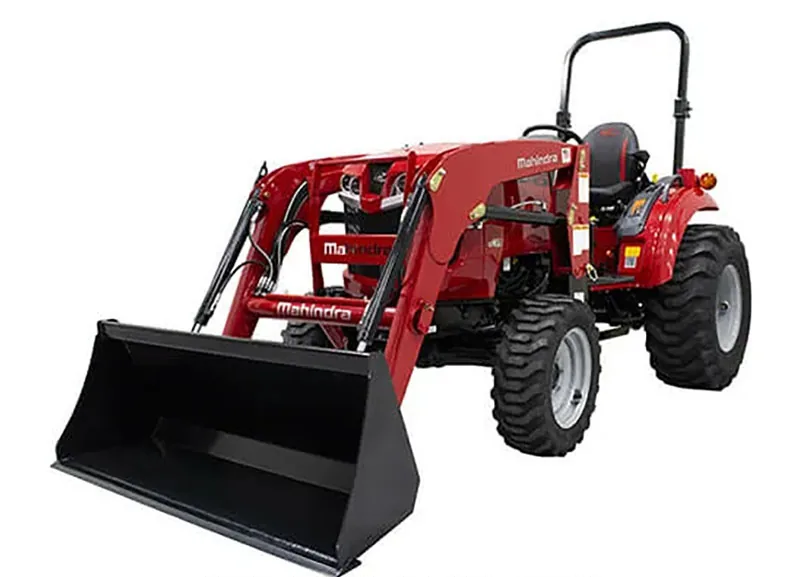
Mahindra 1626

~$22,769

series starting price

Mahindra 1626
Compact
25.9 hp engine · 19 PTO−27% to the shaft

At 24.7 hp the 1626 is a compact tractor with a Mahindra 3-cylinder diesel and class-leading loader lift for the money, backed by a long warranty. It targets value buyers who want more loader muscle and coverage than the premium brands offer at the price.

Engine
25.9 hp
PTO
19 hp
Loader lift
1,830 lbs
3-pt lift
1,720 lbs

0.83 PTO hp per $1,000 of list price

As published by the maker

Specifications

Size class
Compact
Transmission
Hydrostatic
Engine
Mahindra
Engine hp
25.9 hp
PTO hp
19 hp
Drive
4WD
Loader lift
1,830 lbs
Three-point lift
1,720 lbs
Hydraulic flow
7.5 GPM
Fuel tank
8.2 gal
Weight
2,459 lbs
Warranty
7 yr powertrain
4WD
Yes
Cab
Open station
Turbo
No
Cruise control
No

On the price: The maker publishes one starting price for this series rather than a figure per model, and this is the cheapest model in it.

Lift figures are the maker's and are quoted at whichever point the maker chose; the about page explains why two loaders with the same number do not lift the same pallet.

Comes with

4WDHydrostaticFront LoaderPower SteeringDiesel

From owner discussion and long-term write-ups

What owners say

What they like

  • The 1,830 lb loader lift is genuinely class-leading for the price - it out-lifts a Kubota L2501 and Deere 3025E by a wide margin
  • The 7-year powertrain warranty is one of the longest in the industry and a major draw for budget-conscious buyers
  • Priced well below a comparably capable Deere or Kubota, delivering a lot of tractor per dollar
  • The 1,720 lb 3-point lift handles full-size implements the sub-compacts can't touch
  • Mahindra is the world's largest tractor maker, so the company and parts supply are stable
  • It's a strong choice for someone who wants maximum work capacity and doesn't care about resale value

What they complain about

  • The dealer network is thin versus Kubota and Deere, so warranty and service can require a long drive in many regions
  • Only 19 PTO HP despite the 25.9 engine HP, so it's weaker on the PTO than the number suggests
  • Resale value trails the Japanese brands significantly - you take a bigger depreciation hit
  • Fit and finish is a step below Kubota and Deere, with cheaper plastics and fittings noted by owners
  • That big loader capacity can overwhelm the chassis and front axle if you routinely lift near the max

Gathered from owner reports

What owners report

The most useful thing owners say about the 1626 is which Mahindra it is. Two of them point out that it is a Mitsubishi tractor underneath — engine, frame and all, built in Japan, with the loader made in Texas — and one who follows the range separates the line explicitly: the 1626 and the 4540 and 4550 are the Mahindras he considers solid, and the TYM-built models such as the 1635 and the 2600 series the ones he would avoid as lighter duty and higher maintenance. That matters because buyers in this evidence report being pushed hard toward Kubota by neighbours citing parts and service problems that do not distinguish between the two halves of Mahindra's range.

Owner experience splits sharply. On one side a two-year owner at eighty hours calls it one of the best purchases he has ever made, another is delighted at the price point with only the seat getting hot in the sun to complain about, and one bought new for about $21,000 with a free box blade and rear blade. On the other, one shuttle-shift owner's machine had an inoperative start switch, clutch and brakes, had sat at the dealer more than thirty days without even a repair plan, and he says he wishes he had bought a Deere. A used one leaked hydraulic oil out of the bell housing drain before it was off the trailer at delivery. Where the tractor is consistently frustrating is paperwork and fitment: one owner cannot find a parts list or a part number anywhere without buying a $100 manual, another cannot source mounting brackets for a backhoe bought secondhand, and a third found his lift arm pins about 23.25 inches apart against the roughly 27 inches a standard Category 1 quick hitch expects, so the hitch will not fit without welding new points onto the implement.

What comes up favourably

  • It is a Mitsubishi-built tractor with a Texas-made loader, and the owners who know the range treat that as the dividing line between the Mahindras worth buying and the ones to avoid
  • Pricing is genuinely low for the class — one owner paid about $21,000 new with a box blade and a rear blade included, on 0% financing
  • The shuttle transmission suits work the hydrostatic struggles with: an owner who previously ran a 25 hp hydrostatic says the shuttle version runs rings around it for mowing and pulling up a grade, where the hydro lost too much power
  • It is compact where it matters for livestock work, fitting through standard corral panel gates with a little room to spare
  • Owners doing ordinary property work report it lifting and digging what they need without drama, with one two-year owner calling it among the best purchases he has made

What comes up as a complaint

  • Parts documentation is close to nonexistent — one owner searched at length for a simple parts list and found only sites wanting to sell him a $100 manual, and another could not source mounting brackets for a backhoe he bought secondhand
  • The three-point is Category 1a, with lift arm pins about 23.25 inches apart against the roughly 27 inches a standard quick hitch is built for, so quick hitches do not fit without welding new attachment points onto implements
  • PTO shaft clearance is tight: with only around 22 inches between the tractor's PTO and a five-foot tiller's input shaft, one owner could not find any shaft short enough that still carried a slip clutch
  • Not everyone has been lucky — one shuttle owner's machine had the start switch, clutch and brakes all fail, sat at the dealer over thirty days without a repair plan, and a used example leaked hydraulic oil from the bell housing drain on the delivery trailer
  • Owners question whether the frame outruns the engine, with one noting its 63-inch width would need a 72-inch finish mower to cut wider than the tracks, which is at the outer limit of 19 hp at the PTO

Questions worth asking

Is this the Mahindra people warn me about?
Owners draw a line down the middle of the brand. The 1626 is built by Mitsubishi in Japan, with a loader made in Texas, and the owners who track this consider it one of the models worth buying along with the 4540 and 4550. What they steer people away from are the TYM-built Mahindras such as the 1635 and 2600 series, which they describe as lighter duty and higher maintenance. General warnings about Mahindra that do not distinguish between those groups are less useful than they sound — though the advice to check dealer support first applies either way.
Will a standard quick hitch and my implements fit?
Check the pin spacing before you buy either. One owner measured his lift arm pins at about 23.25 inches apart, which is a Category 1a layout rather than the roughly 27 inches a standard Category 1 quick hitch expects, so the hitch simply does not reach without welding new attachment points onto the implement. The same owner found the gap between the tractor's PTO and his tiller's input shaft so short, around 22 inches, that no off-the-shelf shaft with a slip clutch would fit.
Shuttle or hydrostatic?
The one owner in this evidence who has run both is firmly for the shuttle. He previously owned a 25 hp hydrostatic and says the 1626 shuttle runs circles around it, because the hydrostatic lost too much power mowing and pulling on a grade. The trade-off is the usual one: a shuttle is more efficient and better under sustained load, while a hydrostatic is easier for repetitive loader work and for anyone new to tractors.
How much ballast does the 1626 need?
Enough to match a loader owners put at around 1,600 lb in practice, which is more than the tractor's own rear end can hold down on its own. Owners build or buy a ballast box rather than relying on filled tires alone. Size it to the loader rather than to the tractor: the point is to keep weight behind the rear axle when the bucket is loaded and high, not simply to add mass.

Summarised from public owner discussion, not from testing. Nothing here was measured by this site, and a report that recurs is not the same as a defect rate.

Cross-shopped against

Line the Mahindra 1626 up

Same brand or same size, nearest in price

Related tractors

More from Mahindra →
Mahindra 1635
~$25,659dealer list, not MSRP
Compact

Mahindra

Mahindra 1635

36.2 hp engine · 27.6 PTO−24% to the shaft
Loader
1,830 lbs
3-pt
1,720 lbs
Trans
Shuttle
Drive
4WD

Middle rung of the 1600 series, and the point where Mahindra stops publishing a price: the series figure belongs to the 1626, so this one is priced off dealer books at about $25,659 for the 8F/8R synchro shuttle. A three-range HST runs roughly $2,500 more, and a heated cab is offered only on the HST.

Spec sheet & owner notes
Mahindra 2123
~$19,756series starting price
CompactSeries photo

Mahindra

Mahindra 2123

22.9 hp engine · 16.8 PTO−27% to the shaft
Loader
1,477 lbs
3-pt
1,760 lbs
Trans
Hydrostatic
Drive
4WD

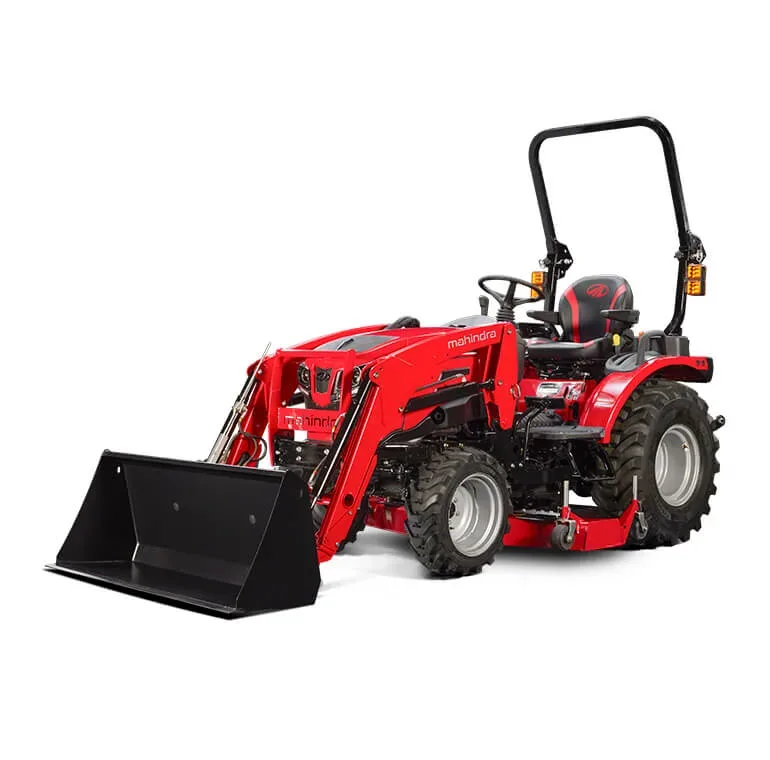
Compact frame with a sub-25 hp engine, which is the point: 22.9 hp and no DPF, but a three-range HST, the 1,477 lb L21 loader and 1,760 lb of rear lift - more than double what the 1100 series manages on the same horsepower. Open station only.

Spec sheet & owner notes
Mahindra 2638
~$26,313MSRP, base build
CompactNo longer built

Mahindra

Mahindra 2638

37.4 hp engine · 31 PTO−17% to the shaft
Loader
1,634 lbs
3-pt
2,646 lbs
Trans
Hydrostatic
Drive
4WD

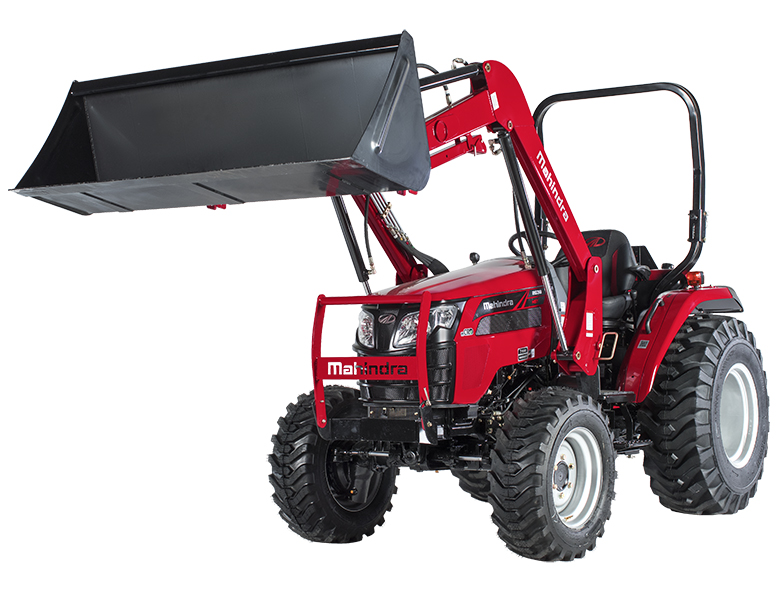
A 2.7-litre mCRD engine with no DPF and a 2,646 lb hitch let this punch well past its 37 hp rating. Mahindra has retired the 2600 series in favour of the 2100, leaving the series brochure as the only maker document that still describes it.

Spec sheet & owner notes