John Deere · Utility

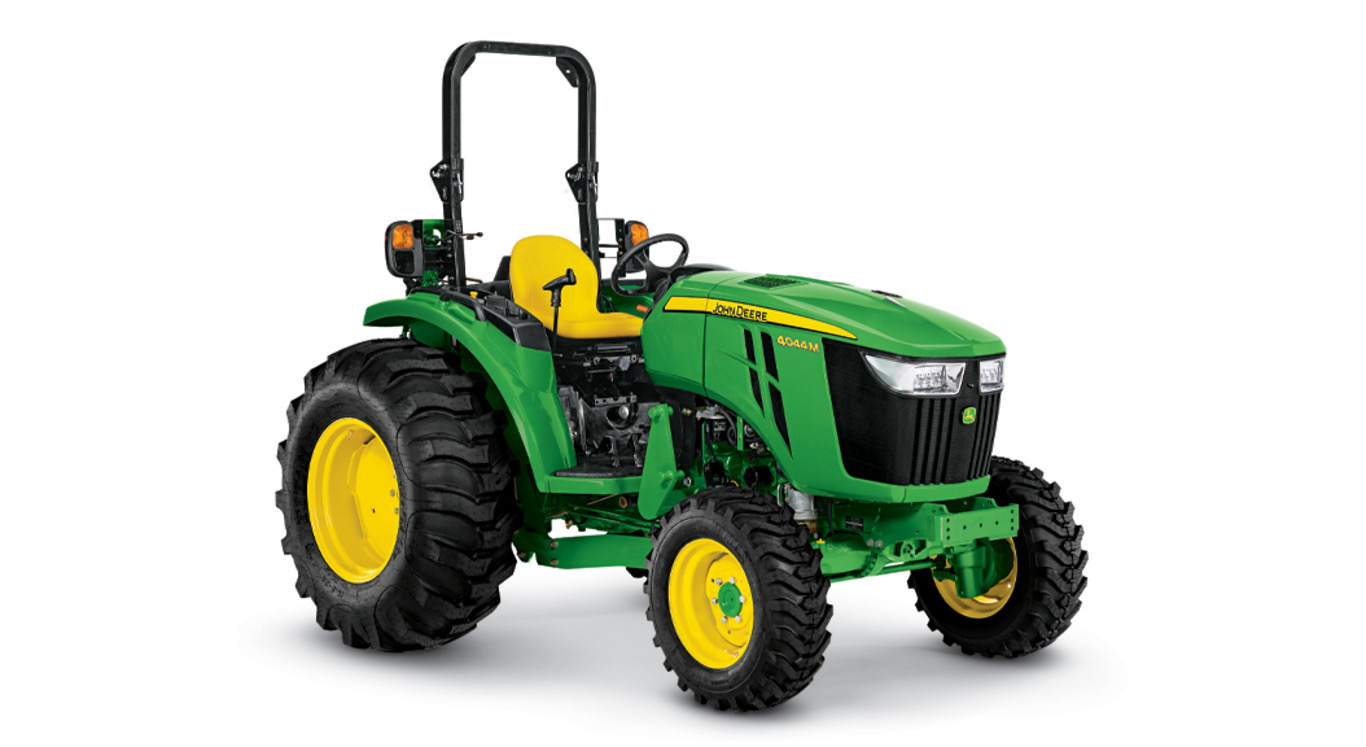
John Deere 4044M

~$36,630

MSRP, base build

John Deere 4044M
Utility
42.5 hp engine · 33.6 PTO−21% to the shaft

Where Deere's compacts stop pretending to be lawn equipment: 42.5 hp, a 3,770 lb frame and 15.4 GPM of hydraulics. M trim drops the R's cab, premium electronics and suspension seat, which is most of the several-thousand-dollar gap.

Engine
42.5 hp
PTO
33.6 hp
Loader lift
2,396 lbs
3-pt lift
2,500 lbs

0.92 PTO hp per $1,000 of list price

As published by the maker

Specifications

Size class
Utility
Transmission
Hydrostatic
Engine
Yanmar
Engine hp
42.5 hp
PTO hp
33.6 hp
Drive
4WD
Loader lift
2,396 lbs
Three-point lift
2,500 lbs
Hydraulic flow
15.4 GPM
Fuel tank
12.4 gal
Weight
3,770 lbs
Warranty
6 yr / 2000 hr powertrain
4WD
Yes
Cab
Open station
Turbo
Yes
Cruise control
Yes

On the price: The maker's own published starting figure for the base build. A dealer adds a loader, a deck and freight on top.

Lift figures are the maker's and are quoted at whichever point the maker chose; the about page explains why two loaders with the same number do not lift the same pallet.

Comes with

4WDHydrostaticFront LoaderPower SteeringCruise ControlTurboDiesel

From owner discussion and long-term write-ups

What owners say

What they like

  • The turbocharged 42.5 HP Yanmar gives it strong, stall-resistant power for heavy loader work, tillage, and big rotary cutters
  • The Quik-Park 400E loader detaches and reattaches in minutes without tools, one of the best loader systems in the class
  • 2,500 lb loader lift and heavy 3,770 lb frame make it a genuine material-handling machine, not a light-duty toy
  • The eHydro transmission with cruise is superb, and the optional 12/12 PowrReverser is ideal for constant loader shuttling
  • 15+ GPM hydraulics run big implements and grapples with authority
  • It's cab-ready and takes a huge range of Deere implements, making it a long-term platform you can grow into
  • The M trim balances features and value better than the pricier 4R for most owners

What they complain about

  • It's expensive - loaded it lands near $38K, which is serious money that pushes some buyers toward larger utility tractors
  • You pay a substantial Deere premium versus a comparably specced Kubota L4701 or Kioti DK4520
  • The turbo and the premium hydraulics add service complexity a simpler compact does not carry
  • At 3,770 lbs plus loader it's heavy for a compact, so trailering requires a substantial truck and trailer
  • No factory cab on the base M without a big upcharge, and open-station-only limits all-weather use
  • Proprietary loader and attachments limit cheaper aftermarket options

Gathered from owner reports

What owners report

Almost everyone in this evidence bought a 4044M for the dealer rather than the tractor. Owners say it plainly: one found it comparable in price to Kubota and New Holland and chose Deere because his area had a network of dealerships under one owner, so a part missing at the nearest branch would still be close by. Another traded a Kubota BX2380 up three sizes to this after his Kubota service department stayed permanently backed up. The advice they hand to the next buyer is about the dealer too — how long has it been open, how far away is the second-nearest branch of the same brand if the first one closes. The counter-example is in the same file: one buyer skipped Deere because his local dealership does mostly big agriculture and will not touch compact warranty work between May and September, and another owner with a Deere mower, Gator and 4044M is leaving the brand entirely over parts availability.

The bargain most owners point to is buying one barely used. Two report picking up 2022 machines with 120 to 128 hours for $30,000 to $32,000 against roughly $40,000 new, with factory warranty still running for years. The catch is that used means as-is: one of those buyers had the three-point start lifting only halfway a week in, found nothing at all on the hydraulic dipstick and no sign of a leak anywhere, and discovered the front axle fluid had been contaminated with water. His dealer was not obliged to help and sent him a hydraulic filter, a transmission filter and eighteen gallons of Deere hydraulic fluid free anyway. Check every fluid on a used one before you drive it.

In work it earns its keep on rough ground. The most prolific owner here runs fifteen acres and three-quarters of a mile of gravel road, has bush hogged over dense material without bogging, knocked trees down with the loader, and says his one real failure was knocking loose the suction pipe feeding hydraulic fluid to the rockshaft — which he puts down to using it beyond what it was designed for. Its size is also its main limitation: the same owner is shopping a cheap small tractor because the 4044M cannot get into his woods. The other recurring headaches are a five-foot rotary cutter that has bent three PTO shafts in three months, twice in the same place, and rodents, which are common enough that owners warn each other the wiring insulation is soy-based and attractive to mice.

What comes up favourably

  • Buying one barely used is where the value is: two owners report 2022 machines with 120 to 128 hours at $30,000 to $32,000 against roughly $40,000 new, with several years of factory warranty left
  • Owners choose it for dealer density rather than specification, and at least one says outright that he would have bought Kubota if a Kubota dealer had been as close
  • It has the PTO power owners wanted from the step up — one reports bush hogging over extremely dense material without bogging, work he does not believe a 3 series would have managed
  • Three-point lift height is better than the frame suggests: an owner with both reports getting about two and a half feet of clearance under his rotary cutter against barely a foot on his much larger 5060E, with Deere confirming the bigger machine was working correctly
  • Dealer goodwill has gone beyond the letter of the warranty, with one owner of a used machine given around $700 of filters and hydraulic fluid free to fix a problem that was not covered

What comes up as a complaint

  • Owners disagree about round bales: one with ballast-filled tires says he would not be comfortable lifting one and advises going a size up, while another names the 4044M as exactly the right size for handling 1,000 lb-plus bales — the difference is how much rear weight you are willing to carry
  • It is too big for woods work, and one owner is shopping a cheap older tractor purely to get into the wooded part of his own property with a four- or five-foot cutter
  • The hydraulic plumbing around the filter and rockshaft is exposed enough to knock loose — one owner lost his entire hydraulic charge that way, refitting the suction pipe in half an hour but having to replace all the fluid
  • One owner has bent three PTO shafts on a five-foot rotary cutter in three months, twice in the same place, with one seized so hard on the PTO stub he had to drive it off with a sledgehammer
  • Rodent damage comes up more than once and is expensive — one newly bought machine was disabled entirely, at a $750 insurance excess, and owners warn that wiring insulation made from vegetable oil is what attracts them
  • Fuel delivery faults cause unexplained shutdowns: one machine cut out mid-plowing while fully warm, and another owner traced the same symptom to a debris-clogged screen in the bottom of the fuel tank at the outgoing fitting
  • Jump-starting is riskier than it looks — one owner boosting a flat battery fried fuses, killed the control module on an aftermarket third valve and left a power terminal beside the fuse box permanently dead

Questions worth asking

Will it handle round bales?
Owners genuinely disagree. One 4044M owner running ballast-filled tires says he would not trust lifting a round bale with it and would step up a size, warning that the real problem is how tippy it gets rather than the loader rating. Another commenter names the 4044M as precisely the class that handles 1,000 lb-plus bales comfortably, where a 35 hp machine is only marginal. The reconciling factor is ballast: with a heavy implement of 750 to 1,000 lb or rear weights on the back it is a different machine, and without them it is not.
Is buying a low-hour used one a good idea?
It is where the best prices in this evidence are — 2022 machines with around 125 hours at $30,000 to $32,000 with warranty still running. But used is sold as-is, and one of those buyers found the hydraulic dipstick completely dry a week in with no leak to be found, plus water contamination in the front axle. Check every fluid yourself before you use it rather than assuming the dealer did, and if something turns up immediately, ask anyway — one dealer covered several hundred dollars of fluid and filters it had no obligation to.
It shut off on its own. Where do I start?
Fuel supply, before anything exotic. One owner's machine cut out while plowing snow after half an hour of running warm, and wondered about untreated winter diesel. A second owner had the same symptom on his 4044M and found the cause was a screen in the bottom of the fuel tank, part of the 90-degree fitting where the outgoing line connects, completely covered in debris — dropping the tank, cleaning the screen and refitting solved it permanently.
Why does my bush hog keep bending PTO shafts?
One owner has bent three in three months, the last two in the same place. The causes he identified for the first two were raising the implement too high and being genuinely rough in heavy growth, but the third came during ordinary clearing, which points at a shaft that is the wrong length for the tractor and cutter combination. A second symptom to watch is a shaft that will not slide off the PTO stub — one had to be driven off with a sledgehammer after bending.
What can I do about mice getting into it?
Take it seriously, because it is the most expensive failure in this evidence — one owner's month-old tractor went from not moving to not cranking at all, with an insurance claim carrying a $750 excess. Owners point out that the wiring insulation on modern machines is made from vegetable oil, which is exactly why rodents chew it in preference to older wiring. Storing the machine where it is disturbed regularly, and checking the harness rather than assuming an electrical fault is electronic, are the practical takeaways.

Summarised from public owner discussion, not from testing. Nothing here was measured by this site, and a report that recurs is not the same as a defect rate.
Cross-shopped against

Line the John Deere 4044M up

Same brand or same size, nearest in price

Related tractors

More from John Deere →
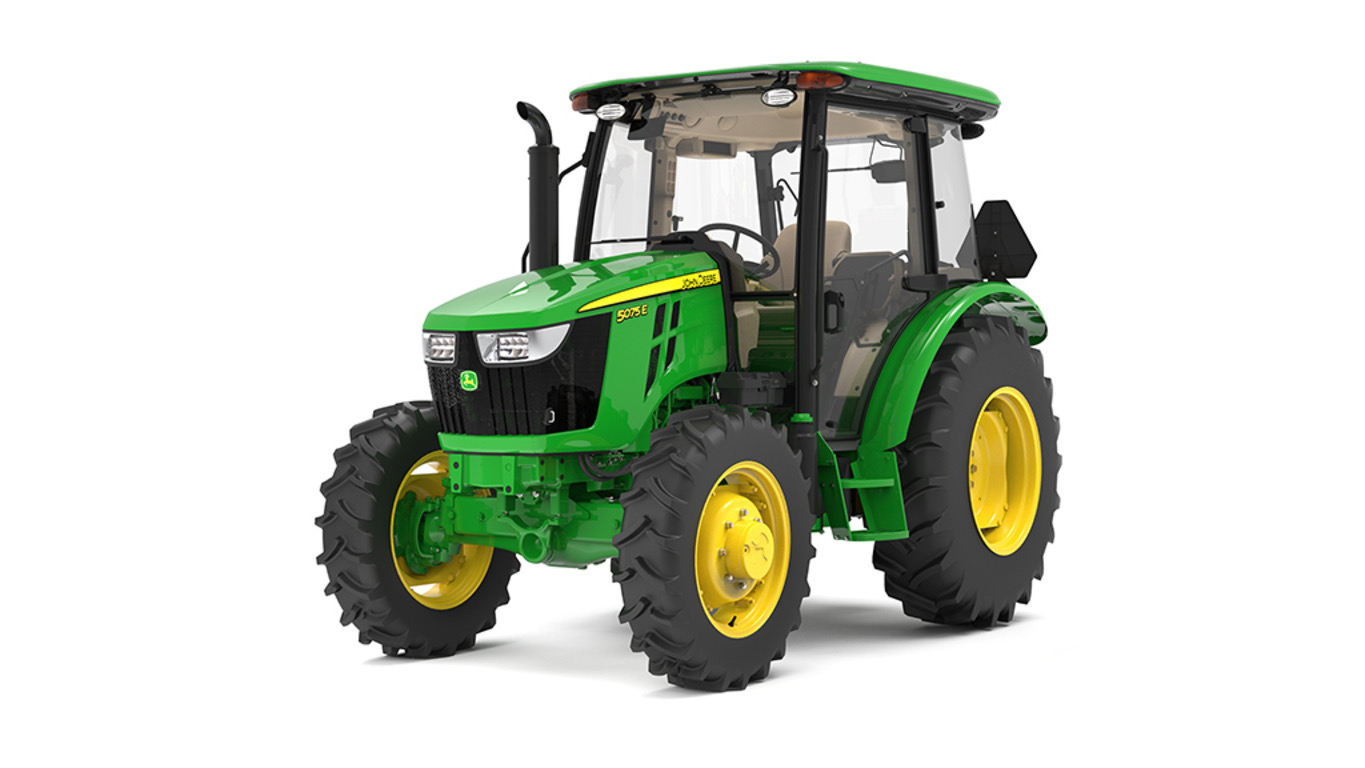
John Deere 5075E
~$37,529MSRP for 2WD open station; Deere lists MFWD separately at $7,103
Utility

John Deere

John Deere 5075E

75 hp engine · 57.6 PTO−23% to the shaft
Loader
2,606 lbs
3-pt
3,192 lbs
Trans
Power Shuttle
Drive
4WD · cab

A genuine farm tractor rather than an oversized compact, running Deere's own 2.9L three-cylinder through a 12F/12R PowrReverser to 3,192 lb at the hitch. The 3-cylinder 5E needs no DPF, no DEF and no regen, which is a maintenance argument by itself.

Spec sheet & owner notes
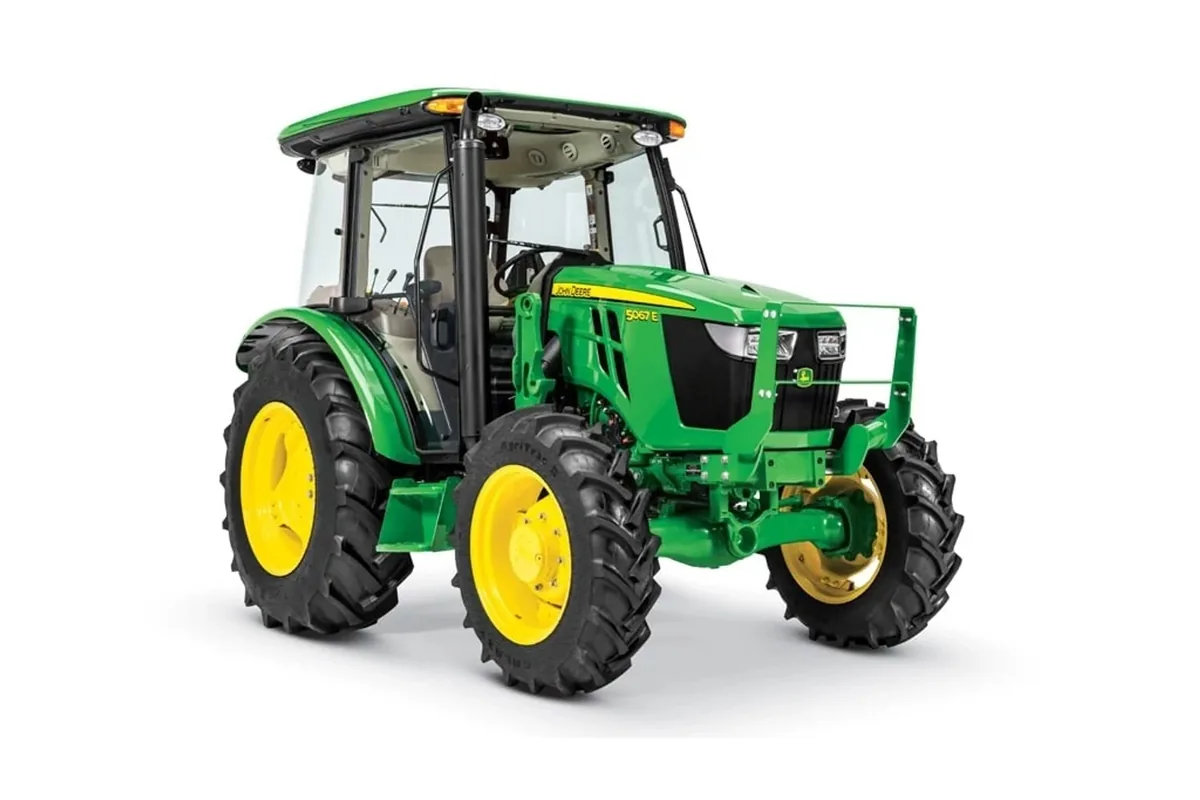
John Deere 5067E
~$34,887MSRP for 2WD open station; Deere lists MFWD separately at $7,103
Utility

John Deere

John Deere 5067E

67.6 hp engine · 49 PTO−28% to the shaft
Loader
2,606 lbs
3-pt
3,192 lbs
Trans
Shuttle
Drive
4WD · cab

The 5E most often bought for baling: 49 PTO hp out of the 2.9 L PowerTech, a Category 2 hitch and 6,029 lb of machine in 4WD trim, with a cab, PowrReverser or eHydro all available. It sits about $2,600 under a 5075E for 8.6 fewer horsepower.

Spec sheet & owner notes
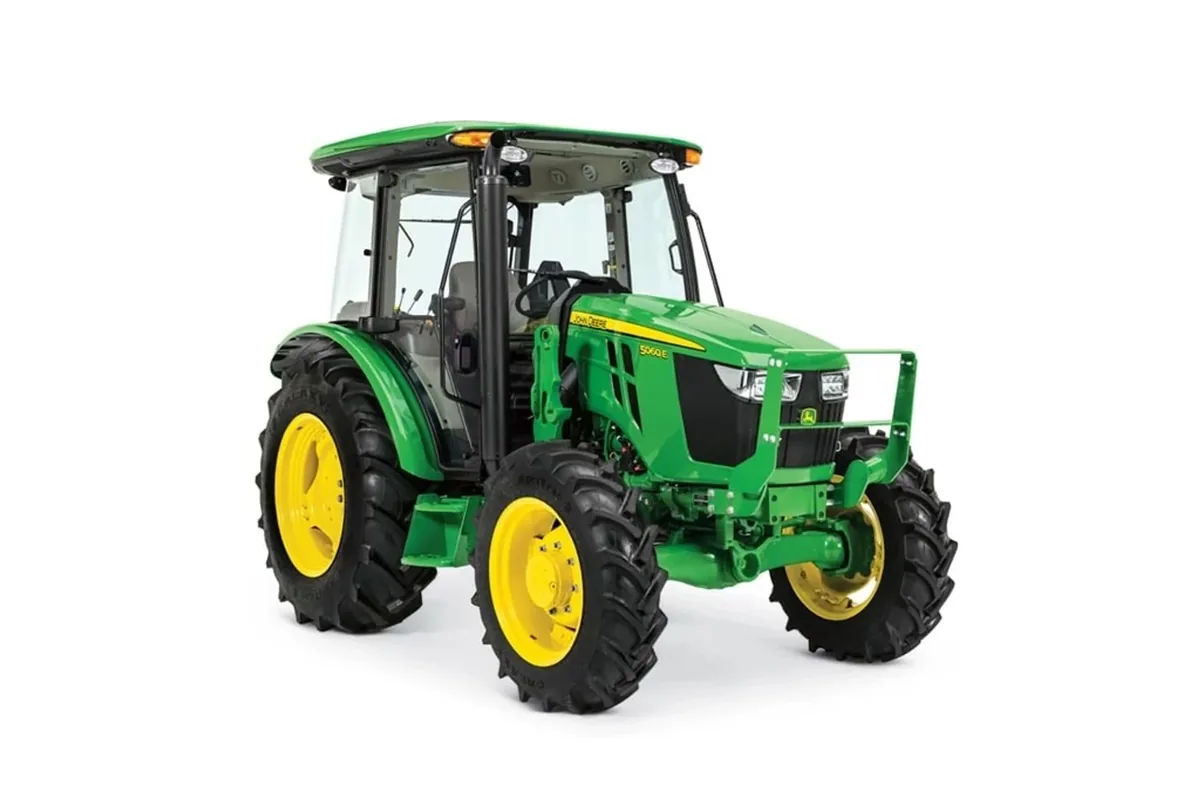
John Deere 5060E
~$31,367MSRP for 2WD open station; Deere lists MFWD separately at $7,103
Utility

John Deere

John Deere 5060E

60 hp engine · 42.9 PTO−29% to the shaft
Loader
2,606 lbs
3-pt
3,192 lbs
Trans
Shuttle
Drive
4WD · cab

Where the 5E line starts offering choices: a cab, a 12F/12R PowrReverser and even an eHydro are all on the 5060E order sheet, none of which the 5050E below it can have. Same 2.9 L PowerTech, same DPF-free aftertreatment, ten more horsepower.

Spec sheet & owner notes