John Deere · Utility

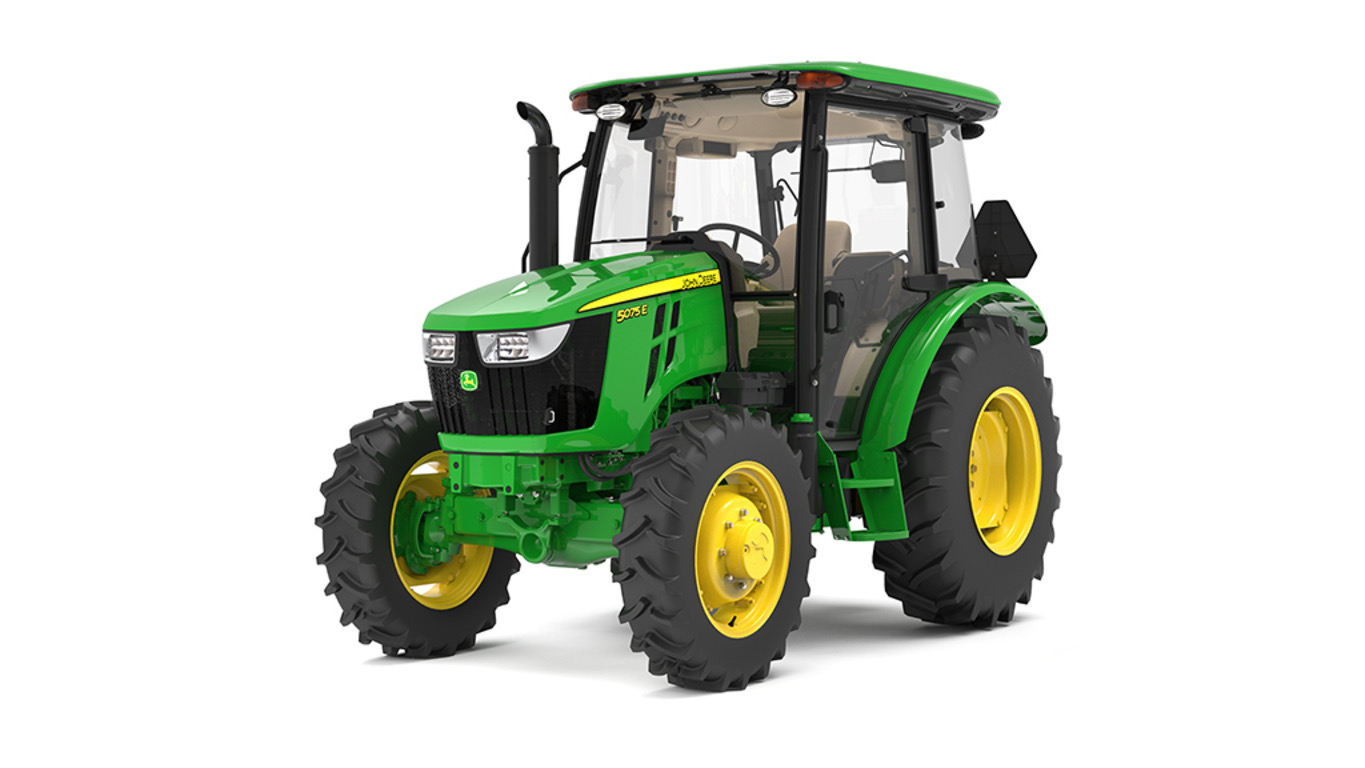
John Deere 5075E

~$37,529

MSRP for 2WD open station; Deere lists MFWD separately at $7,103

John Deere 5075E
Utility
75 hp engine · 57.6 PTO−23% to the shaft

A genuine farm tractor rather than an oversized compact, running Deere's own 2.9L three-cylinder through a 12F/12R PowrReverser to 3,192 lb at the hitch. The 3-cylinder 5E needs no DPF, no DEF and no regen, which is a maintenance argument by itself.

Engine
75 hp
PTO
57.6 hp
Loader lift
2,606 lbs
3-pt lift
3,192 lbs

1.53 PTO hp per $1,000 of list price

As published by the maker

Specifications

Size class
Utility
Transmission
Power Shuttle
Engine
John Deere
Engine hp
75 hp
PTO hp
57.6 hp
Drive
4WD
Loader lift
2,606 lbs
Three-point lift
3,192 lbs
Hydraulic flow
16.4 GPM
Fuel tank
21.9 gal
Weight
5,555 lbs
Warranty
6 yr / 2000 hr powertrain
4WD
Yes
Cab
Available
Turbo
Yes
Cruise control
No

On the price: This figure is the maker's published price for 2WD open station; Deere lists MFWD separately at $7,103. It is a real published number but not a like-for-like one, so nothing on this site ranks it against the bare-tractor prices — not the per-dollar picks, not the matchup pairings.

Lift figures are the maker's and are quoted at whichever point the maker chose; the about page explains why two loaders with the same number do not lift the same pallet.

Comes with

4WDFront LoaderPower SteeringCabPower ShuttleTurboDiesel

From owner discussion and long-term write-ups

What owners say

What they like

  • It's powered by John Deere's own turbocharged PowerTech diesel, a proven farm engine with an excellent reliability record
  • The full-size utility frame and 5,555+ lb weight give it real field capability the compact 4-series can't match
  • The optional 12/12 PowrReverser power-shuttle is fantastic for loader work and headland turns
  • 57.6 PTO HP runs big rotary cutters, balers, tillers, and hay equipment on a working farm
  • Available with a real climate-controlled cab for all-weather, all-day comfort
  • The large 22-gallon tank and stout hitch make it a genuine all-day production tractor

What they complain about

  • It's the value E-series, so it lacks the premium cab, transmission, and hydraulic refinements of the pricier 5M and 5R
  • Loaded with a cab and loader it approaches $50K, a serious investment for a smaller operation
  • No hydrostatic option, so it's a field and loader tractor, not a finish-mowing or beginner-easy machine
  • The base SyncShuttle 9/3 transmission is dated, and the better PowrReverser is a meaningful upcharge
  • At over 5,500 lbs plus loader it requires a heavy-duty truck and trailer to transport
  • The E model's simpler hydraulics limit how many implements you can run at once
  • The $37,529 list is Deere's 2WD open-station figure — mechanical front-wheel drive is a separate $7,103 on the same price sheet, so a 4WD machine as described here lands well above the number shown

Gathered from owner reports

What owners report

This is the machine people buy when a compact has stopped being enough, and the owners describing that jump are the most useful voices in the file: a 14-acre owner who sold the sub-compact he inherited with the property because it was too slow to be efficient, a long-time 4052R owner trading up specifically so he can run a 10-foot bush hog, and an owner who ran a 15-foot brush hog behind his for five years and four hundred hours. Owners consistently report it feeling like more tractor than the badge suggests. The other draw is that the three-cylinder 5E engines carry no particulate filter and no regens — several owners say so and a certified Deere technician confirms the distinction against the 5075M, which does have one.

Two things about it genuinely divide owners. The first is the loader hydraulics. More than one owner reports being unable to curl the bucket while raising or lowering the boom — one function at a time — and describes the loader as slow and weak against a skid steer or a larger competitor. An owner with a mass-excavation background borrowed a near-new one, got frustrated cleaning up an oak, and concluded the hydraulics are intentionally limited. The counter-argument is specific and worth hearing: another owner points out that the recommended operating band starts around 1,500 rpm against roughly 2,100 at the top, that working a loader at 1,400 rpm is lugging the engine and starving the pump, and that at proper revs he has no trouble driving and curling at once, nor any trouble reaching the rated lift with the factory bucket.

The second is the PowrReverser. An experienced rancher taking delivery of a new Premium Cab found reverse about half a mile per hour to a mile per hour faster than forward and abrupt enough to throw him in the seat, with the back end breaking loose while mucking stalls; an owner of a machine at 1,830 hours with the same transmission reports the same behaviour; and a third describes heavy bucking easing off the clutch in the B ranges. Owners who have the fully mechanical version, or who have borrowed a power-shuttle 5065E, are still emphatic that a shuttle is transformative with a loader — so the complaint is about this implementation, not the concept. Electrical faults are the other recurring theme: repeated fault codes on low-hour machines, a hitch that locked up at six hours and again later, a transmission output shaft speed sensor causing bog-and-shutdown, and one land-management operator who says Deere is handling a known ECU problem as a quiet find-it-fix-it rather than a recall after his machine died mid-job.

What comes up favourably

  • It is the machine compact owners step up to and stop wishing for more: a 14-acre owner sold his sub-compact for one, a 4052R owner is trading up to run a 10-foot bush hog, and another pulled a 15-foot brush hog reasonably well for five years and four hundred hours.
  • The three-cylinder 5E engines carry no particulate filter and no regens — owners repeat this as a buying reason and a certified Deere technician confirms it against the 5075M, which does have one.
  • Owners report it punching above its rating, one describing a Premium Cab 5075E as feeling like an M-model machine, and another saying it puts out more than the rated horsepower.
  • It can undercut the 4-series on price for more tractor: owners point out a 5075E with a loader can come out a few thousand below a 4075R, and that the whole 4-series shares one loader, so paying for more horsepower there buys no extra lift.
  • Widely produced and easy to buy used — owners describe low-hour used machines with a cab in the mid-$40,000s and less open-station, and note most owners of this size put on a hundred hours a year or less, so used examples are lightly worked.
  • Owners who have the cab do not regret it, citing air conditioning, a radio, somewhere to put your things, and not taking debris in the face every time the wind turns.

What comes up as a complaint

  • Loader hydraulics are the most-reported disappointment: owners describe being unable to curl the bucket while moving the boom, and one with a heavy-equipment background who borrowed a near-new machine calls the loader slow and weak against what an 80-horsepower rival does, concluding the flow is deliberately limited.
  • There is a credible counter-explanation, which is itself a warning: operating a loader around 1,400 rpm lugs the engine and starves the pump, when the recommended band starts near 1,500 and tops around 2,100. Owners running at proper revs report no trouble curling and driving at once.
  • The PowrReverser draws specific complaints from multiple owners — reverse running half a mile to a mile per hour faster than forward and abrupt enough to unseat you, the rear breaking loose while mucking stalls, and heavy bucking as the clutch takes up in the B ranges. One machine at 1,830 hours behaves the same way, so it is not a break-in issue.
  • Electrical and sensor faults keep recurring on low-hour machines: a repeating fault code at 40 hours, a 3-point hitch that locked up at six hours and returned after being rewired, an output shaft speed sensor causing bog-and-shutdown, and a brand-new machine with gremlins its owners gave up on and sold.
  • One land-management operator running these commercially says Deere is treating a known ECU problem as an unpublicised find-it-fix-it rather than a recall, after his machine died in the middle of a job — he still rates the tractor highly, which makes the complaint harder to dismiss.
  • Ergonomic and durability niggles come up repeatedly: the loader joystick sits far enough from the seat that your arm is nearly outstretched, the seats are reported to break down quickly, and on the loader the hard-line-to-hose fittings are bracketed low by the battery box where brush hogging works them loose into leaks every few hours.
  • It is a lot of tractor for turf and tight spaces. An owner cutting HOA properties worried it would mark grass even on R4s and could not fit some of the access he works in, which is exactly the tradeoff against staying in the 4-series.

Questions worth asking

Does the 5075E have a DPF, regens or DEF?
Owners and a certified Deere technician agree that the three-cylinder 5E models — 5055E through 5075E — have no particulate filter and no regens, and no DEF tank either; emissions are handled another way. The 5075M does have a filter, which is where the confusion comes from. If you see a hot-exhaust warning, owners note it appears on machines used for lots of short, light tasks rather than worked warm.
Why does the loader feel slow and weak?
Owners genuinely split. Several report only being able to do one loader function at a time and describe it as sluggish against a skid steer or a larger rival — one experienced operator concludes the hydraulics are deliberately limited. Others point at engine speed: the recommended band starts around 1,500 rpm and tops near 2,100, so working the loader at 1,400 is lugging the engine and under-supplying the pump, and owners running it properly report curling and driving simultaneously without trouble. Check your revs before you blame the tractor.
Is the PowrReverser worth the upcharge?
Owners are firm that a shuttle transforms loader work — one with the fully mechanical version says he cannot overstate how much nicer his friend's power-shuttle machine is. But several owners of this specific transmission report real complaints: reverse running noticeably faster than forward and harsh enough to unseat you, the rear end breaking loose in confined work, and hard bucking as the clutch engages in the B ranges. One machine at 1,830 hours does the same. Drive one before you order.
How much ballast does it need for loader work?
More than people expect, and owners get specific. One runs roughly three-quarters of a cubic yard of concrete on the 3-point — about 2,400 pounds — plus around 800 pounds of ballast fluid in each rear tire. Owners also point to the owner's manual, which specifies ballast figures for exactly this. The other adjustment worth making is setting the rear rims as wide as they go: one owner calls the side-hill stability difference against the dealer's delivered width night and day.
What size operation does it suit?
Owners describe it as right for hay, pasture and livestock chores on small to mid-size ground, and as the answer when a compact has run out. It will pull a 9- or 10-foot bush hog, and one owner did reasonable work with a 15-foot cutter. It is the wrong tool for manicured turf and tight access — an owner cutting HOA properties worried about marking grass even on industrial tires — and the 4-series is the better fit if that is your work.
New or used?
The financing usually decides it. Owners looking at used machines report quoted rates around 13% even with strong credit, against 0% over 72 months on new, which closes most of the price gap on its own. If you do buy used, owners recommend under 2,000 hours, a real maintenance log, no significant wear in the hydraulics or PTO, and a video of the machine running so you can listen for leaks and noises before you travel.

Summarised from public owner discussion, not from testing. Nothing here was measured by this site, and a report that recurs is not the same as a defect rate.
Cross-shopped against

Line the John Deere 5075E up

Same brand or same size, nearest in price

Related tractors

More from John Deere →
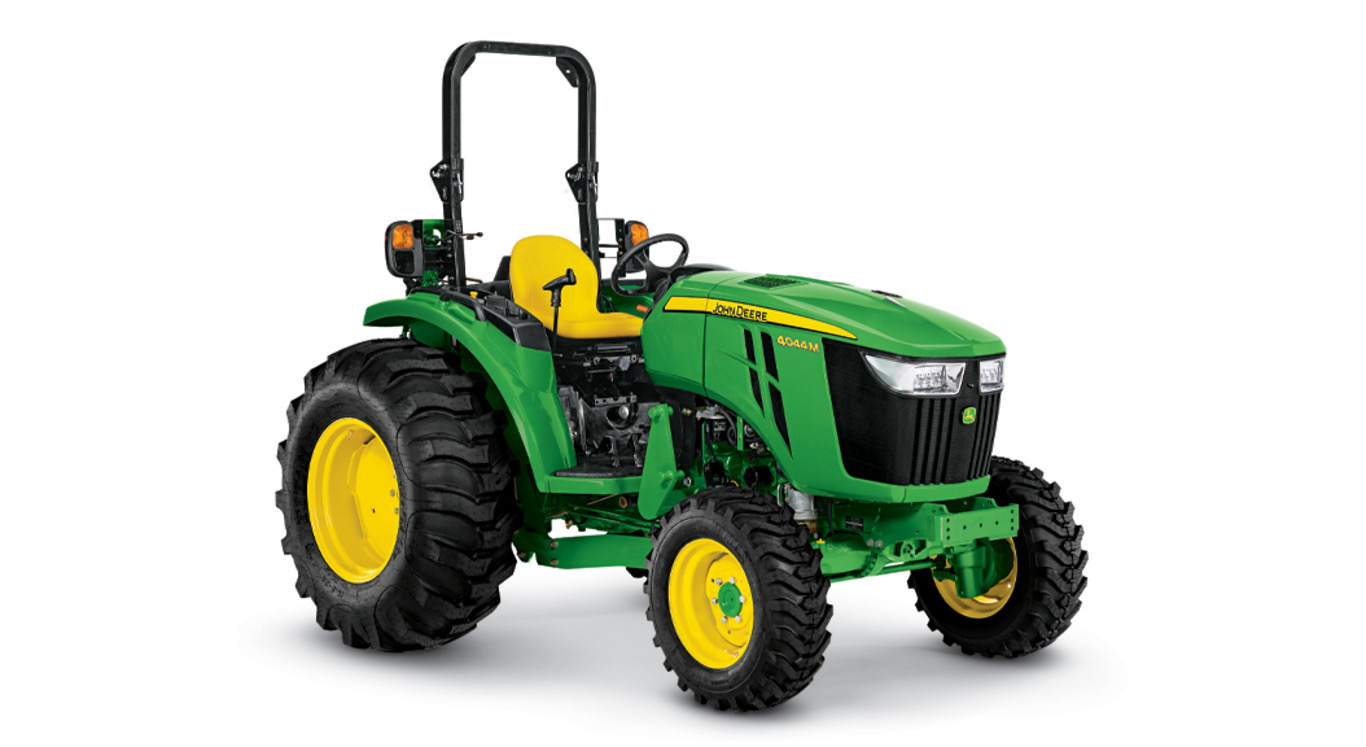
John Deere 4044M
~$36,630MSRP, base build
Utility

John Deere

John Deere 4044M

42.5 hp engine · 33.6 PTO−21% to the shaft
Loader
2,396 lbs
3-pt
2,500 lbs
Trans
Hydrostatic
Drive
4WD

Where Deere's compacts stop pretending to be lawn equipment: 42.5 hp, a 3,770 lb frame and 15.4 GPM of hydraulics. M trim drops the R's cab, premium electronics and suspension seat, which is most of the several-thousand-dollar gap.

Spec sheet & owner notes
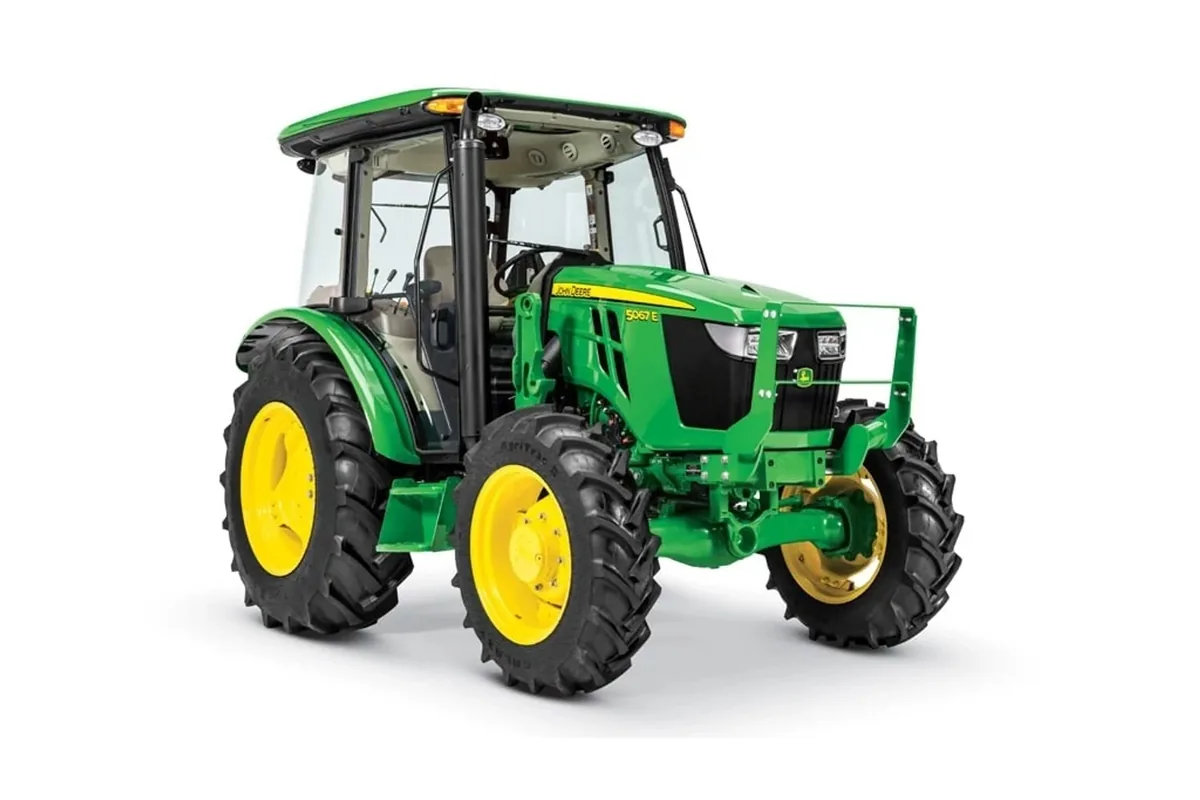
John Deere 5067E
~$34,887MSRP for 2WD open station; Deere lists MFWD separately at $7,103
Utility

John Deere

John Deere 5067E

67.6 hp engine · 49 PTO−28% to the shaft
Loader
2,606 lbs
3-pt
3,192 lbs
Trans
Shuttle
Drive
4WD · cab

The 5E most often bought for baling: 49 PTO hp out of the 2.9 L PowerTech, a Category 2 hitch and 6,029 lb of machine in 4WD trim, with a cab, PowrReverser or eHydro all available. It sits about $2,600 under a 5075E for 8.6 fewer horsepower.

Spec sheet & owner notes
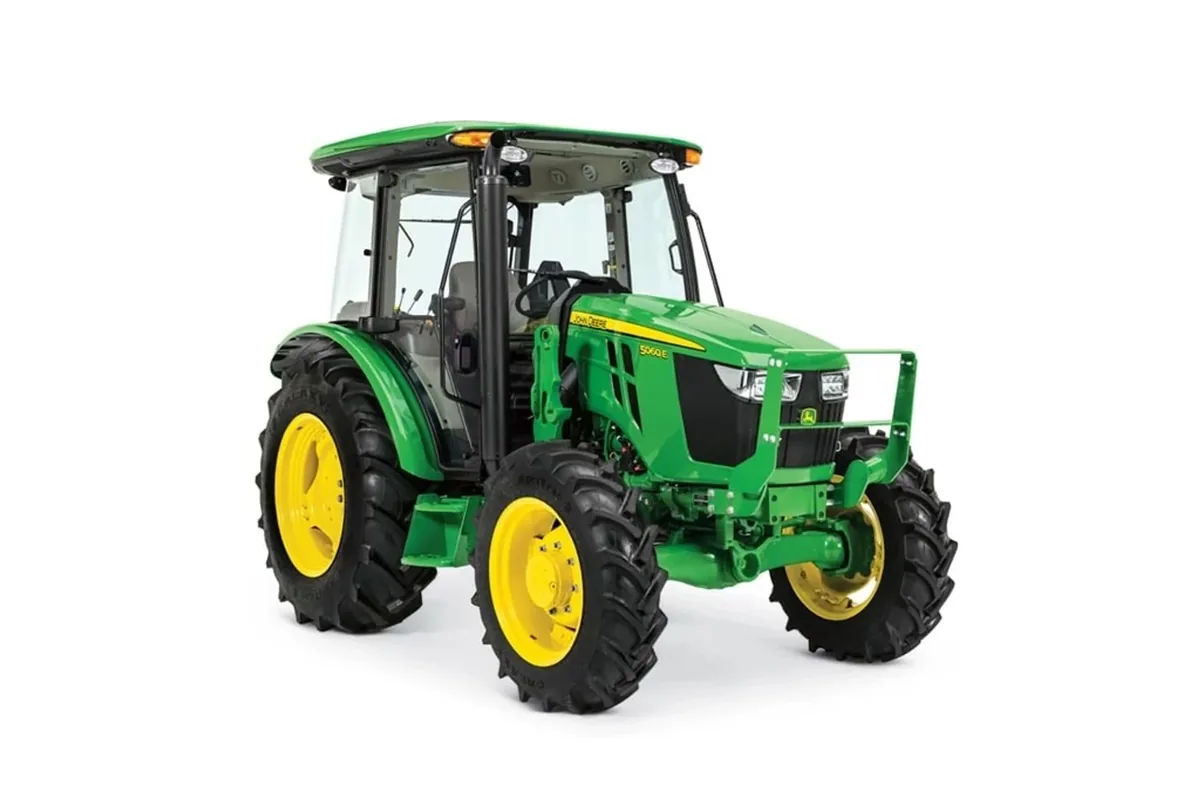
John Deere 5060E
~$31,367MSRP for 2WD open station; Deere lists MFWD separately at $7,103
Utility

John Deere

John Deere 5060E

60 hp engine · 42.9 PTO−29% to the shaft
Loader
2,606 lbs
3-pt
3,192 lbs
Trans
Shuttle
Drive
4WD · cab

Where the 5E line starts offering choices: a cab, a 12F/12R PowrReverser and even an eHydro are all on the 5060E order sheet, none of which the 5050E below it can have. Same 2.9 L PowerTech, same DPF-free aftertreatment, ten more horsepower.

Spec sheet & owner notes