Kubota · Utility

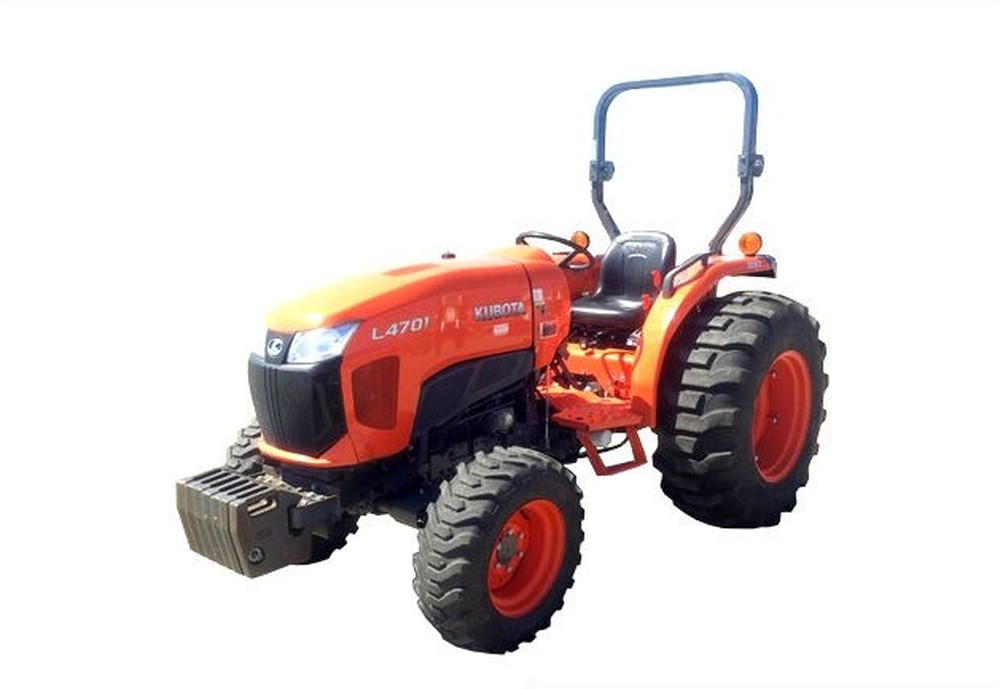
Kubota L4701

Ask a dealer

no published price

No longer in production

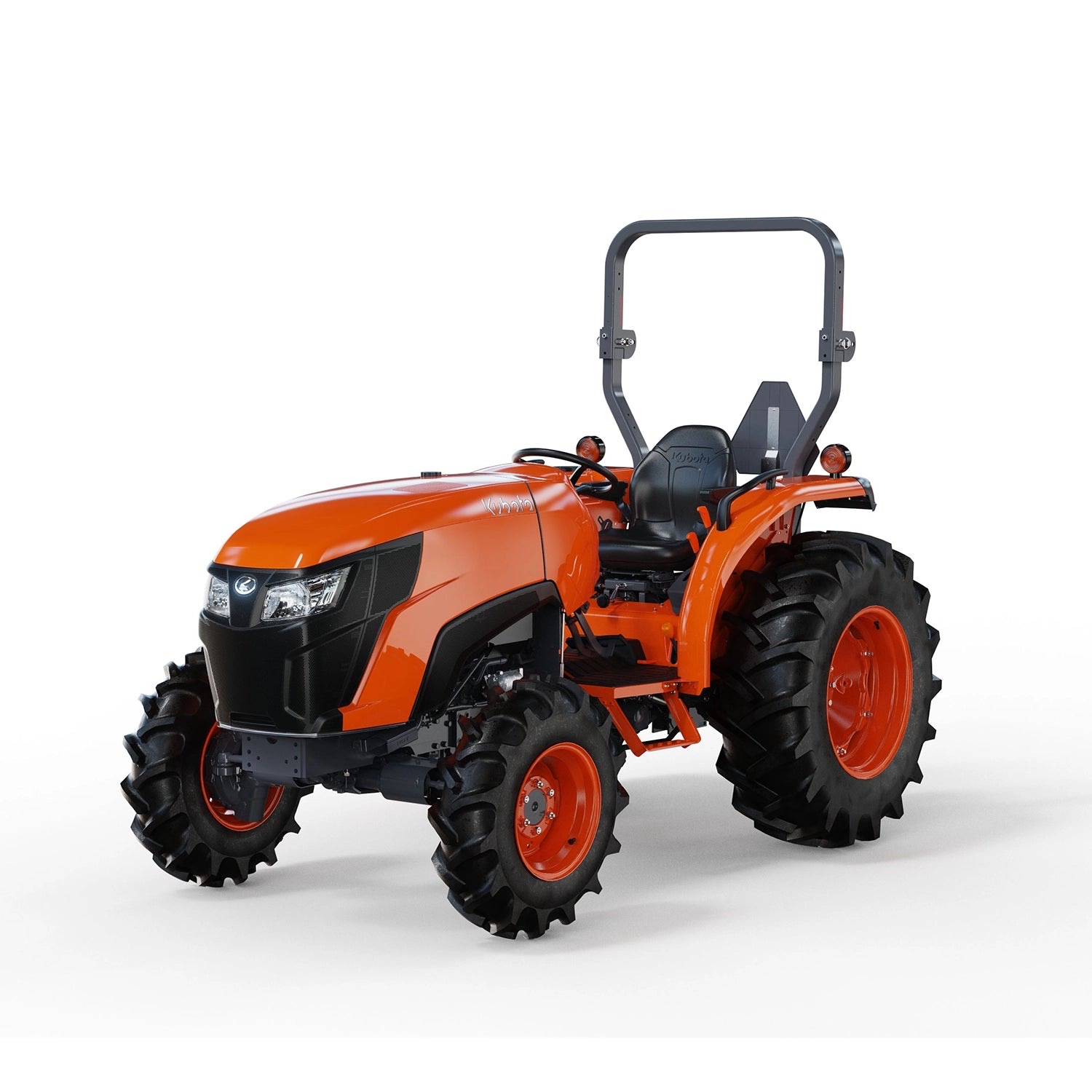
No longer built. The maker sells the Kubota L4802 in its place. See the Kubota L4802 The specs and owner reports below still describe this machine, and used ones trade steadily — but a dealer cannot order you a new one.

Kubota L4701
Utility
47.3 hp engine · 39.3 PTO−17% to the shaft

Naturally aspirated at 47.3 hp, with no turbocharger at all - unusual at this output and a large part of why rental fleets liked it. The L4802 took its place in the L02 refresh, and Kubota has dropped it from the Standard L page.

Engine
47.3 hp
PTO
39.3 hp
Loader lift
1,477 lbs
3-pt lift
2,976 lbs

As published by the maker

Specifications

Size class
Utility
Transmission
Gear
Engine
Kubota
Engine hp
47.3 hp
PTO hp
39.3 hp
Drive
4WD
Loader lift
1,477 lbs
Three-point lift
2,976 lbs
Hydraulic flow
8.9 GPM
Fuel tank
13.5 gal
Weight
3,197 lbs
Warranty
6 yr / 2000 hr powertrain
4WD
Yes
Cab
Open station
Turbo
No
Cruise control
No

On the price: Neither this maker nor any dealer reachable from here publishes a bare-tractor price for this model — every listing found either says “call for price” or bundles a loader. That is how this brand sells, so expect to get a number by asking a dealer rather than by looking it up.

Lift figures are the maker's and are quoted at whichever point the maker chose; the about page explains why two loaders with the same number do not lift the same pallet.

Comes with

4WDFront LoaderPower SteeringGearDiesel

From owner discussion and long-term write-ups

What owners say

What they like

  • The 47.3 HP naturally aspirated Kubota diesel is a simple, torquey, turbo-free engine owners trust for the long haul
  • It's the most powerful Standard L, giving strong loader and PTO performance for heavy property and small-farm work
  • The synchro-shuttle gear transmission is a rugged, efficient drivetrain ideal for sustained field work
  • 39.3 PTO HP runs big rotary cutters, tillers, and hay tools with authority
  • Huge Kubota dealer network, deep parts availability, and strong resale value
  • The larger 13.5-gallon tank keeps it working through long days without frequent refueling
  • Simple, serviceable design keeps DIY maintenance approachable despite the size

What they complain about

  • The Standard L is spartan - basic seat, no cruise, and fewer hydraulic outlets than a Grand L or the competition
  • The loader capacity is modest relative to the engine size, and the front end needs ballast for heavy lifting
  • The base gear transmission requires clutching for direction changes, tedious for constant loader shuttling
  • It has the DPF emissions system, adding regen cycles the under-25HP models avoid
  • No mid-PTO, so it's not suited for belly-mount finish mowing
  • Kubota premium pricing means a Kioti DK4520 of similar spec costs meaningfully less
  • Hydraulic flow of 8.9 GPM is modest for the size, so loader cycle times feel slow to some owners

Gathered from owner reports

What owners report

One owner sums up the market position better than any spec sheet: think of the MX as the smallest of the big tractors and the L47 as the biggest of the small ones. Owners buy it to consolidate — one sold both a 35-horsepower Kioti and a John Deere skid steer to replace them with a single L4701, and reports it noticeably stronger than the smaller tractor and closer to the skid steer than he expected. It is also emphatically not just a bigger L3901: owners point out it has a different engine and frame entirely, where the 2501 through 3901 share one chassis and differ only in horsepower.

The practical loader ceiling is worth knowing before you buy, because owners test it in public. One with 265 hours tried to lift a 1,600-pound pallet of feed out of a pickup bed and got it to tilt but not lift. The rule of thumb owners pass around is that the loader model number roughly doubled gives you pounds at the curl point, which puts this machine near 1,500. And even fully ballasted — loaded rear tires, three wheel weights a side, and a ballast box — one owner has still lifted a rear wheel off the ground running a 60-inch grapple. That grapple, though, is the attachment nobody regrets: owners call it a miracle worker and a back-saver, and use it for everything from clearing timber to autumn leaves.

What comes up repeatedly on the ownership side is a cluster of small, specific things. The backhoe is priced near thirteen thousand dollars and owners who bought one found pulling stumps a chore — anything beyond a couple of hundred pounds means getting into the hole with a chain — with one eventually buying an old proper backhoe instead. Two owners had the three-point or backhoe subframe cut grooves into their rear tire sidewalls, and both fixed it by moving the rims out a position on the adjustable plates. The factory filters are torqued on hard enough to need a razor blade and two filter clamps. The plastic toolbox lid breaks off. And Kubota's own physical damage insurance gets recommended repeatedly, because the things that go wrong on a loader tractor — a stump breaking free and swinging into your hood — are exactly what it covers.

What comes up favourably

  • It consolidates machines. One owner sold a 35-horsepower tractor and a skid steer to buy one, and reports it noticeably stronger than the smaller tractor while giving the skid steer a real run for its money on most jobs.
  • It is a genuinely different tractor from the smaller Ls rather than a re-engined one — different engine and frame, a wider wheelbase, larger tires and more weight — and owners who have run both say the neighbours' smaller L-series simply do not do as much.
  • A grapple is the near-universal recommendation, described as a miracle worker and a back-saver for wood clearing, with owners also using it for autumn leaf cleanup. Owners report the 60-inch version taking a beating and staying solid.
  • Owners on 7 to 24 acres consistently report it being more tractor than they need for most of the year and worth it for the handful of times it is not — one calls those moments priceless, having lifted things a smaller machine simply could not.
  • The skid-steer-style loader coupler is a quiet cost saving against proprietary systems, because attachments can come from anywhere rather than only the dealer.
  • Adding a third function is an easy afternoon: one owner fitted a Summit kit in a little over an hour with average mechanical ability, needing only to swap the quick-detach fittings to match his grapple bucket.
  • Kubota's own damage insurance draws repeated recommendations from owners, who note it covers operator mistakes — the stump that breaks loose and swings into your hood and headlights — and can be rolled into the purchase loan.

What comes up as a complaint

  • The loader runs out before owners expect: one at 265 hours could tilt but not lift a 1,600-pound pallet of feed out of a truck bed. Owners use a rough rule of the loader model number doubled for pounds at the curl point, which lands this machine near 1,500.
  • Even fully ballasted with loaded rears, three wheel weights per side and a ballast box, one owner has lifted a rear wheel off the ground with a 60-inch grapple — the front end will outreach the tractor's weight.
  • The backhoe prices out near thirteen thousand dollars, and owners who bought it report stump pulling as a chore: anything over a couple of hundred pounds means climbing into the hole with a chain after you have broken it free. One eventually bought an old full-size backhoe instead.
  • With a backhoe subframe fitted, the three-point hardware rubs the rear tires — two owners found grooves cut into the sidewalls, and both fixed it by unbolting the rims and moving them out one position on the adjustable plates.
  • Regen is not always the non-event owners describe. One reported all three warning lights flashing and being unable to complete a parked regen at all, needing the dealer; another says his regens go almost unnoticed apart from a hot smell and a change in engine note.
  • Servicing catches people out on both cost and effort. A skipped 50-hour service caught up at 210 hours priced out near $700 in parts against an expectation of $250 to $350, and the factory filters are torqued on hard enough to need a razor blade and two filter clamps.
  • Small-item quality grates: the plastic factory toolbox lid breaks off and owners replace the whole thing with an ammo box, and there is nowhere useful to put anything in the operator area beyond a cup holder.

Questions worth asking

How much will the loader lift on pallet forks?
Around 1,500 pounds at the curl point is the figure that matches owner experience. One owner with 265 hours tried a 1,600-pound pallet of feed out of a pickup bed and could tilt it but not lift it. Owners pass around a rough rule that the loader model number doubled gives pounds at the curl point. A firewood business owner with beet-juice-filled rears carries full totes of split 16-inch wood in most species, and double-stacks pallets — but cannot lift green oak that high.
Is the backhoe worth the money?
Most owners say no. It prices near thirteen thousand dollars, and the recurring argument is that for that money you could add a rotary cutter, a root grapple, a pivoting scrape blade and a good zero-turn and still rent a mini excavator several times. Owners who bought one found stump pulling a chore — you break the stump free, then get in the hole with a chain. A stump bucket is the cheaper middle ground: not enough machine for a big stump, but good for holes and for opening a trench about 20 inches down.
L4701 or L3901?
They are not the same family, and owners correct this misconception often. The 2501 through 3901 share a chassis and differ mainly in PTO horsepower; the L4701 has a different engine and frame, a wider wheelbase, bigger tires, more weight and more stability. Owners who considered both for timber, road work and rocky ground consistently land on the larger machine, with one calling the L4701 about the smallest he would want for timber and driveway maintenance.
What engine speed should I run?
Higher than most new owners do. Owners point at the PTO-rated engine speed — around 2,600 rpm for this machine — and say running at 2,000 does the tractor no favours, both for hydraulic performance and for the regen system. If the hydraulics feel weak, owners advise checking the fluid level first and then the engine speed before assuming something is wrong, since low fluid produces poor performance with no other obvious symptom.
Anything worth asking the dealer about before you buy?
Two things owners raise. There is a front prop shaft service bulletin, so it is worth giving your dealer the serial number to check whether a given machine falls in the affected range. And owners recommend Kubota's damage insurance strongly, because it covers operator mistakes rather than just mechanical failure; owners also note that watching the radiator screen matters, since one had a warning light purely from a grille completely packed with chaff while mowing hay.

Summarised from public owner discussion, not from testing. Nothing here was measured by this site, and a report that recurs is not the same as a defect rate.

Cross-shopped against

Line the Kubota L4701 up

Same brand or same size, nearest in price

Related tractors

More from Kubota →
Kubota MX5400
~$29,170MSRP for Kubota's cheapest MX5400 build; Kubota does not publish which drivetrain the figure covers, and the product card it is shown with is labelled 2WD ROPS
Utility

Kubota

Kubota MX5400

55.5 hp engine · 46.5 PTO−16% to the shaft
Loader
2,275 lbs
3-pt
2,310 lbs
Trans
Gear
Drive
4WD

Kubota's cheapest way into a Category II hitch and a 2.4L turbo four, at $29,170 base. It is the bridge between the L compacts and the M farm tractors, and the 2,310 lb rear lift is what buyers are actually paying the step-up for.

Spec sheet & owner notes
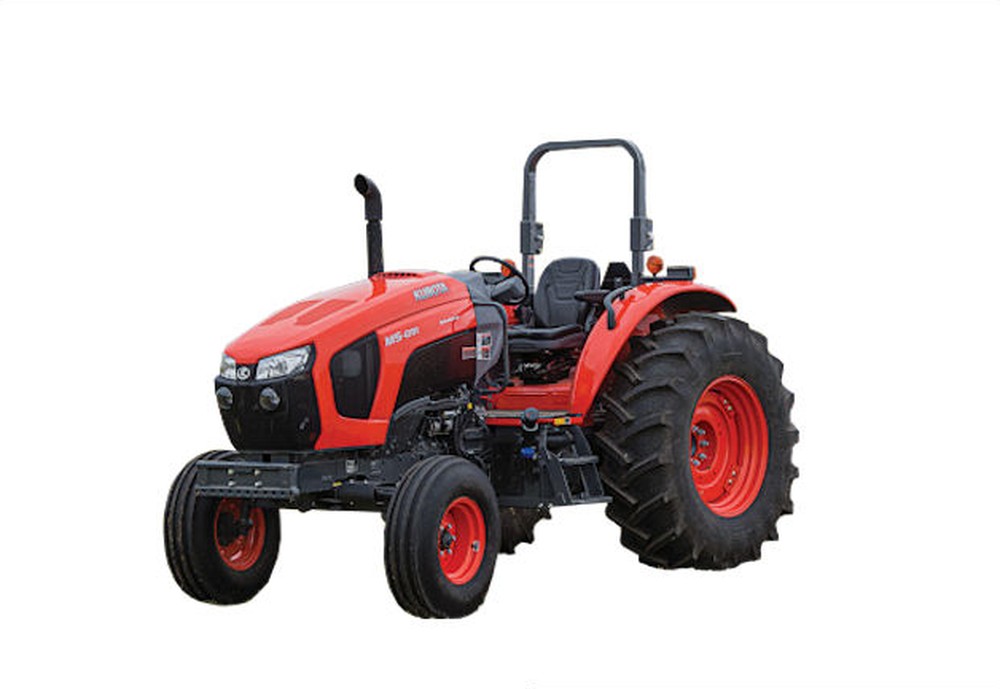
Kubota M5-091
~$78,563MSRP, base build
Utility

Kubota

Kubota M5-091

92.5 hp engine · 76 PTO−18% to the shaft
Loader
3,814 lbs
3-pt
4,630 lbs
Trans
Power Shuttle
Drive
4WD · cab

Ninety-two horsepower and a 4,630 lb three-point put this at the bottom of Kubota's real farm-tractor range rather than the top of its compact range. At $78,563 base it costs more than twice an MX5400, and the hydraulic power shuttle is the reason.

Spec sheet & owner notes
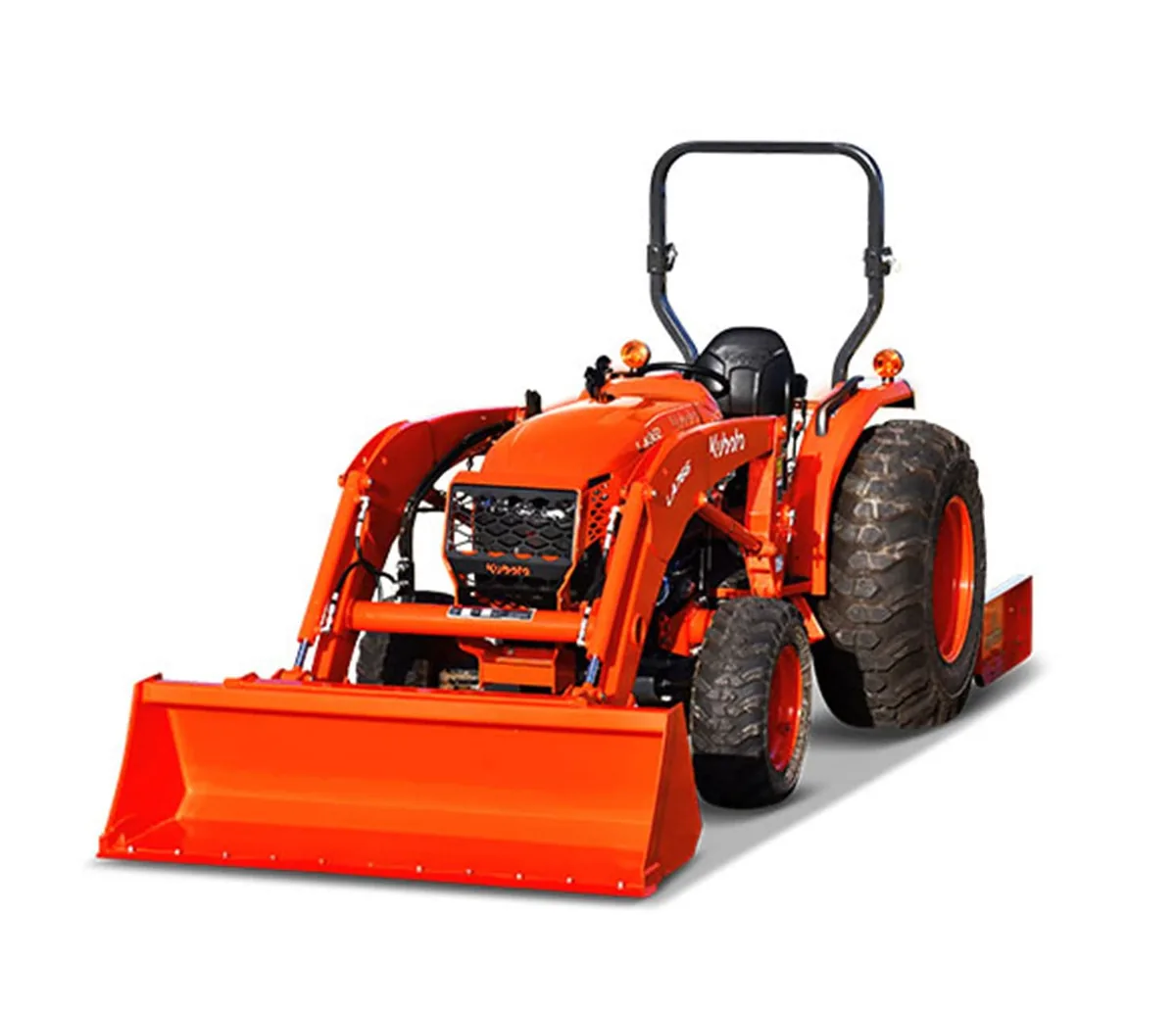
Kubota L4802
~$24,925MSRP, base build
Utility

Kubota

Kubota L4802

48.4 hp engine · 40.5 PTO−16% to the shaft
Loader
2,147 lbs
3-pt
2,870 lbs
Trans
Gear
Drive
4WD

At 48.4 gross hp it replaces the L4701, and it is the only Standard L02 that steps up to the bigger LA766 loader and BH92 backhoe. Kubota's published starting figure covers the two-wheel-drive L4802F, which is why it reads below the smaller L3902.

Spec sheet & owner notes