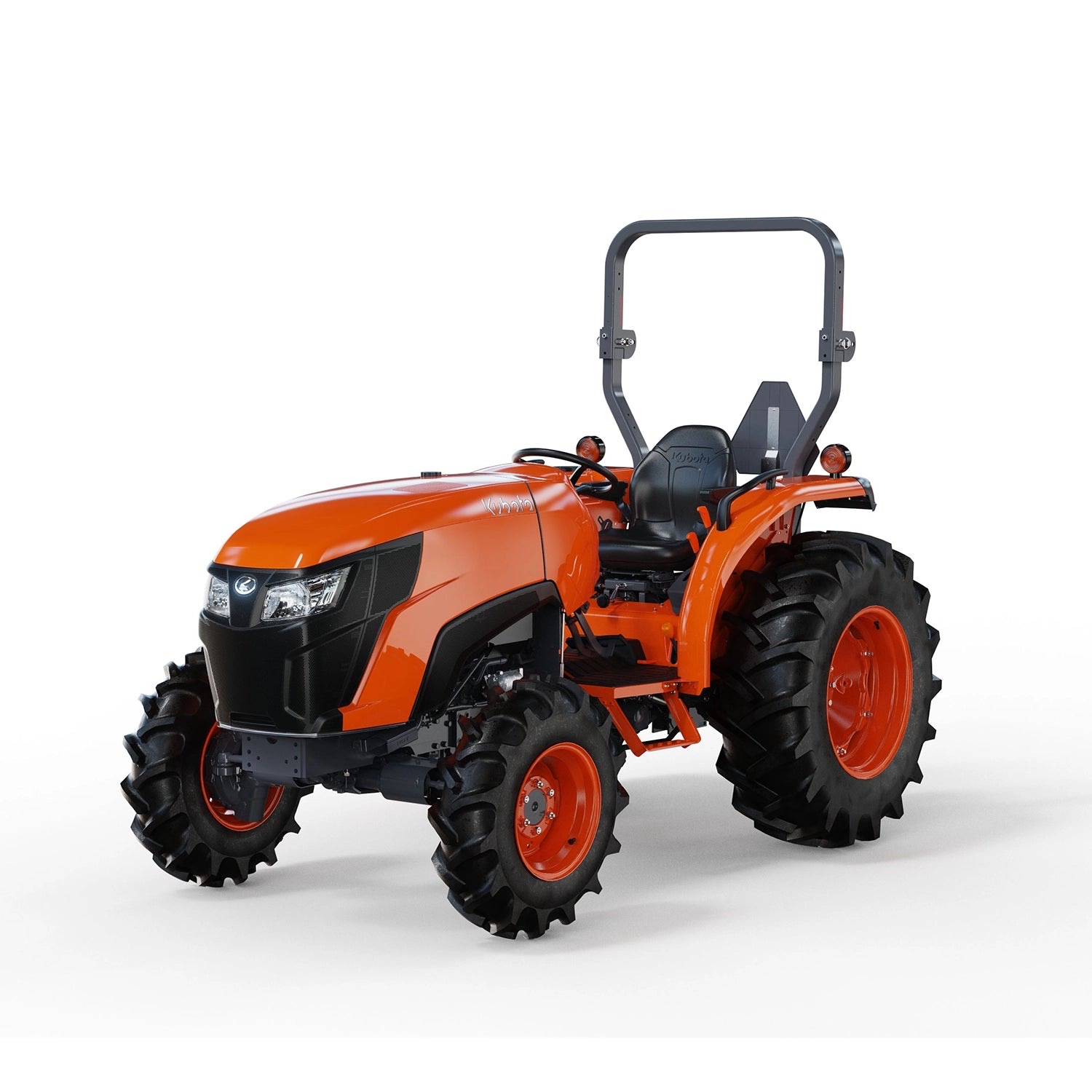
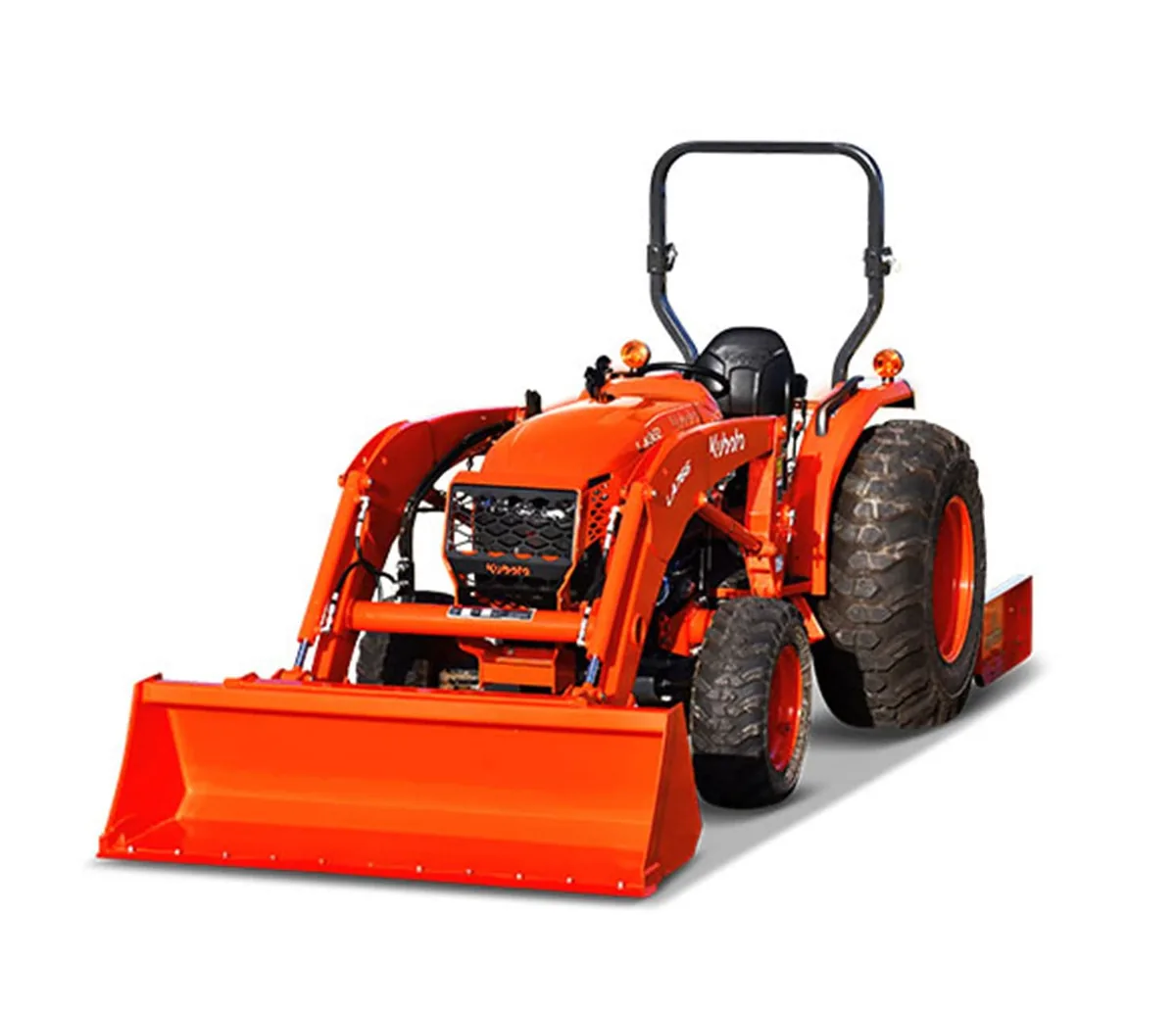
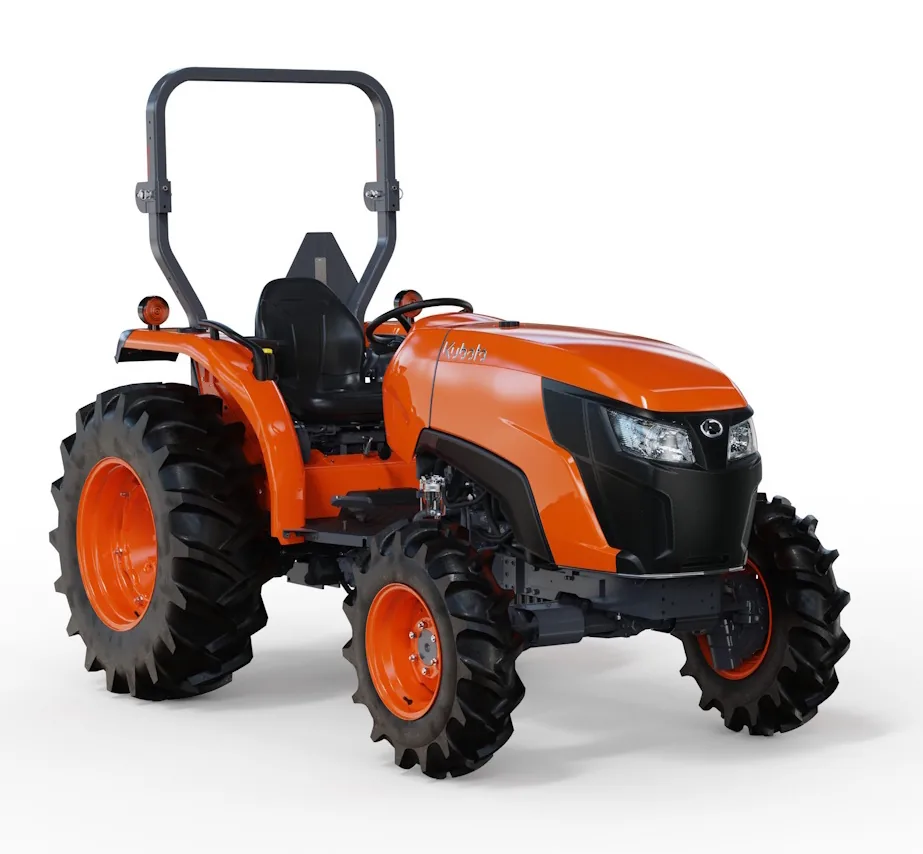
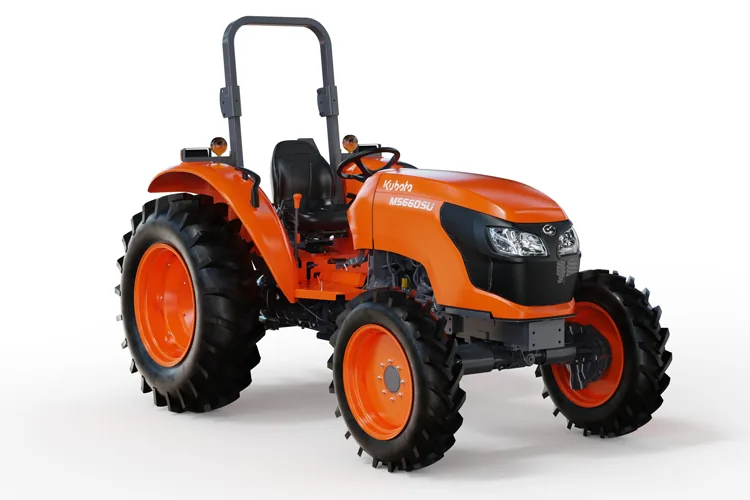
Owners describe the MX5400 as the point where a tractor stops being a big compact and becomes a small utility machine, and they are specific about what that buys. A former Kubota salesman of thirteen years frames it plainly: for around two thousand dollars over the largest L, you get a turbocharged engine, telescopic lower lift arms and a Category 2 hitch that can be bushed down to Category 1. Another owner points out the frame is what makes the roughly one-ton loader possible at all, and that it comes with more hydraulic flow to actually run the bigger implements a Category 2 hitch invites. Owners on 15 to 45 acres repeatedly say buying it is the decision they did not regret — one who was set on a much smaller L compared his way up through three models and ended at this one.
The question everyone actually argues about is the MX6000, and the argument is better than the usual more-is-better reflex. The gap is roughly $1,800 to $2,000 for about 10% more PTO horsepower. The reason that matters is not speed: it is that some implements specify a 50-horsepower PTO minimum — stump grinders and some haying equipment — and running one on a 46.5-horsepower tractor risks a warranty argument on either machine. An MX6000 owner adds the most useful datum in the file: in low range his tractor runs out of traction before power, but clearing snow in medium range he runs out of power regularly, and says it would be worse on the 5400. Against that, plenty of owners run six-foot rotary cutters, finish mowers, chippers and small-square haying equipment on the 5400 happily, and one specifically advises against going to an 84-inch cutter because his 72-inch already bogs in thick wet growth.
One safety point deserves attention because it comes from an owner's first day. Carrying roughly an 1,800-pound log on pallet forks, he almost rolled the tractor, and the lesson he draws is that once you put weight on the front, published rollover angles stop meaning anything. He now runs ballasted tires, two rear wheel weight kits and a bubble level on the dash. Owners elsewhere echo the same practice — spread the rear wheels, fill the tires, keep the loader low, watch the ground for holes. On price, the loudest advice is to shop: one owner collected quotes from six dealers for identical equipment and found a $10,000 spread.
MX5400 or MX6000?+−
The gap is roughly $1,800 to $2,000 for about 10% more PTO horsepower, and the deciding question is your implements rather than your acreage. Some equipment — stump grinders and certain haying tools — specifies a 50-horsepower PTO minimum, which the 5400 does not meet; owners warn that could become a warranty problem on either the implement or the tractor. An MX6000 owner also reports running out of power clearing snow in medium range and says the 5400 would be worse. If the tractor earns money, owners say go up.
How does it compare to the largest L-series?+−
Closer in size than in capability. Owners note the biggest L is only a couple of inches shorter in wheelbase and a couple of hundred pounds lighter, so it is essentially the same machine on the trailer — but the MX carries a turbo, a heavier frame, roughly a ton of loader capacity against about 25% less on the L, more hydraulic flow, telescopic lift arms and a Category 2 hitch. One owner's framing is that the MX is the smallest of the big tractors and the big L is the biggest of the small ones.
How much can it lift, and what does that take?+−
Owners describe close to a ton with the big loader, but with conditions attached: the weight has to be at the pin, carried low, and balanced by real ballast — a thousand-pound implement on the back or filled tires at minimum. Lifting a ton high is where owners say it becomes genuinely dangerous. The practical setup owners run is filled rear tires plus rear wheel weight kits, with some spreading the rear wheels out and one keeping a bubble level on the dash.
Does an MX5400 take a backhoe worth having?+−
Owners overwhelmingly say rent instead. The attachment runs near $10,000, and the recurring comparison is that you can rent a mini excavator many times over for that, with better manoeuvrability, more usable digging power and an operator's seat that swings with the boom. The counter-argument, from an owner who does dig regularly, is that the bigger backhoe on this frame reaches about nine feet instead of seven and has real power for ripping things out — so it comes down to whether digging is recurring work or a project.
Is the insurance worth buying?+−
Owners think so, and a dealer in the file explains why: Kubota's own cover is all-perils physical damage with a low deductible, the dealer acts as your adjuster, and it covers things homeowner policies exclude — such as a relative rolling it off a trailer on the highway. He separates it from the extended warranty, which covers the ECU for three years, and notes an ECU for this tractor can run $2,500. It does cost considerably more on an MX than on an L, and at least one owner went to a local insurer at about half the price with narrower coverage.
What comes up short on the delivered machine?+−
Owners note that neither the MX5400 nor the MX6000 ships with side mirrors, an armrest or a radio head unit, and suggest asking for them as part of the deal before you take delivery. Also plan the trailer: one owner discovered his half-ton truck was no longer up to the job, and with a backhoe fitted these machines approach 10,000 pounds — enough that owners warn against letting anyone load one on a light trailer.
Summarised from public owner discussion, not from testing. Nothing here was measured by this site, and a report that recurs is not the same as a defect rate.