Yanmar · Sub-Compact

Yanmar SA325

~$19,999

dealer list, not MSRP

Yanmar SA325
Sub-Compact
23.9 hp engine · 18.1 PTO−24% to the shaft

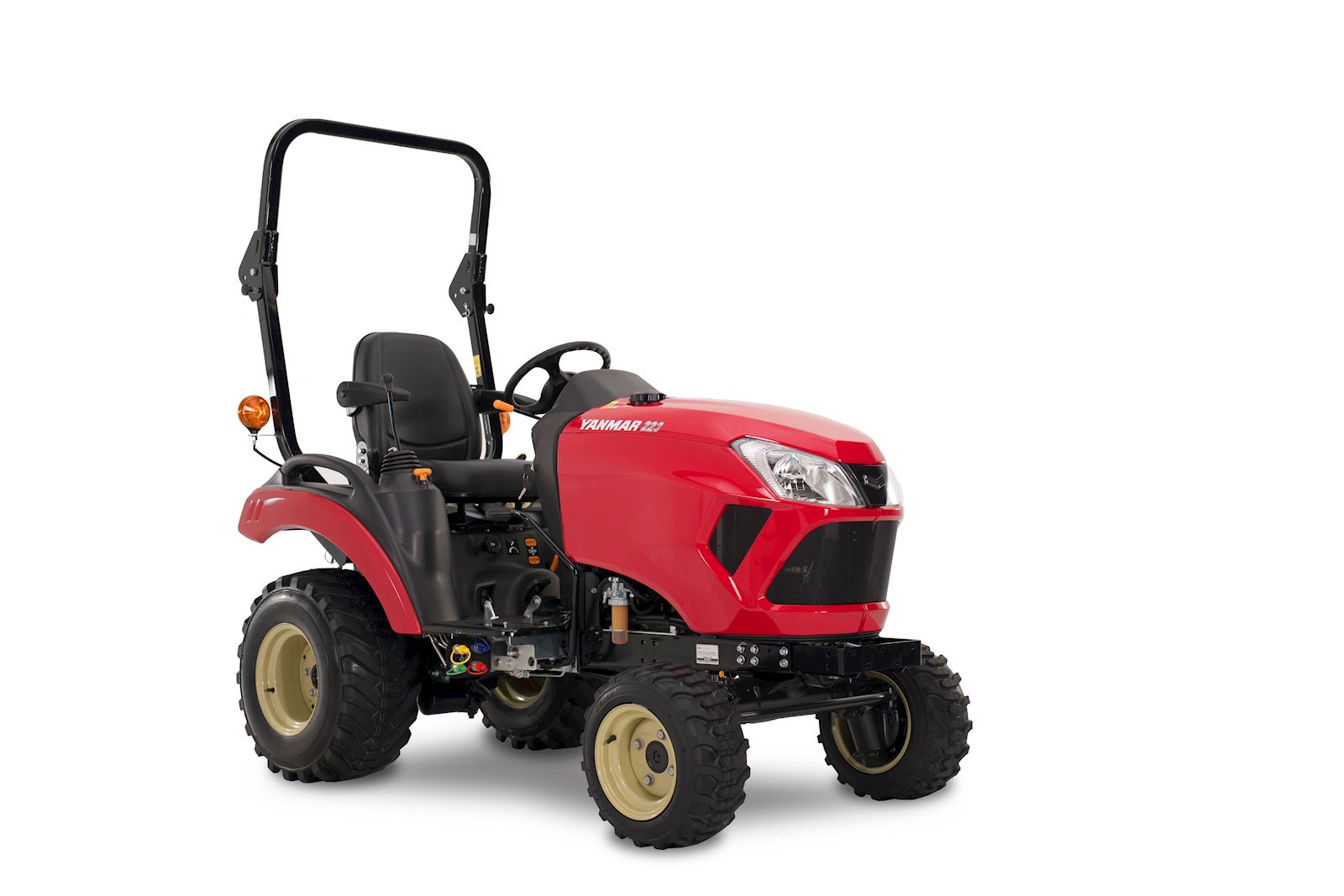
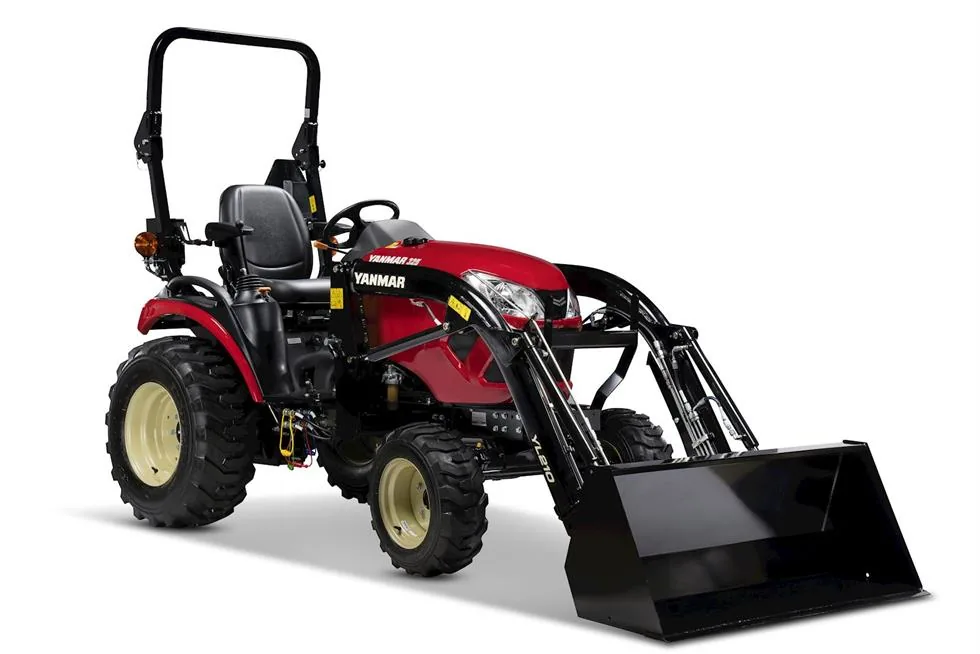
Sits between the SA223 and SA425 on price while running the same 23.9 hp 3TNV80F diesel as the dearer SA425, so what the badge buys over the SA223 is horsepower rather than a different machine. Full-frame chassis, dual-range hydrostatic, 1,200 lb loader.

Engine
23.9 hp
PTO
18.1 hp
Loader lift
1,200 lbs
3-pt lift
1,209 lbs

0.91 PTO hp per $1,000 of list price

As published by the maker

Specifications

Size class
Sub-Compact
Transmission
Hydrostatic
Engine
Yanmar
Engine hp
23.9 hp
PTO hp
18.1 hp
Drive
4WD
Loader lift
1,200 lbs
Three-point lift
1,209 lbs
Hydraulic flow
8.0 GPM
Fuel tank
6.1 gal
Weight
1,715 lbs
Warranty
10 yr / 3000 hr powertrain
4WD
Yes
Cab
Open station
Turbo
No
Cruise control
No

On the price: This maker publishes no price, so the figure comes from dealer listings. Regional dealers price the same machine differently.

Lift figures are the maker's and are quoted at whichever point the maker chose; the about page explains why two loaders with the same number do not lift the same pallet.

Comes with

4WDHydrostaticFront LoaderPower SteeringDiesel

From owner discussion and long-term write-ups

What owners say

What they like

  • Runs the identical 23.9 hp 3TNV80F engine and YL210 loader as the more expensive SA425, so the cheaper badge does not mean a smaller engine or a weaker front end
  • 1,200 lb loader lift at the pivot pin is strong for a sub-compact, roughly 45% more than the 825 lb the SA223 manages
  • 10-year / 3,000-hour limited powertrain warranty runs about double the powertrain terms Kubota and John Deere put on this class
  • Full-frame chassis rather than a load-bearing transmission case, which is uncommon at a sub-$20,000 sticker
  • Independent electro-hydraulic PTO drives both a mid shaft at 2,057 rpm and a rear shaft at 554 rpm, so a belly mower and a rear implement each get a proper drive
  • Stays under the 25 hp emissions threshold, so there is no diesel particulate filter to regenerate or eventually pay to replace

What they complain about

  • 6.1-gallon tank is the smallest in the Yanmar line and roughly half what the YM2 series carries, so loader days mean a refuelling stop
  • The 8.0 GPM total splits into just 4.3 GPM for implements and 3.7 GPM for steering, so running a backhoe and loader together leaves the implement circuit working hard
  • 3-point capacity is published only as 1,209 lb measured 24 inches behind the lift point, which cannot be set against makers who quote at the ball ends
  • Yanmar does not list a cab or enclosure for the SA325, where the sibling SA425DHX offers a soft- or hard-side option
  • Yanmar's dealer coverage is thinner than Kubota's or Deere's, which matters more for parts turnaround than for the purchase itself
  • Yanmar publishes no MSRP of its own, so the sticker is whatever the dealer price book says and there is no maker figure to hold it against

Gathered from owner reports

What owners report

The reason people look at this instead of a John Deere 1025R is the front end, and every direct comparison lands there. Owners and shoppers put the Yanmar's lift at around 1,200 lb against roughly 850 on the 1025R, and one owner who watched a neighbour bring a 1025R over before he bought says the visitor could barely pick up an old steel wood burner that his own machine handles without fuss. Another person familiar with both ranges frames it usefully: on loader capacity it is in 2032R territory, while on horsepower it sits nearer a 2025R. The recurring frustration is not the tractor but the silence around it - one shopper describes finding an abundance of material about the competing Deere and almost nothing about this, and another says getting a real price out of a dealer took effort. The figures that do surface run to about $24,000 with a loader, industrial tires and a 56-inch box blade fitted, and financing is where Deere pulls ahead: one buyer was offered 7.49% with a $2,200 cash incentive while the Deere he was weighing carried 0% over 84 months.

Much of what exists about this tractor comes from one owner who posts often, so read the detail below as one close account rather than a consensus. He reports liking it more the longer he runs it, and fuel consumption is his most specific praise. One who replaced a twenty-year-old Yanmar with this describes the jump as going from a wartime Jeep to a luxury car. Another, who keeps a 1954 Ford alongside it, says he enjoys being able to work on the Ford and equally enjoys never having to work on the Yanmar, adding that it neither drinks fuel nor leaks the way the old tractor does. The servicing side draws particular approval: the manuals are detailed enough for owners to do their own maintenance, and one owner points out that the factory paint-marks every bolt, nut, hose and fitting, which turns the 10-hour torque check the manual asks for into a matter of spotting a mark that has moved. He found exactly one loose hydraulic fitting that way, with dust collecting around it, and now scans the marks as part of his pre-start routine.

What to know before buying concerns the front end and the options list. The loader uses Yanmar's own pin-on mounting rather than the skid-steer quick-attach pattern, and for at least one shopper that alone ruled out both this and its bigger sibling, because attachment choice is tied to the proprietary mount. Ground clearance is the other consideration: the dearer SA425 offers about three inches more for roughly $900, which one buyer who drove both judged worth paying. Owners also recommend the optional belly pan, one having crushed his hydraulic return filter simply by driving over a log, and they warn the three-point quick hitch is fiddly - an owner running Category 1 box and grader blades reports never once coupling up without getting off the seat, abandoning it entirely for his rotary cutter, and needing a file before the bushings would line up with the pin holes.

What comes up favourably

  • The loader is the reason to buy it. Owners and shoppers consistently put it around 1,200 lb against roughly 850 on the comparable John Deere, and one reports a neighbour's 1025R barely managing an old steel wood burner that his own machine picks up without complaint.
  • It punches above its class on lift while sitting mid-pack on power - someone familiar with both lines places it alongside a John Deere 2032R for loader capacity while nearer a 2025R for horsepower, which is an unusual combination at the price.
  • Fuel consumption is the praise that recurs, though most of it is one owner writing in several different threads; he keeps a 1954 Ford alongside it and notes the Yanmar neither drinks fuel nor leaks the way the old tractor does.
  • It is built to be owner-serviced and the documentation backs that up - the one owner who writes about maintenance in detail reports the manuals being good enough to do the routine work himself, with parts available through a dealer or ordered direct from the manufacturer without difficulty.
  • One owner reports the factory paint-marking every bolt, nut, hose and fitting, which turns the 10-hour torque check the manual requires into a visual inspection. He found a single loose hydraulic fitting that way and now checks the marks before every start.
  • It grows on you rather than wearing thin - the owner who replaced a twenty-year-old Yanmar with one describes the step up in stark terms, likening it to going from a wartime Jeep to a luxury car.
  • Where Yanmar shares a dealership with another brand the service can be the better option locally - one shopper found his New Holland and Yanmar dealer far more responsive to questions than the nearby Kubota dealer.

What comes up as a complaint

  • The loader does not use the skid-steer quick-attach pattern. Yanmar fits its own pin-on system, and for at least one shopper that was enough to rule out both this model and its larger sibling, because attachment choice is tied to the proprietary mount.
  • Finding information, or even a price, is genuinely hard. One shopper describes too much written about the competing Deere and almost nothing about this tractor, and another says extracting an actual figure from a dealer took real effort.
  • Financing is where it loses its price advantage. One buyer was quoted 7.49% with a $2,200 cash incentive on a roughly $24,000 package, while the Deere he was comparing was advertising 0% over 84 months.
  • Ground clearance is modest enough that shoppers pay to escape it - the dearer SA425 offers about three inches more for around $900, and one buyer who drove both decided that was worth having.
  • The underside is exposed without the optional belly pan: one owner crushed his hydraulic return filter simply by driving over a log, bought the pan afterwards, and now tells people to specify it from the start.
  • The three-point quick hitch is awkward. An owner using Category 1 box and grader blades reports never managing to couple an implement without climbing off the tractor, having given up on it entirely for his rotary cutter, and having to file the bushings to get them to align.

Questions worth asking

Yanmar SA325 or John Deere 1025R?
The loader decides it for most people who compare them directly. The Yanmar lifts around 1,200 lb against roughly 850 on the 1025R, a gap owners describe in practical rather than percentage terms - one watched a neighbour's 1025R struggle with an old steel stove that his own machine handles. Owners add that if you already have a zero-turn for grass, the Yanmar is the better of the two. What pulls people back towards Deere is the financing and the sheer volume of information and attachments available for the 1025R.
What is the difference between the SA324 and the SA325?
Very little, and owners who were asked gave a consistent answer: the 325 adds the rear hydraulic hookup, plus a small accessory power socket in the left fender storage area. Mechanically they are otherwise the same tractor. So if you have no plans for rear hydraulics, the cheaper model is not a lesser machine - and if you do, the 325 saves you retrofitting them.
Should I spend the extra on an SA425 instead?
The practical difference shoppers cite is about three inches more ground clearance for roughly $900, which one buyer who drove both judged worth paying. Both use the same engine, so this is a chassis decision rather than a power one. If you work in woods, over roots or on rough and rocky ground, clearance is the thing to weigh - and it is worth noting one owner damaged an underside component on a log even so.
Which options are worth ordering?
The belly pan comes up first and most emphatically, from an owner who crushed his hydraulic return filter driving over a log and bought one afterwards. Rear remote couplings are standard on this model rather than the SA324, and dealers will fit front couplings as an option if you plan to run a grapple. Check attachment availability before committing, though, because the loader uses Yanmar's own pin-on mount rather than the skid-steer pattern.
Is it easy to maintain and get parts for?
The one owner who covers this in detail says yes on both. He describes the manuals as good enough to do the routine work yourself, parts as available through a dealer without trouble, and orderable directly from the manufacturer as well. One habit worth copying: the factory paint-marks the fasteners and fittings, so the 10-hour torque check the manual asks for becomes a quick look for a mark that has shifted - and it is worth repeating that glance as part of a pre-start check.

Summarised from public owner discussion, not from testing. Nothing here was measured by this site, and a report that recurs is not the same as a defect rate.
Cross-shopped against

Line the Yanmar SA325 up

Same brand or same size, nearest in price

Related tractors

More from Yanmar →
Yanmar SA425
~$21,399dealer list, not MSRP
Sub-Compact

Yanmar

Yanmar SA425

23.9 hp engine · 18.1 PTO−24% to the shaft
Loader
1,200 lbs
3-pt
1,209 lbs
Trans
Hydrostatic
Drive
4WD

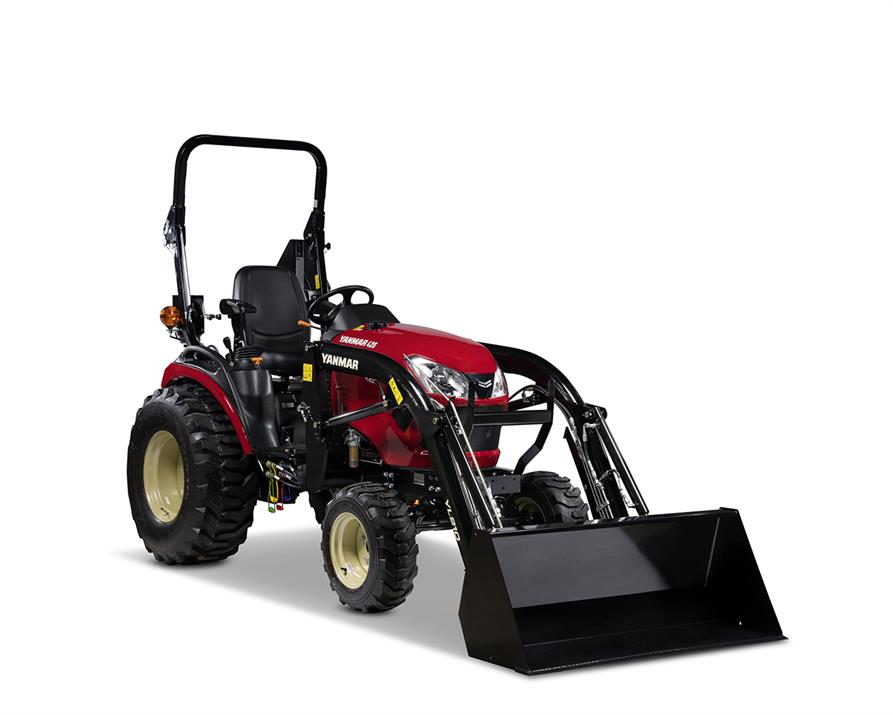
Nearly 24 hp carrying a 1,200 lb loader at the pivot pin, comfortably above what a BX2380 or 1025R manages, on a chassis Yanmar builds under its own badge rather than someone else's. The ten-year powertrain warranty is the closer.

Spec sheet & owner notes
Yanmar SA223
~$17,199dealer list, not MSRP
Sub-Compact

Yanmar

Yanmar SA223

21.5 hp engine · 15.6 PTO−27% to the shaft
Loader
825 lbs
3-pt
660 lbs
Trans
Hydrostatic
Drive
4WD

Cheapest tractor Yanmar sells in the US, and the least expensive way into its ten-year powertrain warranty. At 21.5 hp with an 825 lb loader it lines up against a 1023E and a BX1880, with a thinner dealer network behind it.

Spec sheet & owner notes
Yanmar YM225
~$22,199dealer list, not MSRP
CompactSeries photo

Yanmar

Yanmar YM225

24.4 hp engine · 18.5 PTO−24% to the shaft
Loader
1,500 lbs
3-pt
2,205 lbs
Trans
Shuttle
Drive
4WD

Yanmar's gear-drive YM2 platform starts here, swapping the hydrostatic pedals of the SA line for an 8x8 synchronized reverser and adding 300 lb of loader lift. At 24.4 hp it stays under the emissions threshold that forces a particulate filter.

Spec sheet & owner notes