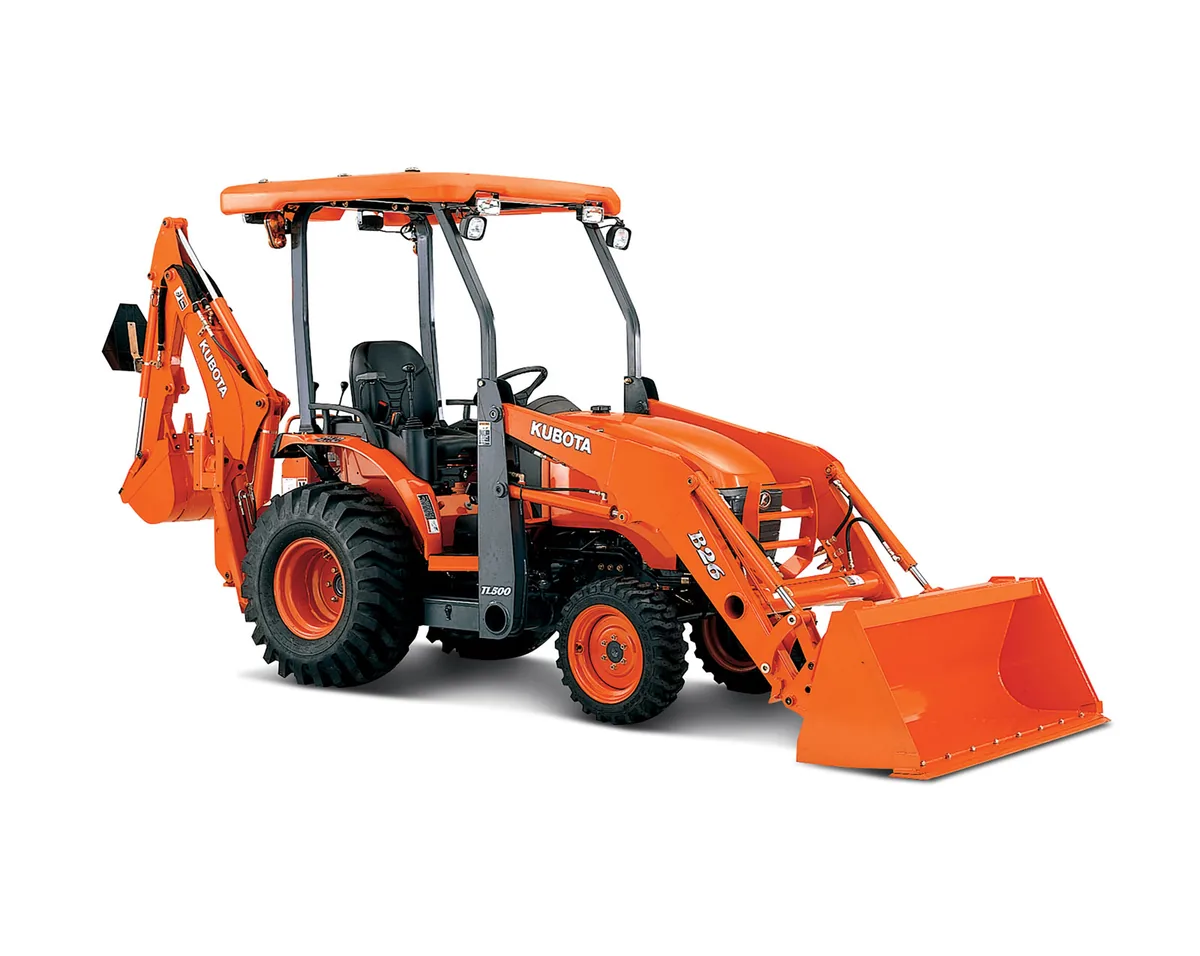
The decision owners actually wrestle with is not this against another tractor but this against two cheaper routes: a standard B-series with a backhoe bolted on, or a compact tractor plus a rented excavator when digging day arrives. On the first, the people who know these machines give a consistent and slightly deflating answer - buy the dedicated machine only if the better backhoe figures buy productivity you will genuinely use. What you are paying for, they point out, is mostly the front end and the hydraulics rather than the engine: roughly 1,300 lb at the loader pin against about 950 on a standard B, a lift height near 94 inches rather than 78, and a pump moving about 11 gpm instead of 8.3, with identical engine and PTO power on both. Several also defuse the fear that drives people here in the first place, that a bolt-on backhoe will wear out a regular B or L - they consider Kubota conservative enough about ratings that normal use is not a worry.
On the second route, owners are blunter still. One who likes his machine describes it as extremely versatile but says it will never be a trackhoe, because it remains a rubber-wheeled loader-backhoe. Owners doing paid excavation say a mini excavator will always dig faster and more precisely, and the advice that recurs is that a single large dig is cheaper rented than bought. A renter who tried to pull 8-inch stumps out of rocky ground finished much of the work with an axe, a reciprocating saw and a pry bar, then moved up to a 3.5-ton class excavator for the trenching that followed. Where the machine earns its keep instead is constant, varied work: a utility crew that ran these for years describes abusing them without breaking them, rental yards stock them because they survive, and owners describe the backhoe getting used for jobs that have nothing to do with moving dirt.
The ownership details are specific and worth knowing before you commit. There is no mid PTO, so no belly mower, and the loader is part of the machine rather than an attachment you take off - which means permanently watching where it is in tight quarters. The roll structure is tall enough that one owner broke the flashers off inside ten hours. Attachments are a real problem: owners report two different pin sizes and unusual pin spacing on the backhoe and conclude the market is too small for makers to bother, and a three-point kit had to be assembled piece by piece. Against that, running costs are reasonable for something built this heavily, with one owner reporting $481 at the dealer for every fluid and filter in the 800-hour service, and it stays under the 25-horsepower emissions line, which owners stepping down from bigger machines name as a specific attraction.
Is a B26 worth it over a regular B-series with a backhoe attachment?+−
Only if the better backhoe figures buy you productivity you will actually use, which is how the most knowledgeable owners put it. The differences they cite are the front end and hydraulics - roughly 1,300 lb at the pin against 950, about 94 inches of lift against 78, around 11 gpm against 8.3 - with the same engine and PTO power on both. Several also say the worry that a bolt-on hoe will wear out a standard B or L is overblown, because Kubota rates these conservatively. If you are not digging constantly, a B01 or L-series is better value and far easier to find.
Will the backhoe cope with rock and hard clay?+−
Not well, if that is the main job. A renter trying to get 8-inch stumps out of rocky ground finished much of the work with hand tools, and similar ground was later trenched by a rented 3.5-ton excavator in a matter of days. Owners who genuinely like their machines still say it will never be a trackhoe. For occasional digging in reasonable soil it is fine; for a long trench through rock, rent the excavator and use this for the spreading and backfilling.
Mine pulls itself toward the hole instead of digging. What am I doing wrong?+−
Probably technique rather than a fault - that exact question was asked and answered by owners. The advice is to heel the bucket over further and use longer, sweeping passes rather than short scrapes, with the stabilizers down and the machine braked. Very hard ground makes the mistake much more obvious than soft ground does, so a first attempt in baked clay or rock is the worst possible place to learn.
Does the backhoe come off, and does it have a PTO?+−
This gets answered wrongly a lot, including confidently. Owners who actually have one say the backhoe does come off and there is a rear PTO, so ordinary rear implements work normally. What it lacks is a mid PTO, so there is no belly mower option, and the loader is part of the machine rather than something you unhook. If you want to mow with it, that is the limitation to weigh.
How do I find a good used one?+−
Slowly, and probably at auction. Buyers report months of hunting while local dealers rarely see one, because contractors and rental fleets run them out rather than trading them in. One buyer 200 miles from a sale paid $175 for an appraiser recommended by the auction house to inspect and video the machine, and got a 610-hour example out the door for about $24,000. Check the badge carefully too - a machine advertised as a B26 is often really a B2601 with a bolt-on backhoe, which is a different and cheaper tractor.
Which attachments should I insist on?+−
A hydraulic thumb comes up more than anything else, described as a game-changer and treated as non-negotiable by several owners. The skid-steer quick-attach front end is the other, because bucket-to-forks swapping is constant on log and firewood work, and pallet forks cover much of what people buy a grapple and third function for. Order what you want at purchase: attachments for this machine are hard to find afterwards, and one owner notes you can roll their cost into the financing.
Summarised from public owner discussion, not from testing. Nothing here was measured by this site, and a report that recurs is not the same as a defect rate.