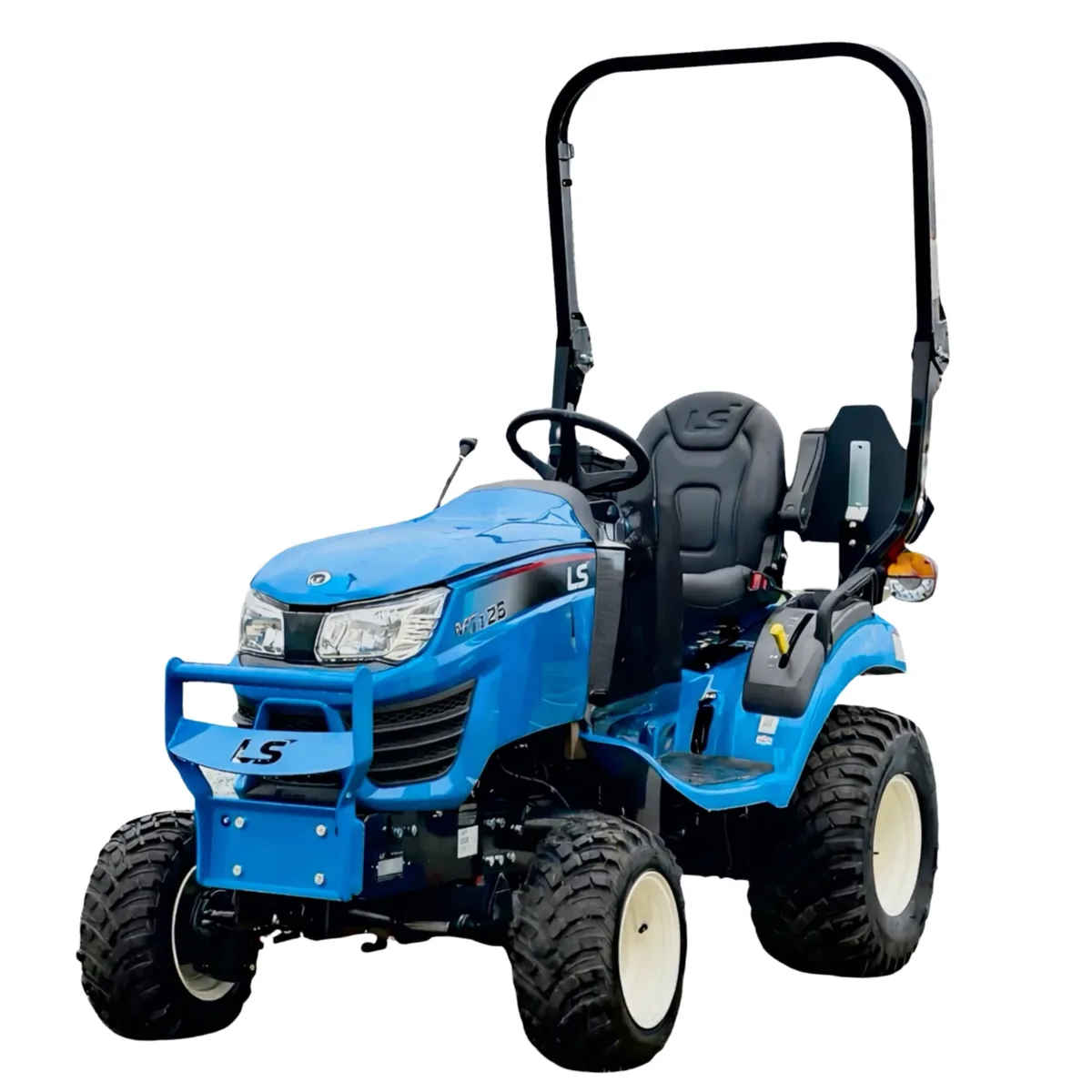
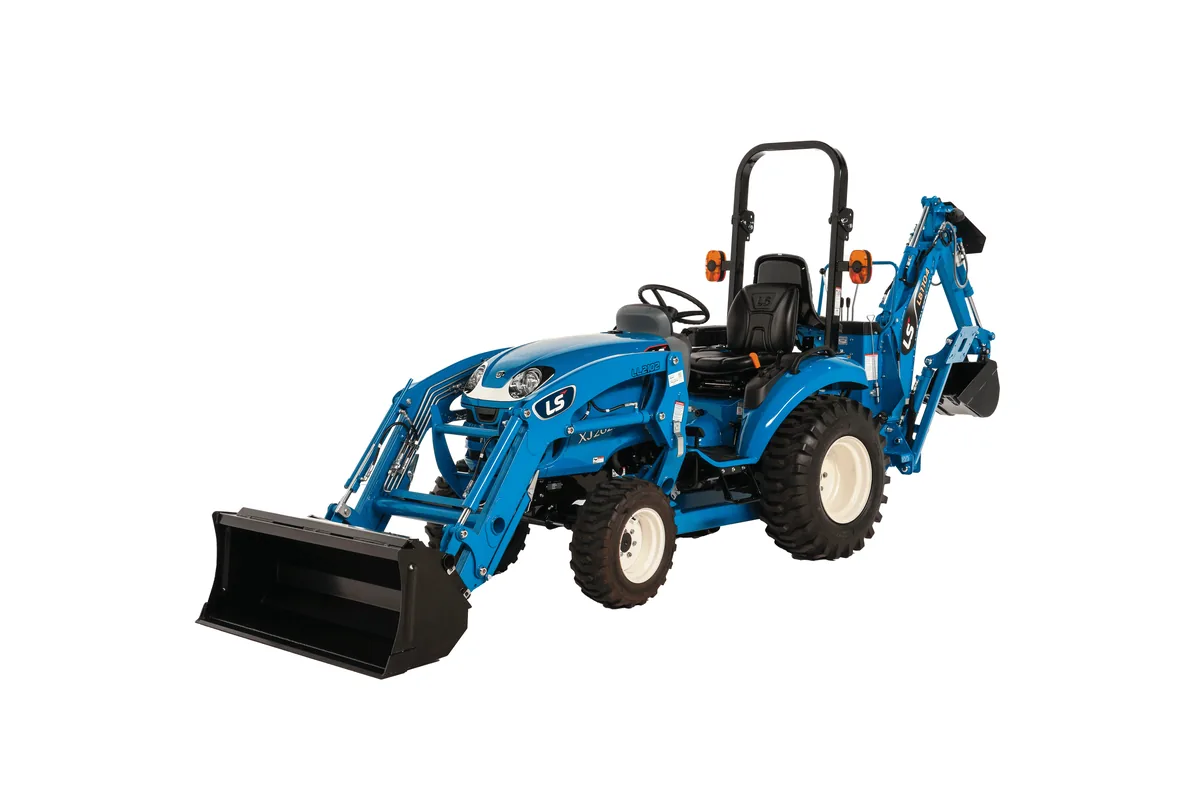
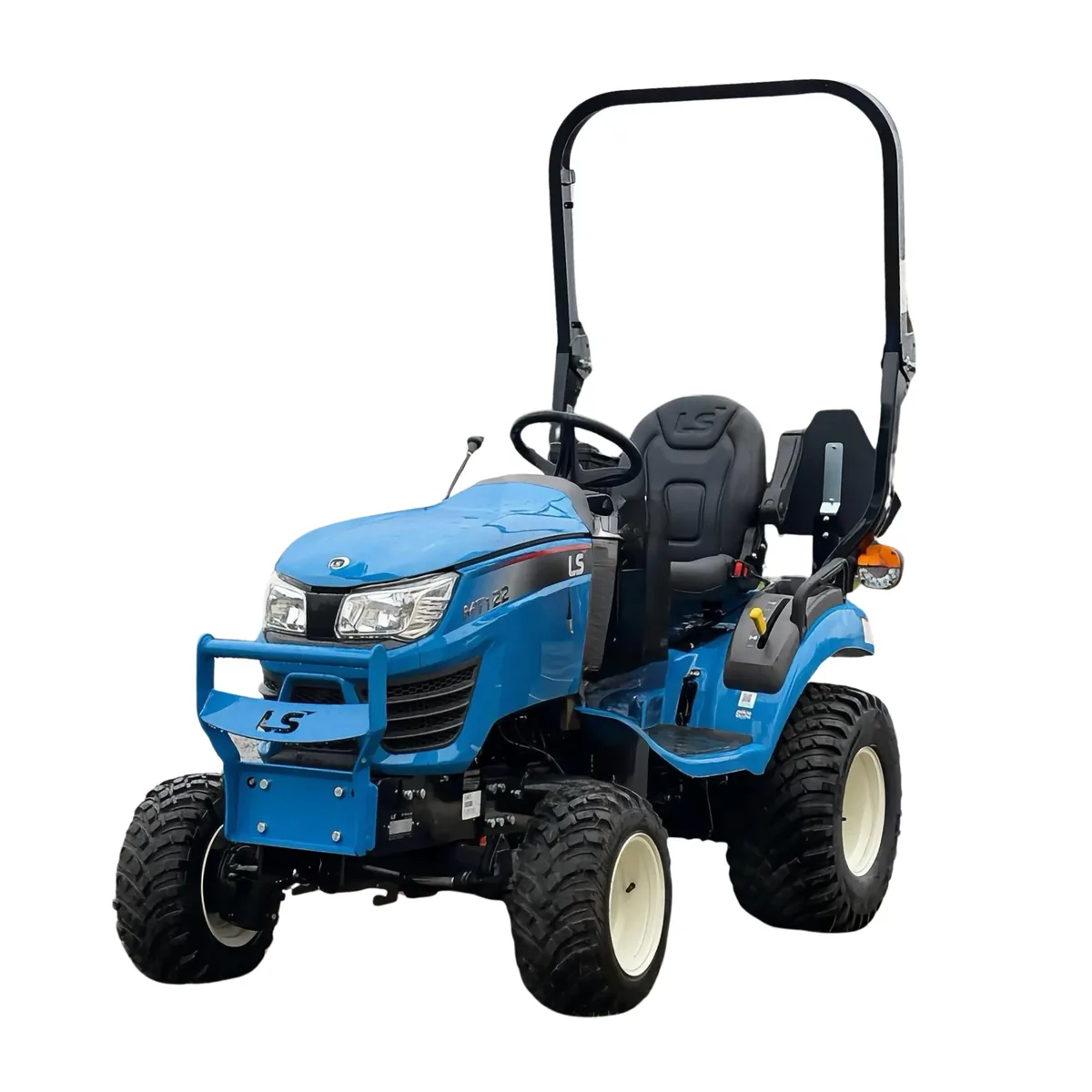
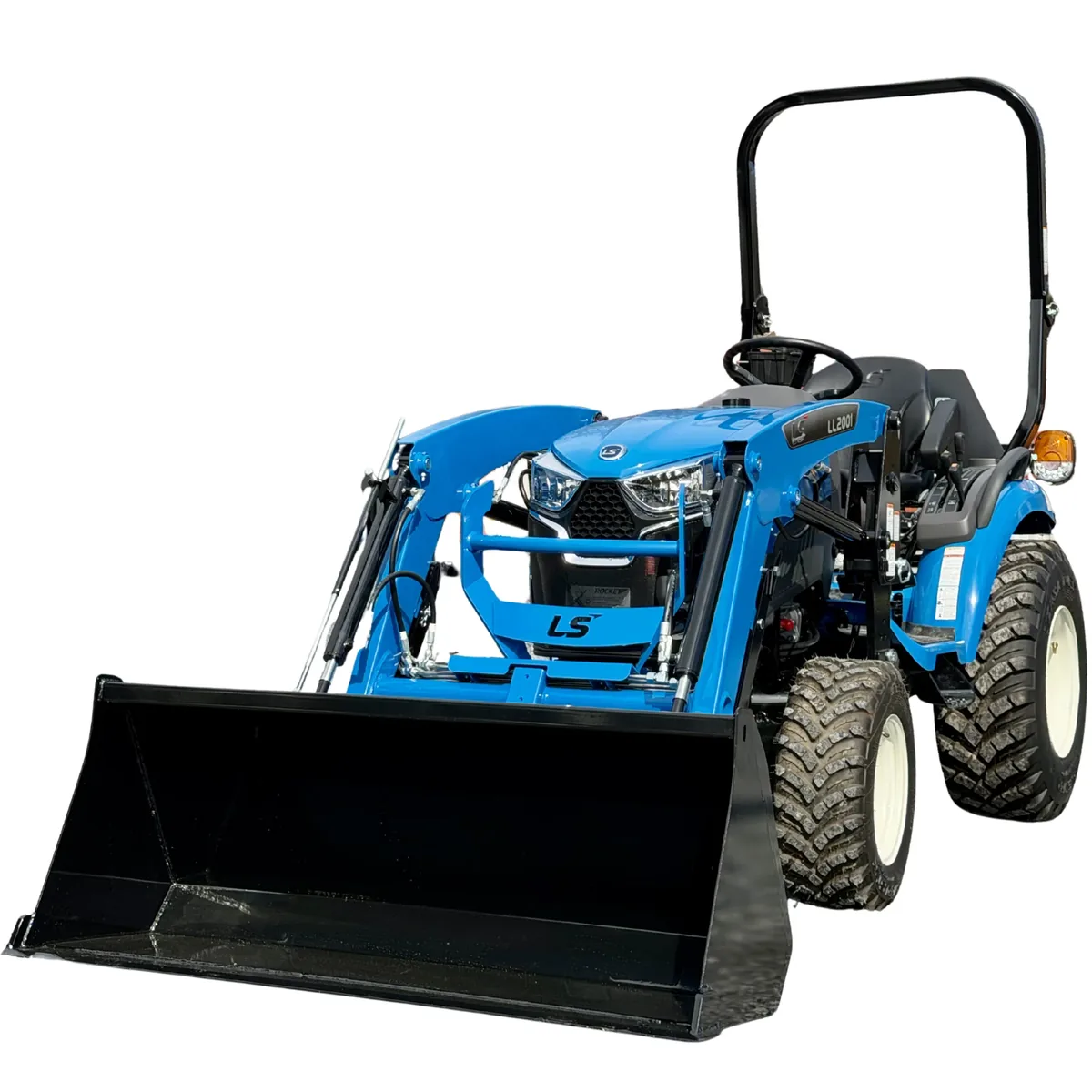
The MT125 is bought on price and financing, and owners are refreshingly open about it. The same machine is sold as the New Holland Workmaster 25S, and buyers report the LS badge saving five to seven thousand dollars against a comparably equipped 1025R or BX - one paid about $24,000 all in for a loader, mid-mount mower, grapple and third function at zero percent over ten years. That long interest-free term is what turns up in almost every purchase story, including from people who could pay cash and chose not to. What they get for the money is described as bare-bones in a way owners mostly like, with a Yanmar engine from the same family as the competition's.
Two faults recur often enough to plan around. The first is the front tires breaking their beads under a loaded bucket: the standard four-ply industrial fronts are rated well below what a full bucket asks of them, more than one owner has rolled a bead and lost air, and the advice that circulates is to fit tubes. The second is the loader joystick linkage, which owners report snapping - one at 70 hours, another twice inside 270 - to the point that one keeps spare parts on the shelf and calls the loader poorly designed. Tie rods sit exposed and cost about a hundred dollars apiece, with thin boots that tear easily, so owners doing rough work check them on walk-arounds.
The dealer network, not the tractor, is the real gamble. Owners describe dealers losing their LS franchise, closing outright, or simply being unresponsive, and one documents a warranty claim running four weeks of back and forth with parts hard to locate. Against that, several owners report entirely ordinary experiences - filters ordered without fuss, a leaking hydraulic pump collected and returned by the dealer, six years of no parts trouble. The workaround worth knowing is that New Holland dealers stock the same components under the same part number with an LS prefix or suffix. Owners run 4-foot brush hogs, 48-inch box blades and post hole diggers on it without complaint, and the ones with 300 to 600 hours describe only minor repairs they made themselves.
Is the money saved against a 1025R or BX worth the trade?+−
Owners who took the trade mostly say yes, with eyes open. The saving is real - five to seven thousand dollars on a comparable build - and the engine is from the same Yanmar family the green competition uses. What you give up is dealer density and, in some regions, patience: owners describe hunting parts and waiting on warranty. The ones who are happiest either have a good dealer or are comfortable fixing things themselves and ordering parts online.
What breaks on an MT125?+−
Two things stand out. Front tires roll off the bead when the bucket is loaded, because the standard four-ply industrial fronts are marginal for loader work; tubes are the fix owners recommend. And the loader joystick linkage fails - one owner had it go at 70 hours, another had it twice in 270 - so keeping the parts on hand is a common habit. Exposed tie rods with thin boots are the third item to watch if you work in brush.
Can I get parts if my dealer is far away or gone?+−
Usually, through New Holland. The MT125 is sold as the Workmaster 25S, and owners report that New Holland dealers stock the same parts under the same number with LS added at the front or the end. Several owners have also simply bought common items online rather than through either network. The complaint that comes with it is price - owners describe paying well over what the part is worth for small hydraulic pieces at both dealers.
Is the MT125's mid-mount mower worth ordering?+−
Owners say no with unusual agreement. The cut is adequate; the problem is that fitting and removing the deck is awkward, needs a smooth surface, and one owner broke the lift linkage doing it. Several moved to a three-point finish mower or a flail instead and prefer it, especially where the grass is allowed to grow long, since the belly deck's side discharge leaves a windrow that kills the grass underneath.
Is it big enough for a few acres?+−
Owners on three to seven acres consistently say yes. Reports include clearing land and trails, pulling 4-inch caliper trees out of the ground, moving dozens of loads of stone and dirt, running a 4-foot brush hog and maintaining a long gravel drive. Where owners want more is lift height and hydraulic power - one traded up within the LS range for exactly that - and anyone planning heavy hydraulic attachments should look one size up.
Summarised from public owner discussion, not from testing. Nothing here was measured by this site, and a report that recurs is not the same as a defect rate.