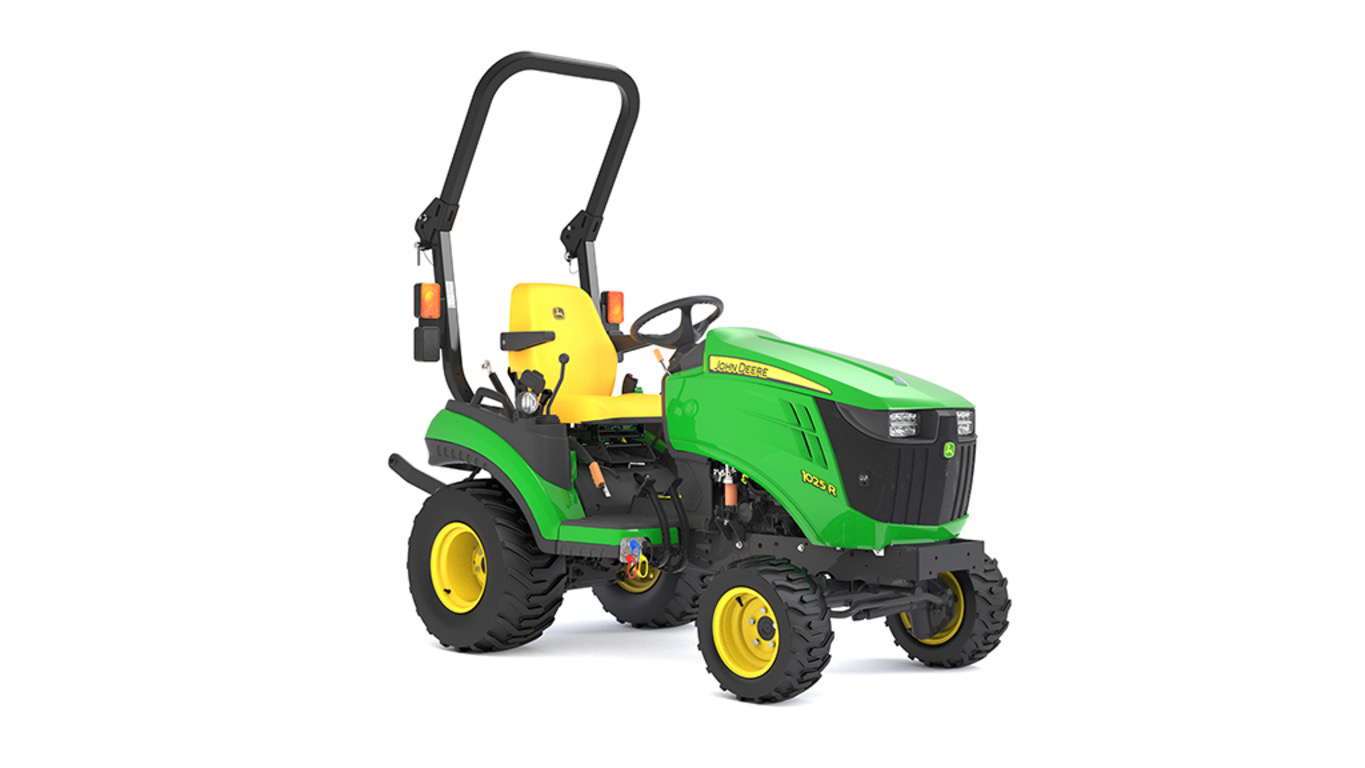
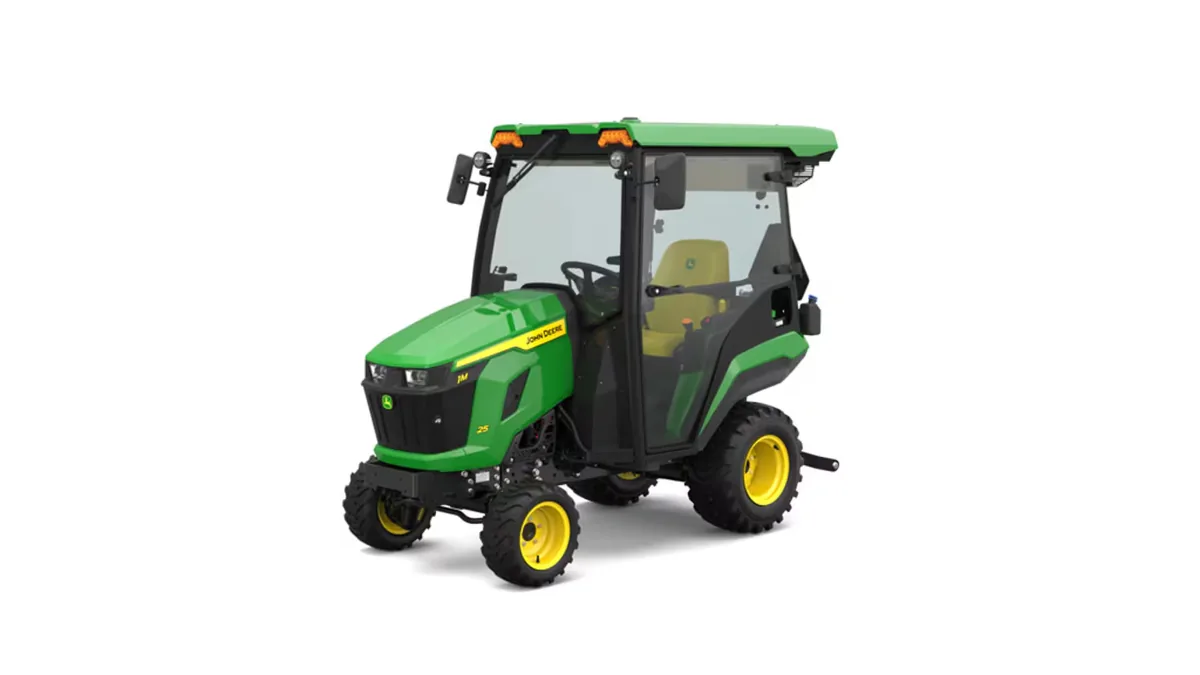
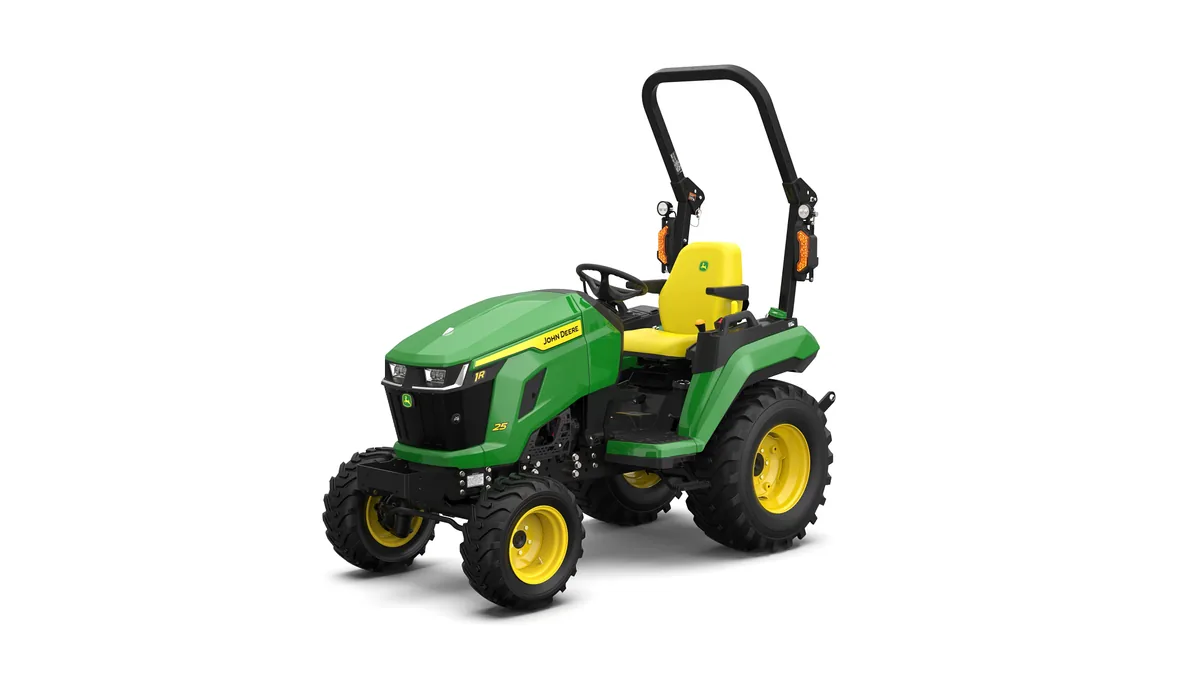
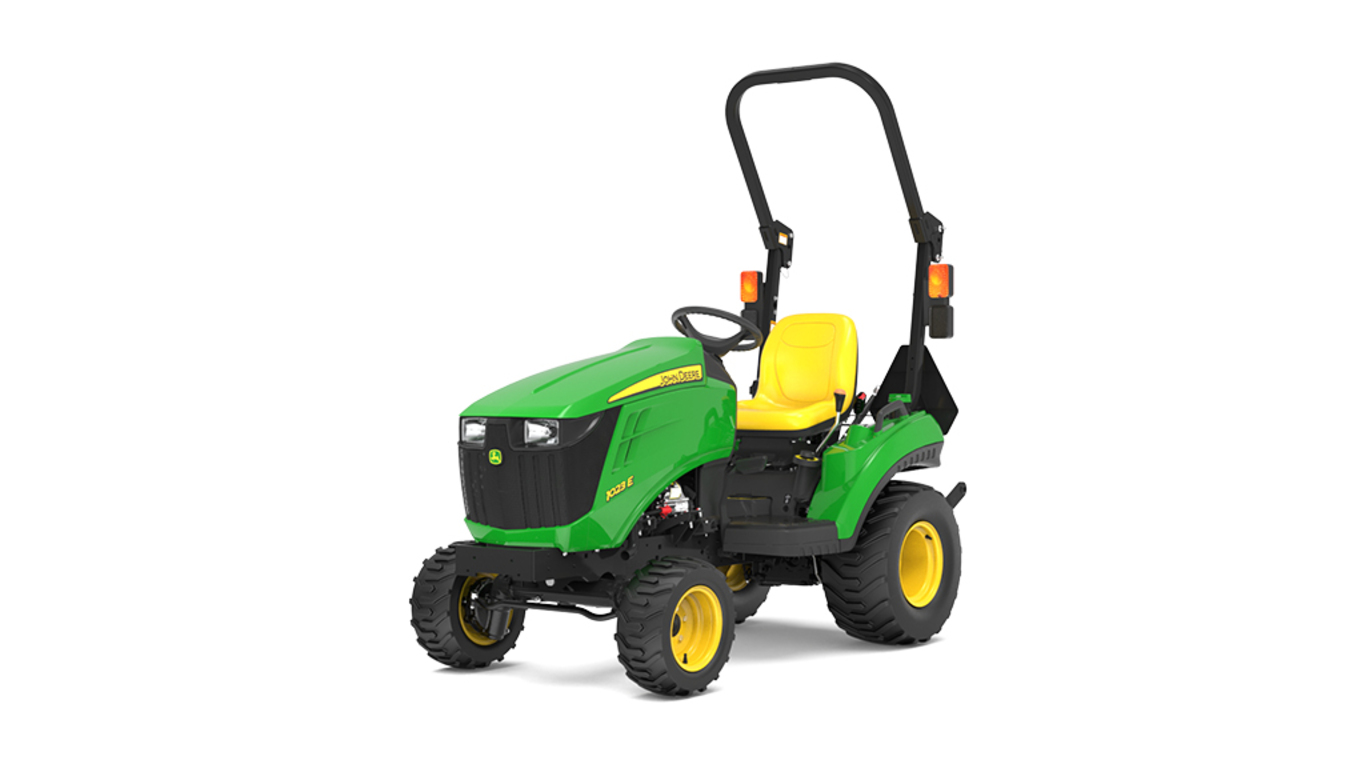
The phrase owners keep reaching for is hydraulic wheelbarrow, and it is meant as a compliment. The work they describe is spreading mulch, moving gravel and dirt, carrying firewood and brush on forks, tilling a garden, running a land plane down a gravel drive, and blowing snow — with several owners doing all of it on properties of ten to fourteen acres where only a few acres are actually mown. One owner at 424 hours lists his entire repair history as a mower-deck hydraulic line he tore out on a rear wheel, a PTO shaft U-joint he let go dry, and one backhoe hose. That, more than any spec, is what owners are recommending when they recommend this tractor.
The limits they describe are all consequences of weight. Owners call it tippy running sideways across a slope — several say up and down is fine and it is the turns at the ends that get uncomfortable — and owners who maintain larger, rougher properties are blunt that it is short on lift and traction for the job. An owner makes the grapple arithmetic explicit: the published limit has to carry the grapple itself, leaving perhaps 500 pounds of actual log, which is roughly one four-foot length of 18-inch oak. A four-foot rotary cutter will cut a field of tall native grass but owners report stalling on anthills and on anything much over an inch thick. Rear ballast is treated as mandatory rather than optional, and owners who used an implement as ballast warn it is one more thing to back into while you are watching the loader. Top links are the part owners report breaking, usually from the side loads of running a post-hole auger, which is why they describe auguring as a two-person job.
Buying advice splits in an interesting way. The strongest recurring opinion is that a backhoe on this size of machine is a mistake for most people — owners describe finishing the honey-do list and then watching a $10,000 attachment sit in the yard, and advise renting a track hoe instead — but owners who have one and a real ongoing reason for it are equally emphatic that it has paid for itself. Size regret runs both directions too: owners who grew into serious loader work wish they had bought a 2- or 3-series, while others in the same conversations warn about neighbours who bought a 30-series-sized machine and found it too big and heavy for the chores they actually had. Financing is part of the value case for almost everyone, with quotes around $22,000 for tractor, 60-inch deck, bucket and 3-point at 0% interest.
Is the backhoe worth having on a 1025R?+−
This is the most argued question about the machine and owners land on both sides. The majority view is that most buyers finish the handful of jobs that needed a backhoe and then watch a $8,000-to-$10,000 attachment sit unused, and that renting a small track hoe is cheaper and faster — repositioning the tractor for every bucket-width of trench is genuinely tedious. The minority who keep one have ongoing reasons: stumps, french drains, planting large trees, anything you would otherwise do with a shovel. If you cannot name recurring digging work, the money goes further in implements.
How many acres can a 1025R actually keep up with?+−
More than the class suggests, if you are honest about what is mown. Owners run them on 9 to 14 acres where three or four acres are cut with a 60-inch deck and the rest is knocked down occasionally with a rotary cutter. Owners also warn the other way: one says under about three acres of already-groomed ground it will run out of jobs, and owners maintaining large wooded or orchard parcels with long gravel drives generally say they should have bought a 3-series for the lift and weight.
Can it move logs and pallets?+−
Pallets and forks work — one owner loaded an entire house move with his — but logs are where owners do the arithmetic. The rated grapple lift has to carry the grapple itself, so figure roughly 500 pounds of actual wood, and a four-foot length of 18-inch oak is already about that heavy. Owners moving real timber describe the light front end and limited traction as the binding constraint, not the hydraulics.
Does the 1025R have a DPF to regen?+−
No. It sits under the 25-horsepower threshold, so there is no particulate filter and no regen cycles, and owners specifically name that simplicity as a reason to stay in the 1- and 2-series rather than step up. Owners describe the engine as close to non-electronic, which is part of why several say they intend to keep the machine indefinitely.
Should I mow with the belly deck or keep a separate mower?+−
A lot of owners end up doing both, and describe it as the best of both worlds: the zero-turn for the passes around obstacles, the tractor for the open ground. Owners who have run an X700-series garden tractor alongside consistently say the garden tractor cuts better, and one long-time owner calls buying the belly mower money he did not need to spend. On flat, open lawn with few obstacles, owners report the 60-inch deck does fine.
What actually goes wrong on a 1025R?+−
The recurring items are small and mostly self-inflicted: mower-deck hydraulic lines catching a rear wheel and tearing out their mount (more zip ties is the fix), the deck PTO shaft's U-joint seizing if it never sees grease, and the occasional hydraulic hose. A dealer technician also reports resealing transmissions and replacing PTO seals on these under warranty, and one owner traced error codes and a dead mid-PTO to loose linkage under the seat not reaching its sensor.
Summarised from public owner discussion, not from testing. Nothing here was measured by this site, and a report that recurs is not the same as a defect rate.