John Deere · Compact

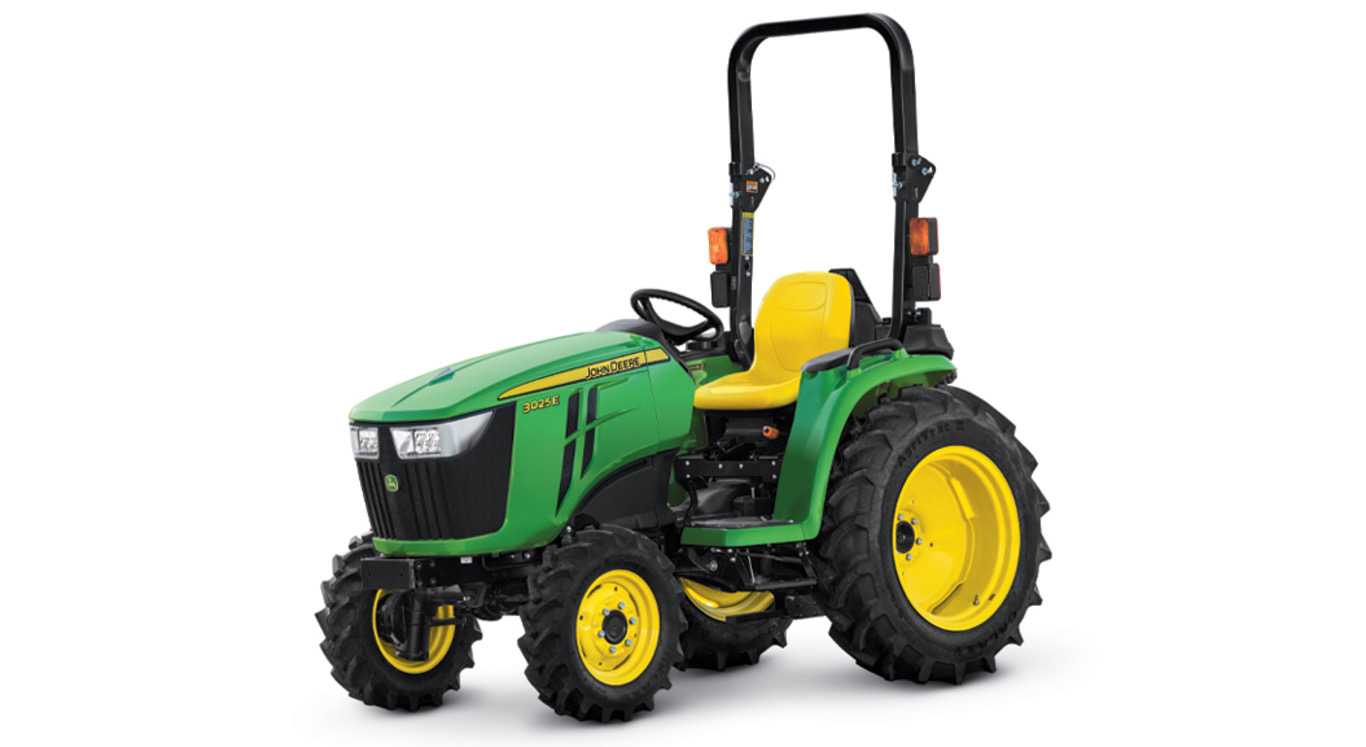
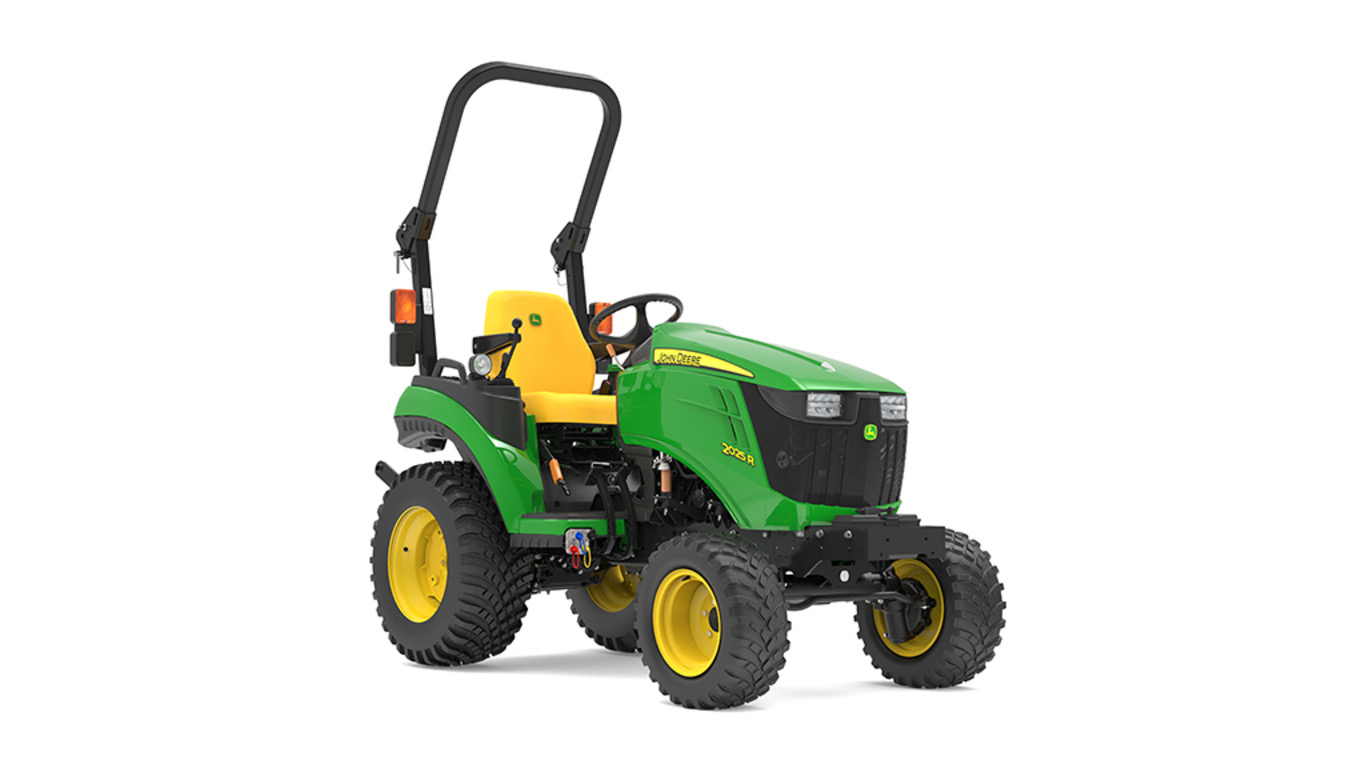
John Deere 2025R

~$21,768

MSRP, base build

No longer in production

No longer built. The maker sells the John Deere 1R 25 in its place. See the John Deere 1R 25 The specs and owner reports below still describe this machine, and used ones trade steadily — but a dealer cannot order you a new one.

John Deere 2025R
Compact
24.2 hp engine · 18 PTO−26% to the shaft

A 1-Series operator station bolted to a heavier frame, and the 1,150 lb three-point against the 1025R's 681 lb is the whole argument for the step up. Deere rolled it into the renamed 1R 25 for 2026; the machine did not change, the badge did.

Engine
24.2 hp
PTO
18 hp
Loader lift
1,023 lbs
3-pt lift
1,150 lbs

0.83 PTO hp per $1,000 of list price

As published by the maker

Specifications

Size class
Compact
Transmission
Hydrostatic
Engine
Yanmar
Engine hp
24.2 hp
PTO hp
18 hp
Drive
4WD
Loader lift
1,023 lbs
Three-point lift
1,150 lbs
Hydraulic flow
6.4 GPM
Fuel tank
5.4 gal
Weight
1,755 lbs
Warranty
6 yr / 2000 hr powertrain
4WD
Yes
Cab
Open station
Turbo
No
Cruise control
Yes

On the price: The maker's own published starting figure for the base build. A dealer adds a loader, a deck and freight on top.

Lift figures are the maker's and are quoted at whichever point the maker chose; the about page explains why two loaders with the same number do not lift the same pallet.

Comes with

4WDHydrostaticFront LoaderPower SteeringCruise ControlDiesel

From owner discussion and long-term write-ups

What owners say

What they like

  • Much stronger 1,150 lb 3-point lift than the 1025R, so it handles heavier rear implements like box blades and rotary cutters far better
  • The 220R loader lifts over 1,000 lbs, a meaningful upgrade over the 1025R for material handling
  • Keeps the beloved AutoConnect drive-over mower deck, so you still mount the deck without leaving the seat
  • The longer wheelbase and extra weight give it a more planted, stable feel than the 1025R for loader and slope work
  • Cruise control standard on the HST makes long mowing sessions much easier on the operator
  • It's a genuine step up in capability while still fitting in a standard garage and trailer easily

What they complain about

  • It costs noticeably more than a 1025R for only a modest bump in engine HP, so many owners debate whether it's worth the jump
  • Still only 24.2 engine HP and 18 PTO HP, so the power is unchanged from the 1025R - you're paying mostly for lift and size
  • The tiny 5.4-gallon fuel tank carries over, meaning frequent refueling on big jobs
  • Deere's proprietary loader and deck lock you out of cheaper third-party attachments
  • Fully equipped it pushes past $22K, encroaching on 3025E territory which has more real power
  • Ground clearance is still fairly low for rough terrain compared to a 3-series
  • The premium Deere pricing means a comparably capable Kubota LX or Kioti CK often costs less

Gathered from owner reports

What owners report

Almost every owner conversation about the 2025R is really an argument about whether it is worth roughly $3,000 more than a 1025R, and the striking thing is that owners and dealer staff do not even agree on the numbers. Some describe it as clearly the better machine — more weight, bigger frame, far more 3-point capacity. Others, including dealer-side voices, say the two share the same front loader, that the 3-point gains only around 150 pounds, and that most of the extra 300-odd pounds of weight is simply bigger wheels and tires. A third group splits the difference: the percentage gains are real, they just land on small numbers. What the file does agree on is that the 2025R's genuine advantage is ground clearance, which owners with belly mowers and rough ground value, and that anyone who wants a real step up in capability should be looking at a 2032R or 2038R instead.

Stability is the surprise. A dealer explains that the 2025R gets taller tires without getting wider, and that customers moving up from a 1023E or 1025R regularly complain it feels tippier — wheel spacers and loaded tires come up as the standard fix. Owners mowing wet slopes report real trouble; one had a hired operator refuse to come back after a wet summer of getting stuck. On the work side, the reports are specific and useful: a 54-inch front blower runs out of auger before it runs out of engine in three or four inches of light snow, but an 18-inch heavy drift lugs it down the torque curve and has to be taken in bites. A home-built six-foot drag scraper spins the wheels on any grade — four feet is what owners recommend. And 62 inches of belly deck on five acres is described as an all-day affair, which is why several owners keep a zero-turn alongside.

Reliability reports pull in opposite directions and both deserve weight. Dealer staff who set these up and service them say they simply do not see them come back with mechanical faults and that they are easy to work on. Owners report a string of small electrical and trim irritations instead: a three-year-old machine with 80 hours that would not recognise neutral, a reverse-implement-option mechanism that catches in branches and breaks repeatedly until it gets zip-tied out of the way, and warranty claims for a hood and decals dragging on for a month. Buying used carries one specific trap worth knowing: the AutoConnect deck uses attaching arms unique to the 2025R, and a deck sourced from another tractor needs a manual lift kit that runs over $1,400.

What comes up favourably

  • Ground clearance is the upgrade owners actually name. It is what buyers who chose it over a 1025R cite, and belly-mower owners say the extra height makes connecting, disconnecting and driving around with the deck meaningfully less awkward.
  • It stays under the emissions threshold, so there is no particulate filter or regen to manage — and owners value that as simplicity rather than a spec, one noting he does not believe there is a computer anywhere on the machine and buying it specifically to keep forever.
  • Owners who do loader work regularly say the extra capacity shows itself quickly, and the ones who added wheel weights and loaded tires on top describe the resulting machine as genuinely heavy for its size.
  • Dealer-side voices are unusually positive about the service record — staff who set these up and work on them report not seeing them come back with mechanical problems, and describe them as easy to work on yourself.
  • Value retention is visible over decades, not years: owners point to the 855, the 30-year-old equivalent, still selling well equipped around $15,000, and note parts availability is better than rivals, especially online.
  • It is an easy machine for a first-time owner, which dealer staff and owners both say when someone arrives frustrated — the learning curve is short once somebody walks you through the basics.

What comes up as a complaint

  • Owners cannot agree what the upgrade over a 1025R actually buys, and dealer-side voices are among the skeptics: that both run the same front loader, that the 3-point gains only around 150 pounds, and that most of the extra weight is bigger wheels and tires. Several say their own customers do not think that is worth $3,000.
  • The recurring advice is to skip it in both directions — buy the 1025R and put the difference into implements, or buy a 2032R or 2038R and get a genuine step up in lift. Owners describe the 2025R as essentially a taller 1025R without the performance the larger 2-series machines bring.
  • It can feel tippier than the smaller machines it replaces. A dealer explains why: taller tires without any extra width, so buyers moving up from a 1023E or 1025R complain about it, and wheel spacers plus loaded tires become the standard fix.
  • Wet slopes are a real problem. One owner's hired mowing operator managed fine on dry hills and got stuck repeatedly once the summer turned wet, then declined to come back the following season.
  • Small electrical and trim faults show up more than the mechanical record would suggest: a three-year-old, 80-hour machine that would not recognise neutral to start, a reverse-implement mechanism that catches in branches and breaks until it is zip-tied out of action, and a hood and decals stuck in warranty limbo for a month.
  • It is not a large-area mower. Owners describe 62 inches of belly deck on five acres as an all-day job and borrow a bigger tractor with a six-foot rotary instead; several keep a zero-turn purely for mowing.
  • Ground engagement beyond about four feet of width overwhelms it — an owner who built a six-foot drag scraper for his says it works on the flat and spins the wheels on any grade or dip, short on both power and weight.
  • Buying a used AutoConnect deck is a trap: the 2025R uses its own longer attaching arms, so a deck off another tractor needs a manual lift kit costing over $1,400, and owners warn the most common used-purchase mistake is parts that stayed bolted to the seller's tractor.

Questions worth asking

Is the 2025R worth the jump over a 1025R?
Owners genuinely do not agree, and the disagreement extends to the specifications themselves. One camp calls it clearly the better machine for its weight, frame and 3-point capacity; the other, including dealer staff, says the loader is shared, the 3-point gains only about 150 pounds, and most of the extra weight is bigger tires. The one advantage nobody disputes is ground clearance. If you want a real capability step rather than a taller machine, the consistent advice is to look at a 2032R or 2038R.
Is it more stable than a 1025R on slopes?
Not necessarily, and this catches buyers out. A dealer explains that the 2025R gets taller tires but is no wider, and that customers stepping up from a 1023E or 1025R regularly report it feels tippier. Wheel spacers and loaded tires are the fix owners recommend, and more than one owner shopping specifically for hill work was steered back to the 1025R.
How well does it handle snow?
Very well in ordinary snow and honestly in deep snow. An owner with a 54-inch front blower can give it full pedal in low range through three or four inches of light snow and says he runs out of auger before he runs out of horsepower. An 18-inch heavy drift is a different machine entirely — it lugs down the torque curve, and moving a big pile means taking bites to keep the RPM up. Owners without a blower push snow with the bucket and accept it spilling over the sides.
Is the backhoe worth it on a 2025R?
It depends entirely on whether the digging keeps coming. One owner on three acres with lots of trees and a sprinkler system uses his constantly, has gotten skilled at repositioning from the seat, and lists jobs he simply would not have attempted otherwise. The opposing view, which appears more often, is that stump removal with a machine this light is slow and tedious — the constant repositioning plus limited weight for the curl — and that renting a track hoe or hiring the job out is the better money.
What can it run on the 3-point?
Owners keep implements to about four feet wide for ground-engaging work. A four-foot box blade or scraper is the repeated recommendation; one owner's home-built six-foot drag scraper works on flat gravel and spins the wheels the moment there is a grade or a dip, short on power and weight rather than hitch capacity. Rotary cutting, tilling and post-hole work in that width range are all well within it.
Anything to watch for when buying a used 2025R?
Two things owners raise repeatedly. First, the AutoConnect deck for this tractor uses unique longer attaching arms, and a deck taken off a different model needs a manual lift kit costing over $1,400 — and the parts most often missing from a used purchase are the ones that stayed bolted to the seller's tractor. Second, the reverse-implement mechanism is exposed enough to catch in branches and break; owners who have replaced it once often disable it instead.

Summarised from public owner discussion, not from testing. Nothing here was measured by this site, and a report that recurs is not the same as a defect rate.
Cross-shopped against

Line the John Deere 2025R up

Same brand or same size, nearest in price

Related tractors

More from John Deere →
John Deere 3025D
~$20,857MSRP, base build
Compact

John Deere

John Deere 3025D

24.4 hp engine · 20.7 PTO−15% to the shaft
Loader
1,186 lbs
3-pt
2,081 lbs
Trans
Shuttle
Drive
4WD

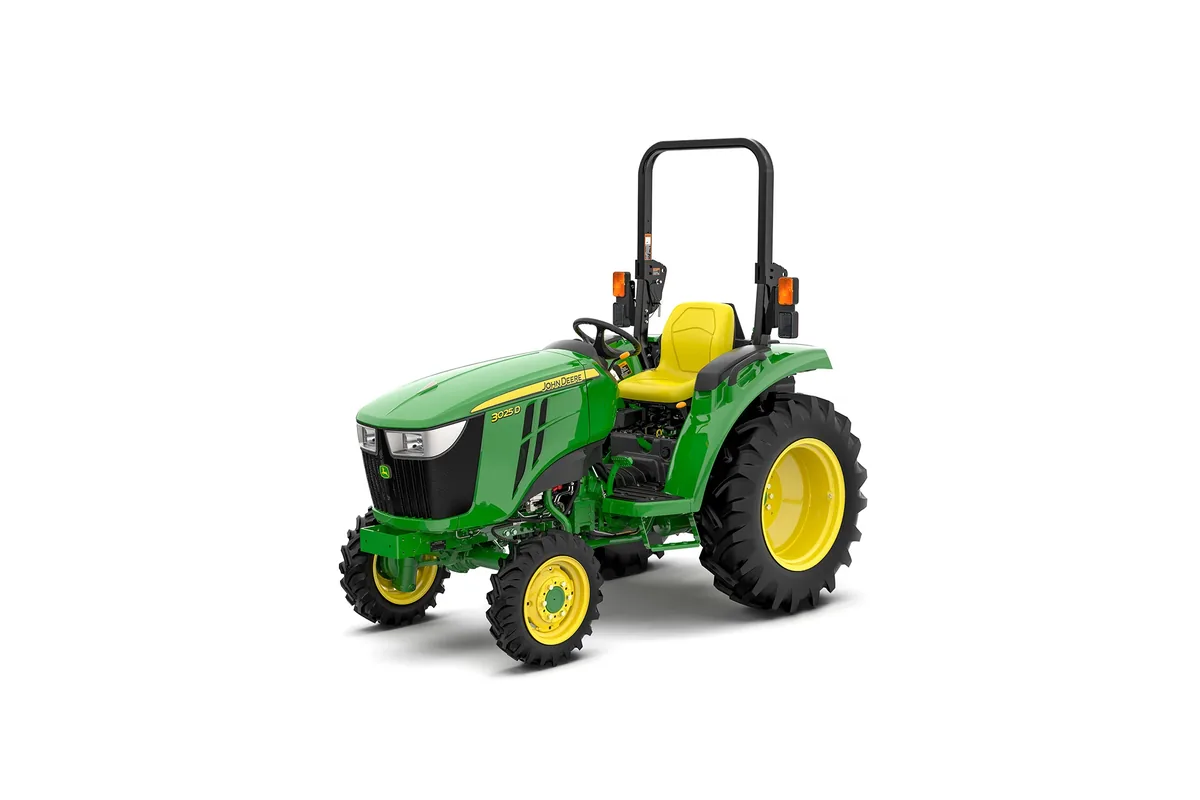
Deere's cheapest way into the 3 Series, and the only one with no hydrostatic option at all: an 8F/8R synchromesh shuttle box and a 24.4 hp Yanmar held deliberately under 25 hp, which is how it dodges the diesel particulate filter its 3035D and 3043D siblings carry.

Spec sheet & owner notes
John Deere 3025E
~$22,790MSRP, base build
Compact

John Deere

John Deere 3025E

24.4 hp engine · 18.5 PTO−24% to the shaft
Loader
1,186 lbs
3-pt
1,356 lbs
Trans
Hydrostatic
Drive
4WD

Deere's cheapest full-frame compact, and deliberately stripped to get there: basic dash, no mid-PTO, no premium hydraulics. The 1,356 lb three-point and 2,354 lb frame are what separate it from a 2-Series, which it undercuts while out-lifting.

Spec sheet & owner notes
John Deere 3035D
~$25,739MSRP, base build
Compact

John Deere

John Deere 3035D

34.2 hp engine · 30.4 PTO−11% to the shaft
Loader
1,186 lbs
3-pt
2,081 lbs
Trans
Shuttle
Drive
4WD

Ten more horsepower than the 3025D from the same 1.6 L Yanmar block and the same 8F/8R shuttle gearbox, with 30.4 hp reaching the PTO - enough for a 6 ft rotary cutter. Crossing 25 hp brings a diesel particulate filter the 3025D avoids.

Spec sheet & owner notes