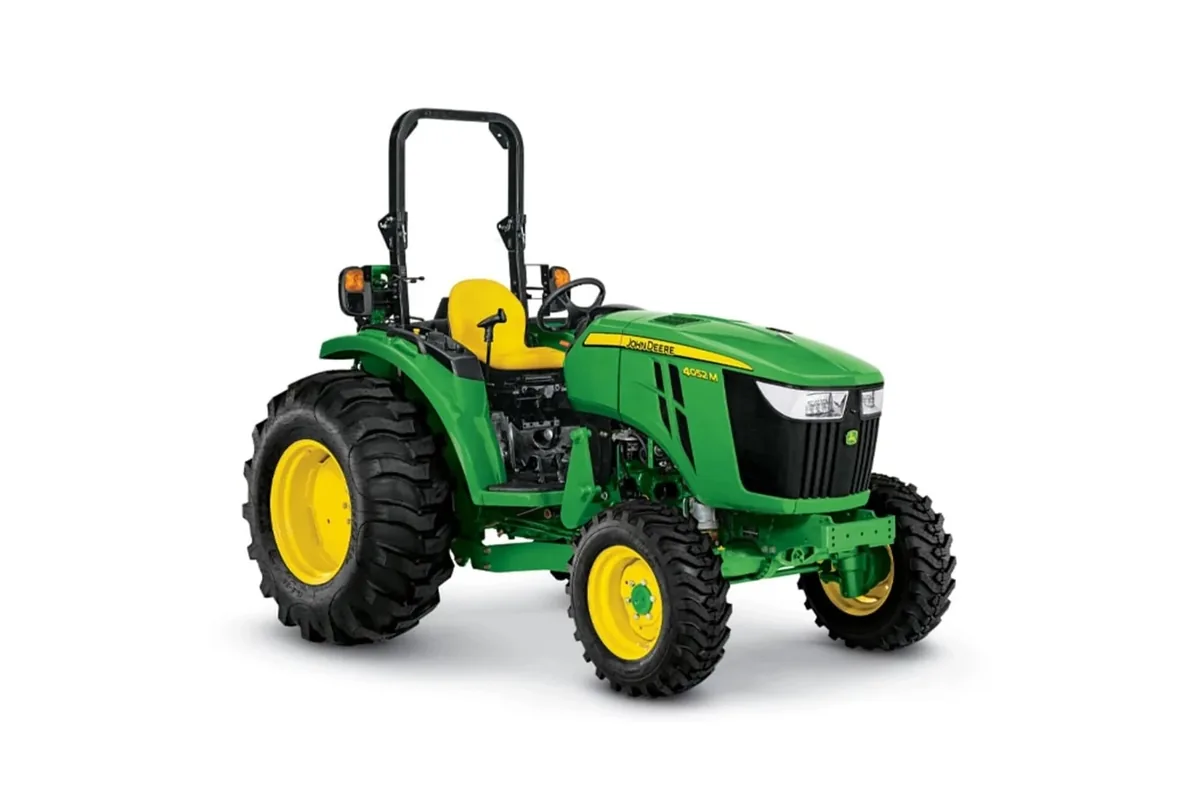
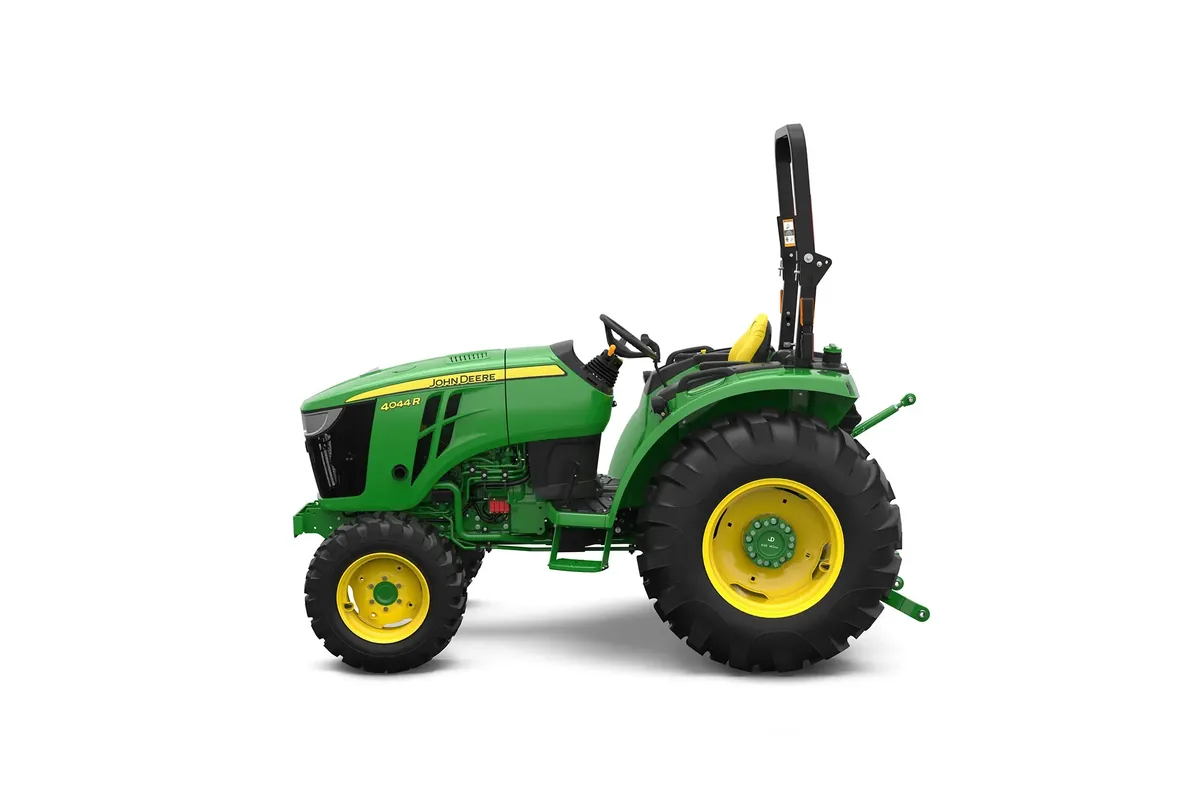
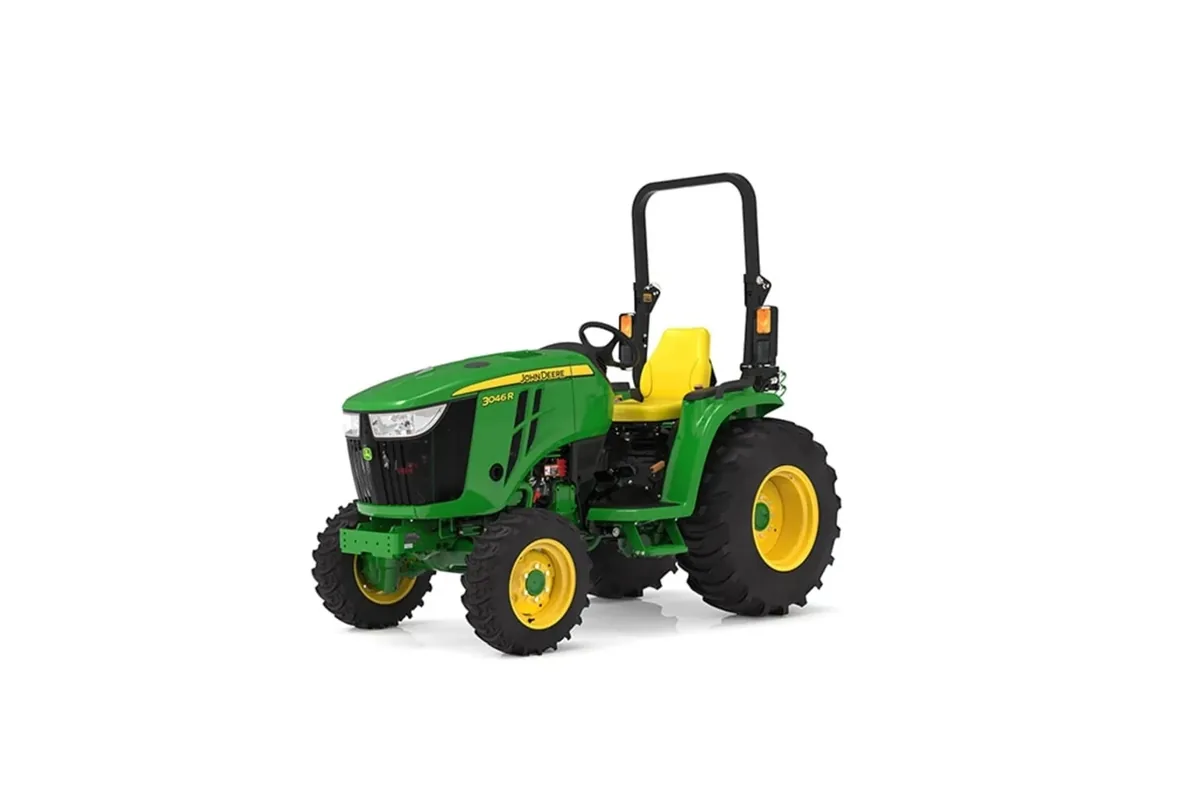
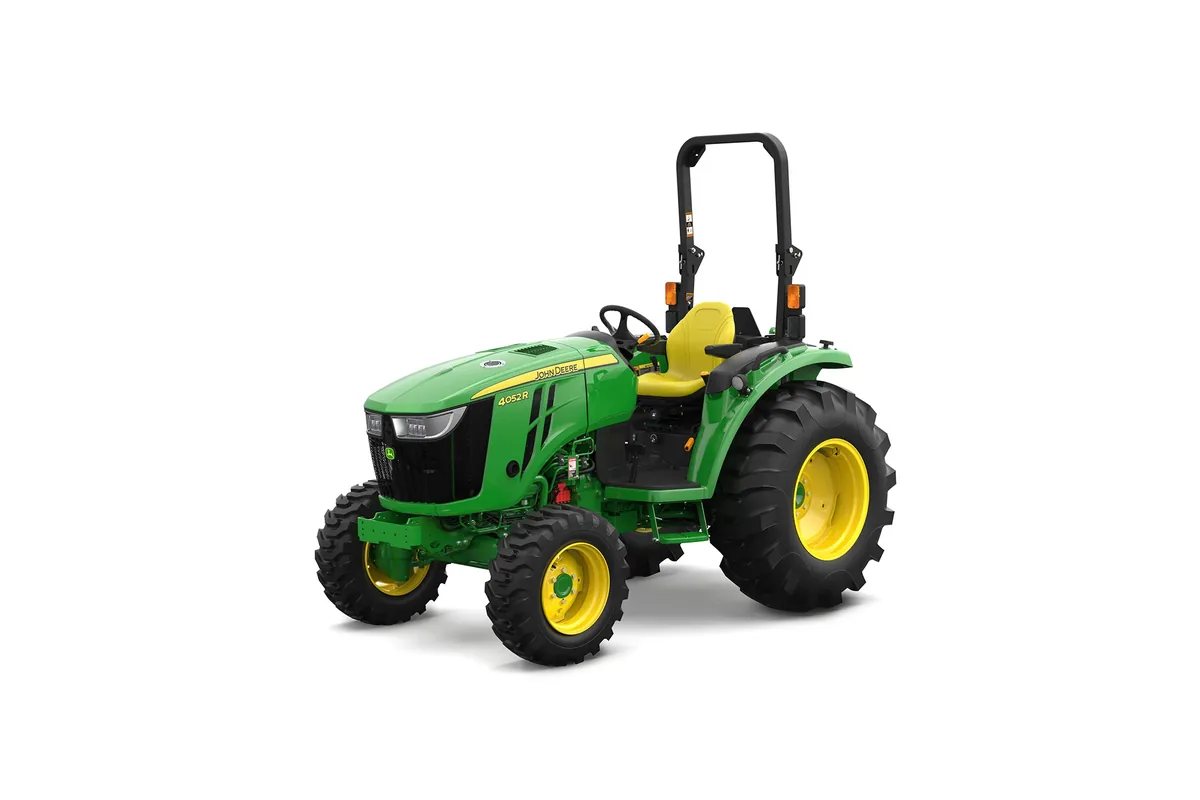
Owners put this at roughly the right size for 30 acres, and they are precise about where the ceiling is: a 7-foot rotary cutter. One owner who runs exactly that describes it as just barely enough, says elsewhere that he can pull the cutter but would not recommend it, and notes his father's larger utility tractor runs the same implement in any conditions as fast as you care to go - the honest reading is that a 7-footer works in good going and does not in heavy. His implement advice is worth more than the horsepower numbers: an 8-foot twin-spindle cutter is heavier but shorter than a 7-foot single-spindle, which makes it easier for the tractor to carry. Snow is where another owner has ten years of evidence, clearing a foot from a 1,300-foot steep gravel driveway in 25 to 45 minutes with a 6-foot rear PTO blower on hydraulic chute controls and an 8-foot push box up front. He skipped the cab and is fine in the open station most of the time, wanting one only for the long storms when he digs out family and friends.
Two cautions stand out. The first is the age of the design: an owner who bought a 2015 example and wants to move to a cabbed 4066R was disappointed to find almost nothing has changed in the line in a decade, considers Deere's 3- and 4-series cabs the smallest in their class, and is deliberately waiting for a redesign rather than trading. The second is emissions, and it is the most consistent complaint. One owner reports endless particulate filter and regeneration trouble, limp-mode trips to the dealer, a replacement engine control unit costing around $3,000 at under 300 hours, and a factory tie rod end that failed so completely at under 100 hours that he could shake the stud in a circle by hand. A second owner had no faults at all but deleted the emissions hardware anyway, simply because the way he uses the tractor forced frequent regenerations - his removed parts sit in perfect condition in a box in his garage. That same owner reports two Deeres, this one and a smaller compact, both flawless at around 1,000 hours, so the record splits rather than condemning the machine.
On stability, one owner's advice runs directly against the common wisdom and is specific enough to be worth testing. He says removing the loader entirely is the big win on hills because it takes the weight off high up, and that carrying the bucket low with weight in it makes matters worse rather than better - the only case where it helps is driving straight up a steep slope with a cutter behind, worried about going over backwards. Loader fitted, bucket full, no wheel spacers and no fluid in the tires, he reckons you can nearly flip it on flat ground. He runs 12 psi in the rears having come up from 6 or 7, which was too soft on slopes, and now thinks 10 would be the right answer.
What size brush hog will it really run?+−
Seven feet is the practical maximum and it is at the limit, not within it - the owner running one calls it just barely enough and says in another discussion that he would not recommend it, which reads as fine in good conditions and hard work in heavy growth. His more useful tip is counterintuitive: an 8-foot twin-spindle cutter is heavier than a 7-foot single-spindle but shorter, which makes it easier for the tractor to carry. If you have open ground, he suggests looking at a twin-blade 8-foot unit rather than a longer 7-footer.
How should I set it up for slopes?+−
One owner's advice runs against the usual wisdom and is worth hearing. He says taking the loader off entirely is the biggest single improvement, because it removes weight mounted high, and that carrying a loaded bucket low actively makes things worse rather than lowering your centre of gravity - the one exception being driving straight up a steep hill with a cutter behind, where it helps against going over backwards. Widest tire setting, wheel spacers and fluid in the tires all help, though he warns spacers put extra stress on axles.
What tire pressure should I run?+−
Lower than you might expect, but not too low. An owner who had been running 6 or 7 psi in the rears found it excellent on flat ground and too squishy on slopes, so he went to 12 psi, which firmed things up but is more than he wants - he would prefer around 10. Worth knowing before you fill your tires: once the fluid level sits above the valve stem, adjusting pressure downwards becomes an awkward job rather than a quick one.
Are the emissions problems as bad as people say?+−
Reports split. One owner describes constant regeneration trouble, limp mode and a costly engine control unit replacement, and considers modern Deeres unreliable on that basis. Another had no actual faults but deleted the system anyway because his working pattern demanded frequent regenerations he found inconvenient, and reports the tractor otherwise flawless at around 1,000 hours. The common thread is that short, intermittent jobs suit these systems badly, so if that is how you will use it, ask the dealer how regeneration behaves before buying.
Should I buy new or used?+−
Owners lean used on this model. One spent a few years watching prices never move off list before buying a clean used example with a loader fitted for about $30,000, and others report 4WD machines with a bucket under 500 hours in that same region. Financing can swing it back, though - one buyer found the interest offers between brands added up to a difference worth thousands, so it is worth getting comparable quotes from more than one dealership before deciding.
Summarised from public owner discussion, not from testing. Nothing here was measured by this site, and a report that recurs is not the same as a defect rate.