John Deere · Compact

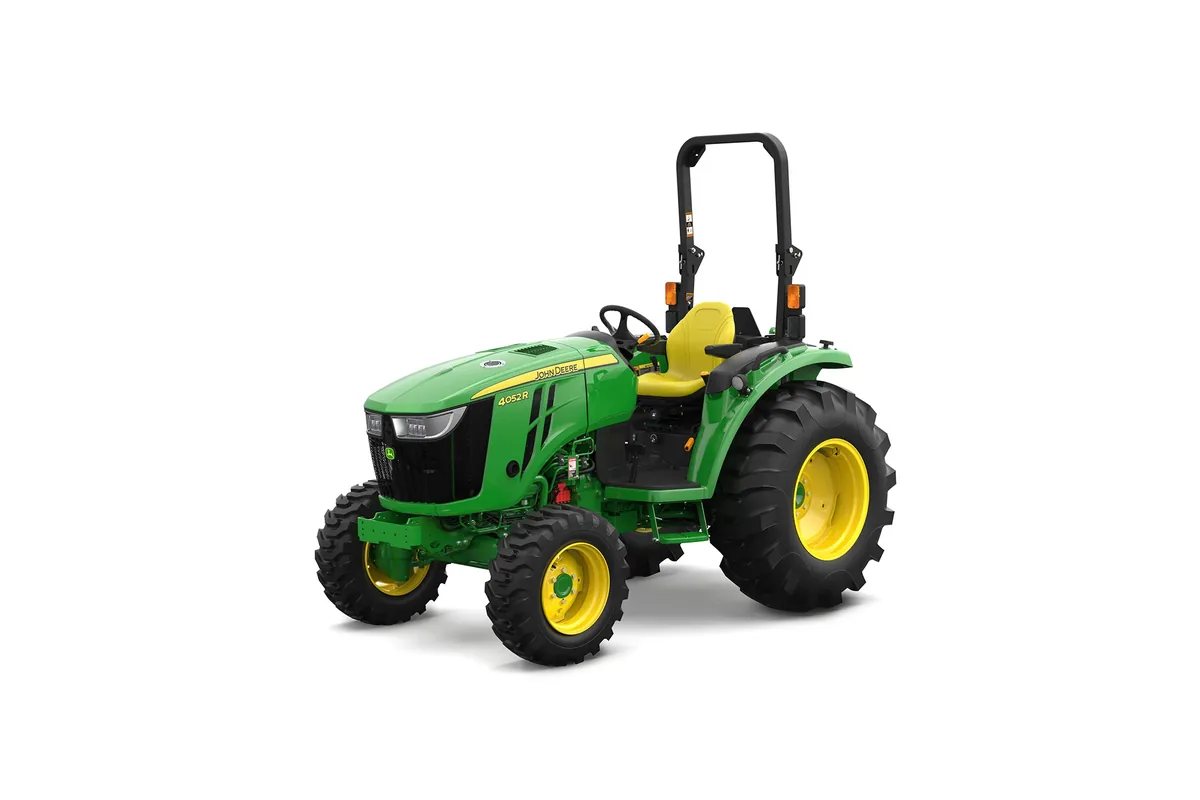
John Deere 4052R

~$44,538

MSRP, base build

John Deere 4052R
Compact
50.8 hp engine · 39.1 PTO−23% to the shaft

Same turbocharged 2.091 L Yanmar as the 4052M, moved into the 4R chassis: eHydro standard, the self-levelling 440R loader, and a premium ComfortGard cab on the order sheet. About $5,600 buys the cab option and the better loader, not more engine.

Engine
50.8 hp
PTO
39.1 hp
Loader lift
2,313 lbs
3-pt lift
2,500 lbs

0.88 PTO hp per $1,000 of list price

As published by the maker

Specifications

Size class
Compact
Transmission
Hydrostatic
Engine
Yanmar
Engine hp
50.8 hp
PTO hp
39.1 hp
Drive
4WD
Loader lift
2,313 lbs
Three-point lift
2,500 lbs
Hydraulic flow
17.4 GPM
Fuel tank
15 gal
Weight
3,770 lbs
Warranty
6 yr / 2000 hr powertrain
4WD
Yes
Cab
Available
Turbo
Yes
Cruise control
Yes

On the price: The maker's own published starting figure for the base build. A dealer adds a loader, a deck and freight on top.

Lift figures are the maker's and are quoted at whichever point the maker chose; the about page explains why two loaders with the same number do not lift the same pallet.

Comes with

4WDHydrostaticFront LoaderPower SteeringCruise ControlTurboDieselCab

From owner discussion and long-term write-ups

What owners say

What they like

  • Mechanical self-levelling on the 440R keeps a loaded pallet flat through the lift, which matters more than raw capacity on fork work
  • A premium ComfortGard cab with heat and air conditioning is a factory option; the equivalent 4052M cannot be ordered with one
  • 17.4 gpm total, 11.2 gpm implement and a separate 6.2 gpm steering circuit
  • eHydro is standard with cruise control, and the 12F/12R PowrReverser remains available for 1.7 more PTO horsepower
  • Turning radius of 9.19 ft with brakes keeps a 3,770 lb machine usable in a yard

What they complain about

  • 39.1 PTO hp with eHydro is 1.7 hp less than the cheaper 4052M delivers through its standard PowrReverser
  • Deere's published maximum-height 440R figures are internally inconsistent, printing the 500 mm-ahead capacity above the pivot-pin capacity; the 1,500 mm row is the one that reads correctly
  • The cab build drops fuel from 15 gal to 13.8 gal and adds 905 lb
  • Dealer sheets split on whether this engine is rated 50.8 or 51.5 hp gross; the stated 37.9 kW converts to 50.8, which is the figure used here
  • A diesel particulate filter and oxidation catalyst are part of the package, with regeneration cycles to match

Gathered from owner reports

What owners report

The most valuable thing owners say about this model is where it sits in the range, and the answer is that it is the sensible stopping point. For loader and three-point work there is no benefit to going bigger within the family, because every machine in it carries the same loader, so the extra money buys engine rather than lift - a point a Deere salesman made to one shopper unprompted, calling the step up to the next model wasted horsepower for around $7,300. Horsepower only matters if PTO implements are the point. Follow that logic far enough and owners tell you to leave the family altogether: one suggests anyone looking at the top model should ask why they are not buying the 5-series equivalent, which with a loader can come out a few thousand dollars cheaper and can now be had with a premium cab. A long-time owner of this exact machine puts the limits precisely - a 6-foot rotary cutter is about the maximum in any heavy mowing unless you crawl, and it is not ideal for extended heavy grapple work because of its weight even when ballasted - while still calling it the best tractor he has owned for its size. He is trading it for a 5-series so he can run a 10-foot cutter.

The used market is where owners find value, and they travel for it. One drove 900 miles round trip for a four-year-old example with a rototiller and plow at 80 hours, reports it digging out nine stumps on the first day with little effort, and rates it a huge step up from the 30-horsepower machine he had been renting. Another bought a four-year-old cab model with bucket, snow plow and rototiller at 85 hours from a private seller and says he could not justify paying tens of thousands more for new. Most were sold with factory cabs, and examples around 640 hours have been listed near $30,000. That active used market attracts trouble too: one shopper found an online seller advertising a 1,040-hour example with a loader for $8,800 against a $20,000 to $23,000 private-sale value, responsive by message and offering shipping and a return window, but evading every question about buyer protection or trade accreditation.

What comes up favourably

  • It is the point in the family where paying more stops making sense for loader work - every model in the line shares the same loader, so a Deere salesman told one shopper that stepping up was wasted horsepower for roughly $7,300, and a commenter agreed that only PTO implements justify going bigger.
  • A long-time owner calls it the best tractor he has ever owned for its size, even while recommending a bigger machine for the heavier work he now wants to do.
  • It shifts real work straight away - one owner dug out nine stumps on his first day with it and describes the effort as low, having previously been renting a 30-horsepower machine.
  • The used supply is good and usually well equipped, most having been sold with factory cabs, with low-hour examples bundled with implements turning up regularly - owners report buying four-year-old machines at 80 to 85 hours and being very happy with the price.
  • Frame size buys stability rather than just capacity, which is why owners on small acreages still recommend this size, and one who also owns a skid steer says he would pick the tractor if limited to a single machine.

What comes up as a complaint

  • The exhaust filter clogged at very low hours on one machine, could not regenerate itself and had to be removed and cleaned by the dealer. The owner's fix was to stop unnecessary idling and keep it at no less than about 2,000 rpm once warm, and he has had no trouble since.
  • A 6-foot rotary cutter is the practical ceiling in heavy mowing, according to a long-term owner, unless you accept a very slow rate of travel - and he says extended heavy grapple work asks more of the machine's weight than it has, even ballasted.
  • The three-point has no factory lock limiting upward travel, which caught out a crew towing a 10-foot rake - with the tines raised for transport the balance lifted the hitch, and the steel pin they improvised to stop it was simply snapped by the lift arms.
  • Small electrical and control faults crop up: one owner's loader joystick locked up and needed the cables at its base adjusting, and another has an engine code limiting him to about 900 rpm at idle and 1,860 at full throttle that returns the moment the key goes on, apparently needing a technician to clear.

Questions worth asking

Is it worth stepping up to a bigger model in the same family?
Not for loader work. Every machine in this family uses the same loader, so more horsepower buys no extra lift - a Deere salesman told one shopper the step up was wasted horsepower for about $7,300, and owners agree the only reason to pay it is running PTO implements, where a higher-rated engine will drive a given implement better and burn less fuel doing it. If PTO work is not your focus, owners say stay here and move to a 5-series when you genuinely outgrow it.
How do I stop the exhaust filter clogging?
Heat and revs. An owner whose filter clogged at very low hours - badly enough that it would not regenerate and the dealer had to remove and clean it - changed two habits afterwards: no unnecessary idling, and keeping the engine at no less than around 2,000 rpm once it is warmed up. He has had no further trouble. The same advice recurs across other Deere and Kubota models, so treat long periods of light-load idling as the thing to avoid.
What size rotary cutter can it handle?
Six feet, and that is the maximum rather than a comfortable fit. A long-time owner says a 6-foot cutter is about all it will manage in any heavy mowing unless you travel very slowly, and that is his reason for moving to a 5-series so he can run a 10-footer. If you are mowing large acreages regularly rather than occasionally, owners with experience of both sizes are clear that the bigger machine will make your life easier.
Is buying one used online safe?
Buy used by all means, but be careful where. Owners have done very well privately - one drove 900 miles for a low-hour example with implements, another found a four-year-old cab machine with 85 hours from a private seller - and around $30,000 buys a mid-2010s example near 640 hours. The warning sign one shopper spotted is instructive: an online seller advertising a 1,040-hour machine at $8,800 against a $20,000-plus private value, responsive and offering shipping and a return period, but dodging every question about buyer protection or trade accreditation.

Summarised from public owner discussion, not from testing. Nothing here was measured by this site, and a report that recurs is not the same as a defect rate.

Cross-shopped against

Line the John Deere 4052R up

Same brand or same size, nearest in price

Related tractors

More from John Deere →
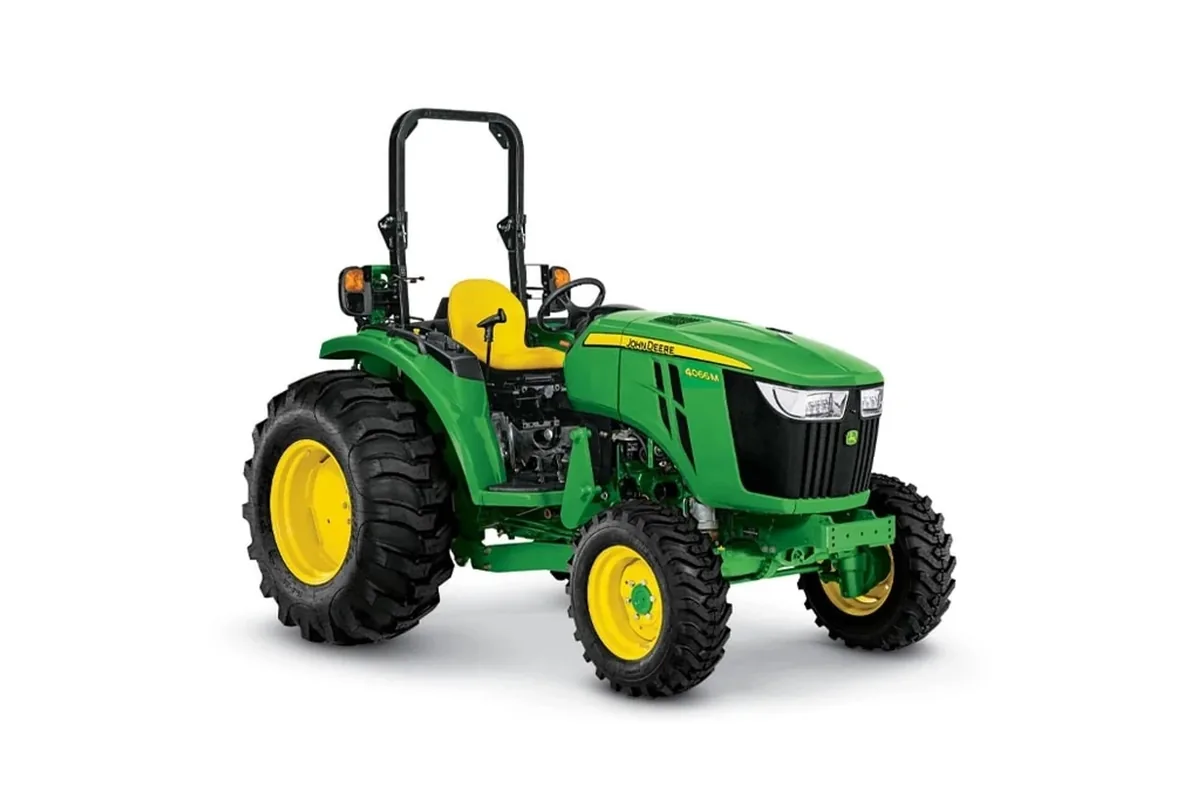
John Deere 4066M
~$47,356MSRP, base build
Compact

John Deere

John Deere 4066M

65 hp engine · 54.2 PTO−17% to the shaft
Loader
2,396 lbs
3-pt
2,500 lbs
Trans
Power Shuttle
Drive
4WD

Largest of the open-station 4M machines: a charge-air-cooled 4TNV86CHT pulling 65 hp from the same 2.091 L block the 4052M uses, and 54.2 hp at the PTO. Hitch, hydraulics and loader are unchanged from the 4052M, so the step buys engine and 228 lb of chassis.

Spec sheet & owner notes
John Deere 4044R
~$40,864MSRP, base build
Compact

John Deere

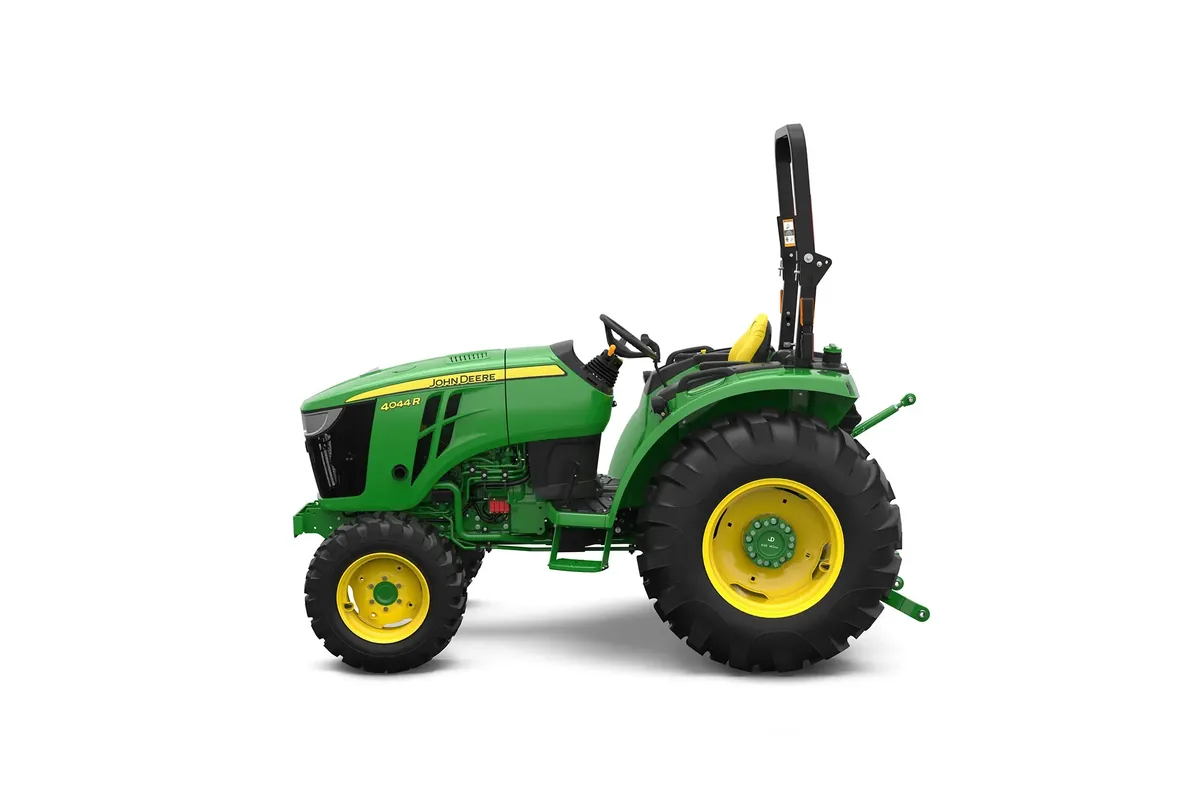
John Deere 4044R

43.1 hp engine · 32.3 PTO−25% to the shaft
Loader
2,313 lbs
3-pt
2,500 lbs
Trans
Hydrostatic
Drive
4WD · cab

Cheapest way into a cab-capable 4 Family machine. eHydro is standard here rather than optional, the 440R self-levelling loader replaces the 4M's 400E, and the 2.189 L Yanmar is the only naturally aspirated engine left in the 4R line.

Spec sheet & owner notes
John Deere 4052M
~$40,265MSRP, base build
Compact

John Deere

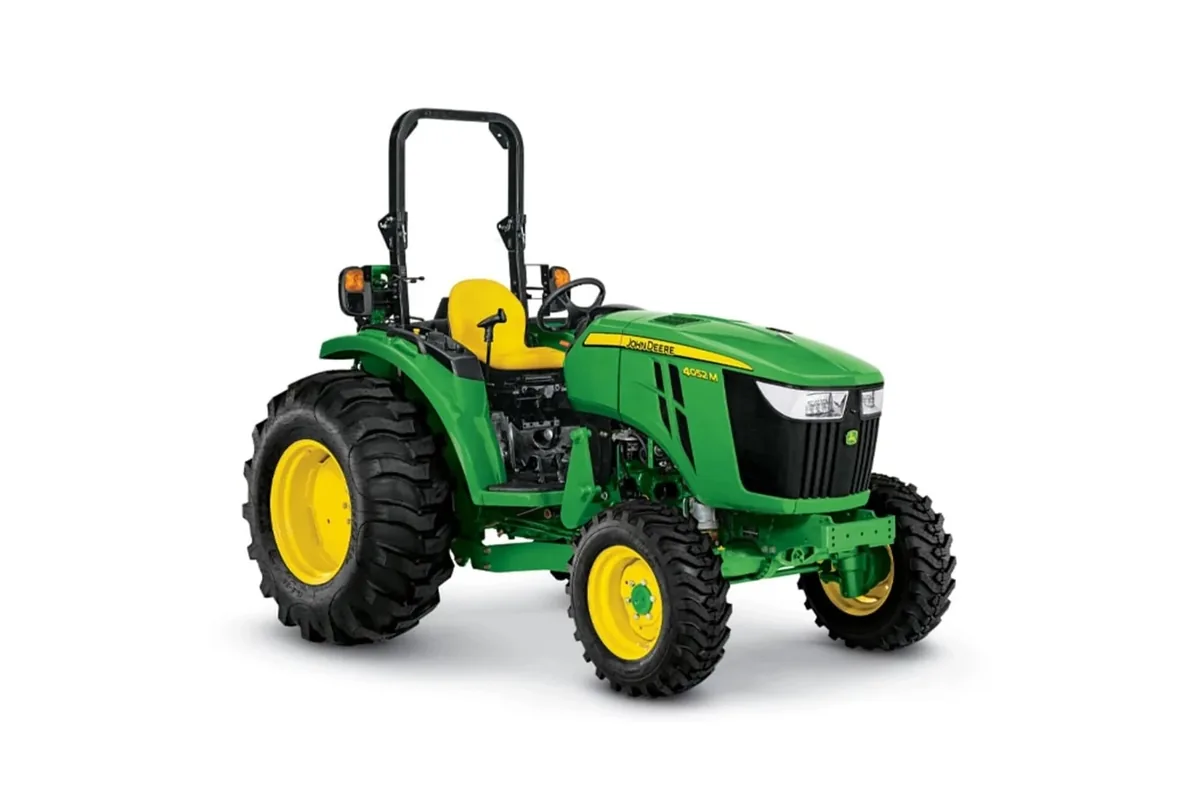
John Deere 4052M

50.8 hp engine · 40.8 PTO−20% to the shaft
Loader
2,396 lbs
3-pt
2,500 lbs
Trans
Power Shuttle
Drive
4WD

Fifty horsepower with a 12F/12R PowrReverser as standard equipment rather than an upcharge, and the 400E loader that lifts 2,396 lb at the pivot pin - nearly double what the 3 Series manages. The trade is the operator station: 4M is open-station only.

Spec sheet & owner notes