Kubota · Compact

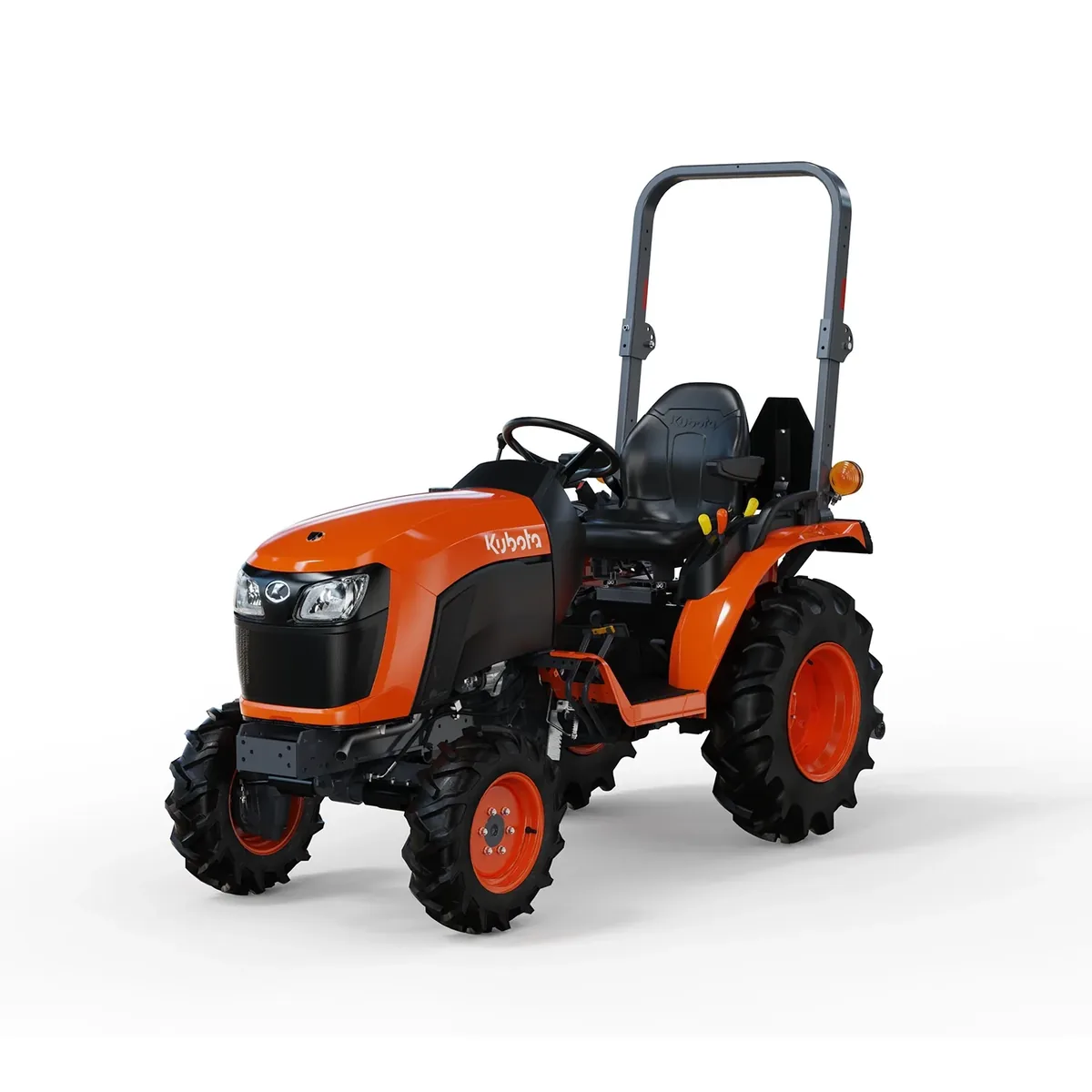
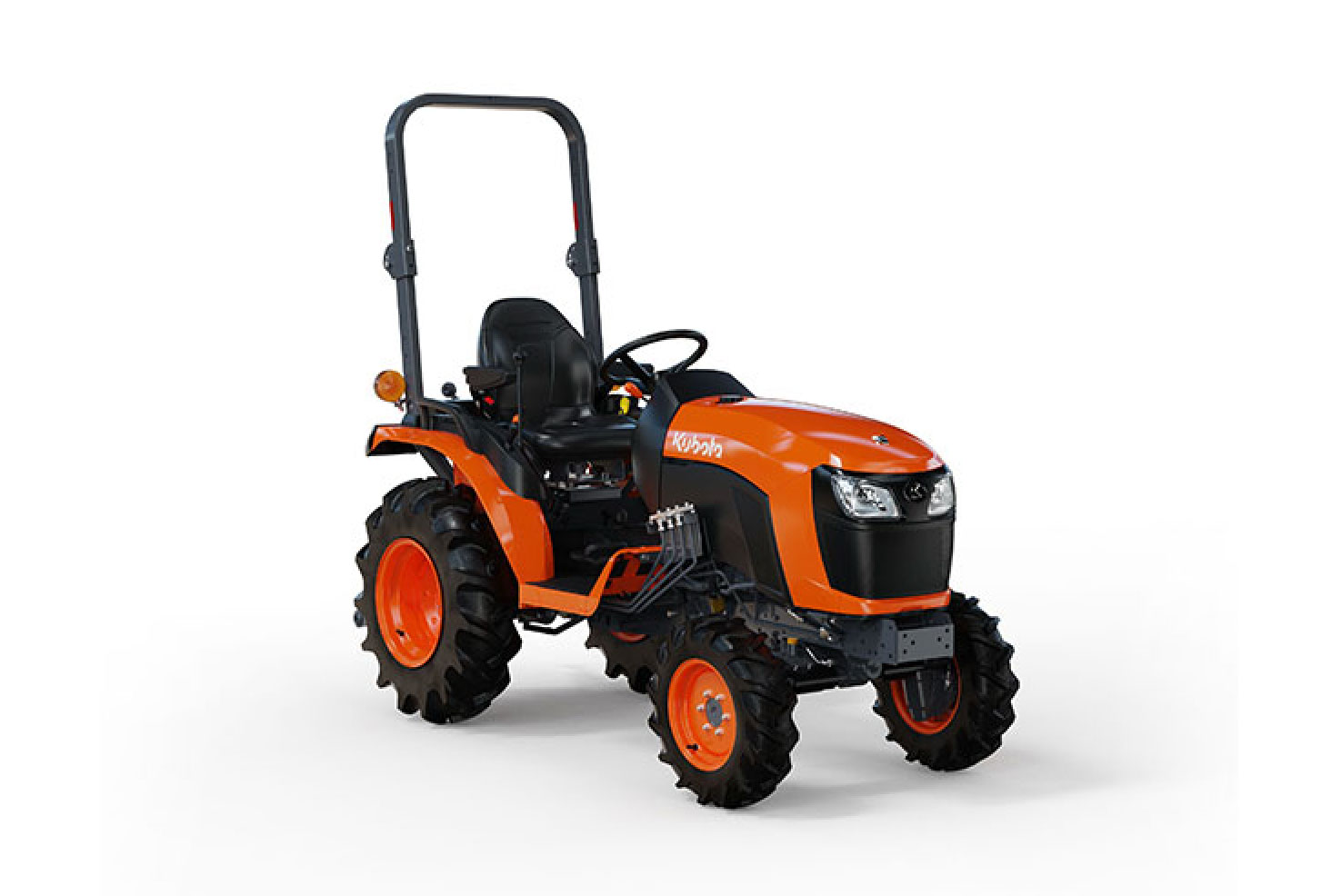
Kubota B2301

~$18,874

MSRP, base build

Kubota B2301
Compact
20.9 hp engine · 17.4 PTO−17% to the shaft

Cheapest hydrostatic B-series Kubota sells, sitting between the BX80 range and the B2601 on 20.9 gross hp from the 61.1 cu in D1005. It shares the B2601's LA435 loader, 8.3 gpm pump and 1,411 lb hitch outright - the difference between the two is 3.4 gross horsepower.

Engine
20.9 hp
PTO
17.4 hp
Loader lift
1,175 lbs
3-pt lift
1,411 lbs

0.92 PTO hp per $1,000 of list price

As published by the maker

Specifications

Size class
Compact
Transmission
Hydrostatic
Engine
Kubota
Engine hp
20.9 hp
PTO hp
17.4 hp
Drive
4WD
Loader lift
1,175 lbs
Three-point lift
1,411 lbs
Hydraulic flow
8.3 GPM
Fuel tank
6.1 gal
Weight
1,566 lbs
Warranty
6 yr / 2000 hr powertrain
4WD
Yes
Cab
Open station
Turbo
No
Cruise control
No

On the price: The maker's own published starting figure for the base build. A dealer adds a loader, a deck and freight on top.

Lift figures are the maker's and are quoted at whichever point the maker chose; the about page explains why two loaders with the same number do not lift the same pallet.

Comes with

4WDHydrostaticFront LoaderPower SteeringDiesel

From owner discussion and long-term write-ups

What owners say

What they like

  • Shares the B2601's LA435 loader, 8.3 gpm pump and 1,411 lb hitch, so the cheaper machine gives up horsepower and nothing structural
  • 1,175 lb of loader lift at the pivot pin from a 1,566 lb tractor, far beyond anything in the BX80 range below it
  • Three-range hydrostatic with a semi-flat operator deck, tilt steering and a high-back suspension seat as standard
  • 12 in of ground clearance, roughly double what a BX carries, which is the difference on rutted ground
  • The BH70 backhoe and 54 or 60 in mid-mount decks all mount to this chassis

What they complain about

  • 20.9 gross hp and 17.4 at the PTO make it the least powerful machine in the B01 range
  • 1,411 lb is what the hitch holds 24 in behind the lift points; the 1,808 lb headline figure is only available right at them
  • At $18,874 it asks about $3,600 more than a B2401 that makes more power, if a gear box is acceptable
  • Kubota lists no factory cab anywhere in the B01 range

Gathered from owner reports

What owners report

Buy the B2301 for the backhoe. That is not the catalogue's pitch, but it is overwhelmingly what owners say: several report trying to cancel the backhoe before delivery, or being told it was a waste of money, and then using it as much as the loader. The jobs they list are the ordinary ones that a shovel makes miserable - culverts under trails, footings for a shed and a deck, drainage ditches cut during a week of rain, moving a flower bed, digging out stumps - and one adds a detail nobody advertises: with a backhoe fitted you are very hard to get permanently stuck, because you can push yourself out.

The frame is the other reason people choose it. Owners who considered a BX went to the B for lift and for wheel size, and several say tire diameter and weight matter more than horsepower for pulling and pushing. What it will not do is lift high: owners describe a tall tote of dead ash as about the ceiling, a full cage of cordwood as beyond it, and heavy loads as liftable only just clear of the ground rather than up onto a stack. Two owners independently say a couple of hundred pounds more capacity would make it perfect. Hills need respect - one owner working a camp steep on all four sides has dropped the loader to the ground more than once to stop a roll, and wears a seatbelt while still questioning what would happen.

The B2301 and B2601 share a frame, a hydraulic pump, a loader and a backhoe, so the only thing the extra money buys is PTO horsepower - which owners running snowblowers and mowers say is worth it and owners using loader and hoe say is not. For implements, pallet forks get recommended more often than anything else, with a warning to buy proper quick-attach forks rather than clamp-on ones that cost lift by sitting further from the pins. And the mid-mount mower deck is not loved: separate owners call it a pain to fit and remove and moved to a rear-mounted finish or rotary mower instead.

What comes up favourably

  • The BH70 backhoe is what owners rate highest - people who nearly cancelled it report using it as often as the loader for culverts, footings, ditches, stumps and tree planting
  • A backhoe also means you can almost always dig yourself out, which one owner who has buried his tractor more than once considers an underrated benefit
  • It was chosen over a BX for lift and wheel size, and owners repeatedly say tire diameter and machine weight do more for pulling and pushing than horsepower does
  • Pallet forks are the most recommended implement by a distance - one owner unloaded a 600 lb pallet from a semi that arrived without a liftgate and calls them his favourite attachment
  • It stays narrow enough for trails that are too tight for anything larger, which is why owners with wooded property pick it over an L
  • Owners coming from 1950s and 1960s tractors describe getting more done in an hour than they used to in a day, and several say the only regret is not buying one years earlier
  • It is hard to hurt - one owner clearing land and digging stumps for three years reports breaking a tail light and nothing else, and says the machine is set up to stall before it breaks

What comes up as a complaint

  • Lift height is the wall you hit: a tall tote of dry ash is about the limit, a full cage of cordwood is not, and heavy loads come off the ground but will not go up onto a stack
  • Separate owners say a couple of hundred pounds more capacity would make it right, and note the B2601 does not fix that - the loader is the same, so more lift means moving to the LX
  • Steep ground demands real caution - one owner working a camp that is steep on all four sides has had to drop the loader to arrest a roll more than once
  • The mid-mount mower deck is disliked enough that owners switched to rear-mounted finish or rotary mowers rather than keep fitting and removing it
  • Clamp-on bucket forks are a false economy here, since the further the load sits from the pins the less the loader holds - owners say buy quick-attach forks the first time
  • The auger is limited by the loss of a slip clutch on this generation: a contractor running these says a golf-ball-sized stone stops a 12-inch auger, where his skid steer spins a 36-inch one
  • One owner reports noticeable play at the loader quick-connect on a low-hour machine, and another that the backhoe boom settles overnight while the loader holds position indefinitely

Questions worth asking

Is the backhoe worth the money on one this size?
Owners here answer yes more consistently than on any larger Kubota. Several say they were advised against it or tried to cancel the order, and now use it as much as the loader - for culverts under trails, footings for sheds and decks, drainage during heavy rain, stump removal and tree planting. One who priced a culvert job at six thousand dollars did it himself for just over two. The counter-argument owners acknowledge is that a cheap mini excavator costs about the same and digs better; the tractor's advantage is that it is already there.
B2301 or B2601?
Same frame, same hydraulic pump, same loader, same backhoe - the extra money buys PTO horsepower only. Owners running a snowblower or a mower say the extra three horsepower is worth having. Owners whose work is loader and backhoe say they do not miss it at all. One buyer found the B2601 only about a thousand dollars more at the time and took it on that basis; others point out the gap has been larger since.
What will the loader actually lift?
A fully heaped bucket of wet topsoil, comfortably. Beyond that, owners describe the limit in terms of height rather than weight: one can move a tall tote of standing dead ash but not oak or maple, and only lift it enough to clear obstacles rather than curl it back or raise it high. A full IBC cage of cordwood is past it. If you need to stack material at height, owners say that is a much bigger machine's job.
Should I get the mid-mount mower deck?
Owners largely say no. The complaint is fitting and removal rather than cut quality - one calls the underbelly deck a pain to get on and off, and separate owners run a 60-inch rear-mounted rotary or finish mower instead and prefer it, with the caveat that you have to learn how a rear deck tracks through turns. If mowing is the main job and the lawn is fussy, a dedicated mower plus the tractor is the combination they recommend.
How does it handle slopes?
It is manageable with discipline and unforgiving without it. Owners say keep the bucket low, wear the belt and take grades straight on. The most vivid report comes from an owner whose property is steep on all four sides, who has had to drop the loader to the ground more than once to stop the machine rolling, and describes it as genuinely uncomfortable at times. Filled tires and a rear implement help, but this is a light machine with a high loader.
What did people pay, and does it hold value?
Owners bought during a period of rising prices and several mention it. One reports the same machine going up more than fifteen percent in under two years, and several bought a B2301 only because the L they wanted was a year out. Extended coverage runs real money - one owner paid around $2,150 for the Kubota policy on a tractor-loader-backhoe, roughly seven and a half percent of the purchase price. On resale, owners upgrading typically keep the backhoe and subframe and sell the tractor, because replacing the hoe costs more than it is worth to let it go.

Summarised from public owner discussion, not from testing. Nothing here was measured by this site, and a report that recurs is not the same as a defect rate.
Cross-shopped against

Line the Kubota B2301 up

Same brand or same size, nearest in price

Related tractors

More from Kubota →
Kubota B2601
~$20,017MSRP, base build
Compact

Kubota

Kubota B2601

24.3 hp engine · 19.5 PTO−20% to the shaft
Loader
948 lbs
3-pt
1,411 lbs
Trans
Hydrostatic
Drive
4WD

Stepping off the BX frame buys a real Category I hitch and a 1,411 lb three-point, roughly double what a BX lifts at the rear. At $20,017 it sits between the BX80 range and the L02 compacts, and it is the smallest Kubota that takes full-size rear implements.

Spec sheet & owner notes
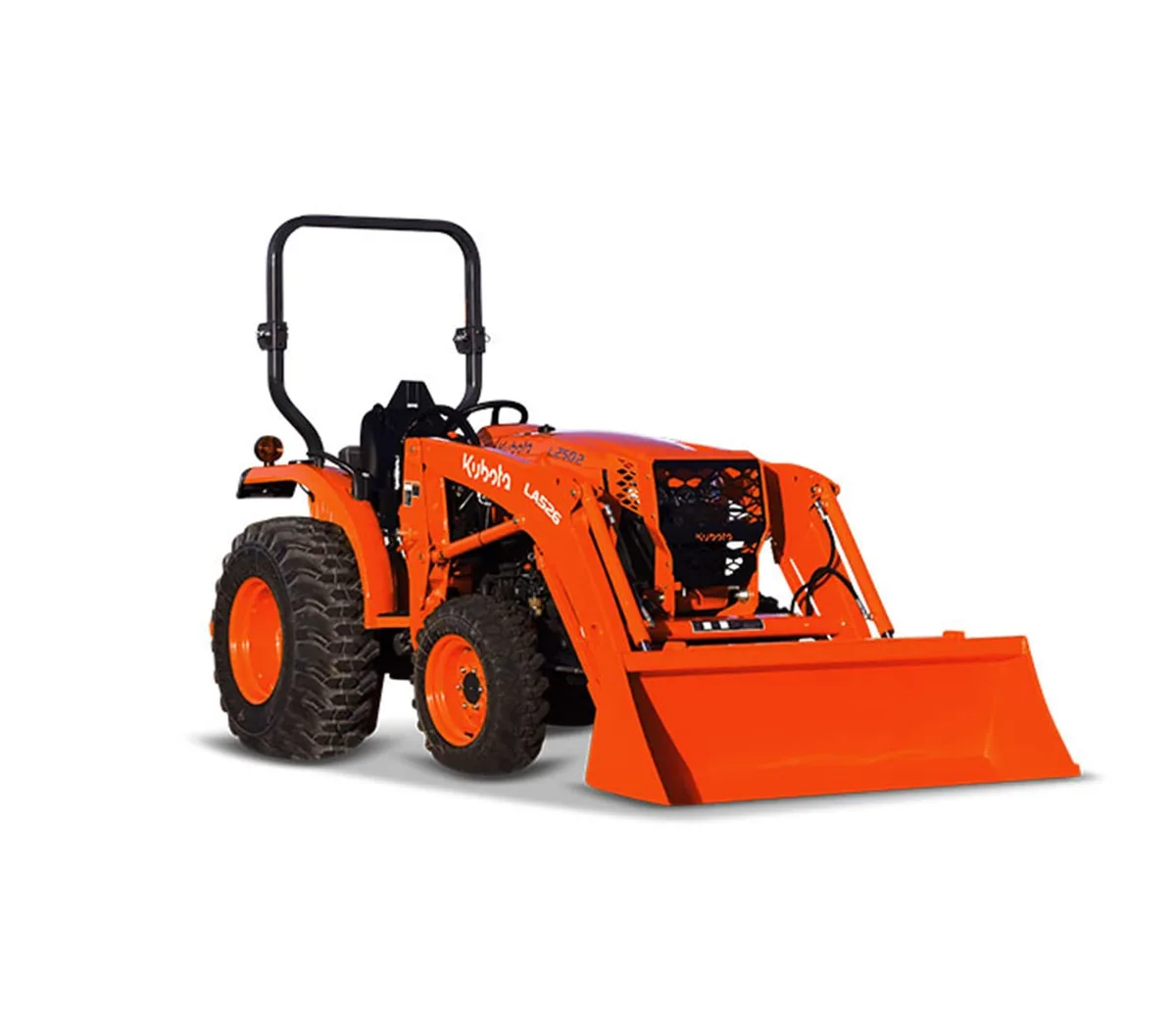
Kubota L2502
~$17,449MSRP, base build
Compact

Kubota

Kubota L2502

23.3 hp engine · 19.8 PTO−15% to the shaft
Loader
1,446 lbs
3-pt
1,874 lbs
Trans
Gear
Drive
4WD

Replaces the L2501 at the bottom of Kubota's Standard L range, now rated 23.3 gross hp where the older machine was rated 24.8. Same cast frame, all-metal hood and Kubota-built LA526 loader; the 8F/8R synchronised shuttle is the base build and a three-range HST is the alternative.

Spec sheet & owner notes
Kubota LX2620
~$20,337MSRP, base build
Compact

Kubota

Kubota LX2620

23.3 hp engine · 19.4 PTO−17% to the shaft
Loader
1,324 lbs
3-pt
1,676 lbs
Trans
Hydrostatic
Drive
4WD

Replacing the LX2610 as the entry point to the LX20 range, rated 23.3 gross hp from the indirect-injection D1305 with a three-range hydrostatic as the only transmission. It sits between the B01 series and the Standard L02 - more loader than a B2601, less hitch than an L2502, and about $2,900 dearer than the L2502.

Spec sheet & owner notes