Kubota · Compact

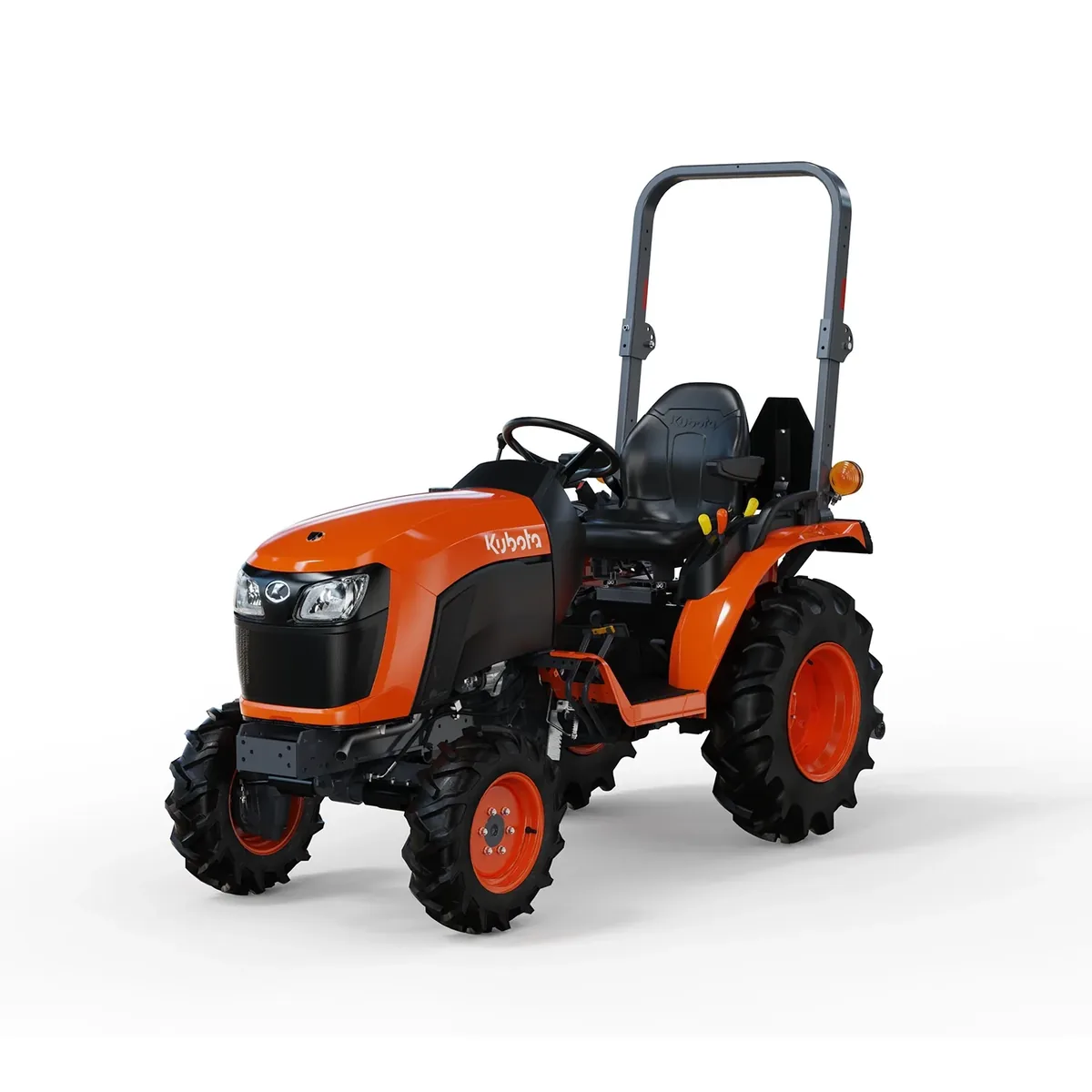
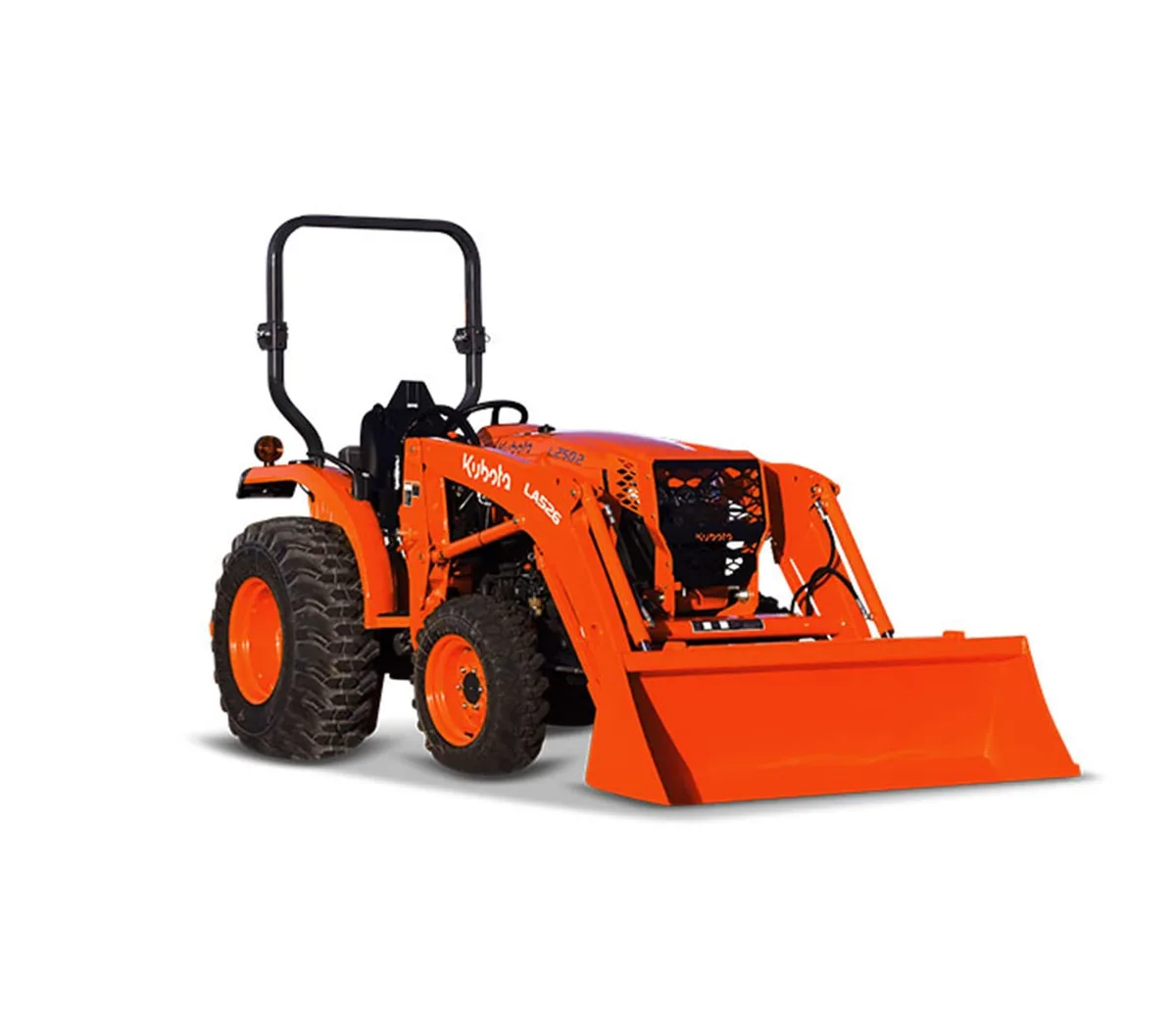
Kubota LX2620

~$20,337

MSRP, base build

Kubota LX2620
Compact
23.3 hp engine · 19.4 PTO−17% to the shaft

Replacing the LX2610 as the entry point to the LX20 range, rated 23.3 gross hp from the indirect-injection D1305 with a three-range hydrostatic as the only transmission. It sits between the B01 series and the Standard L02 - more loader than a B2601, less hitch than an L2502, and about $2,900 dearer than the L2502.

Engine
23.3 hp
PTO
19.4 hp
Loader lift
1,324 lbs
3-pt lift
1,676 lbs

0.95 PTO hp per $1,000 of list price

As published by the maker

Specifications

Size class
Compact
Transmission
Hydrostatic
Engine
Kubota
Engine hp
23.3 hp
PTO hp
19.4 hp
Drive
4WD
Loader lift
1,324 lbs
Three-point lift
1,676 lbs
Hydraulic flow
8.7 GPM
Fuel tank
7.1 gal
Weight
1,775 lbs
Warranty
6 yr / 2000 hr powertrain
4WD
Yes
Cab
Open station
Turbo
No
Cruise control
No

On the price: The maker's own published starting figure for the base build. A dealer adds a loader, a deck and freight on top.

Lift figures are the maker's and are quoted at whichever point the maker chose; the about page explains why two loaders with the same number do not lift the same pallet.

Comes with

4WDHydrostaticFront LoaderPower SteeringDiesel

From owner discussion and long-term write-ups

What owners say

What they like

  • 8.7 gpm of total pump output from a dual-pump system, more flow than Kubota gives the physically larger L2502
  • 1,775 lb bare weight makes it one of the lightest machines that still carries a full Category I hitch and a 3-range HST
  • The LA535 reaches 84 in at the pivot pin, enough to clear the side of most utility trailers
  • Standard ROPS, value-spec SU and factory cab builds all share this chassis, so the range runs from stripped to enclosed without changing model
  • The D1305 stays under the 25 hp line, which keeps it in the lighter emissions band

What they complain about

  • 1,676 lb measured 24 in behind the lift points is the lowest hitch rating in the LX range, against 1,962 lb for the LX3520 above it
  • Hydrostatic is the only transmission offered at this horsepower - there is no gear build
  • 7.1 gallons is the smallest fuel tank in the LX range and half what a Standard L02 carries
  • At $20,337 it asks roughly $2,900 more than an L2502 that has more frame, more hitch capacity and a gear-drive option
  • The LA535 lifts 1,324 lb at the pivot pin, about 120 lb less than the cheaper L2502's LA526 manages

Gathered from owner reports

What owners report

Almost every LX2620 owner arrived from somewhere smaller, and they arrived for the same reason. People trading up from a BX describe the loader on their old machine as the thing they could not live with - one says he is sorely disappointed every time he gets back on his father's BX - and they picked the LX over the B specifically for lift and ground clearance. The move is generally judged a success: owners clear land, move rocks, drag downed trees with a grapple and maintain long gravel drives with it, and several say the only regret is not buying one years earlier.

And then the same owners say they want more lift. That tension runs right through the evidence. People on five acres who use it constantly still wish for more loader capacity, and one points out that a six-foot hardwood log weighs more than the machine will pick up, so logs get bucked shorter instead. Filled rear tires and wheel spacers come up in nearly every serious answer as the fix for both stability and lifting, and one cab owner says that even with three-inch spacers he would prefer the machine were wider. The cab is the other defining choice: owners who have it will not go back, citing heat, air conditioning and a dust and insect free environment for mowing and snow work, but they are honest about the cost - roughly seven and a half thousand dollars - and about the nuisance of climbing out to reach the three-point controls, which is why one owner uses the right-hand door for hitching implements.

The fault that shows up most in ownership is the third-function circuit. Separate owners describe hydraulic fluid weeping from the third-function fitting into the pump, a distribution valve sticking so a grapple would not close properly, and a failed valve at eight hours - all fixed under warranty, in two cases by a technician sent to the house at no cost. Two other buyers report rough handover condition, one of them serious enough that the dealer replaced the entire tractor. For snow, the combination owners keep recommending is a front blade set a few inches high with a rear blade doing the cleanup, on the reasoning that a tractor is built to pull rather than push and the rear blade acts like a rudder.

What comes up favourably

  • Owners who traded up from a BX are unanimous that the loader is the reason, and they say the LX will go almost anywhere the BX would while lifting and pulling considerably more
  • It is chosen over a B-series specifically for lift and ground clearance, and owners who considered both say those two things settled it
  • Cab owners are emphatic: heat, air conditioning and a dust and insect free environment change what the machine is usable for, especially mowing and winter snow work
  • The belly mower deck rolls on its own wheels and comes off far faster than a BX or B deck, according to an owner who has removed both
  • A 72-inch finish mower, a six-foot rotary cutter and a 55 to 58-inch tiller are all reported as comfortable matches for it
  • Owners land-clearing on five acres report moving large boulders and whole downed trees with a grapple, and carrying heavy logs across steep, unstable ground without incident
  • Warranty response gets specific praise - two owners had third-function faults fixed at their own property at no cost

What comes up as a complaint

  • Loader capacity is the one thing owners keep wishing for more of, including people who otherwise love the machine; one points out a six-foot hardwood log is beyond it and gets bucked shorter instead
  • The third-function circuit is the recurring fault: separate owners report fluid weeping from the fitting into the pump, a distribution valve sticking so a grapple would not close, and a valve failing at eight hours
  • Stability wants help from the start - filled tires and wheel spacers come up in nearly every answer, and one cab owner with three-inch spacers still wishes the machine were wider
  • A cab adds roughly seven and a half thousand dollars, and owners note it gets in the way when hitching three-point implements, which means more climbing in and out
  • Handover condition is inconsistent: one buyer found scratched paint on a new machine off the lot, and another had so many problems the dealer replaced the entire tractor
  • The backhoe is slow compared with a rented mini excavator and does not tilt far enough to dig close to a foundation, according to an owner who bought one and ended up renting anyway

Questions worth asking

Is it a real step up from a BX?
Owners who made that move say yes, and specifically on the loader. One who runs both his father's BX and his own LX describes going back to the BX and being disappointed by how weak the loader feels. The LX also carries a substantially bigger rear tire, which is worth real ballast once it is filled. The thing it gives up is almost nothing - owners say their LX will go virtually anywhere the BX would.
Cab or open station?
Owners with cabs do not want to go back. The arguments they make are climate control, no dust, no insects and the ability to work in weather - one bush-hogs without worrying about ground wasps, another does winter snow work in comfort. The costs are real: roughly seven and a half thousand dollars, a taller machine, and a cab structure that gets in the way every time you climb down to hook up a three-point implement. Opinions on stability differ - one owner moving from a ROPS B-series says the cab is not noticeably tippier.
How much will the loader lift in practice?
Enough for firewood, gravel, rock and driveway work, and not enough for big timber. Owners who clear land with a grapple move whole downed trees and large boulders happily, but one points out that a six-foot hardwood log will weigh more than the machine can pick up, and the practical answer is to cut logs shorter. Loaded rear tires make a noticeable difference to what you can safely lift. If lifting is the main job, owners consistently say buy heavier.
What goes wrong on an LX2620?
The third-function hydraulic circuit is what shows up more than once. Owners describe fluid weeping from the third-function fitting into the pump, a distribution valve sticking so the grapple would not close reliably, and a failed valve at around eight hours on a new machine. All were warranty repairs and two were done at the owner's property free of charge. Beyond that, reports are mostly delivery-condition issues rather than mechanical ones.
What is the best snow setup for it?
Owners who have tried several configurations recommend a front blade paired with a rear blade rather than a front blade alone. The reasoning is that tractors are designed to pull, not push, so a front blade alone gets shoved around; running the front blade a few inches off the surface and letting the rear blade do the final cut gives far better directional control, with the rear blade acting like a rudder. Grooved R4 tires get credit for traction, and a cab is the upgrade winter owners most often name.

Summarised from public owner discussion, not from testing. Nothing here was measured by this site, and a report that recurs is not the same as a defect rate.
Cross-shopped against

Line the Kubota LX2620 up

Same brand or same size, nearest in price

Related tractors

More from Kubota →
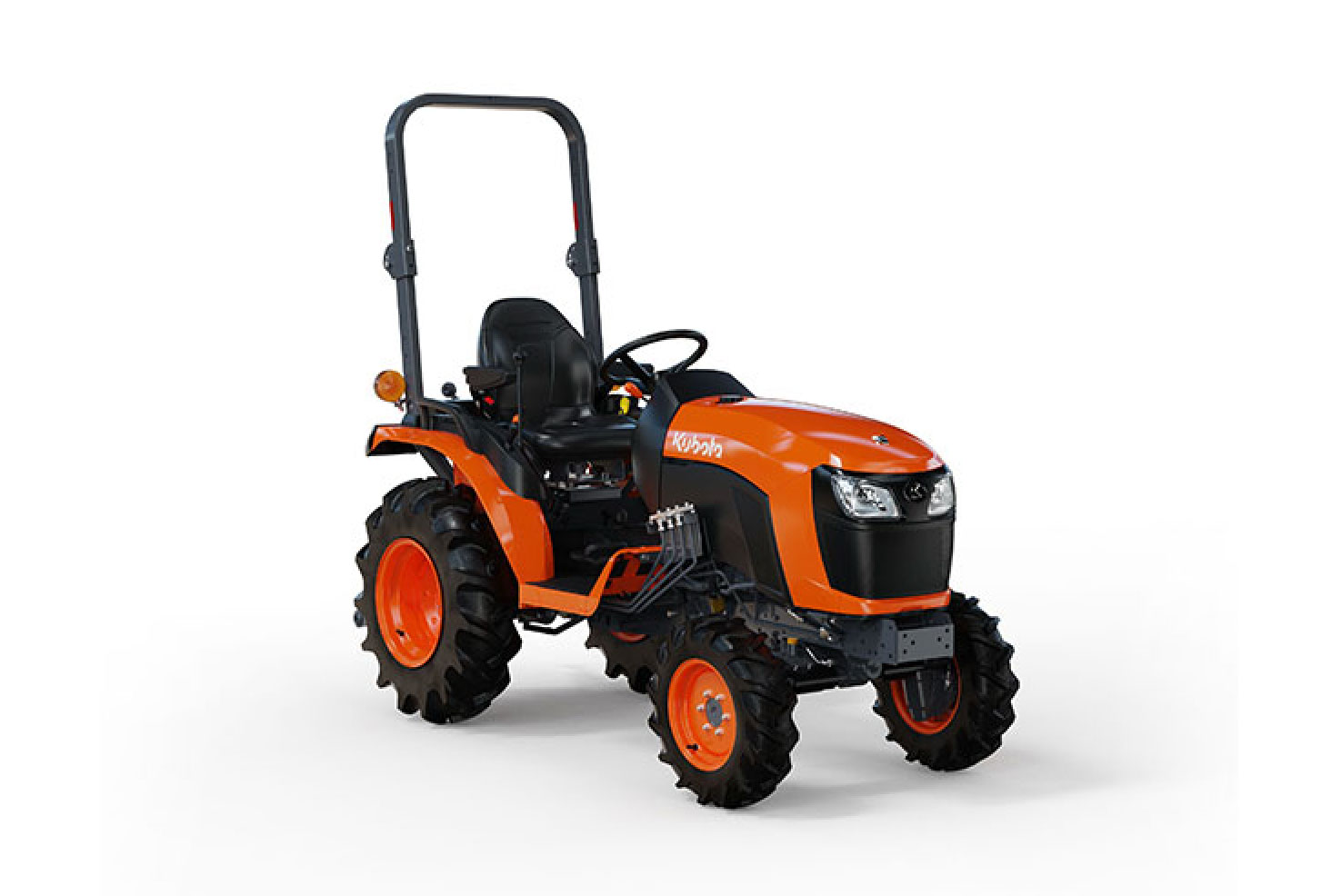
Kubota B2601
~$20,017MSRP, base build
Compact

Kubota

Kubota B2601

24.3 hp engine · 19.5 PTO−20% to the shaft
Loader
948 lbs
3-pt
1,411 lbs
Trans
Hydrostatic
Drive
4WD

Stepping off the BX frame buys a real Category I hitch and a 1,411 lb three-point, roughly double what a BX lifts at the rear. At $20,017 it sits between the BX80 range and the L02 compacts, and it is the smallest Kubota that takes full-size rear implements.

Spec sheet & owner notes
Kubota B2301
~$18,874MSRP, base build
Compact

Kubota

Kubota B2301

20.9 hp engine · 17.4 PTO−17% to the shaft
Loader
1,175 lbs
3-pt
1,411 lbs
Trans
Hydrostatic
Drive
4WD

Cheapest hydrostatic B-series Kubota sells, sitting between the BX80 range and the B2601 on 20.9 gross hp from the 61.1 cu in D1005. It shares the B2601's LA435 loader, 8.3 gpm pump and 1,411 lb hitch outright - the difference between the two is 3.4 gross horsepower.

Spec sheet & owner notes
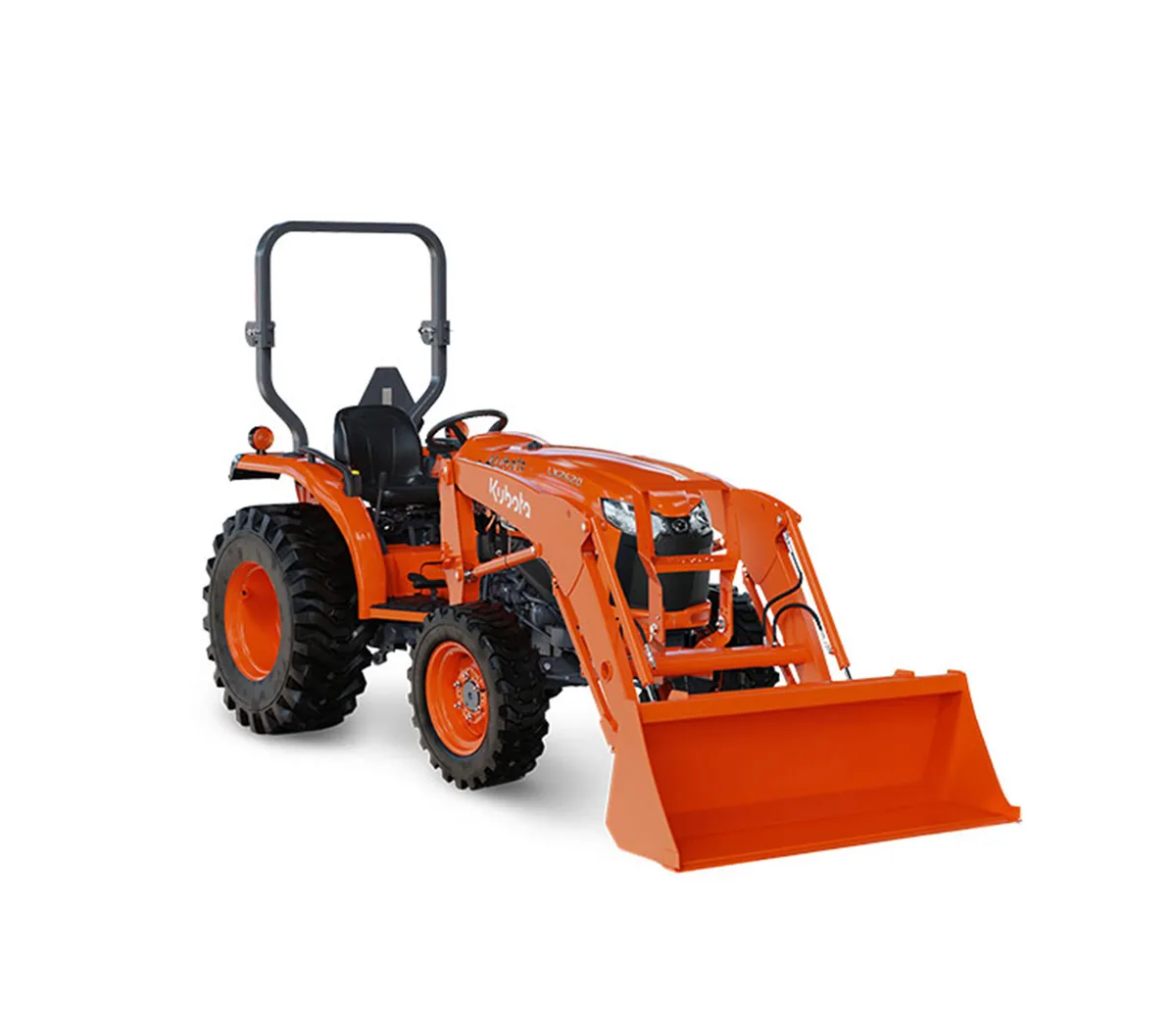
Kubota L2502
~$17,449MSRP, base build
Compact

Kubota

Kubota L2502

23.3 hp engine · 19.8 PTO−15% to the shaft
Loader
1,446 lbs
3-pt
1,874 lbs
Trans
Gear
Drive
4WD

Replaces the L2501 at the bottom of Kubota's Standard L range, now rated 23.3 gross hp where the older machine was rated 24.8. Same cast frame, all-metal hood and Kubota-built LA526 loader; the 8F/8R synchronised shuttle is the base build and a three-range HST is the alternative.

Spec sheet & owner notes