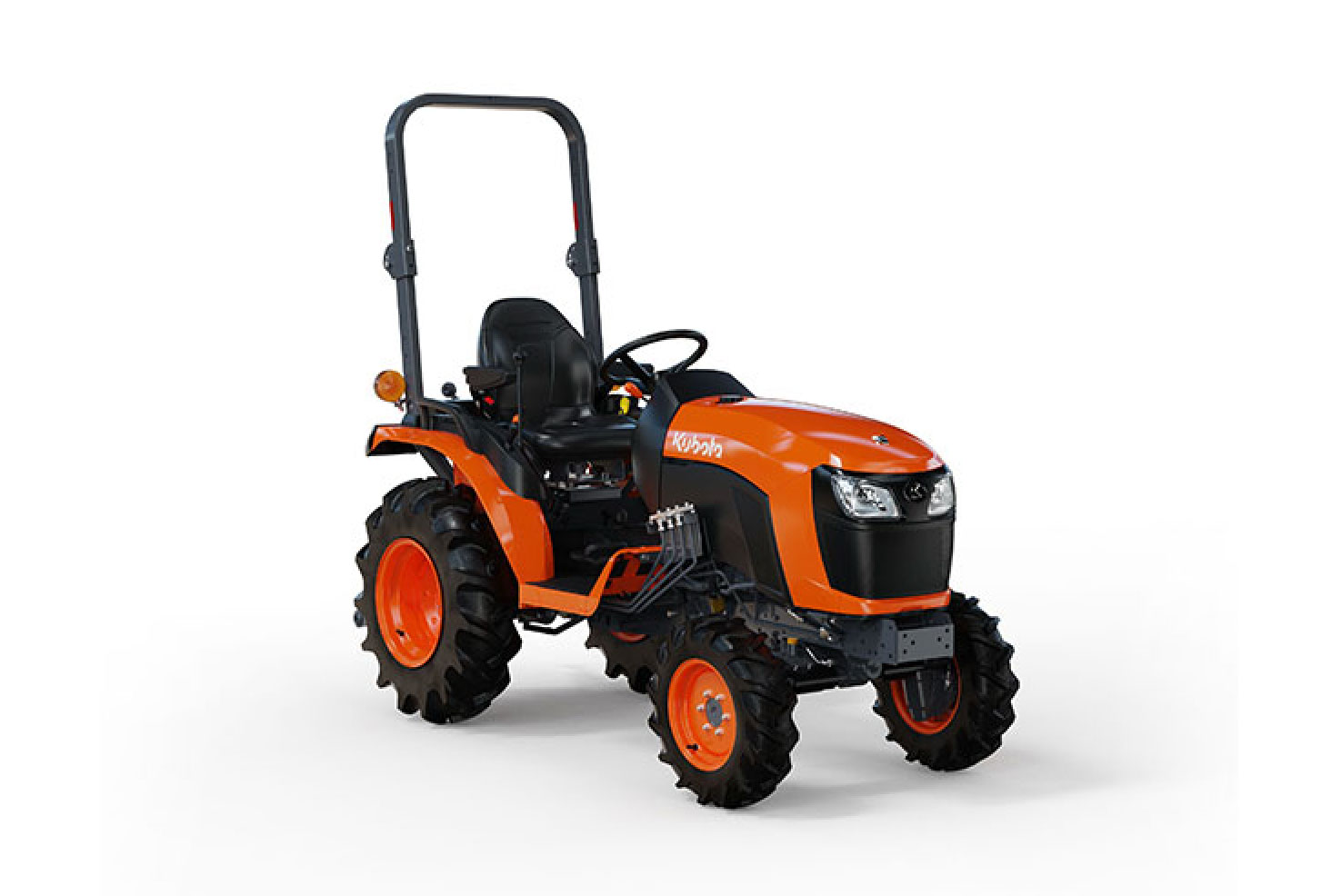
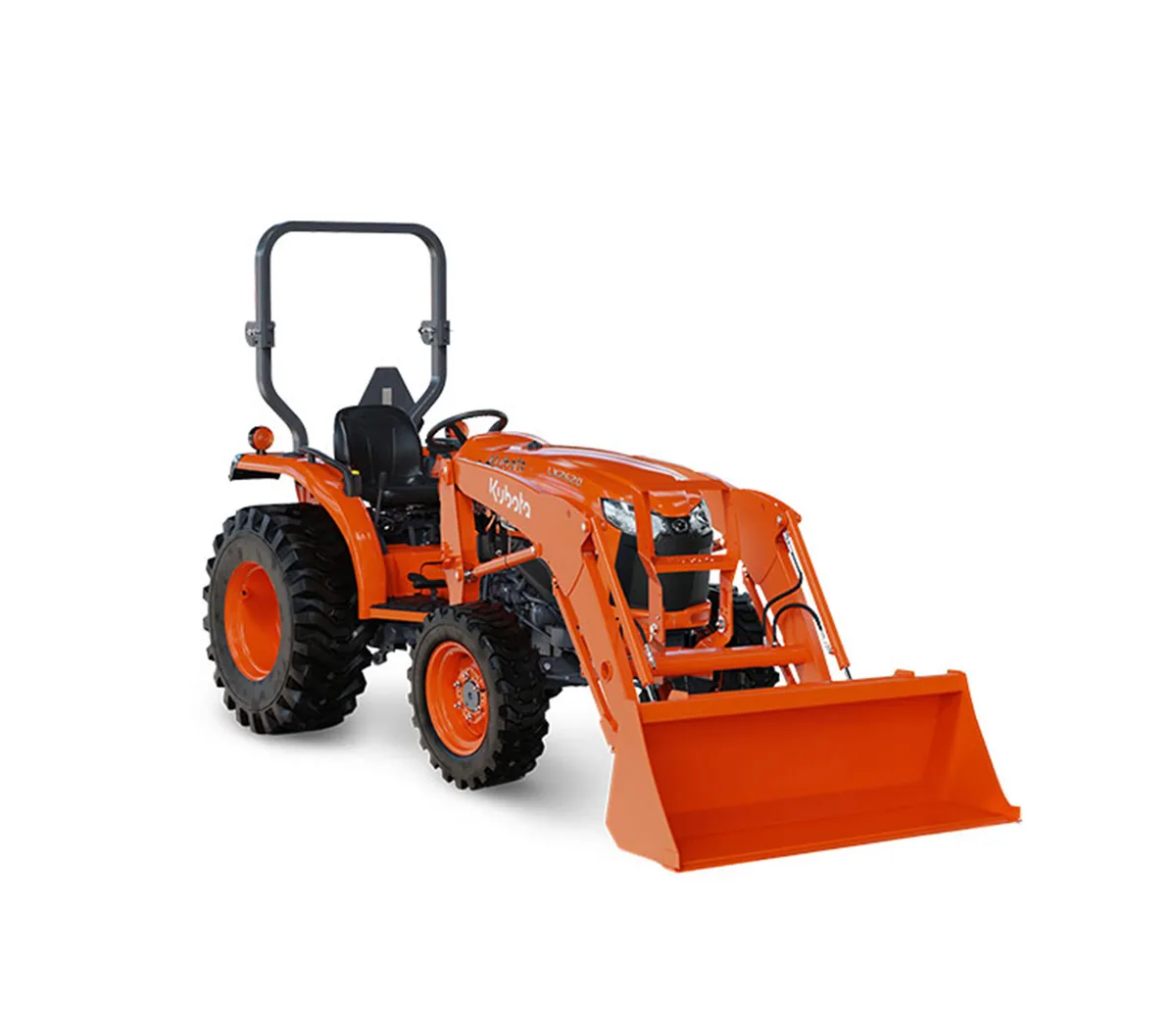
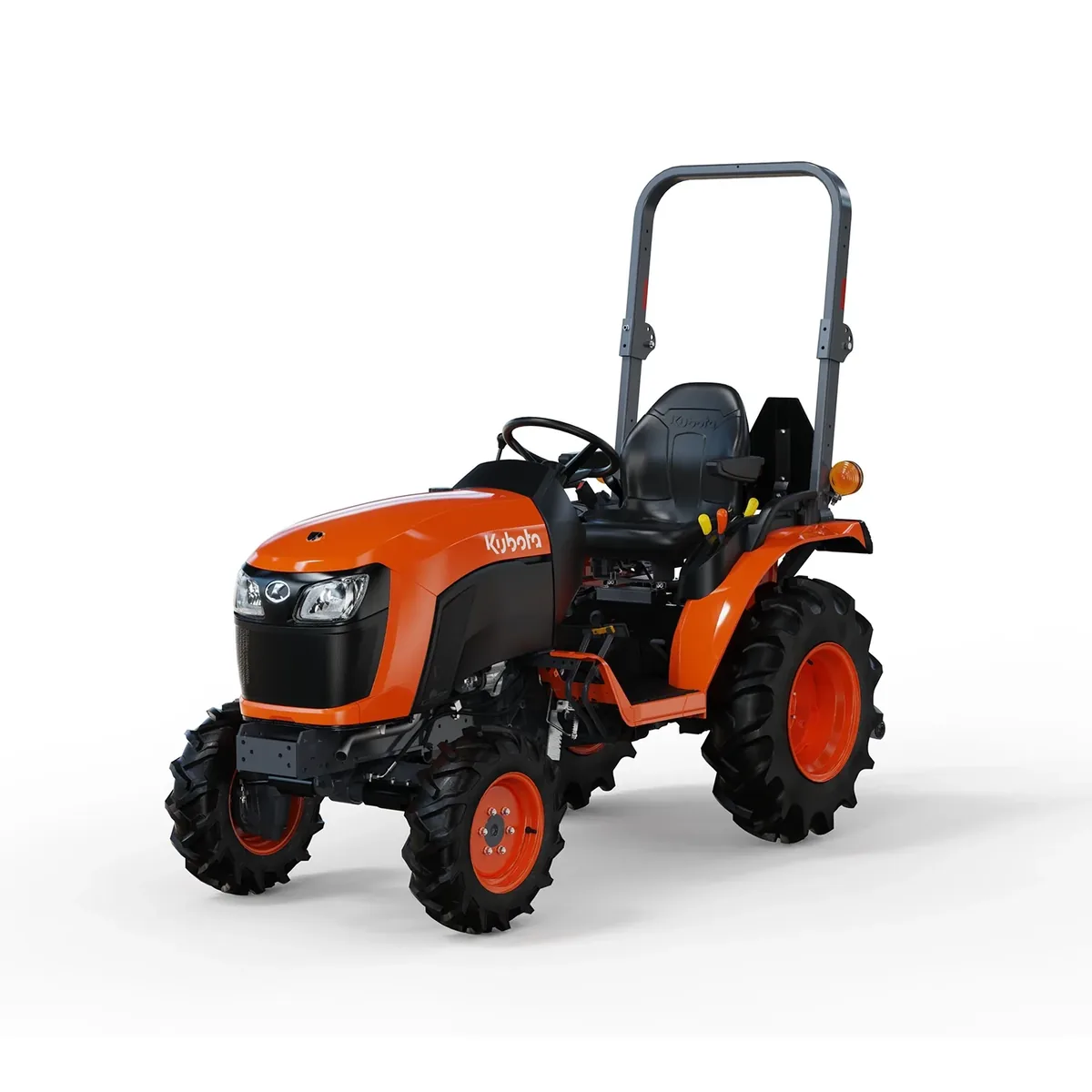
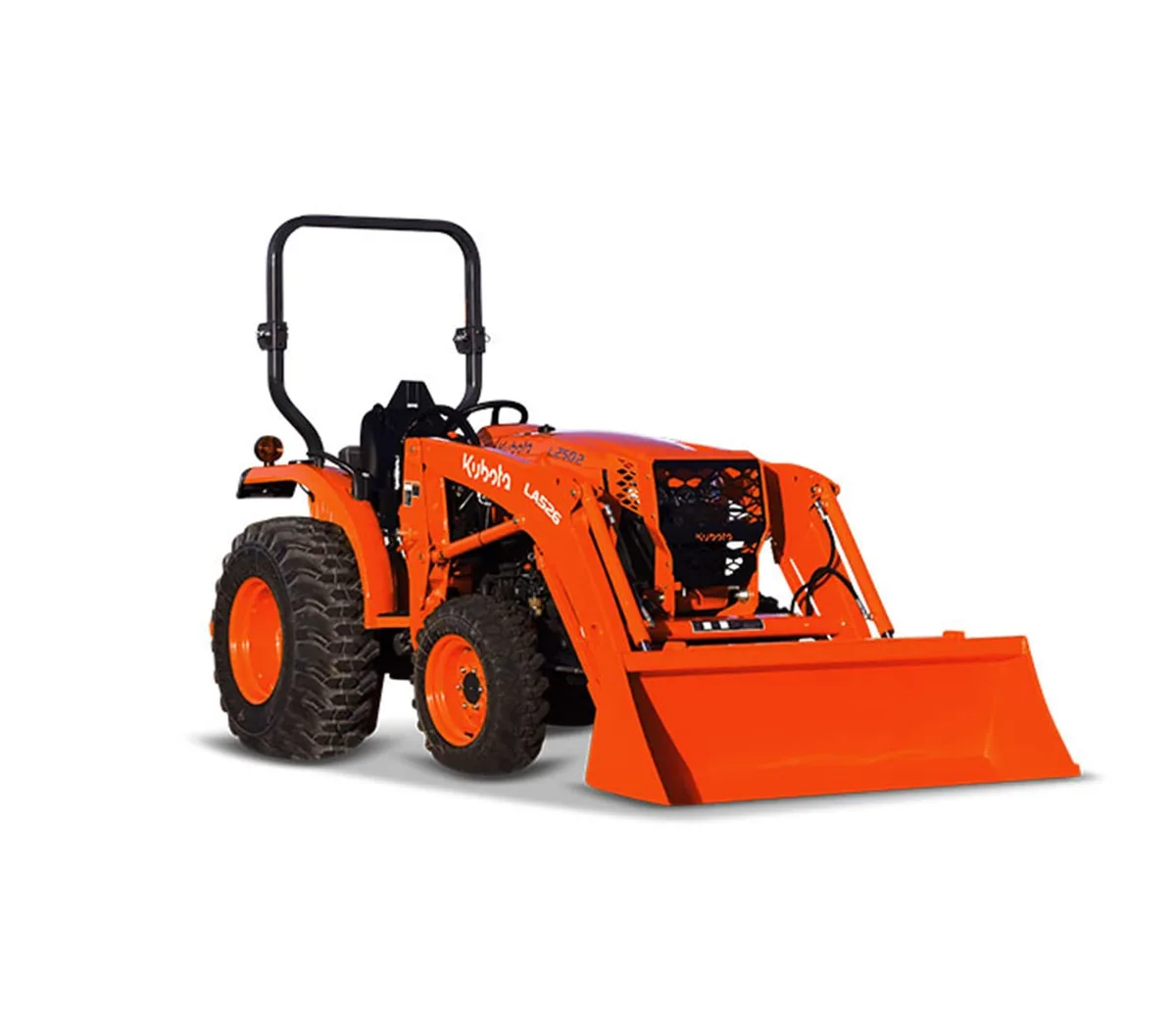
Owners buy the B2601 for lift, and the ones who are happiest are the ones who also bought a third-function valve and a grapple. That combination comes up more than any other single recommendation in the file — owners call it a lifesaver for dead ash removal, a huge time saver on brush and rock, and the thing that makes the machine feel larger than it is. One owner on three acres with a grapple, forks, auger, landscape rake and box blade says he has never hit a job on his property the machine could not do, and has moved logs big enough to look absurd against it. A school maintaining 34 acres hit a hundred hours and cannot work out how anything got done before. Owners also point out the front-mounted hydraulic auger off the third function as an underrated choice: safer than a PTO post-hole digger, reversible if you get it stuck, and it takes a stump-grinding bit too.
The thing to know before buying is that this machine tips. The reports are numerous and they come from experienced people: a contractor who runs several says he has rolled all of his more than once, an owner in the British Columbia mountains flipped his and now tells buyers to order wheel spacers, another fitted two-inch spacers and calls the difference night and day, and one lifting a firewood tote on forks describes the front setting down with a rear wheel in the air. Owners who move full firewood totes can do it on flat ground with loaded tires and a box blade for ballast, going slowly, but not on off-camber ground — and the consensus is that loading a tote into a truck bed wants an MX-class machine. If your land is hilly, several owners who started here have moved up to an L or LX for exactly that reason.
The belly mower is the implement owners use least. The school reports the tractor is simply more functional with the deck off because of the clearance it costs; an owner on two hilly acres says mowing takes far too long and the machine is heavy enough to tear turf when the ground is wet, even on filled versa-turf tires, and is shopping for a zero-turn. Mechanically the machine is quiet in what owners write, with two faults worth knowing: the loader and three-point going dead while the backhoe still works, which two owners traced to failed hydraulic quick-connect couplers costing about $40 in parts after hours of hunting; and the PTO lever being easy to nudge while dismounting, which trips the safety and makes everything appear broken until you cycle it off and on.
Is the B2601 stable enough for hilly ground?+−
This is the thing to know before you buy. Multiple owners, including a contractor running several and an owner in mountain country, report rolling or flipping one. Wheel spacers are the near-universal first modification — an owner who fitted two-inch spacers calls the difference night and day. Owners who work real slopes consistently end up moving to an L or LX. On flat and gently rolling ground with loaded tires and rear ballast, owners are comfortable; off-camber with a load on the forks, they are not.
How much can it actually lift?+−
Enough to change what you can do against a BX, but less than the spec implies in practice. One owner cites a published figure of 800 pounds and plans around it; others frame it as roughly 300 pounds more than a BX, which matters because a grapple eats a couple of hundred pounds before you pick anything up. The practical benchmark owners use is a full tote of firewood: movable on flat ground with filled tires and a box blade for ballast, going slowly — not on slopes, and not up into a truck bed.
What should I buy with it?+−
A third-function valve and a grapple, according to more owners than any other recommendation. After that, owners name pallet forks, a quick hitch that does not need bushings so implements swap fast, and a toothbar for the bucket. The front hydraulic auger off the third function gets recommended over a PTO post-hole digger — safer, reversible if it binds, and it takes a stump-grinding bit. Owners also suggest a grill guard, since the plastic grille and lights are exposed.
Can it run a bush hog and finish-mow the lawn?+−
It can do both, and owners use neither as much as they expected. The belly mower comes up repeatedly as the least-used implement — a school fleet says the tractor is more functional with the deck off because of the clearance, and an owner on hilly ground finds it slow and heavy enough to tear wet turf even on filled versa-turf tires. One owner also finds a bush hog cumbersome on lawn and is switching to a flail for a better cut and better brush work.
B2601 or step up to an L-series or LX?+−
The honest answer from owners who have done both is that it depends on slope and round bales. On one to three acres of mixed property work owners are consistently happy and say they have never run into a job the machine could not do. Owners who moved up did so for hills and stability, for a cab, or for a little more power without going much larger. And owners are unanimous that horses and round bales mean an L — the B will not do that work.
What goes wrong on a B2601?+−
Very little, and the two faults that recur are cheap. Owners report the loader and three-point going completely dead while the backhoe still works, which traces to failed hydraulic quick-connect couplers — about $40 in parts and a ten-minute job once you know. And more than one owner has panicked over a tractor that appears dead after dismounting, only to find clothing had nudged the PTO lever far enough to trip the safety switch without being visibly out of position; cycling the PTO off and on clears it.
Summarised from public owner discussion, not from testing. Nothing here was measured by this site, and a report that recurs is not the same as a defect rate.