Kubota · Sub-Compact

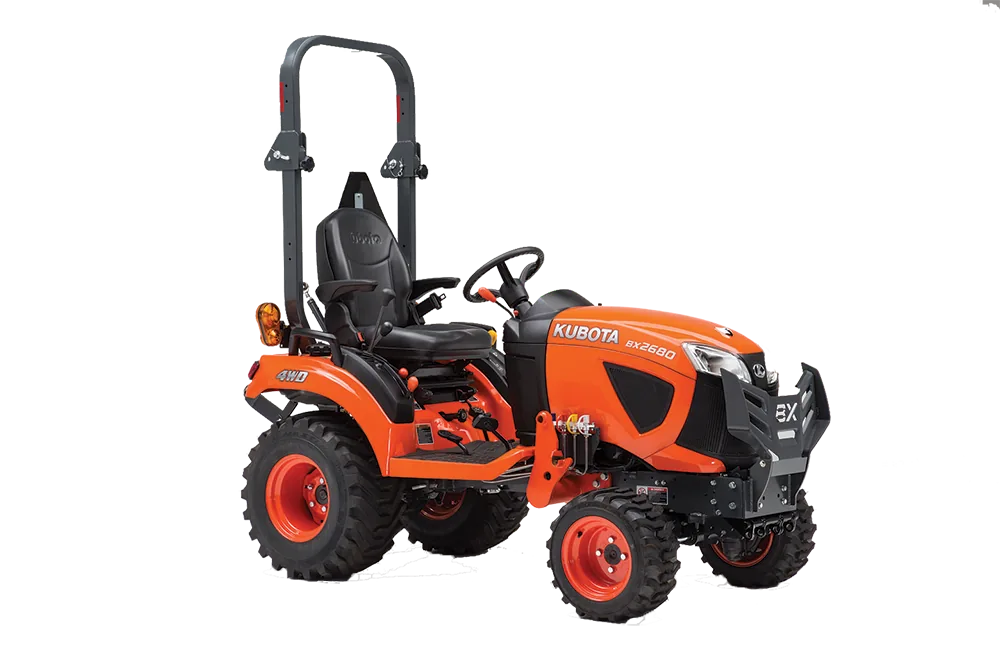
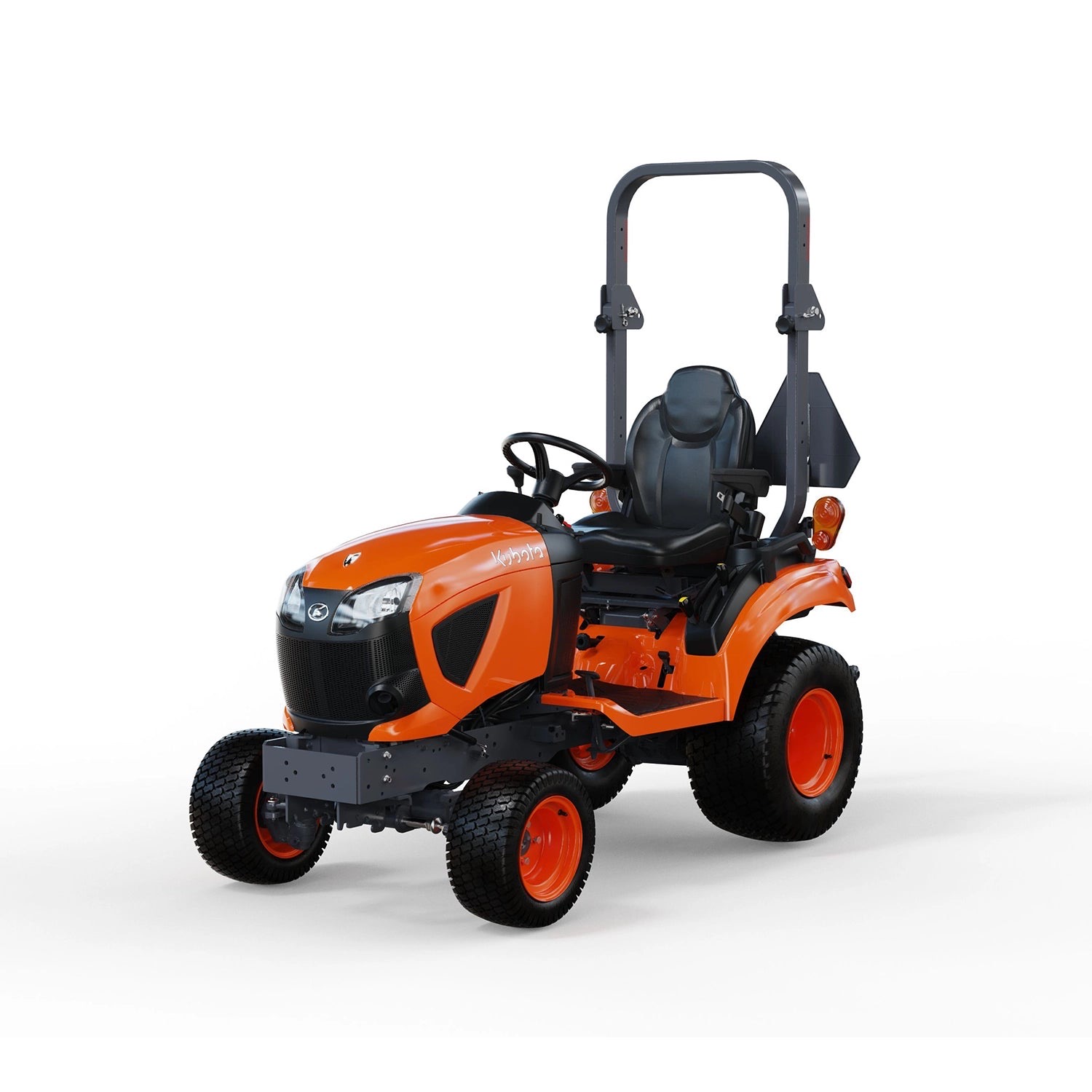
Kubota BX2680

~$17,632

MSRP, base build

Kubota BX2680
Sub-Compact
23.3 hp engine · 19.2 PTO−18% to the shaft

Top of the BX80 range and the last step before the B series: 23.3 gross hp from a 61.1 cu in three-cylinder against the BX2380's 21.6 from 54.8 cu in. Frame, 6.6 gal tank, 6.2 gpm pump and 680 lb hitch all carry over unchanged from the cheaper models.

Engine
23.3 hp
PTO
19.2 hp
Loader lift
699 lbs
3-pt lift
680 lbs

1.09 PTO hp per $1,000 of list price

As published by the maker

Specifications

Size class
Sub-Compact
Transmission
Hydrostatic
Engine
Kubota
Engine hp
23.3 hp
PTO hp
19.2 hp
Drive
4WD
Loader lift
699 lbs
Three-point lift
680 lbs
Hydraulic flow
6.2 GPM
Fuel tank
6.6 gal
Weight
1,520 lbs
Warranty
6 yr / 2000 hr powertrain
4WD
Yes
Cab
Open station
Turbo
No
Cruise control
No

On the price: The maker's own published starting figure for the base build. A dealer adds a loader, a deck and freight on top.

Lift figures are the maker's and are quoted at whichever point the maker chose; the about page explains why two loaders with the same number do not lift the same pallet.

Comes with

4WDHydrostaticFront LoaderPower SteeringDiesel

From owner discussion and long-term write-ups

What owners say

What they like

  • 19.2 PTO hp is 1.5 hp over the BX2380 for about $1,000, and that shows on a 60 in deck in thick grass
  • The Swift-Tach LA344S comes off and goes back on without tools and without leaving the seat
  • Under seven feet to the top of the ROPS, so it parks in a standard garage without folding anything down
  • 54 in and 60 in mid-mount decks plus a 60 in Easy-Over deck are all offered here, where the BX1880 is limited to 48 and 54 in
  • Kubota builds the engine, the loader and the mower decks, so no part of the package depends on an outside supplier

What they complain about

  • 680 lb of three-point lift measured 24 in behind the pin is identical to the 16.6 hp BX1880's, so the extra power buys no hitch capacity at all
  • 6.2 gpm of total hydraulic flow, only 5.2 gpm of it reaching the implement circuit, is the thinnest hydraulic package Kubota sells on a tractor
  • The quick-attach LA344S lifts 699 lb at the pivot pin at 1,500 mm against 820 lb for the pin-on LA344, so the convenient bucket is the weaker one
  • 6.6 gal of fuel goes quickly once a mower deck is loading the engine
  • At $17,632 it costs more than a B2401, which carries nearly double the hitch capacity and a much bigger loader if a gear box is acceptable

Gathered from owner reports

What owners report

Owners treat the BX2680 as the sub-compact you buy when snow is the real job. It turns up repeatedly on long gravel drives with a front blower, a heated cab and a rear blade, on semi-commercial snow routes, and in the White Mountains clearing two feet with an oversized three-point blower and a pusher box. The extra power over the BX2380 is specifically what owners point to for blowing, and the single upgrade they credit most is filled rear tires - beet juice is described as a complete game changer for climbing inclines with snow in front and for keeping the back end from stepping out sideways.

In summer it is a capable little machine well past what its size suggests. Owners have dragged a 72-inch land plane to regravel roads, run a six-foot rotary cutter on hilly ground, and pulled a 2,680 lb trailer with the three point. The limits are the loader and the frame. Usable lift is around 600 lb, and owners note that a grapple weighing 200 lb comes straight off that, leaving about 400 lb for what you are actually picking up - one owner moves one log at a time with forks and calls his uncle with a B-series for anything faster. Stability is the other limit and the reports are pointed: owners describe going up on three wheels crossing a tree root, nearly flipping on wooded slopes with the tires already filled, and finding ditches genuinely unstable. Wheel spacers help, and adding a cab gives some of that gain straight back.

The complaints that cluster are about build and dealers rather than design. Owners report a mower deck bracket welded wrong so the deck kept detaching on one side, a deck shell welding fault that stopped the blades and stalled the tractor, sun-damaged front tires on a machine with under ten hours, and a cracked weld on the loader stand - and in two of those cases the dealer initially insisted nothing was wrong or that the owner had caused it. The machine is also tightly packaged: one long-term owner rerouted his own fuel line because the filter clearance was so tight, and says the tank cannot be cleaned without either twelve hours of his own labour or six of a mechanic's.

What comes up favourably

  • Snow is what owners buy it for: front blowers, plows, pusher boxes and oversized rear blowers all get used on it, and the extra power over the BX2380 is exactly what owners say matters for blowing
  • Filled rear tires are described as transformative for winter traction - going up inclines with a full push of snow instead of fishtailing - and they double as loader ballast
  • It punches above its size on the three point: owners have dragged a 72-inch land plane to regravel a road, pulled a six-foot rotary cutter on hilly ground and moved a 2,680 lb trailer
  • The skid-steer quick attach means implements come from anywhere - one owner bought SSQA forks for about $500 and points out the closed-system alternative costs roughly double
  • The front blower and plow swap on and off in a couple of minutes with the quick-hitch system, which owners say is far quicker than fitting the belly mower
  • Long-term reliability of the engine gets consistent praise, with owners of older BX machines in the same family running them for well over a decade on routine servicing

What comes up as a complaint

  • Usable loader lift is around 600 lb, and a grapple eats about a third of that before it picks anything up - owners moving logs describe one at a time as the realistic pace
  • Stability on side slopes is the most serious complaint: owners report coming up on three wheels over a tree root and nearly flipping on wooded hillsides with the rear tires already filled
  • The drive-over mower deck is awkward: owners say the loader really needs to come off to fit or remove it, and cracked deck wheel welds are attributed to people who leave the loader on
  • Factory defects come up more than once - a deck pivot bracket welded so the deck detached on one side, and a deck shell fault that stopped the blades and stalled the tractor when the mid-PTO engaged
  • Dealers pushing back on warranty claims is a recurring theme: owners describe being told sun-cracked new tires were their own damage and being charged for a cracked loader-stand weld before the money was refunded
  • It is packaged very tightly for servicing - one owner rerouted his fuel line to reach the filter and says the fuel tank design puts a proper cleaning out of reach without pulling it
  • Several owners say the loader is the thing they would change about the machine, both for capacity and for how awkwardly it attaches compared with older pinned designs

Questions worth asking

Is it worth the step up from a BX2380?
Owners who use theirs for snow say yes, and for one reason: the extra PTO power blowing snow. One with a blower in deep drifts says the few extra horsepower would make his smaller machine better. An owner who replaced an older model reports the newer one mows heavy grass without the slight overheating the old one showed. If the work is mostly bucket and three point, the difference is much smaller - the loader and hydraulics are the same.
How much will the BX2680's loader really lift?
Owners work to roughly 600 lb and subtract the attachment. A grapple around 200 lb leaves about 400 lb of payload, which is one modest log at a time - one owner called in a neighbour with a B-series to speed the job up. Pallet forks weighing close to 300 lb have the same effect. Owners who need more consistently say the B or LX is the step that fixes it, since the lift roughly doubles rather than creeping up.
How stable is it on hills?
Less than owners expect, and this is the complaint they raise most urgently. Separate owners report coming up on three wheels crossing a small tree root, almost flipping on wooded slopes with filled rear tires, and finding ditches very unstable. The advice that comes back is consistent: take slopes straight up and down, never sideways, keep the bucket no higher than the headlights when loaded, fill the tires and fit wheel spacers - while knowing a cab gives part of the spacer gain back.
R4, turf or R14 tires for snow?
Owners disagree, which is worth knowing before you spend the money. Two who do semi-commercial snow work argue for turf tires, on the grounds that the larger contact patch and the siping between lugs bite better on ice. Another owner in the Colorado mountains says R4s are poor on snow and ice and recommends R1 or R14, with chains as the fix if you keep the R4s. What nobody disputes is that filled rear tires matter more than the tread pattern.
What should I check on a used BX2680?
Owners point at a few specific things. Look along the mower deck pivot brackets, since a mis-welded lip caused one owner's deck to keep detaching on one side. Check the loader stand for cracked welds - one owner found his only after the loader would not come off. Check the front tires for weather cracking, which has caused new machines to leak down overnight when the bucket is loaded. And ask about fuel: debris in the tank is a known nuisance on these, and the tank is not easy to clean.
What does one cost new and used?
Owner-reported numbers vary more than you might expect. A bare tractor with loader and bucket was quoted around $24,000 by one dealer, while another bought new with mower and bucket for about $21,000. The used market is much softer and seasonal: owners report buying at auction with low hours and several implements in the mid-teens, and paying about $14,000 for a 70-hour machine with a plow in the middle of a Midwest winter. Owners advise selling in spring and buying in winter.

Summarised from public owner discussion, not from testing. Nothing here was measured by this site, and a report that recurs is not the same as a defect rate.

Cross-shopped against

Line the Kubota BX2680 up

Same brand or same size, nearest in price

Related tractors

More from Kubota →
Kubota BX2380
~$16,624MSRP, base build
Sub-Compact

Kubota

Kubota BX2380

21.6 hp engine · 17.7 PTO−18% to the shaft
Loader
—
3-pt
680 lbs
Trans
Hydrostatic
Drive
4WD

Five more horsepower than the BX1880 for about $3,800 more, on the identical BX80 chassis, LA344 loader and drive-over deck. That single step is the whole BX buying decision, and 21.6 hp is where most of the volume lands.

Spec sheet & owner notes
Kubota BX1880
~$12,798MSRP, base build
Sub-Compact

Kubota

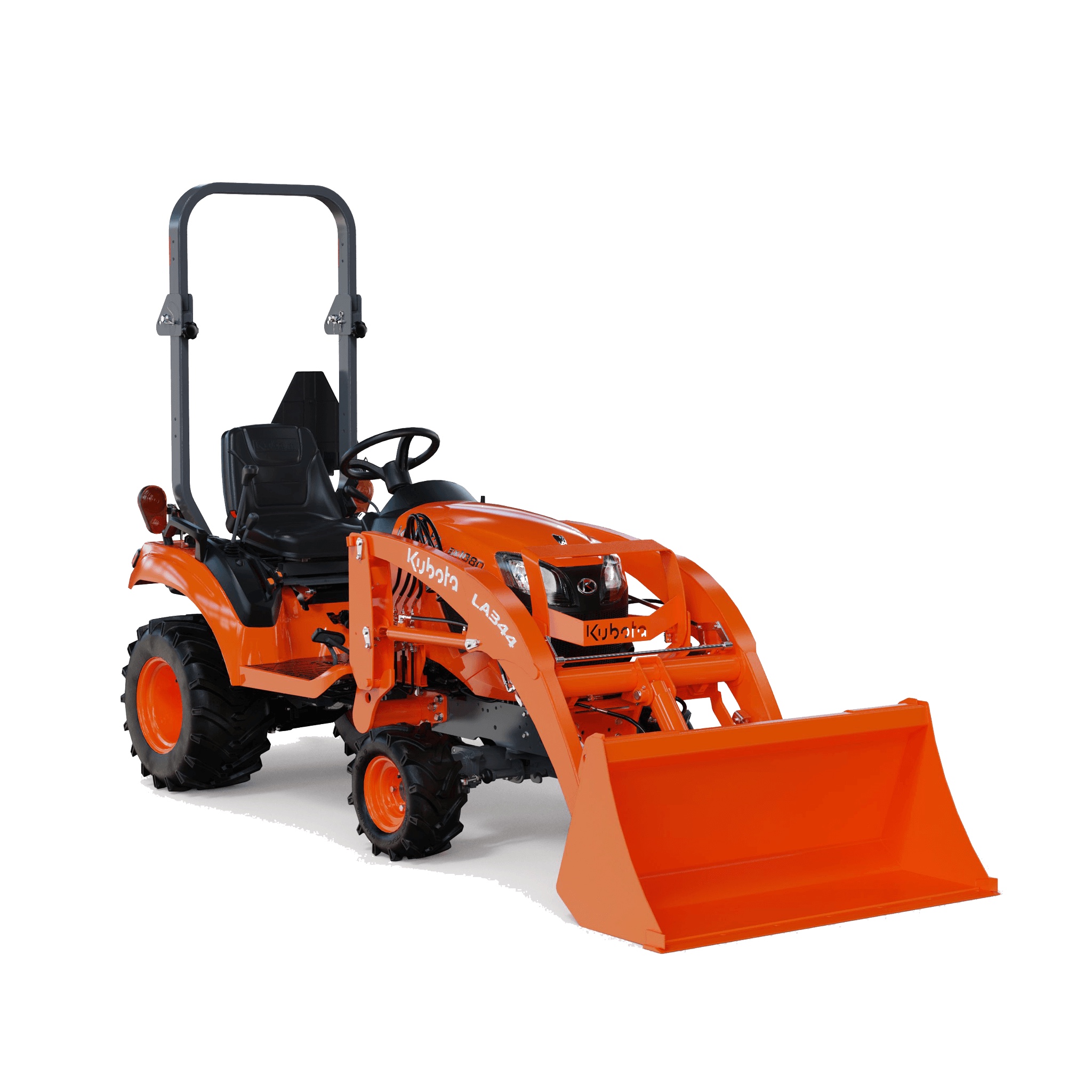
Kubota BX1880

16.6 hp engine · 13.7 PTO−17% to the shaft
Loader
—
3-pt
680 lbs
Trans
Hydrostatic
Drive
4WD

Cheapest diesel tractor Kubota sells in the US at $12,798 base, and the 16.6 hp D722 is the compromise that buys that number. It mows an acre or two and moves light loads; it is not the one to buy if a loader bucket will be full most days.

Spec sheet & owner notes
Kubota BX23S
~$28,061MSRP, base build
Sub-Compact

Kubota

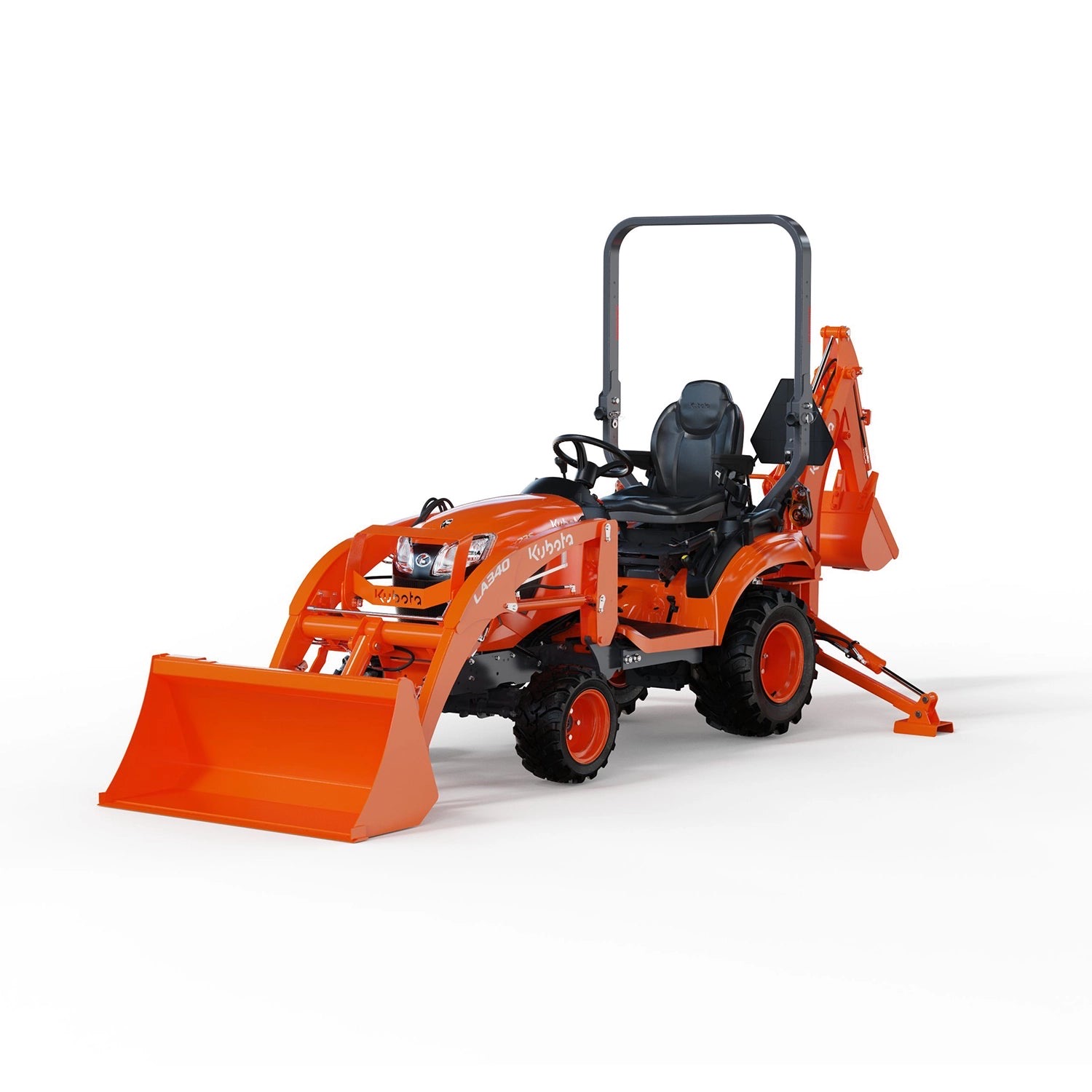
Kubota BX23S

21.6 hp engine · 17.7 PTO−18% to the shaft
Loader
739 lbs
3-pt
680 lbs
Trans
Hydrostatic
Drive
4WD

A factory backhoe is the entire point, and it is why the MSRP sits about $11,400 above a BX2380 running the same 21.6 hp engine. The BT603 hoe and LA340 loader ship as one Kubota-built package rather than a dealer-fitted afterthought.

Spec sheet & owner notes