Kubota · Sub-Compact

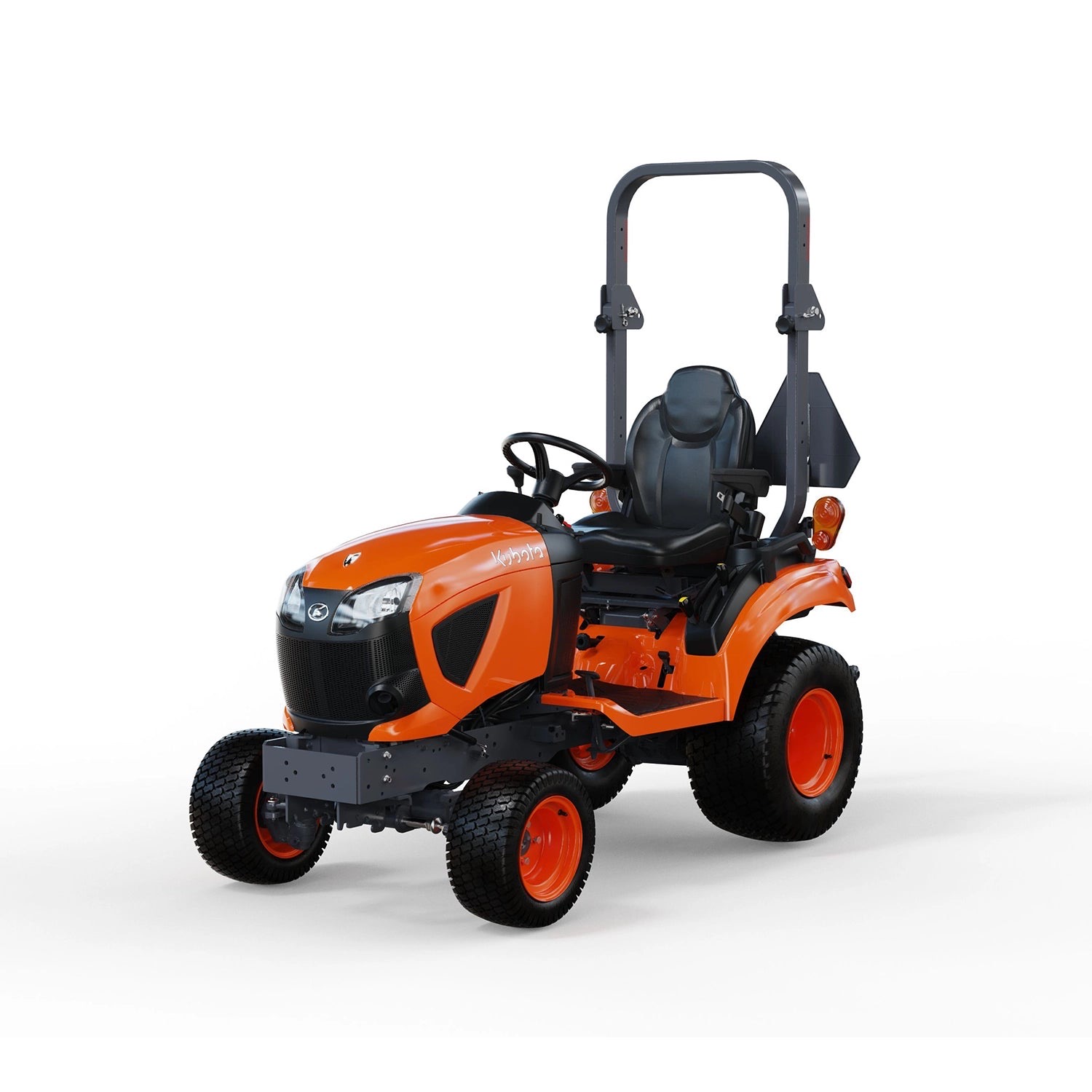
Kubota BX23S

~$28,061

MSRP, base build

Kubota BX23S
Sub-Compact
21.6 hp engine · 17.7 PTO−18% to the shaft

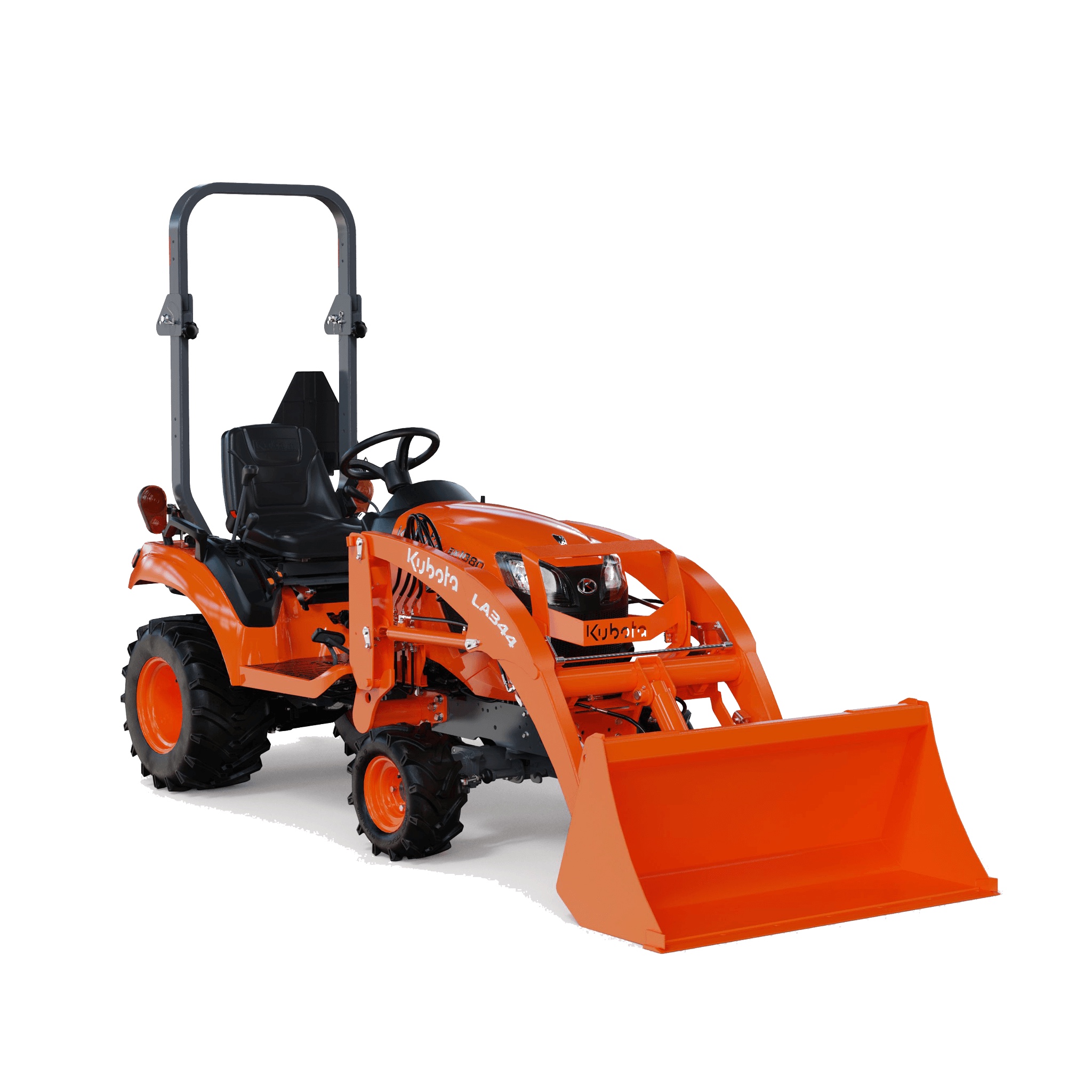
A factory backhoe is the entire point, and it is why the MSRP sits about $11,400 above a BX2380 running the same 21.6 hp engine. The BT603 hoe and LA340 loader ship as one Kubota-built package rather than a dealer-fitted afterthought.

Engine
21.6 hp
PTO
17.7 hp
Loader lift
739 lbs
3-pt lift
680 lbs

0.63 PTO hp per $1,000 of list price

As published by the maker

Specifications

Size class
Sub-Compact
Transmission
Hydrostatic
Engine
Kubota
Engine hp
21.6 hp
PTO hp
17.7 hp
Drive
4WD
Loader lift
739 lbs
Three-point lift
680 lbs
Hydraulic flow
6.2 GPM
Fuel tank
6.6 gal
Weight
1,808 lbs
Warranty
6 yr / 2000 hr powertrain
4WD
Yes
Cab
Open station
Turbo
No
Cruise control
No

On the price: The maker's own published starting figure for the base build. A dealer adds a loader, a deck and freight on top.

Lift figures are the maker's and are quoted at whichever point the maker chose; the about page explains why two loaders with the same number do not lift the same pallet.

Comes with

4WDHydrostaticFront LoaderPower SteeringBackhoeDiesel

From owner discussion and long-term write-ups

What owners say

What they like

  • The factory-integrated backhoe is the whole reason to buy this - it's a real digging machine, not a bolt-on afterthought, and it swings and digs like a mini-excavator
  • Kubota builds their own engine, so you're not relying on a third-party powerplant, and the D902 has a bulletproof reputation among owners
  • The curved-boom loader gives noticeably better dump clearance and reach than the straight-boom loaders on some competitors
  • The backhoe swing frame doubles as a rear ballast so you don't need to add weights for loader work
  • The build is heavy for a sub-compact at over 1,800 lbs, giving it good stability and traction for its size
  • Cross-drilled rear axles allow independent left/right brakes for tight turns, a genuinely useful feature owners rave about

What they complain about

  • At 21.6 HP it's the weakest engine of the popular sub-compacts, so with the backhoe weight it can feel underpowered doing loader and PTO work
  • The TLB package pushes the price well past $24K, making it the most expensive way into a sub-compact by a wide margin
  • No AutoConnect-style drive-over mower deck - fitting the mid-mount deck is more of a hassle than the Deere 1025R system
  • The backhoe adds a lot of length and weight, hurting maneuverability and ride quality when you're not actually digging
  • PTO horsepower of 17.7 limits it on wider mowers, tillers, and snowblowers compared to a 3-series compact
  • Loader lift of 739 lbs at the pin is fairly modest once you account for a heavy bucket

Gathered from owner reports

What owners report

The sentence owners keep writing about this machine is some version of it will do anything a bigger tractor will do, it just takes longer — and they mean it literally. One owner re-landscaped a quarter-acre corner lot with it: tore out everything, brought in yards of stone, moved seven yards of decomposed granite and planed it flat, removed trees and trenched for drainage and irrigation. He estimates a skid steer would have done it in about twenty hours against his fifty, and that the skid steer costs three times as much. Another unloaded roughly ten cords of log-length wood off an 18-foot trailer over a weekend and says he would never have attempted it without the machine. A third has run one for six years in northern Ontario trenching, grading, clearing snow and pulling stumps, and calls it reliable, comfortable and tough.

The universal caveat is loader capacity, and owners raise it more often than any other subject. The same six-year owner calls the lift quite marginal and describes his own attempts to move wood and lumber as half-hearted. Others report carrying a third of a firewood tote at a time, being underwhelmed lifting on pallet forks, struggling to pull an engine because the lift height runs out, and barely clearing the four-foot sides of a dump trailer with a full bucket of wet dirt. Two owners independently recommend a quick-attach coupler as the single best option — worth it purely for bucket-to-fork swaps, with one saying he would step up to a B-series before giving up the quick-attach if its weight cost him capacity. Both also warn that the front tire sidewalls wear quickly under loader work, and that a rear ballast box is not optional unless the backhoe is on.

On the backhoe, owners who have one are more positive than the received wisdom. One reports the hoe's breakout force exceeding a small mini excavator's and has pulled three-foot rocks out of his driveway; another says nothing has defeated it except rock and stumps, which simply take longer; and several note it pops off easily with the frame brackets staying on the tractor. The honest limits they give are swing arc and travel — you cannot scoop, swing and dump like a mini excavator, so you are climbing off to reposition. Pricing is the other recurring shock: owners who paid around $25,000 out the door in 2020 with a deck, forks and a sprayer report current quotes closer to $38,000, and Kubota appears not to discount below list, with the only real lever being the length of the 0% term.

What comes up favourably

  • Owners describe it as slow but unstoppable within its weight class — one re-landscaped an entire quarter-acre lot with it, moving yards of stone and granite, removing trees and trenching, and reckons a skid steer would have halved his hours at three times the price.
  • The backhoe earns its keep for owners who bought it: one cites a breakout force higher than a small mini excavator's and has pulled three-foot rocks from his driveway, another says the only things that slow it down are rock and stumps, and both value having it available at any hour without a rental booking.
  • It comes off easily. Owners report the backhoe unpinning quickly with its frame brackets left on the tractor, which is what makes switching between digging and loader work practical rather than a project.
  • A quick-attach coupler is the option two owners independently name as the best money they spent — worth it for bucket-to-fork swaps alone, and one says he would move up to a B-series rather than give it up.
  • For a retired couple, the rental arithmetic settled it: roughly $300 a day or $1,000 a week locally, with the added worry of paying for days they would not feel like working, made buying the obvious choice.
  • It trailers easily for its capability — owners report around 4,000 pounds with the trailer on a 7x14 tandem and tow it comfortably behind a light-duty three-quarter-ton, with one noting the rig is no wider than a half-ton pickup.
  • Mechanical trouble is scarce in owner reports: one at nearly four years has had nothing but a broken weld on a backhoe mount pin, replaced at no charge, and another mentions only air in the fuel line after a filter change, cleared with the bleeder valve.

What comes up as a complaint

  • Loader capacity is the complaint owners raise most, including the ones who love the machine. A six-year owner calls the lift marginal and his own wood-moving efforts half-hearted; others carry a third of a firewood tote at a time, are underwhelmed on pallet forks, and barely clear four-foot dump trailer sides with a full bucket of wet dirt.
  • Front tire sidewalls wear quickly, according to owners who do a lot of loader work — the weight sits on them constantly, and it is the kind of wear people do not budget for.
  • The backhoe's swing arc is small and moving the tractor is slow, so unlike a mini excavator you cannot scoop, swing and dump from one position — you are climbing off and repositioning constantly on any trench longer than a few feet.
  • The rear three-point is fiddly enough that owners modify it: one added a Category 1 quick release, another replaced the factory cotter pins in the lift arm pins with lynch pins so the whole assembly goes together at once.
  • New pricing has moved sharply. Owners who paid around $25,000 out the door in 2020 with a deck, forks and a sprayer report current quotes near $38,000, and Kubota appears to hold list — the only negotiating lever owners find is the length of the 0% term.
  • Implement sizing is tight: owners put the ceiling at a four-foot box blade or tiller and say six feet belongs on an L-series, and at least one accessory owners wanted turned out to be built for Kubota's compacts rather than the sub-compact frame.

Questions worth asking

Is the BX23S backhoe actually worth having?
Owners who bought one are more positive than the general advice suggests. One points out its breakout force exceeds that of a small mini excavator and has pulled three-foot rocks out of a driveway; another says nothing has stopped it except rock and stumps, which just take longer. The honest limits are swing arc and travel — you cannot scoop, swing and dump from one spot, so long trenches mean climbing off and repositioning. The recurring counter-argument is cost: for a single big dig, renting is cheaper, and for professional digging owners say buy an excavator.
How hard is it to take the backhoe off?
Owners report it pops off easily and the frame brackets stay on the tractor, so the swap is a short job rather than a project. The thing to plan for is ballast: with the hoe off, the weight it was providing goes with it, so owners add a ballast box or weight bar before lifting anything heavy — one specifically bought weights so he would stop feeling obliged to hang the backhoe on just to use the loader or forks.
What can a BX23S loader actually pick up?
Less than owners want, and this is the most consistent criticism the machine gets from people who otherwise love it. Practical reports: a third of a firewood tote per trip, forks that underwhelm, an engine pull frustrated by running out of lift height, and a full bucket of wet dirt only just clearing four-foot dump trailer sides. Owners who regularly move wood or lumber say plainly that this is where the machine stops and a B-series starts.
Should a BX23S have the mid-mount deck too?
Owners split. One with a belly deck calls it a seriously capable lawn tractor and points out that four-wheel drive beats a zero-turn on hills. Another took his deck off after a year and a quarter and bought a dedicated mower, because the tight turns are awkward on the BX and it saves the tractor's hours and maintenance. An owner with slopes recommends a zero-turn outright for its low centre of gravity. If your ground is flat and open, a zero-turn is probably the better mower.
How much property can it handle?
Owners are happiest between about a quarter-acre and two and a half acres of mixed work — landscaping, firewood, trails, snow, driveway maintenance. At four acres owners say it is fine unless the land is all field or you are making hay. Beyond that, the reports turn cautionary: an owner advising someone on fifteen acres with three acres of woods to clear says that will take an eternity at this size, and several who bought one for a bigger place wish they had gone up.
What does one cost now, and can I negotiate?
Expect to pay near list. Owners report Kubota sets tractor pricing tightly enough that two buyers six months apart were quoted the same figure, and the only real variable is the 0% term. Sticker shock is real: roughly $25,000 out the door in 2020 with a deck, forks and a sprayer, against quotes near $38,000 more recently. The used market is where the value is — one owner bought his at 68 hours for $16,500 — and owners note resale is strong enough that several bought partly because they expect to get most of it back.

Summarised from public owner discussion, not from testing. Nothing here was measured by this site, and a report that recurs is not the same as a defect rate.
Cross-shopped against

Line the Kubota BX23S up

Same brand or same size, nearest in price

Related tractors

More from Kubota →
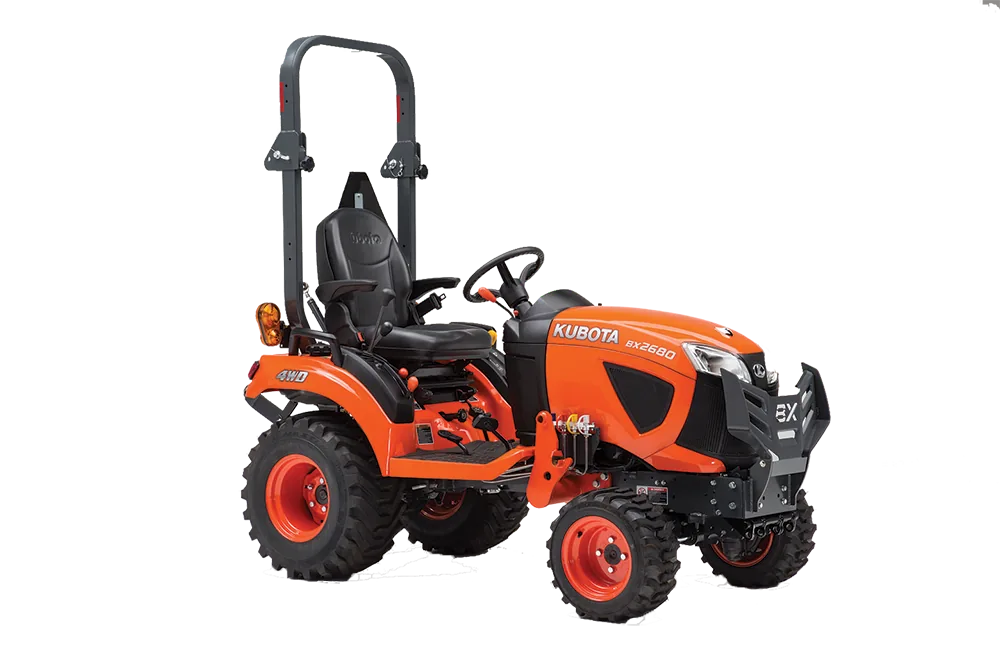
Kubota BX2680
~$17,632MSRP, base build
Sub-Compact

Kubota

Kubota BX2680

23.3 hp engine · 19.2 PTO−18% to the shaft
Loader
699 lbs
3-pt
680 lbs
Trans
Hydrostatic
Drive
4WD

Top of the BX80 range and the last step before the B series: 23.3 gross hp from a 61.1 cu in three-cylinder against the BX2380's 21.6 from 54.8 cu in. Frame, 6.6 gal tank, 6.2 gpm pump and 680 lb hitch all carry over unchanged from the cheaper models.

Spec sheet & owner notes
Kubota BX2380
~$16,624MSRP, base build
Sub-Compact

Kubota

Kubota BX2380

21.6 hp engine · 17.7 PTO−18% to the shaft
Loader
—
3-pt
680 lbs
Trans
Hydrostatic
Drive
4WD

Five more horsepower than the BX1880 for about $3,800 more, on the identical BX80 chassis, LA344 loader and drive-over deck. That single step is the whole BX buying decision, and 21.6 hp is where most of the volume lands.

Spec sheet & owner notes
Kubota BX1880
~$12,798MSRP, base build
Sub-Compact

Kubota

Kubota BX1880

16.6 hp engine · 13.7 PTO−17% to the shaft
Loader
—
3-pt
680 lbs
Trans
Hydrostatic
Drive
4WD

Cheapest diesel tractor Kubota sells in the US at $12,798 base, and the 16.6 hp D722 is the compromise that buys that number. It mows an acre or two and moves light loads; it is not the one to buy if a loader bucket will be full most days.

Spec sheet & owner notes