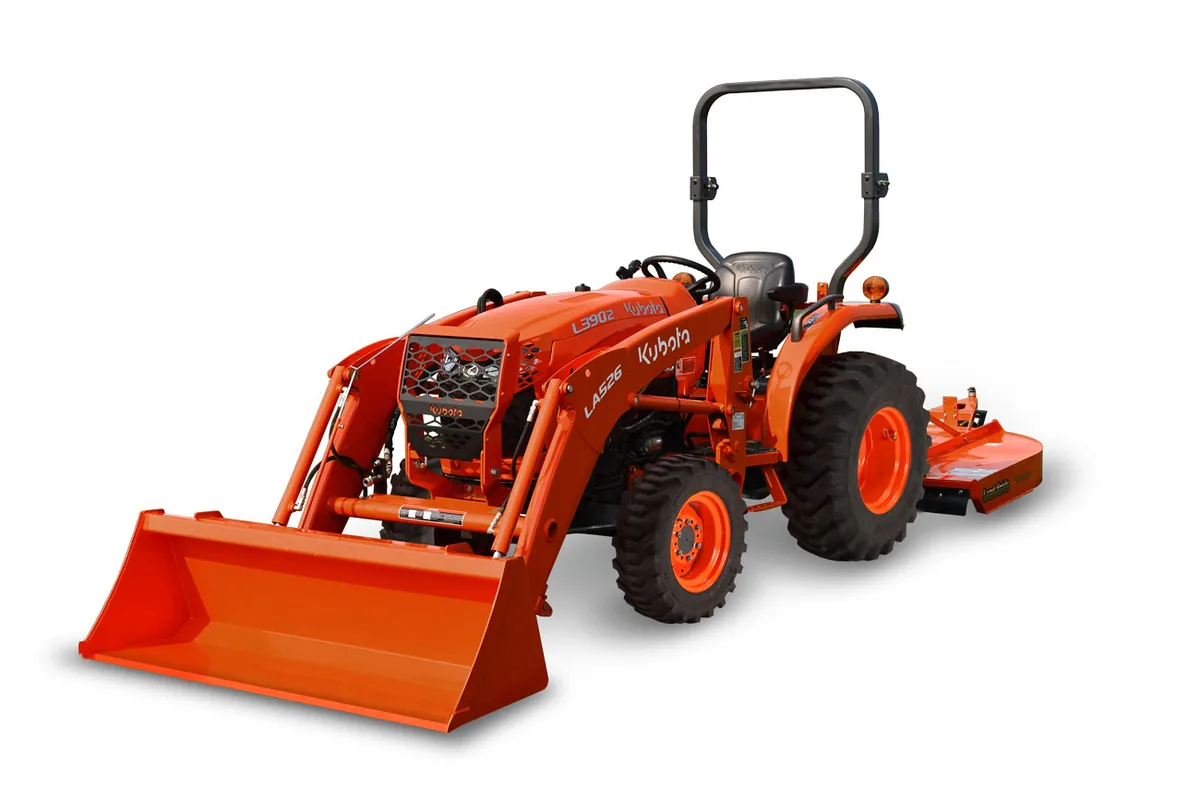
Kubota · Compact

Kubota LX3520

~$29,879

MSRP, base build

Kubota LX3520
Compact
34.9 hp engine · 28.7 PTO−18% to the shaft

Where the LX range stops being a big sub-compact and starts being a small compact: the turbocharged V1505 replaces the LX2620's naturally aspirated D1305, PTO output jumps from 19.4 to 28.7 hp, and the bigger LA545 loader comes with it. ROPS, value-spec SU and factory cab builds are all offered.

Engine
34.9 hp
PTO
28.7 hp
Loader lift
1,325 lbs
3-pt lift
1,962 lbs

0.96 PTO hp per $1,000 of list price

As published by the maker

Specifications

Size class
Compact
Transmission
Hydrostatic
Engine
Kubota
Engine hp
34.9 hp
PTO hp
28.7 hp
Drive
4WD
Loader lift
1,325 lbs
Three-point lift
1,962 lbs
Hydraulic flow
9.1 GPM
Fuel tank
8.5 gal
Weight
2,191 lbs
Warranty
6 yr / 2000 hr powertrain
4WD
Yes
Cab
Open station
Turbo
Yes
Cruise control
No

On the price: The maker's own published starting figure for the base build. A dealer adds a loader, a deck and freight on top.

Lift figures are the maker's and are quoted at whichever point the maker chose; the about page explains why two loaders with the same number do not lift the same pallet.

Comes with

4WDHydrostaticFront LoaderPower SteeringTurboDiesel

From owner discussion and long-term write-ups

What owners say

What they like

  • Common-rail turbo V1505 gives 28.7 PTO hp, nearly half again the LX2620's 19.4, for about $9,500 more
  • 1,962 lb of three-point lift measured 24 in behind the lift points, which is the conservative figure and still beats what most sub-compacts claim at the ball ends
  • 8.5 gal tank and 9.1 gpm of total pump output, both up on the LX2620
  • A factory cab is offered on this chassis, which the whole Standard L02 range lacks at any price
  • The LA545 reaches 87.6 in at the pivot pin, three and a half inches higher than the LA535 on the LX2620
  • The BH77 subframe still allows a mid-mount mower and the three-point to work while the backhoe is fitted

What they complain about

  • The LA545 lifts 1,325 lb at the pivot pin, only a pound more than the LA535 on the much cheaper LX2620, so the loader is not where the money goes
  • Turbocharging puts it above the 25 hp threshold and into the heavier emissions band the LX2620 sits below
  • At $29,879 it is dearer than a 37.5 hp L3902, which has more frame, more hitch and a bigger loader
  • Hydrostatic is the only transmission on the standard model; the gear build is the narrow LX3520DTN, which takes no loader at all

Gathered from owner reports

What owners report

There is a single sentence that several LX3520 owners write in almost identical words: they run out of loader capacity and weight long before they run out of horsepower. One with a 72-inch finish mower, a flail, a six-foot box grader and a front snowblower says he has never run out of power and regularly runs out of lift. Another says he runs out of weight before power. A third calls the machine almost certainly too small for heavy loader work while still being perfectly capable of blowing snow and cutting brush. Taken together that is the clearest buying signal in the evidence: this is a mowing, snow and light-dirt machine, and if the job list is mostly loader work the same owners point you at an L or heavier.

The cab is why most of them bought this model rather than something cheaper. Owners describe doing snow removal in shorts, working rain or shine, and simply being willing to spend five or six hours on the machine instead of four. It costs around ten thousand dollars over the open-station build, it stands about seven foot two, which caught out one owner who had to widen his garage door to eight feet, and it is the wrong choice around trees, where branches hit the cab and mirrors. Winter is also where the front-mounted snowblower question lives. Owners run the LX2963 or LX2980 on a subframe, which means the loader comes off for the season; those who have done it say the swap takes under half an hour once practised, but several admit they miss the bucket and forks all winter and keep a box blade on the three point for ballast and back-dragging.

Two things are worth knowing before ordering. First, supply has been unreliable - buyers report long waits and a dealer-reported nationwide shortage, and at least two cancelled orders and bought something else, one of them a used Deere that was more tractor for less money. Second, the regeneration cycle is poorly explained to new owners: one says the machine has two kinds of regeneration and it is not clear what it wants from you when the lights come on, and another had a confusing double-signal event at 30 hours that ended with the tractor shutting off and refusing to restart. Neither is a reason to avoid the model, but both are worth asking the dealer to walk through at handover.

What comes up favourably

  • Power is never the limit - owners running a 72-inch finish mower, a flail, a six-foot box grader and a front snowblower all report the engine has more in it than the rest of the machine does
  • The cab is the reason most owners chose this model over something cheaper, and they describe snow removal in comfort and a willingness to put in longer days as the payoff
  • It is light enough not to mark a lawn - owners with R14 tires report no damage on dry ground, and one clearing 30 acres of dead trees credits the low weight for leaving grass intact
  • Flail mowers, including articulating ones for ditch banks, pair well with it, and owners run anything from a 53-inch up to a 60
  • The front-mounted snowblower swap takes under half an hour once you have done it a few times, and owners with long gravel drives are consistently happy with the result
  • The 28.7 PTO horsepower is enough to run a 14 to 15 kW generator, which owners compare favourably against the cost of a standby unit

What comes up as a complaint

  • Owners repeatedly report running out of loader capacity and machine weight long before horsepower, and several say outright that heavy loader work belongs on an L or bigger
  • It is too light for ground-engaging work in heavy clay - one owner says box-blading is possible but slow, and that the machine simply does not have the mass for it
  • The cab stands around seven foot two, which forced one owner to widen his garage door to eight feet, and it is the wrong choice for mowing among trees where branches hit the glass and mirrors
  • Running a front-mounted snowblower means removing the loader for the season, and owners say losing the bucket and pallet forks all winter is a real cost they underestimated
  • The regeneration system is badly explained to new owners - one notes there are two kinds and the dash does not make clear what it wants, and another had a confusing event at 30 hours that ended with the machine shut down and not restarting
  • Supply has been unreliable, with long waits and a dealer-reported nationwide shortage; more than one buyer cancelled an order and bought a different machine instead
  • Owners do break them - one lost a pin from a box grader under load and bent a three-point arm, and dented a bucket edge early on finding out whether it would dig
  • Rear remotes run at full hydraulic flow, which makes articulating implements far too twitchy until pressure-reducing fittings are added

Questions worth asking

Will I run out of horsepower or capacity first?
Capacity, and owners say so almost in unison. Several describe running a 72-inch finish mower, a flail, a six-foot box grader and a snowblower without ever reaching the engine's limit, while regularly reaching the loader's. One puts it as running out of weight before power. If your job list is mowing, snow and light grading, that balance suits you fine; if it is moving heavy material, owners consistently point at a heavier L-series instead.
Is the cab worth around ten thousand dollars?
Owners who bought it say yes without much hesitation - the arguments are heat and air conditioning, working rain or shine, and comfortable snow removal. Owners who did not buy it mostly say they wanted it and could not justify the price. The real counterarguments are physical: it stands about seven foot two, which may not fit your building, it is awkward around trees, and it makes communicating with someone on the ground harder during work like post-hole digging.
Front-mount or rear-mount snowblower?
Front-mount owners like the result and accept the cost. The blower rides on a subframe, so the loader comes off for the season - the swap runs under half an hour once practised, but you lose the bucket and forks for the winter, which more than one owner says they miss. Rear-mount blowers are cheaper and keep the loader, at the price of working in reverse. A common compromise is a front blower with a box blade on the three point for ballast and back-dragging.
Should I get the mid-mount mower or a rear finish mower?
Owners disagree, which is itself useful. One cab owner runs a 72-inch rear finish mower specifically because he switches implements constantly and does not want a deck in the way or eating his ground clearance, and says he has not heard good things about the mid-mount for this model. Others run a 72-inch belly mower and are happy with it, and the LX deck rolls on its own wheels and comes off more easily than on the smaller Kubotas. If dirt work is frequent, the rear mower is the less annoying answer.
What should I ask the dealer about regeneration?
Ask them to show you both kinds and what each dash light actually wants from you. Owners report this is the least clearly communicated part of the machine: one says it is not obvious what the tractor is asking when the lights come on, and another had a regeneration light go solid while a parked-regeneration light began flashing at 30 hours, ending with the machine shutting down and refusing to restart. Frequent short winter runs with long warm-ups appear to bring the first regeneration on early.
How long will I wait for one?
Potentially a long time. Buyers report a dealer-described nationwide shortage covering this model and the LX4020, with no delivery estimate offered, and separate buyers cancelled preorders after months of waiting - one bought a used Deere with a cab for less money and more tractor, another moved down the range. If you are shopping to a deadline, ask about actual stock on the lot rather than an order slot, and check other dealers for leftover inventory.

Summarised from public owner discussion, not from testing. Nothing here was measured by this site, and a report that recurs is not the same as a defect rate.
Cross-shopped against

Line the Kubota LX3520 up

Same brand or same size, nearest in price

Related tractors

More from Kubota →
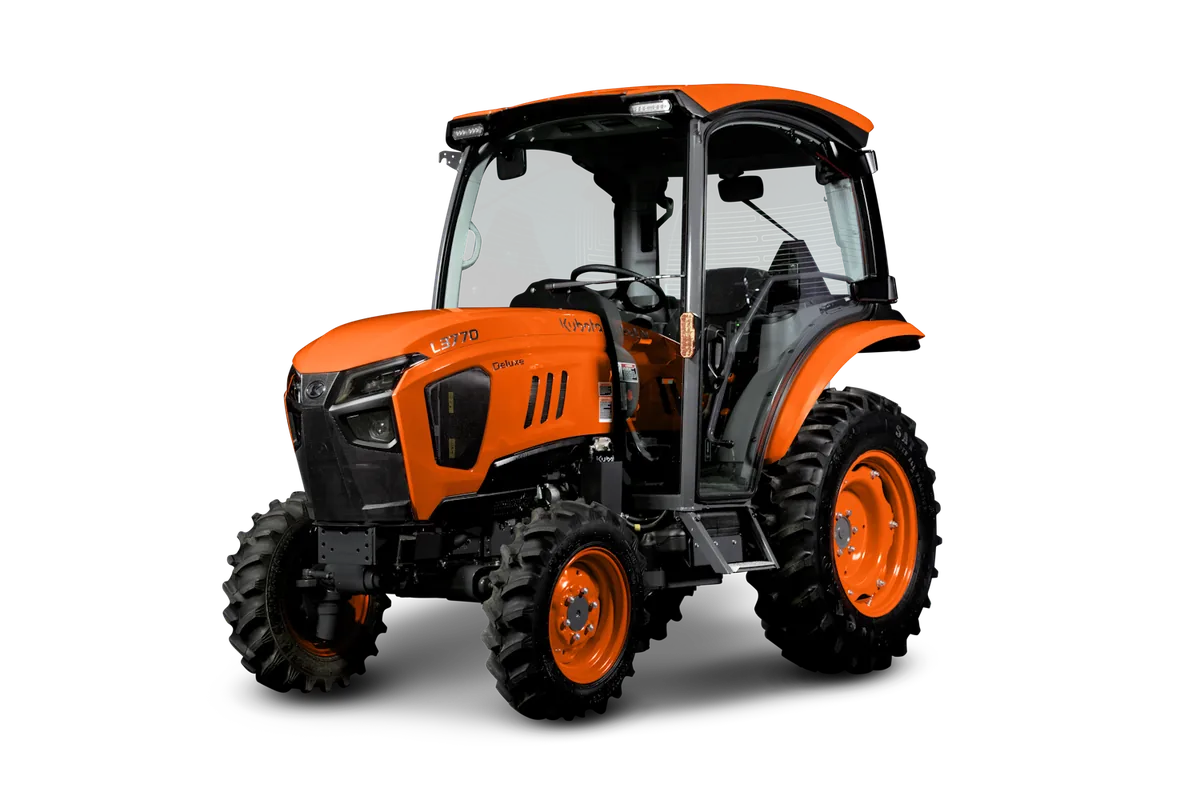
Kubota L3770
~$31,829MSRP, base build
CompactSeries photo

Kubota

Kubota L3770

37 hp engine · 28 PTO−24% to the shaft
Loader
1,726 lbs
3-pt
2,646 lbs
Trans
Hydrostatic
Drive
4WD · cab

Entry to the Grand L70 generation that replaced the Grand L60 in 2025, and one of only two in the range built to Deluxe rather than Premium trim. The naturally aspirated D1803-CR-E5 keeps it simple where the four models above it are turbocharged.

Spec sheet & owner notes
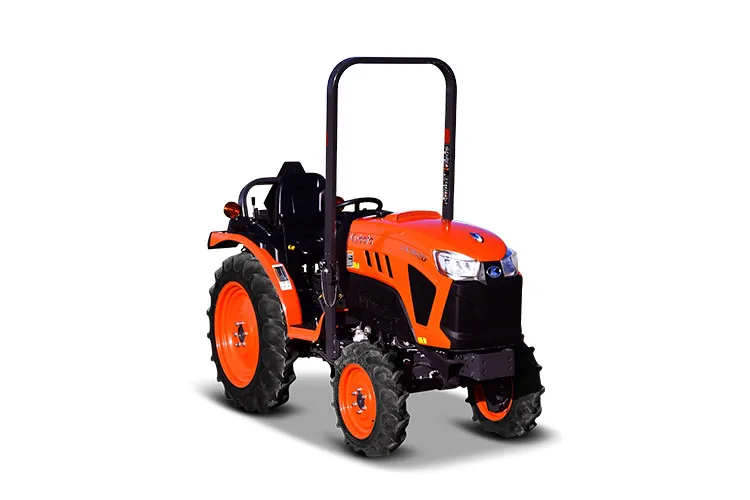
KubotaLX4020
~$32,084MSRP, base build
Compact

Kubota

Kubota LX4020

39.8 hp engine · 32.6 PTO−18% to the shaft
Loader
1,325 lbs
3-pt
1,962 lbs
Trans
Hydrostatic
Drive
4WD

The most powerful machine Kubota builds on the LX chassis: 39.8 gross hp from the same turbo V1505 the LX3520 uses, 32.6 hp at the PTO, and 433 lb more tractor under it. Hydrostatic only, ROPS or factory cab.

Spec sheet & owner notes
Kubota L3902
~$26,181MSRP, base build
Compact

Kubota

Kubota L3902

37.5 hp engine · 32.1 PTO−14% to the shaft
Loader
1,506 lbs
3-pt
1,998 lbs
Trans
Gear
Drive
4WD

Direct replacement for the L3901 and the middle of the Standard L02 range: 37.5 gross hp from the 111.4 cu in three-cylinder, the same LA526 loader and BH77 backhoe as the L2502 below it, and a 1,998 lb hitch. Gear-drive 8F/8R is the base build, three-range HST the alternative.

Spec sheet & owner notes