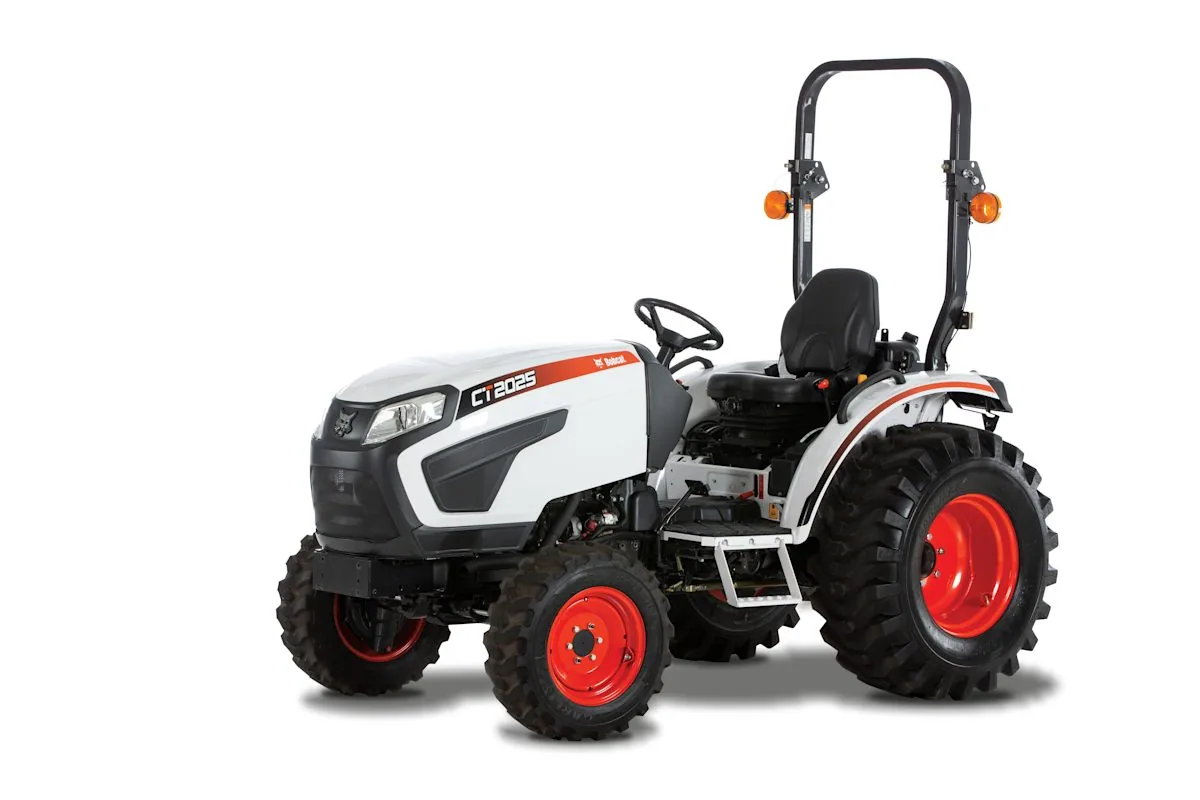
Owners know exactly what they bought: a Kioti CK2610 in white paint, usually for about $2,000 less than the Kioti it is based on. That is said matter-of-factly rather than as a complaint, and it shapes how people shop it — one buyer's three quotes for a 25 hp tractor with loader and third function came back at $27,650 for a Kubota L2502, $27,100 for a Kioti CK2620 and $26,000 for the Bobcat. Leftover stock goes much lower, with owners reporting $14,500 cash for a new one with a loader and $15,900 for a 4WD hydrostatic with loader on run-out model years, and 0% terms over 72 or 84 months are the standard structure. What people do with it is not small: a three-year owner's list runs from plowing a quarter mile of driveway and spreading 100 tons of gravel to pulling a stuck Deere 35G mini excavator out and disposing of an entire dilapidated mobile home in pieces.
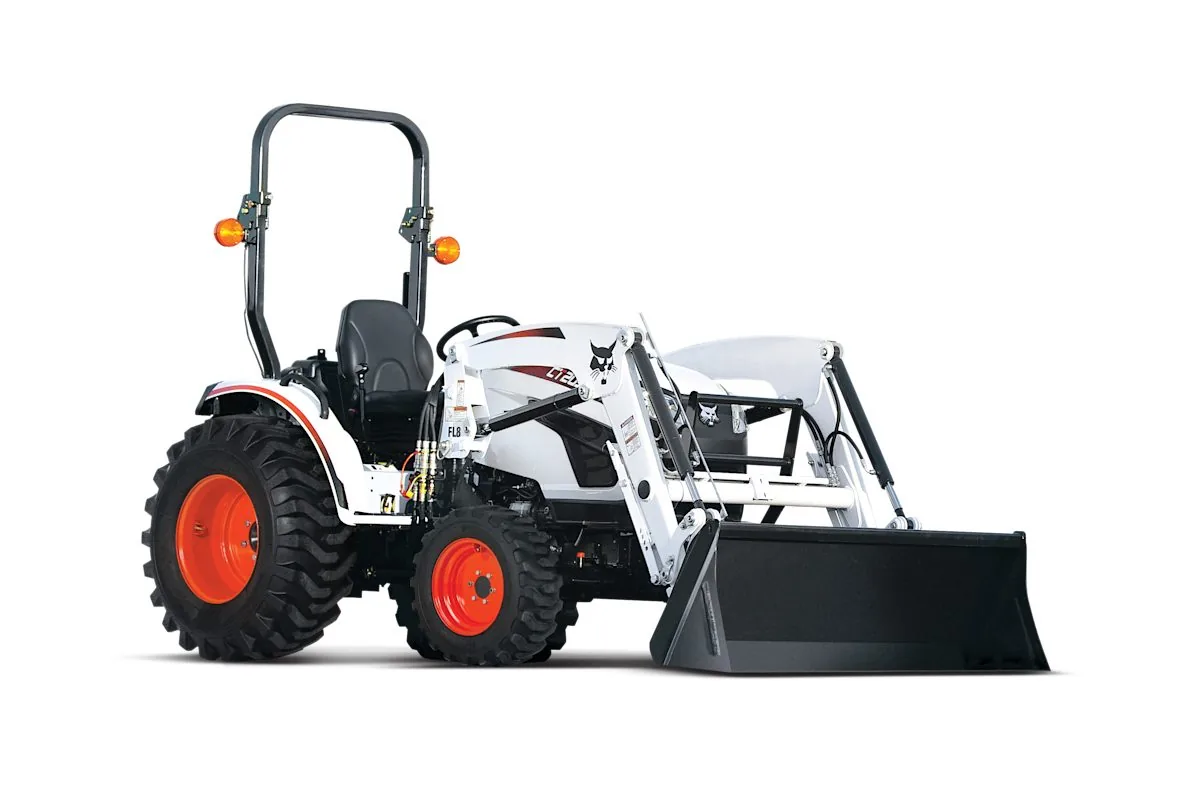
The loader is where the argument is. Bobcat publishes its lift at maximum height, and one owner who moved from a CT2025 to a Yanmar with the same rated capacity insists the Yanmar out-lifts it — he buys 1,500 lb bulk feed bags, and the Bobcat could only get one a few inches off the ground hanging bare off the quick-attach bar with the backhoe extended as ballast, while the Yanmar picks the same bag off a pallet in a truck bed. Another owner with a backhoe on the back says his lifts 1,600 lb without complaint and only the curl feels underwhelming. What both agree on is that the curl is the weak link, and two owners have bent the curl cylinders — one after backing up with the bucket fully curled down and a grapple hooked on a wire fence he had not seen, then straightening them in a press rather than paying for replacements. A third owner warns against raising the hydraulic pressure for exactly that reason.
Ballast is the other thing owners mention changing the machine. One reports living in four-wheel drive before he filled the rear tires and simply driving afterwards. Reliability reports at real hours are good and the failures are small: an o-ring on the fuel filter water separator at 200 hours that no generic part would fit, ROPS blinkers broken twice on low branches, a sticking brake pedal, and one machine that takes a minute of cranking to start in a garage that never drops below freezing. The thread running through nearly every positive account is the dealer rather than the tractor — owners describe getting pickup and redelivery written into the deal, a dealer trailering the tractor to an elderly relative's house to clear snow at no charge, and Bobcat's own parts site pulling up any part by VIN and delivering in under a week.
Is it really just a Kioti with different paint?+−
Essentially yes, and owners say so without much drama — it is built on the Kioti CK2610, with one owner noting the loader is the part that differs. The practical consequences are good ones: the machine has a known mechanical track record, a Kioti dealer can usually help with parts, and the Bobcat badge typically costs about $2,000 less than the Kioti equivalent. Owners who cross-shopped both mostly chose on which dealer they preferred.
Will it lift what the spec sheet says?+−
Read the measuring point carefully — the figure is taken at maximum height, and at least one owner argues that makes Bobcat's number look better than machines quoting lift at the pin. His practical test was a 1,500 lb feed bag, which his CT2025 could barely raise a few inches even with a backhoe as counterweight, while a Yanmar with the same published rating handled it easily. Other owners report 1,600 lb without complaint. The safe planning assumption is that ballast decides the outcome as much as the loader does.
What breaks on a CT2025?+−
Not much, and what does is small. The one real pattern is bent curl cylinders, which owners trace to driving with the bucket fully curled down and catching something. Beyond that: an o-ring on the fuel filter water separator at 200 hours, ROPS indicator lights snapped off by branches, a brake pedal that sticks, and an o-ring pinched during dealer installation of the rear remotes. Owners at 300 to 550 hours report nothing that stopped the machine working for long.
Does the Bobcat dealer network make up for the badge?+−
For the owners in this evidence it is the whole reason they are happy. Examples they give are concrete: pickup and redelivery for scheduled service and warranty work written into the purchase agreement, a dealer trailering a tractor 25 miles free of charge so an elderly relative's drive could be cleared in an emergency, and a dealer brokering the private sale of a trade-in. The dissenting voice is an owner who escalated a structural concern past his dealer and could not get Bobcat itself to engage.
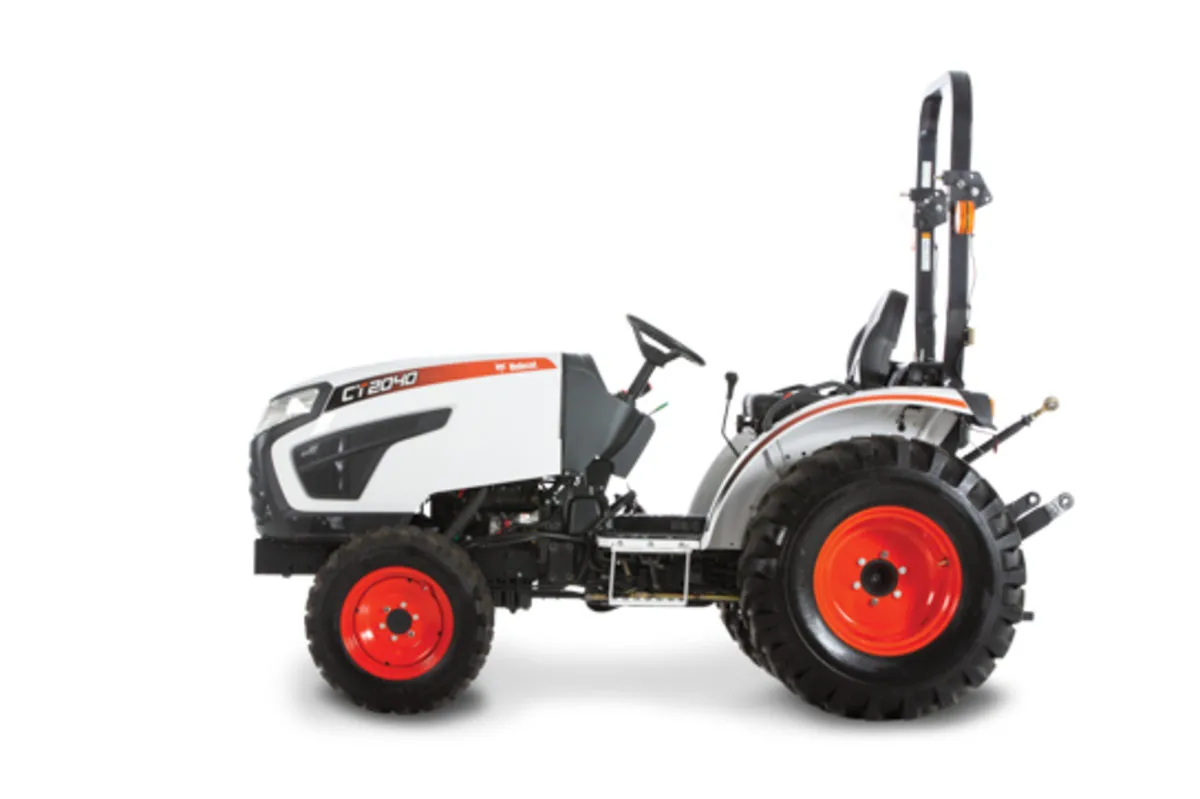
Is it enough tractor, or should I go to a CT2040?+−
It depends almost entirely on the rear PTO rather than the loader. Owners doing loader work, gravel, snow and general property maintenance on a handful of acres are content. The ones who upgraded did so because they wanted to run large three-point attachments — flail mowers, woodchippers, wide rotary cutters — which is where 25 hp runs out first. One buyer weighing the two put it well: the 2025 will do everything on his list, and the 2040 would simply never reach its limits.
Summarised from public owner discussion, not from testing. Nothing here was measured by this site, and a report that recurs is not the same as a defect rate.