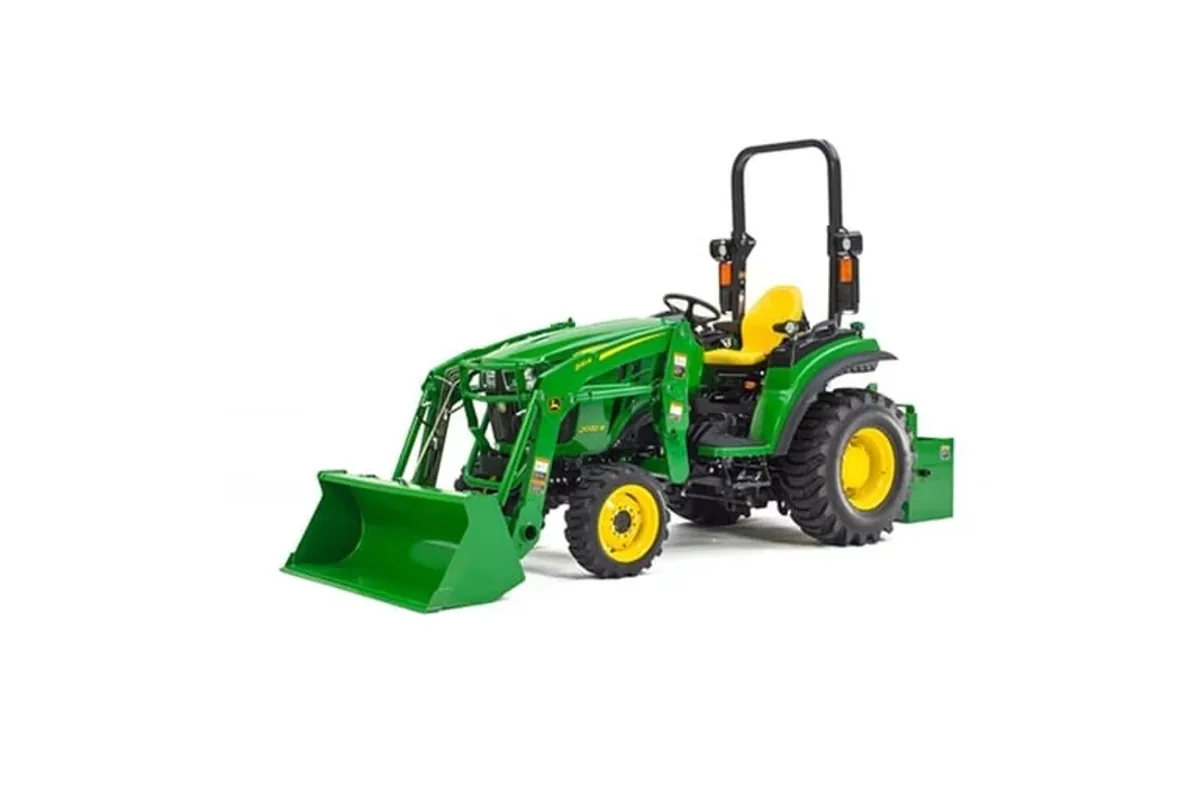
John Deere · Compact

John Deere 2032R

~$28,866

MSRP, base build

John Deere 2032R
Compact
30.7 hp engine · 24.2 PTO−21% to the shaft

Deere's premium small compact, sharing the 3032E's 1.642 L Yanmar and hydraulics but wrapping them in a heavier chassis with a step-through platform, tilt wheel and standard cruise control. It costs more than the 3032E and lifts less.

Engine
30.7 hp
PTO
24.2 hp
Loader lift
1,120 lbs
3-pt lift
1,356 lbs

0.84 PTO hp per $1,000 of list price

As published by the maker

Specifications

Size class
Compact
Transmission
Hydrostatic
Engine
Yanmar
Engine hp
30.7 hp
PTO hp
24.2 hp
Drive
4WD
Loader lift
1,120 lbs
Three-point lift
1,356 lbs
Hydraulic flow
9.3 GPM
Fuel tank
8.5 gal
Weight
2,879 lbs
Warranty
6 yr / 2000 hr powertrain
4WD
Yes
Cab
Open station
Turbo
No
Cruise control
Yes

On the price: The maker's own published starting figure for the base build. A dealer adds a loader, a deck and freight on top.

Lift figures are the maker's and are quoted at whichever point the maker chose; the about page explains why two loaders with the same number do not lift the same pallet.

Comes with

4WDHydrostaticFront LoaderPower SteeringCruise ControlDiesel

From owner discussion and long-term write-ups

What owners say

What they like

  • Electronic cruise control is standard equipment, not an option, which is the thing 3E owners most often wish they had on long mowing passes
  • The step-through platform, tilt steering wheel, fender-mounted controls and high-back seat are a genuine grade above the 3E station
  • CommandCut deck lift sets mowing height by dial and keeps the hydraulics free for other work
  • 2,879 lb makes it heavier than a 3032E, which steadies it with a loaded bucket
  • Two-range hydrostatic with Twin Touch pedals and a matched Sauer-Danfoss pump and motor
  • Six years or 2,000 hours of powertrain coverage

What they complain about

  • The 220R lifts only 1,120 lb at the pivot pin and 803 lb measured 500 mm ahead of it - less than the 300E on the cheaper 3E models
  • Deere's published base list is around $28,866, roughly $3,100 above a 3032E that makes the same power and lifts more up front
  • 8.5 gal of fuel is the smallest tank of any 3- or 2-Series machine here
  • No factory cab - the heated cab sold for this model is a dealer-installed accessory, and Deere's own spec table lists the cab row as not applicable
  • 24.2 PTO hp limits you to a 5 ft rotary cutter
  • The aftertreatment includes a diesel particulate filter with passive, active and parked cleaning cycles

Gathered from owner reports

What owners report

This machine sits in a triangle, and owners discuss it almost entirely in terms of the two tractors either side. Against the 1025R below, the people who moved up say it fixed real problems: one who had been borrowing a 1025R on 20 acres of hills and woods felt uneasy on slopes and underpowered moving logs, and calls this the right tractor for the same ground, while another watched a friend on two acres keep wanting more until he traded for one and stopped wanting. Loader capacity is roughly double, and owners report lighter round bales under about 900 lb going up on the loader when the tractor is properly ballasted, where a 1025R can only manage them on the three-point. Against the cheaper 3032E, which actually lifts more up front, the answer is the mid-mount mower - the 3E models are named repeatedly as the value choice but cannot belly-mow at all, so this is what you pay for if you want one machine that cuts the lawn properly and still loads.

Whether that is worth it is genuinely contested. Owners who mow with it mostly wish they did not: the deck is in the way for loader, gravel and woods work, the bucket blocks the view and stops you getting in close to buildings and fences, and one owner both grounded out on his deck in the woods and packed a deck spindle with mud and gravel from loader work, breaking the spindle and the belt. The recurring recommendation is this tractor plus a zero-turn, which owners point out costs about what the mower deck alone does and cuts better. Against that, an owner who replaced a heavier cab machine with one of these, fitted a 72-inch mid-mount and turf tires, reports it working well and running a 60-inch rotary cutter and a 72-inch snowblower without strain - his reason being that he wants one machine and stores it indoors where space is tight.

On reliability the record splits hard enough that it should shape how you buy. Some owners report nothing whatever wrong at 236 hours and at 600 hours, and the first-generation machines - Yanmar-engined, built until around 2016 and described as near-identical to the older 2720 - have a particularly strong name. Others describe repeated dealer visits before 125 hours, fuel filters found plugged tight at low hours on carefully filtered fuel, and one owner at 124 hours who lost the driveshaft out of the rear spindle after two of four trunnion bolts backed out and sheared the others, then found two of the four front-axle bolts loose as well. The conclusion owners themselves draw is that the dealer matters more than the badge, and buying is where that starts: prices are not published, dealers will not quote over the phone, and one buyer was told 0% financing did not exist and he would have to buy the rate down during months when Deere was advertising it.

What comes up favourably

  • It is the step up that owners who started smaller say actually solved something - one who borrowed a 1025R on 20 acres of steep hills and woods felt uneasy on slopes and underpowered moving logs, and calls this the right machine for the same ground.
  • The mid-mount mower is the real reason to pay more than a 3032E, which cannot belly-mow at all. An owner running a 72-inch mid-mount on turf tires reports it working well while the same tractor also handles a 60-inch rotary cutter and a 72-inch snowblower.
  • Loader capacity is roughly double a 1025R's, and that changes the job list: owners report moving round bales under about 900 lb on the loader when properly ballasted, where the smaller machine can only shift them on the three-point.
  • First-generation examples have an excellent reputation with people who have run them for years - one calls his 2014 near bulletproof and flawless, and another reports 600 hours without a single issue.
  • It is very hard to stop in snow. Owners running chains on the rear report pushing through two, three and four feet with four-wheel drive, the locking rear differential and low range engaged, one describing it as a billy goat once chained, and R3 tires are preferred to R4 for the job.
  • A backhoe can pay for itself outright - one owner reports his roughly $10,000 unit covering a garage foundation and site work, an electric line, tree planting, fence posts and drain lines, and rates never having to book an excavating contractor as worth as much again.

What comes up as a complaint

  • Reliability reports divide sharply and cannot be honestly averaged. Several owners report flawless machines at 236 and 600 hours, while others describe repeated dealer visits before 125 hours, and one says his has given more trouble than any tractor he has owned.
  • One specific failure is worth inspecting for: an owner at 124 hours lost the driveshaft out of the rear spindle after two of four trunnion bolts backed out and sheared the rest, and found two of the four front-axle bolts loose as well - leaving two of eight bolts holding the front end together, with knock-on damage to the driveshaft and front axle bushings.
  • The mid-mount mower's sprung front arm is a weak point that Deere does not sell on its own. One owner bent the L-shaped rod twice while attaching a 60-inch deck and was told it only exists as an assembly costing around $2,800, so he had a replacement fabricated instead.
  • Owners who mow with it largely regret it: the deck fouls loader, gravel and woods work, the bucket blocks both your view and your access to buildings and fences, and one owner grounded out on his deck in the woods and separately destroyed a deck spindle and belt after loader work packed it with mud and gravel.
  • Front snow blowers are brutally expensive here, quoted at roughly $8,000 to $10,000 on top of the tractor - enough that owners route around them entirely with a rear three-point blower at about half the money.
  • Buying one is reported as genuinely unpleasant. One owner found it worse than any car dealership because prices are not published and dealers will not quote by phone, and reckons he paid at least $1,000 over the going rate; another was told 0% financing did not exist and that he must buy the rate down, in months when Deere was publishing 0% offers.
  • Running costs step up from the smaller machines - more filters and larger fluid volumes, according to an owner who runs one alongside a lawn tractor - and the grease schedule is demanding at 10-hour intervals, with trunnion and front-axle driveshaft fittings that are easy to miss because they are hidden.

Questions worth asking

Should I buy a 1025R or a 2032R?
Owners who moved up say this one solved what the 1025R could not - stability on slopes, moving logs, and roughly double the loader capacity. Owners who stayed put make a fair counter-case: the 2025R in between is essentially a bigger 1025R without the real 2-Series benefits, and the money is better spent on implements. The dividing line in the evidence is the work. For loader jobs, hills, woods and bales, take the bigger machine. For mowing and a short driveway, even 2032R owners will tell you the 1025R is the better buy.
Why pay more than a 3032E that lifts more up front?
The mid-mount mower, essentially. The 3E models are named again and again as the value option but cannot belly-mow, so a rear finishing mower or rotary cutter is your only choice there. If you want a single machine that cuts the lawn properly and still does loader work, that is what the price difference buys. If you are content to own a separate mower, owners are blunt that a zero-turn alongside a 3E will mow better and cost less than the deck alone.
Can it handle round bales?
Lighter ones, carefully. Owners report the loader managing round bales under roughly 900 lb when the tractor is properly ballasted, where a 1025R can only move them on the three-point. Bear in mind Deere itself rates a 3-Series with the larger loader as its own minimum for round bale work, so you are at the edge of the machine - check the loader manual's minimum ballast figures and keep all four tires on the ground, because bales are heavy enough to damage axle components.
What is the cheapest sensible way to do snow with one?
A rear three-point PTO blower. Owners report front blowers quoted at around $8,000 to $10,000, against roughly half that for a rear unit that hooks to a quick hitch and leaves the loader bucket in place - choose one designed to be driven forward rather than reversed into the snow. Chains on the rear transform traction, with owners pushing through two to four feet using chains, four-wheel drive, diff lock and low range. R3 tires beat R4, watch the radiator packing with snow, and keep a blade for wet slush, which blowers handle badly.
Is the 2032R reliable?
Reports genuinely split, and it is better to know that going in. Some owners have nothing wrong at 236 and 600 hours, and the first-generation machines have a notably good name. Others report repeated dealer visits before 125 hours, fuel filters plugged tight at low hours on carefully filtered fuel, and in one case front-end bolts backing out and cascading into driveshaft and axle damage. The lesson owners draw themselves is that the dealer matters more than the paint - one puts a competent dealer at a hundred times the value of the brand.
Is a used first-generation one the same tractor?
No. The first generation used a Yanmar engine and ran until around 2016, and owners who know both describe it as near-identical to the older 2720 rather than to the current machine. People who have run them rate them very highly, so this is not a warning against buying one - but do not assume parts, specifications or other owners' impressions carry across the generations.

Summarised from public owner discussion, not from testing. Nothing here was measured by this site, and a report that recurs is not the same as a defect rate.
Cross-shopped against

Line the John Deere 2032R up

Same brand or same size, nearest in price

Related tractors

More from John Deere →
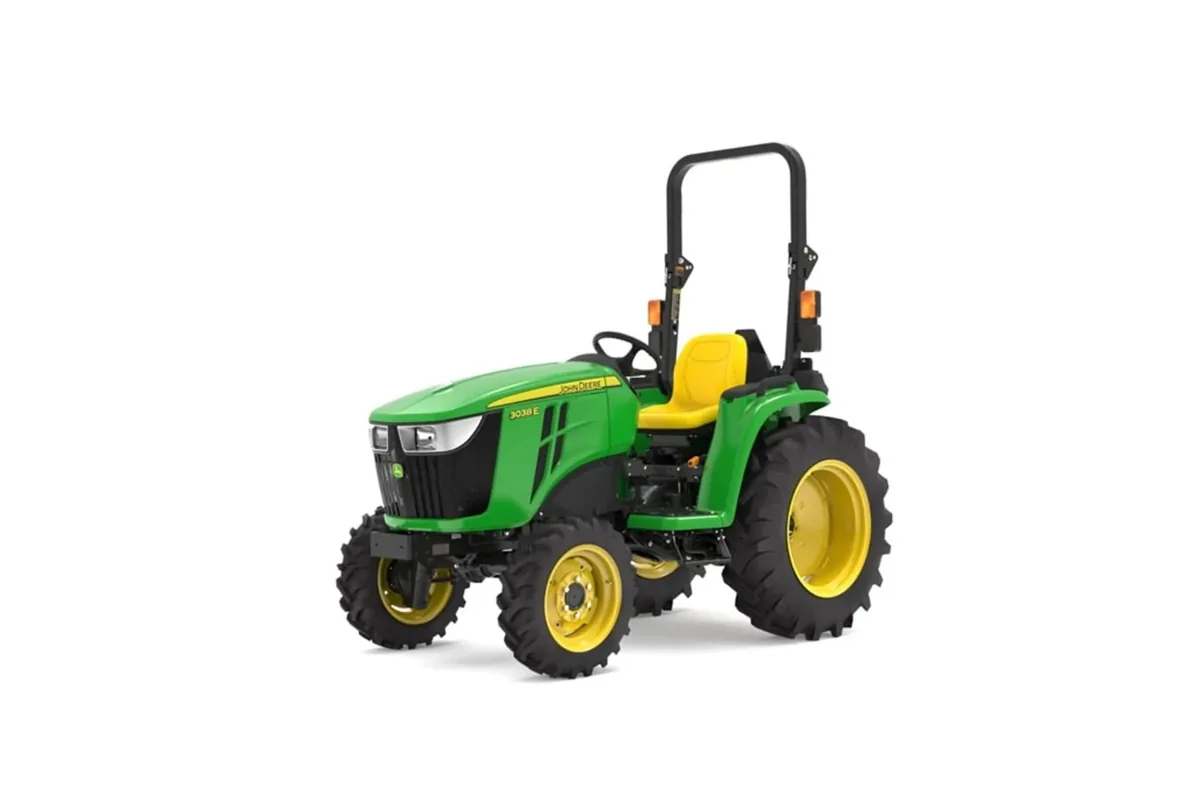
John Deere 3038E
~$28,730MSRP, base build
Compact

John Deere

John Deere 3038E

36.7 hp engine · 30 PTO−18% to the shaft
Loader
1,186 lbs
3-pt
1,356 lbs
Trans
Hydrostatic
Drive
4WD

Turbocharging is what separates this from the 3032E below it: a 1.568 L Yanmar 3TNV86CT making 36.7 hp and 30 at the PTO, in a chassis 446 lb heavier. Hitch, hydraulics and loader are unchanged from the rest of the E line.

Spec sheet & owner notes
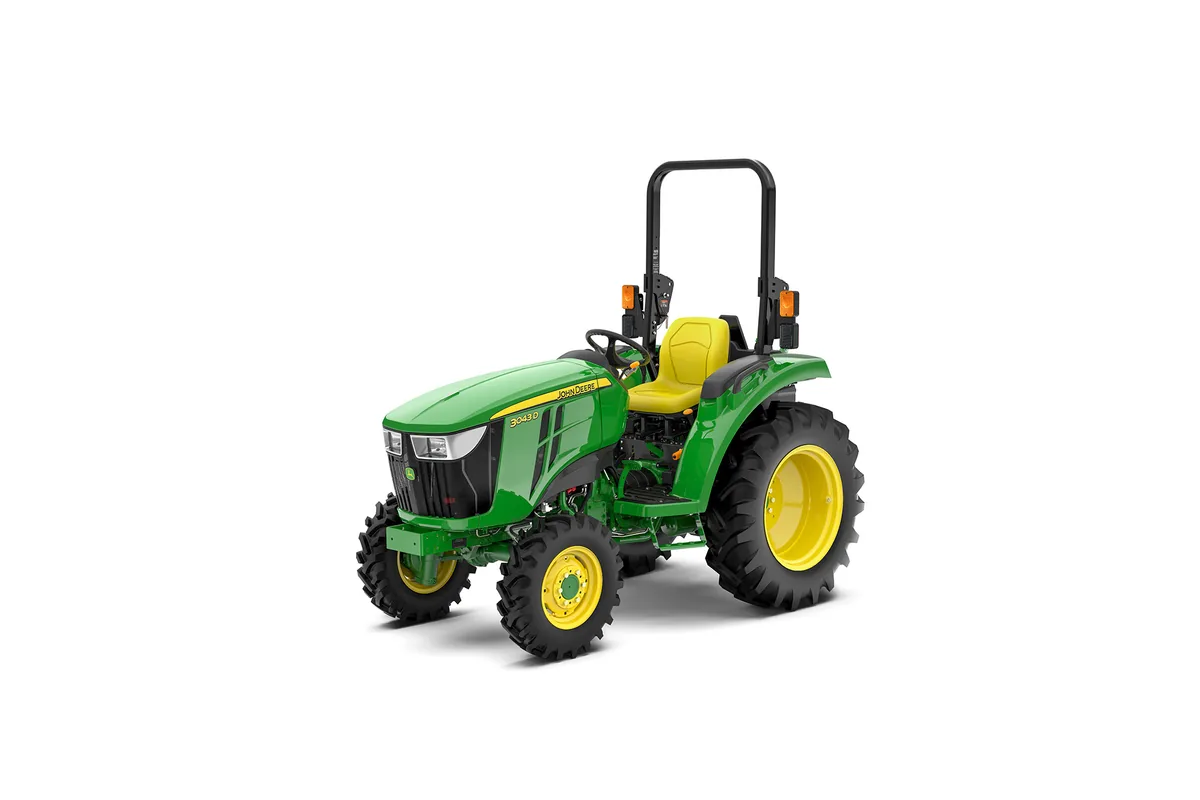
John Deere 3043D
~$29,644MSRP, base build
Compact

John Deere

John Deere 3043D

41.6 hp engine · 36.3 PTO−13% to the shaft
Loader
1,186 lbs
3-pt
2,081 lbs
Trans
Shuttle
Drive
4WD

The only turbocharged gear-drive D, and the biggest: a 1.57 L Yanmar 3TNV86CT making 41.6 hp, 36.3 of it at the PTO. It runs the same hitch, hydraulics and 2,840 lb chassis as the 3035D, so the whole price step buys engine.

Spec sheet & owner notes
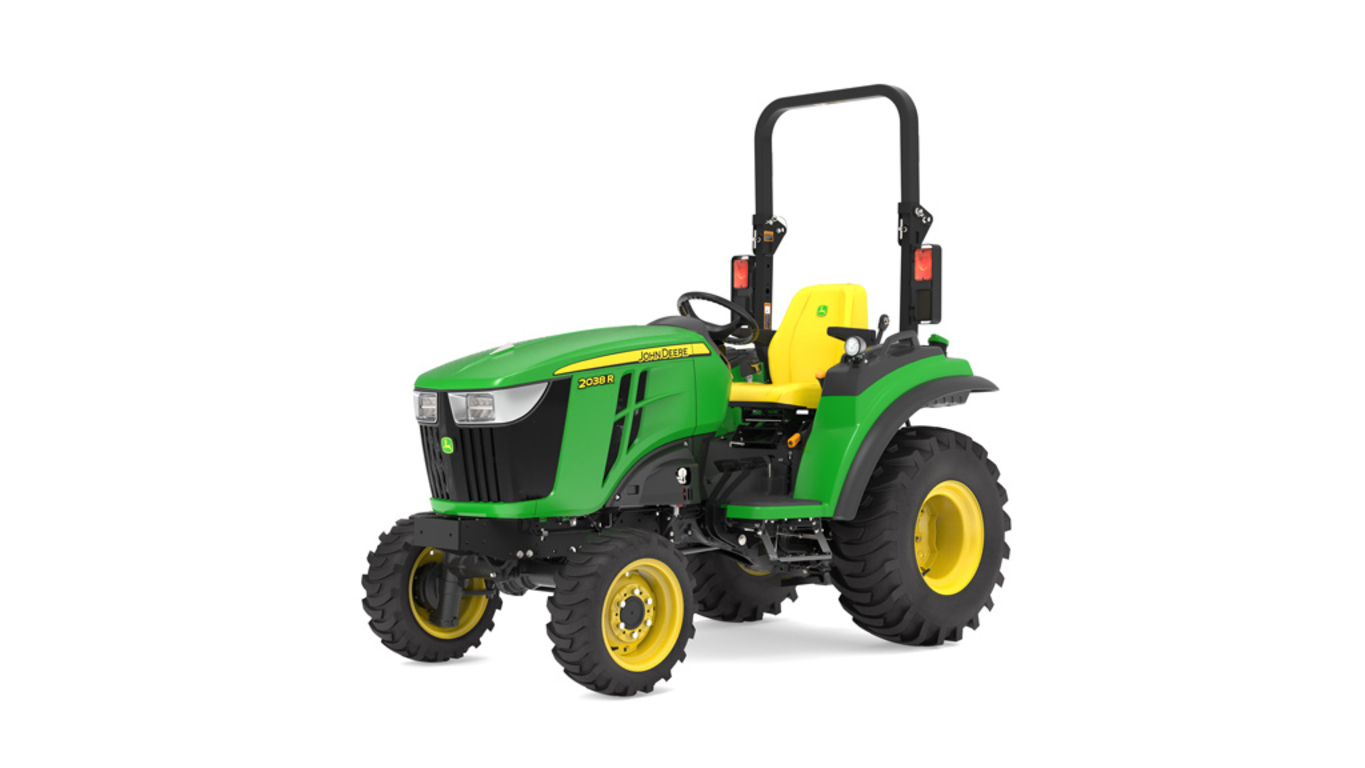
John Deere 2038R
~$31,253MSRP, base build
Compact

John Deere

John Deere 2038R

36.7 hp engine · 30 PTO−18% to the shaft
Loader
1,120 lbs
3-pt
1,356 lbs
Trans
Hydrostatic
Drive
4WD

Thirty-seven horsepower while keeping the AutoConnect mower deck on the options list, which nothing else this size manages. Sitting between the 2025R and the 3-Series, its premium platform - eHydro, cruise, full dash - is what the money buys.

Spec sheet & owner notes