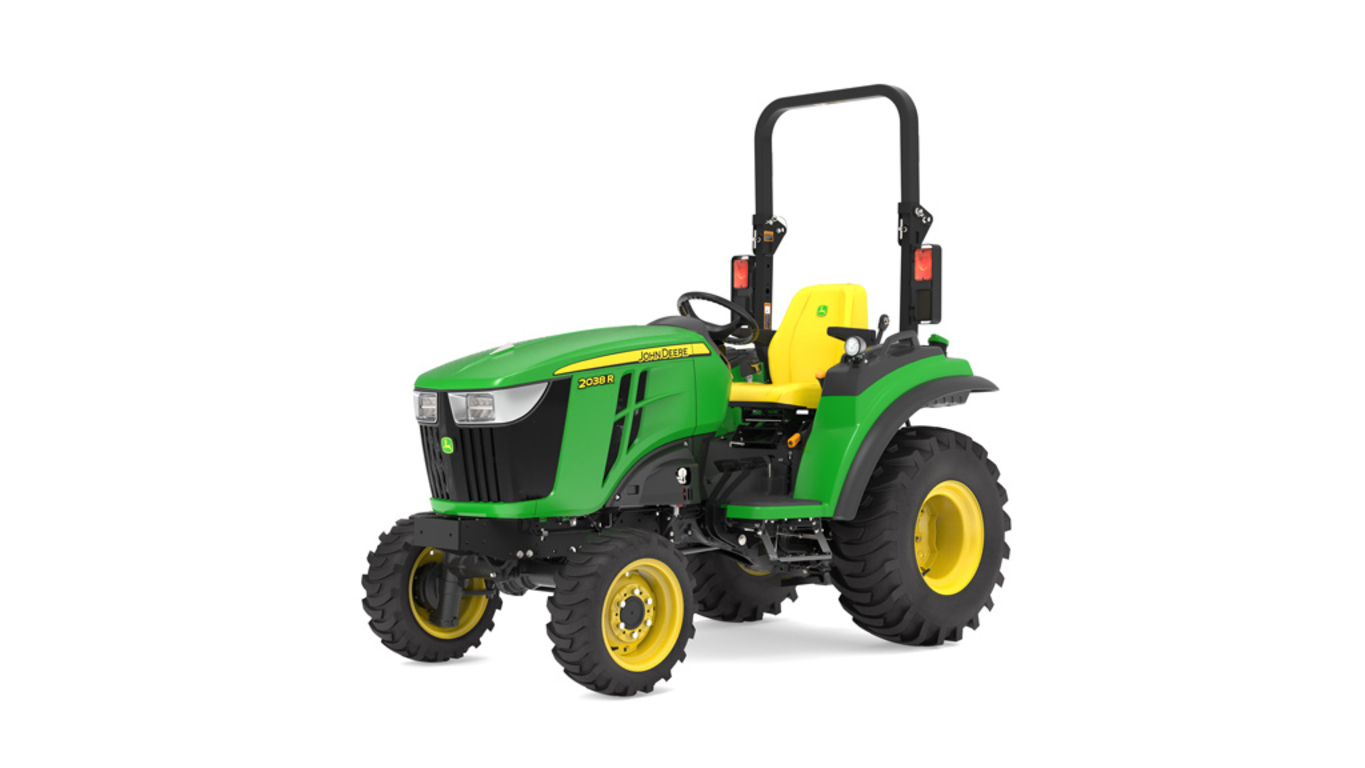
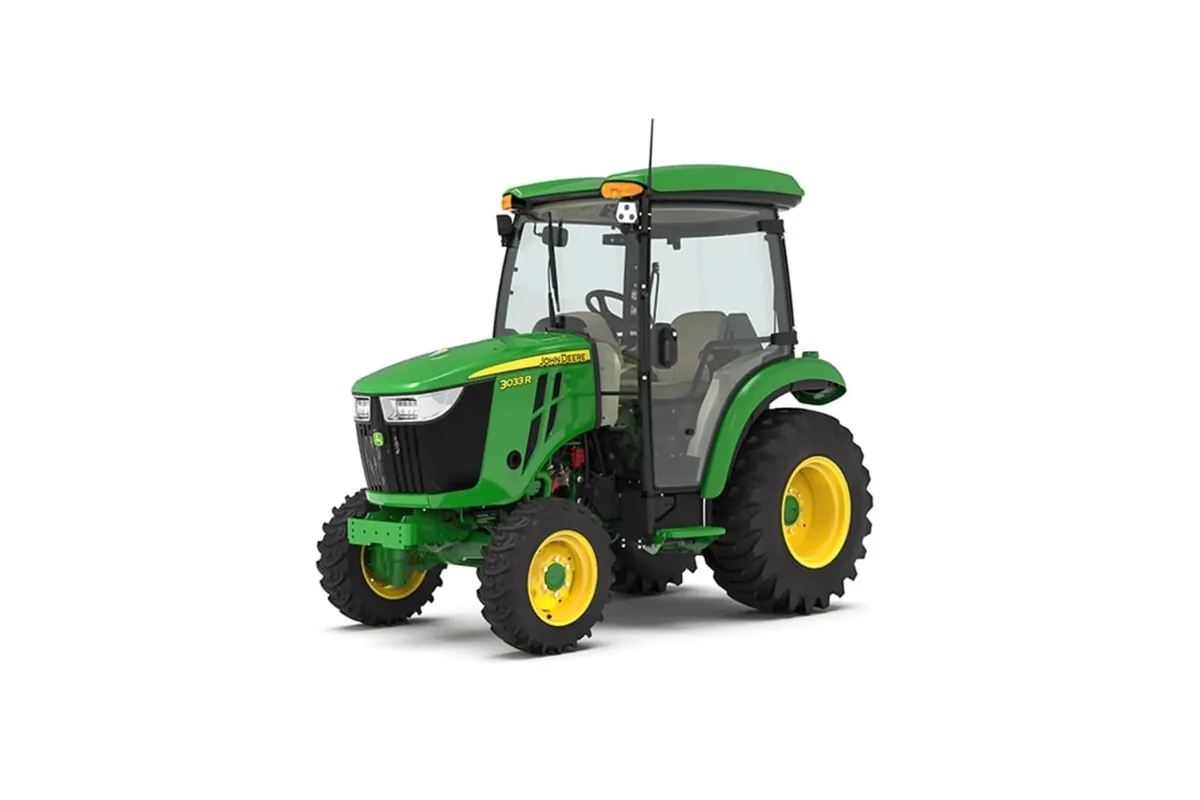
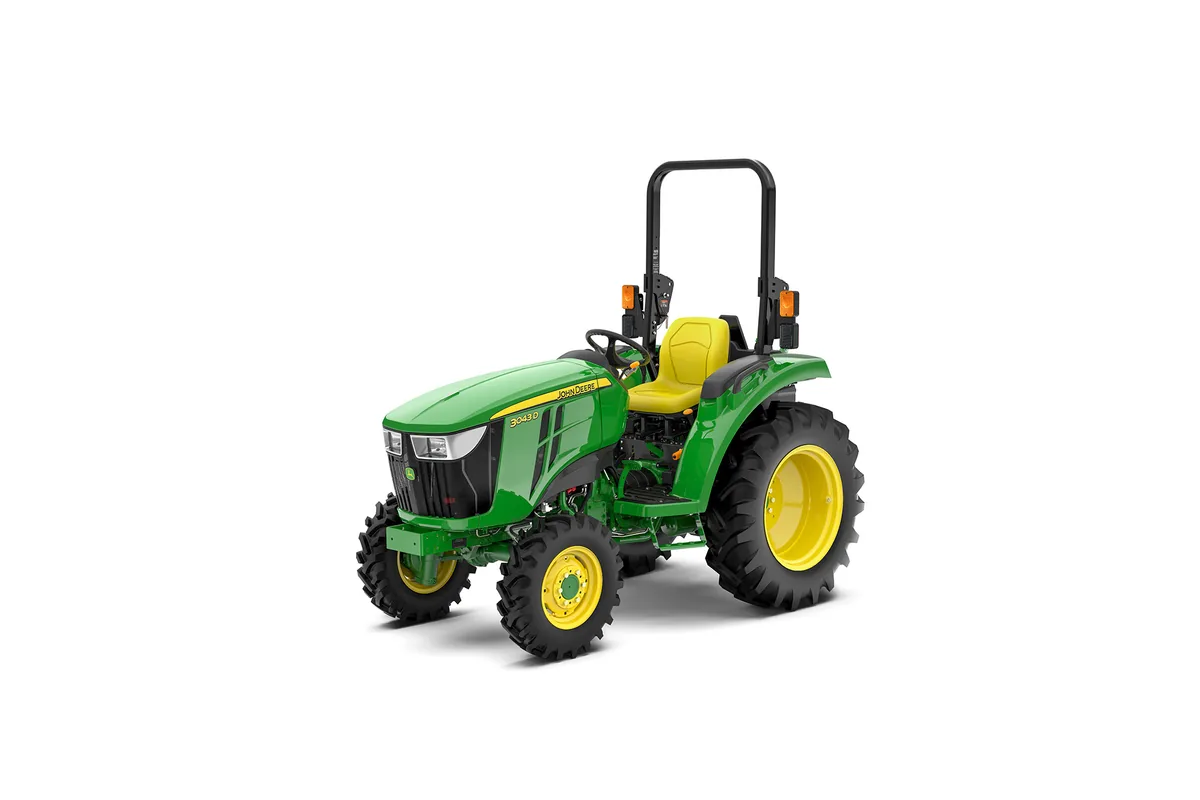
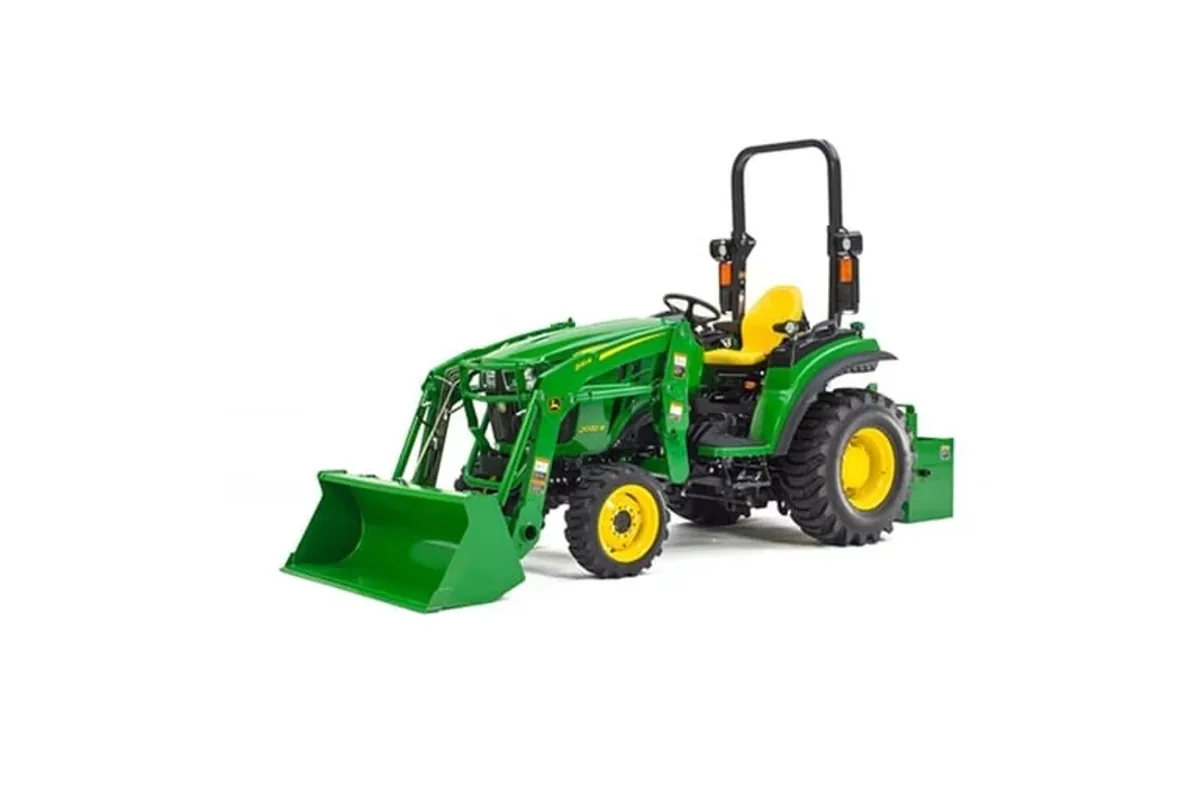
The 2038R gets recommended by owners as the machine that is big enough to finish the job and still small enough to get into the woods. Owners describe it doing real work on properties from four acres up to sixty: one on 22 acres calls it exactly the right size for a mower, a snowblower and a stump grinder while still fitting the tight spots in his timber; another on 40 acres mows twelve, maintains ten acres of woods and clears a quarter-mile gravel drive plus half a mile of county road the county never gets to. Snow is where owners are most emphatic — a 60-inch front blower moving 24 inches of heavy wet snow comes up, along with a strong preference for turf radials, which several owners rate the best snow tire even though they give up mud traction.
The most useful thing in the file is not about the tractor at all, it is about buying one. Owners report dealers in one-dealer territories holding firm at list — one neighbour was quoted $40,000 locally and bought the same machine in Nebraska for $32,000 including a front remote, with $1,200 of shipping on top. Another found one online $6,000 under his local dealer and talked the local dealer into matching it plus delivery plus $500, specifically so warranty work would stay nearby. A third bought a 150-hour used machine with a truckload of implements for the price of a base new unit. And 0% financing repeatedly decides the brand: one owner found Kubota about a thousand dollars cheaper and nearly nine thousand more in interest.
Loader capacity is where owners argue, and the argument is really about measurement. Figures ranging from 800 pounds to over 2,200 all appear from owners of the same tractor, and the explanation that settles it comes from an owner spelling out the three ways capacity is quoted: breakout force, full height at the pivot pin, and full height at the bucket about 500mm forward — the last being roughly 70% of the pin figure and the only one that reflects what you can actually pick up. Owners also warn that pallet forks feel tippy on soft, uneven ground even with loaded tires. On the backhoe, two owners who have logged real hours with the 270B say the same thing in different words: it beats a shovel and it saved them buying a second machine, but the limited reach and depth means constant repositioning, and both keep thinking about a mini excavator.
How much can the 2038R loader actually lift?+−
Less than the biggest numbers you will hear, and the disagreement is about where the measurement is taken. Owners quote everything from 800 pounds to over 2,200 for the same tractor. The useful framing comes from an owner who lays out the three conventions: breakout force, full height at the pivot pin, and full height at the bucket about 500mm forward — the last being roughly 70% of the pin figure and the only one that reflects a load on forks. A dealer puts the practical figure at 1,000 to 1,100 pounds.
2038R or a 2025R?+−
Owners who considered both are unusually one-sided here. The recurring advice is that if you are buying a 2-series, buy a 2032R or 2038R, because those are the ones with the lift capacity and capability the series is meant to have; the 2025R is described as a taller 1025R. Owners who went to the 2038R specifically cite not wanting a limited 3-point hitch.
Is it worth buying out of state?+−
Owners regularly do. In territories with one Deere dealer, list price is the price, and owners report saving $6,000 to $8,000 by buying elsewhere and paying about $1,200 to ship. One owner's better move: he found the out-of-area price, took it to his local dealer, and offered to buy locally at that price plus delivery plus $500 — keeping the relationship for warranty work. Also weigh financing: one owner chose Deere over a Kubota that was a thousand cheaper because the interest difference was close to nine thousand.
Can it handle heavy tillage and plowing?+−
Within limits, and owners are candid about them. A 6-foot brush hog over 20 to 30 acres takes a couple of days. A tiller at 30 PTO horsepower will bog depending on soil conditions, according to an owner doing spring tillage on ten acres. And one owner argues that drawbar horsepower is well below the PTO rating once hydrostatic losses are counted, which is why a much heavier old gear-drive tractor out-pulls it with a two-bottom plow.
Should I get the backhoe?+−
Only with recurring digging work, and even then owners hedge. Two owners with the 270B have logged real hours — culverts, retaining walls, stumps, burying a water line below a 60-inch frost line — and both say it works and saved them buying a second machine. Both also say the limited depth and reach means repositioning constantly, and that the money is a real down payment on a mini excavator. One owner's counterpoint is that renting failed him: the rental did not arrive on time and then broke down mid-job.
Summarised from public owner discussion, not from testing. Nothing here was measured by this site, and a report that recurs is not the same as a defect rate.