John Deere · Compact

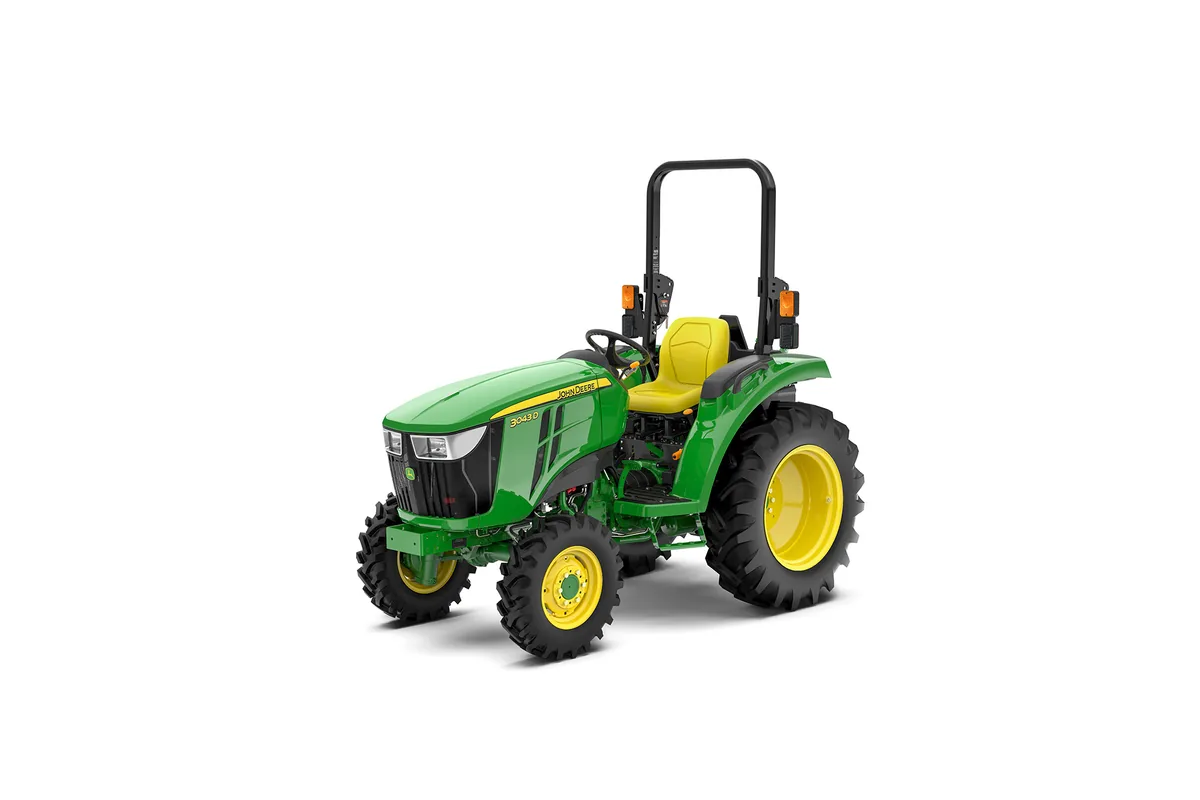
John Deere 3043D

~$29,644

MSRP, base build

John Deere 3043D
Compact
41.6 hp engine · 36.3 PTO−13% to the shaft

The only turbocharged gear-drive D, and the biggest: a 1.57 L Yanmar 3TNV86CT making 41.6 hp, 36.3 of it at the PTO. It runs the same hitch, hydraulics and 2,840 lb chassis as the 3035D, so the whole price step buys engine.

Engine
41.6 hp
PTO
36.3 hp
Loader lift
1,186 lbs
3-pt lift
2,081 lbs

1.22 PTO hp per $1,000 of list price

As published by the maker

Specifications

Size class
Compact
Transmission
Shuttle
Engine
Yanmar
Engine hp
41.6 hp
PTO hp
36.3 hp
Drive
4WD
Loader lift
1,186 lbs
Three-point lift
2,081 lbs
Hydraulic flow
10.3 GPM
Fuel tank
9.7 gal
Weight
2,840 lbs
Warranty
6 yr / 2000 hr powertrain
4WD
Yes
Cab
Open station
Turbo
Yes
Cruise control
No

On the price: The maker's own published starting figure for the base build. A dealer adds a loader, a deck and freight on top.

Lift figures are the maker's and are quoted at whichever point the maker chose; the about page explains why two loaders with the same number do not lift the same pallet.

Comes with

4WDShuttleFront LoaderPower SteeringTurboDiesel

From owner discussion and long-term write-ups

What owners say

What they like

  • 36.3 PTO hp is more than the hydrostatic 3046R delivers at 33.9, for roughly $9,500 less on Deere's published base list
  • Turbocharging pulls 41.6 hp from 1.57 L, a smaller engine than the naturally aspirated 3035D's 1.642 L makes 34.2 from
  • 2,081 lb at 24 in. behind the link arms and two rear SCVs as published, enough for a 6 ft cutter or a rear blade with hydraulic angle
  • Same 9.7 gal tank and 2,840 lb chassis as the rest of the D line, so the price step over the 3035D is almost entirely engine
  • Gear drive keeps more of that engine at the PTO than a hydrostatic would

What they complain about

  • The turbo and the diesel particulate filter together are the most complex emissions plumbing in the D line, on the model with no hydrostatic option to show for it
  • No cab and no cruise control on any 3D model
  • 10.3 gpm total flow is unchanged from the 3035D despite 7 more horsepower, so implements do not move any faster
  • Still the 300E loader at 1,186 lb at the pivot pin, unchanged from the 24 hp 3025D - the price step buys no loader capacity at all
  • 845 lb at 500 mm ahead of the pivot pin is modest for a 41 hp machine, and it is the forward figure that governs pallet forks

Gathered from owner reports

What owners report

The clearest reason to buy one is price, and the clearest reason not to is where the loader controls live. On price, an owner who picked one up during a dealer promotion got it with the front loader and bucket for around $20,000 with interest-free finance over four years, has no complaints, and has since added a 4-foot auger, a mechanical grapple and a bale spear for clearing and debris work on newly bought acreage. On ergonomics, someone who has run both the gear-drive D models and the hydrostatic R models is blunt about preferring the R: he dislikes the loader controls being mounted on the loader frame itself rather than at the operator station, calls the R generally more comfortable for any lengthy loader work, and notes the D has no cruise control - which he rates as extremely handy for rotary cutting. Owners also split on the loader's speed: one who test-drove a 3043D liked the bucket action and mentions others complaining the bucket moves too quickly, which does not bother him because he has no patience anyway.

Buyers considering one of these usually also want to know about adding a backhoe later, and that question came up directly alongside the answer that a backhoe cannot be mounted on any D-series machine, with the advice being to buy an E-series instead if a hoe is anywhere in your plans. Worth knowing too, if you are choosing between this and the smaller D models, is that moving up within the range does not change your emissions burden - the 25-to-75 horsepower band all carries the same class of hardware, so a buyer comparing the 3035D and this is choosing purely on capability. On bumpiness over roots and rocks, an owner points out that the factory offers different seats that meaningfully reduce the jolting, which is worth specifying rather than tolerating.

What comes up favourably

  • Dealer promotions have put it at genuinely low money - one owner got his with the front loader and bucket for about $20,000 at 0% over four years, and reports no complaints while using it for clearing and debris removal.
  • It drives well and the loader is quick: an owner who test-drove one liked both the way it handled and the bucket action, and rates the machine as feeling very solid overall.
  • Stepping up within the D range costs you nothing in emissions complexity, since this whole power band carries the same class of hardware - so the choice between the smaller D models and this one is about capability alone.
  • The bounce over roots and rocks that buyers worry about can be addressed at order time, because the factory offers alternative seats that noticeably reduce it.

What comes up as a complaint

  • The loader controls are mounted on the loader frame rather than at the operator station, which an owner familiar with both this and the hydrostatic models dislikes enough to prefer the R for any extended loader work.
  • There is no cruise control, which owners doing rotary cutting rate as a genuinely useful feature to be without.
  • A backhoe cannot be fitted to any D-series machine, so buyers who might want one later are told to buy an E-series instead - a question that comes up from prospective owners precisely because it is easy to assume otherwise.
  • Some owners find the bucket too fast, according to one who test-drove it and was untroubled himself but had seen the complaint raised.
  • One owner has a three-point position control that only works at the top of its range - it lifts just before position five, bottoms out at four, does nothing at three, two or one, and the pump keeps running at five so he has to tap it back down.

Questions worth asking

Can I add a backhoe later?
No, and it is worth settling before you buy. When a buyer asked about picking up a backhoe attachment down the road for one of these, the answer was that a backhoe cannot be mounted on any D-series machine and that anyone with a hoe in their future plans should buy an E-series instead. The two D models are described as otherwise identical apart from horsepower, so this is a limitation of the line rather than of this particular model.
Is it big enough to push over small trees and skid firewood?
For the trees, expect to work at it rather than simply push them down - owners with similar machines describe pushing a small fallen tree off a trail as within reach, while a standing tree of any health will more likely stall you or break traction. Firewood hauling and pulling a wagon are well within it, and owners point out you could do that part with a much smaller tractor. The thing to watch is your ground: anything other than turf tires will mark a lawn, and even the industrial tires will if there is moisture about.
How does it compare with the hydrostatic 3046R?
An owner who has used both prefers the R, and gives two specific reasons: the loader controls sit at the operator station rather than on the loader frame, which matters over a long loader session, and it has cruise control, which he calls very handy when rotary cutting. The D's counter-arguments are price and mechanical simplicity, and it puts noticeably more of its engine power to the PTO shaft for the money.

Summarised from public owner discussion, not from testing. Nothing here was measured by this site, and a report that recurs is not the same as a defect rate.

Cross-shopped against

Line the John Deere 3043D up

Same brand or same size, nearest in price

Related tractors

More from John Deere →
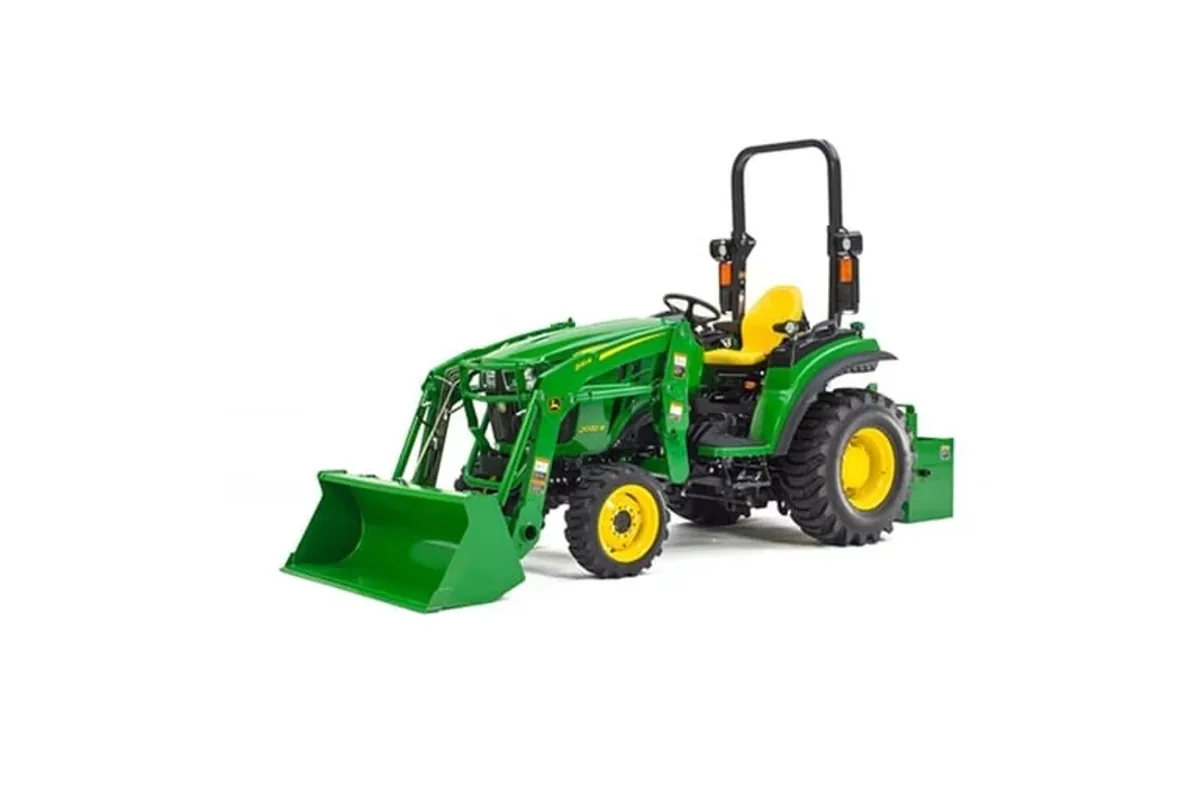
John Deere 2032R
~$28,866MSRP, base build
Compact

John Deere

John Deere 2032R

30.7 hp engine · 24.2 PTO−21% to the shaft
Loader
1,120 lbs
3-pt
1,356 lbs
Trans
Hydrostatic
Drive
4WD

Deere's premium small compact, sharing the 3032E's 1.642 L Yanmar and hydraulics but wrapping them in a heavier chassis with a step-through platform, tilt wheel and standard cruise control. It costs more than the 3032E and lifts less.

Spec sheet & owner notes
John Deere 3038E
~$28,730MSRP, base build
Compact

John Deere

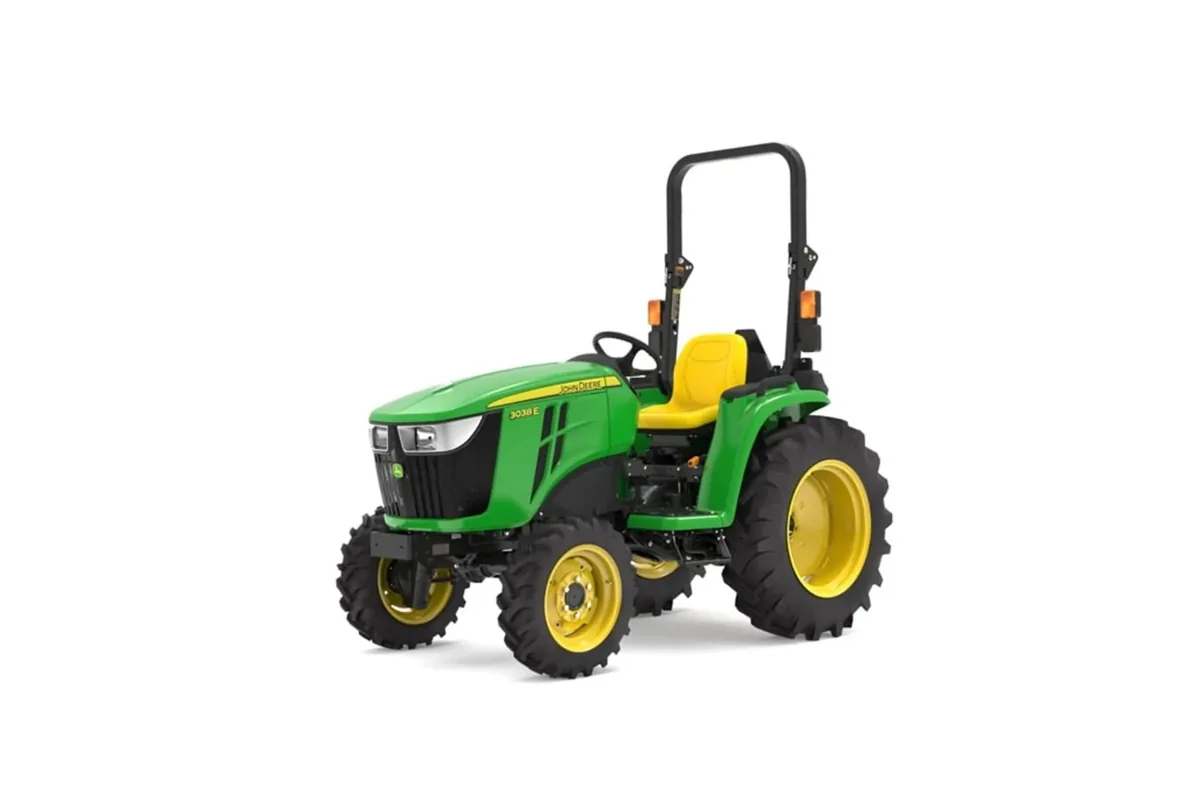
John Deere 3038E

36.7 hp engine · 30 PTO−18% to the shaft
Loader
1,186 lbs
3-pt
1,356 lbs
Trans
Hydrostatic
Drive
4WD

Turbocharging is what separates this from the 3032E below it: a 1.568 L Yanmar 3TNV86CT making 36.7 hp and 30 at the PTO, in a chassis 446 lb heavier. Hitch, hydraulics and loader are unchanged from the rest of the E line.

Spec sheet & owner notes
John Deere 2038R
~$31,253MSRP, base build
Compact

John Deere

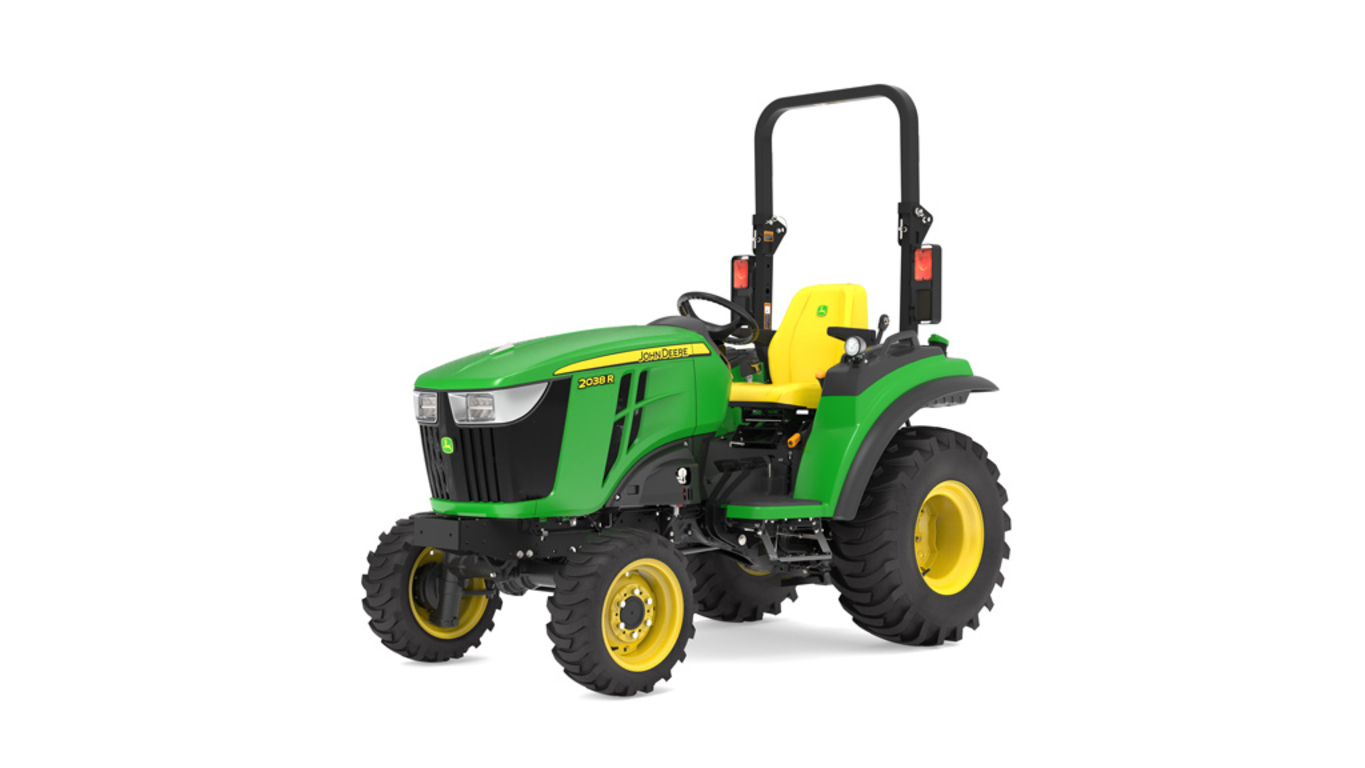
John Deere 2038R

36.7 hp engine · 30 PTO−18% to the shaft
Loader
1,120 lbs
3-pt
1,356 lbs
Trans
Hydrostatic
Drive
4WD

Thirty-seven horsepower while keeping the AutoConnect mower deck on the options list, which nothing else this size manages. Sitting between the 2025R and the 3-Series, its premium platform - eHydro, cruise, full dash - is what the money buys.

Spec sheet & owner notes