John Deere · Compact

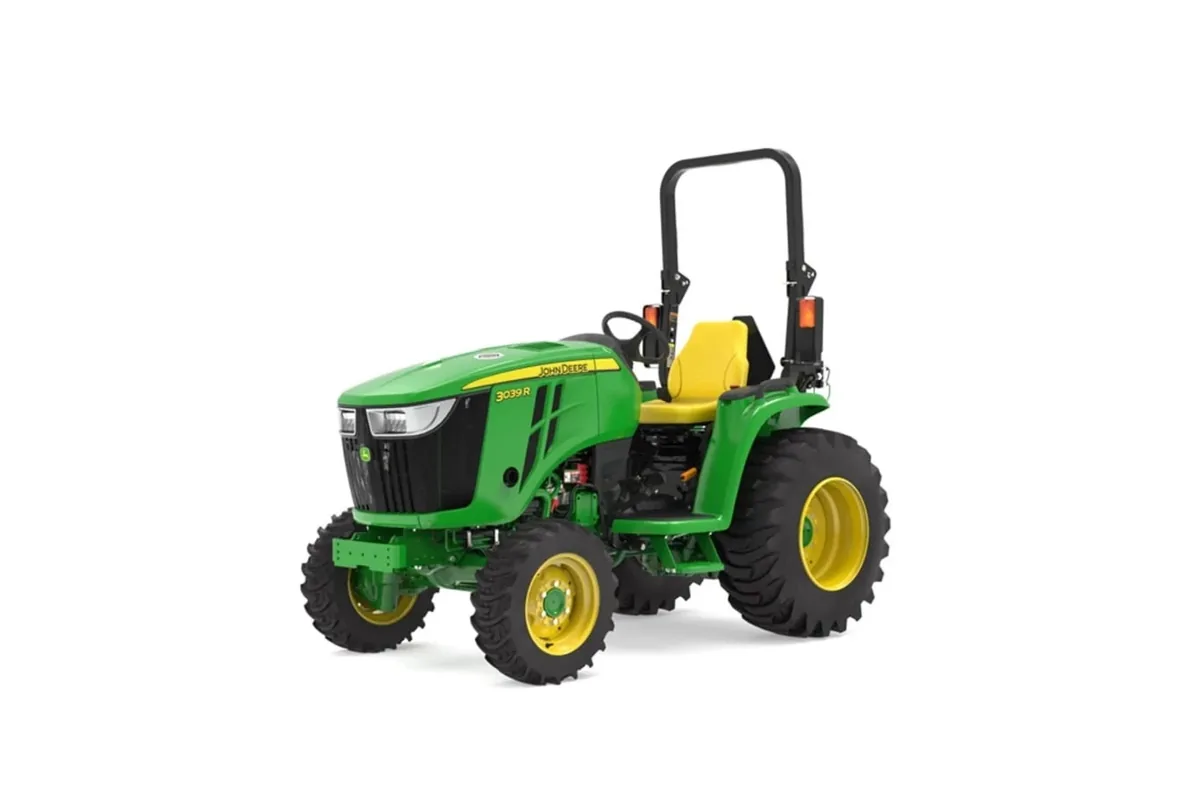
John Deere 3039R

~$35,898

MSRP, base build

John Deere 3039R
Compact
38.2 hp engine · 29.8 PTO−22% to the shaft

Deere's 3R line picks up where the discontinued 3038R left off: a turbocharged 1.6 L Yanmar, 15.3 gpm of pump flow and a 2,194 lb hitch. Pick eHydro or a 12F/12R PowrReverser gearbox, and a ComfortGard cab with air conditioning is a factory option on the eHydro build.

Engine
38.2 hp
PTO
29.8 hp
Loader lift
1,393 lbs
3-pt lift
2,194 lbs

0.83 PTO hp per $1,000 of list price

As published by the maker

Specifications

Size class
Compact
Transmission
Hydrostatic
Engine
Yanmar
Engine hp
38.2 hp
PTO hp
29.8 hp
Drive
4WD
Loader lift
1,393 lbs
Three-point lift
2,194 lbs
Hydraulic flow
15.3 GPM
Fuel tank
10 gal
Weight
3,005 lbs
Warranty
6 yr / 2000 hr powertrain
4WD
Yes
Cab
Available
Turbo
Yes
Cruise control
Yes

On the price: The maker's own published starting figure for the base build. A dealer adds a loader, a deck and freight on top.

Lift figures are the maker's and are quoted at whichever point the maker chose; the about page explains why two loaders with the same number do not lift the same pallet.

Comes with

4WDHydrostaticFront LoaderPower SteeringCruise ControlTurboDieselCab

From owner discussion and long-term write-ups

What owners say

What they like

  • The turbocharged 3TNV86CT pulls 38.2 hp from 1.6 L, and the PowrReverser gearbox takes 32.8 hp to the PTO against 29.8 with eHydro - three horsepower the gear option gives you for free
  • 2,194 lb at 24 in. behind the lift points handles a 6 ft rotary cutter, which is the implement most buyers at this size actually want
  • 15.3 gpm total pump flow with 9.1 gpm reaching implements, so a backhoe and loader on the same machine are not fighting each other for oil
  • A factory ComfortGard cab with air conditioning is on the option sheet - nothing in the 3E line below it can be ordered with one
  • Cruise control is standard with eHydro, which matters on the long mowing passes this size of machine gets bought for
  • Six years or 2,000 hours of powertrain coverage, among the longest terms offered on a compact tractor

What they complain about

  • Final Tier 4 compliance here runs a diesel particulate filter, so there are regeneration cycles that a sub-25 hp rival sidesteps entirely
  • The 320R lifts 1,393 lb at the pivot pin but 1,005 lb measured 500 mm ahead of it, and the forward figure is the one that governs a loaded pallet fork
  • Deere's published base list price of $35,898 is a bare tractor; dealer 'starting at' quotes that look cheaper usually have a 320R folded into them
  • 10 gal of fuel on the open-station build is thin for a machine that will spend a full day behind a cutter
  • Choosing the cab forces eHydro - the 12F/12R PowrReverser is an open-station-only option

Gathered from owner reports

What owners report

A striking number of 3039R owners did not set out to buy one. They arrived from a 1025R or an older 4110 after discovering that the thing limiting a sub-compact is weight and loader lift rather than horsepower - one owner had his 1025R six months before concluding the list of jobs he could not do was longer than the list he could. Others bought it because Deere offers no factory cab below the 3 series, and were then surprised to find the bigger tractor turns tighter than the 2 series it replaced. The cab is what most of them mention first: mowing at six or seven miles an hour in air conditioning, blowing snow in comfort, working in weather.

And then the same owners say they wish it lifted more. That refrain is remarkably persistent - people who moved up specifically for lift capacity still want more of it, including for gravel and bales. The working answer is ballast rather than a bigger machine: one owner runs a 700 lb ballast box plus 200 lb of wheel weights when handling logs with a grapple, and says even with filled tires he needs an implement on the back to avoid overloading the front axle. Filled tires alone add something in the region of 800 lb on this size of tire, but owners describe iron on the three point as what actually stopped their rear wheels leaving the ground while digging.

Two purchases owners consistently advise against are the backhoe and the belly mower. One buyer's own dealer talked him out of the backhoe, arguing that $350 rental weekends for a mini excavator would take many years to add up to the $8,000 to $10,000 it would have added, and pointing out that trenching with a machine that has to be repositioned every few feet is miserable work. On mowing, several owners run a zero-turn alongside the tractor and say the 72-inch belly deck is heavy, awkward to handle and worse around trees once a cab is fitted - though the owner who does use one mows a big meadow happily and notes he tears grass in four-wheel drive but not in two. Practical notes worth carrying: chains for serious snow work, winter fuel treatment if it sits between uses, and keep an eye on loader fittings, which one owner retightens every time he mounts his grapple.

What comes up favourably

  • The cab is the reason many owners are in this model at all, since Deere offers no factory cab lower down the range, and they describe mowing and snow blowing in climate control as what changed how much they use the machine
  • It is more manoeuvrable than buyers expect - one owner who cross-shopped says it turns sharper than the 2 series he was considering, despite being the bigger tractor
  • Owners moving up from a 1025R or a 4110 consistently report the extra weight and lift opened up work the smaller machine simply could not do
  • At 35 to 40 hp it comfortably runs a 72-inch mower, using the rule of thumb of five PTO horsepower per foot of deck that leaves smaller tractors struggling
  • Owners describe long trouble-free stretches - one reports six or seven years with no problems on a machine used year-round
  • Deere's interest-free financing is decisive for some buyers: one calculated that the cheaper rival would have cost him around $9,000 in interest, wiping out the price difference
  • Consumables are not locked to the dealer - owners run ordinary heavy-duty diesel oil and aftermarket batteries with no trouble, provided the specification and cold-cranking amps match

What comes up as a complaint

  • Loader lift is the standing complaint even among owners who upgraded specifically to get more of it, and it shows up most when handling gravel, bales and logs
  • It needs serious rear ballast to use the loader safely - one owner runs a 700 lb ballast box plus 200 lb of wheel weights for grapple work and still keeps loads low
  • Owners advise against the backhoe: one was talked out of it by his own dealer on the grounds that it would have added $8,000 to $10,000 and that repositioning a fixed hoe every few feet makes trenching tedious
  • The 72-inch belly mower divides owners - one finds it too heavy to handle even with a deck lift, and several run a separate zero-turn instead, noting that a cab means more trimming around trees
  • Grapple work on trails is slow going: an owner watched a tracked skid steer push through 3 to 4 inch saplings that left his tractor skidding in place
  • Loader hydraulic fittings need watching - an owner says he checks and retightens them every time he mounts the grapple
  • Snow work wants chains, according to an owner with a 60-inch rear blower who says he will not do another season without them once ice packs down
  • Dealer margin on a new machine in this class is reported to be thin, so owners say the negotiating room is in the implements rather than the tractor

Questions worth asking

Should I buy this or stretch down to a 1025R or 2 series?
The owners best placed to answer are the ones who owned the smaller machine first, and they are consistent. One sold his 1025R within a year after finding the tasks he could not do outnumbered the ones he could; another traded up after realising the limits were weight and lift rather than power. The other common reason to be in the 3 series is the cab, which Deere does not offer factory-fitted lower in the range. The cost is money rather than manoeuvrability - it turns at least as tightly as the 2 series.
How much ballast does it need?
More than filled tires alone. Beet juice in this tire size runs around 800 lb, which helps, but an owner handling logs with a grapple uses a 700 lb ballast box and 200 lb of wheel weights on top of it, and says an implement on the back is needed to keep the front axle from being overloaded. Another describes his early mistake as the rear wheels lifting while digging, which took 400 lb of iron on the three point to cure. If you buy used with ballast already in the tires, owners say leave it.
Is the 3039R's backhoe worth it?
Owners say no with unusual consistency, and at least one dealer agreed. The argument is arithmetic and ergonomics: the backhoe added something like $8,000 to $10,000 at purchase, against roughly $350 for a weekend mini excavator rental, and a machine that digs from a fixed position makes trenching a cycle of digging, dismounting, repositioning and starting again. A mini excavator digs and moves continuously. If you need frequent small digs far from a rental yard the calculation changes, but nobody here makes that case.
Belly mower, rear finish mower, or a separate zero-turn?
Most owners here keep a zero-turn for grass and use the tractor for everything else, and say so explicitly. The owner who does run the 72-inch belly deck is happy with it - he mows a meadow at six or seven miles an hour in air conditioning and likes maintaining only one machine - but notes it plans over lumps rather than giving a fine finish, that a cab forces more trimming around trees, and that he tears grass in four-wheel drive but not in two. A different owner simply finds the 72-inch deck too heavy to handle off the tractor.
What goes wrong on a 3039R?
Not much, on the evidence, and what there is looks like individual faults rather than a pattern. One owner's rockshaft control went limp at about 110 hours with the cable intact, on a three point he describes as having been sloppy since new. Another found a bolt in the driveway that turned out to be from the four-wheel-drive engagement linkage. Loader fittings loosening with repeated attachment changes comes up, and a factory battery that was allowed to sit discharged failed at three years. Owners otherwise report multi-year trouble-free ownership.
What does one cost?
New, owners describe dealer margin in this class as around eight percent, so the tractor itself barely moves and the discount comes on implements - and Deere's interest-free financing is what several say tipped them away from a cheaper rival. Used prices are wide: a one-year-old machine is quoted in the thirty to fifty-five thousand range depending on hours and options, and buyers have found gently used cabbed examples for less than a new competitor was going to cost them.

Summarised from public owner discussion, not from testing. Nothing here was measured by this site, and a report that recurs is not the same as a defect rate.

Cross-shopped against

Line the John Deere 3039R up

Same brand or same size, nearest in price

Related tractors

More from John Deere →
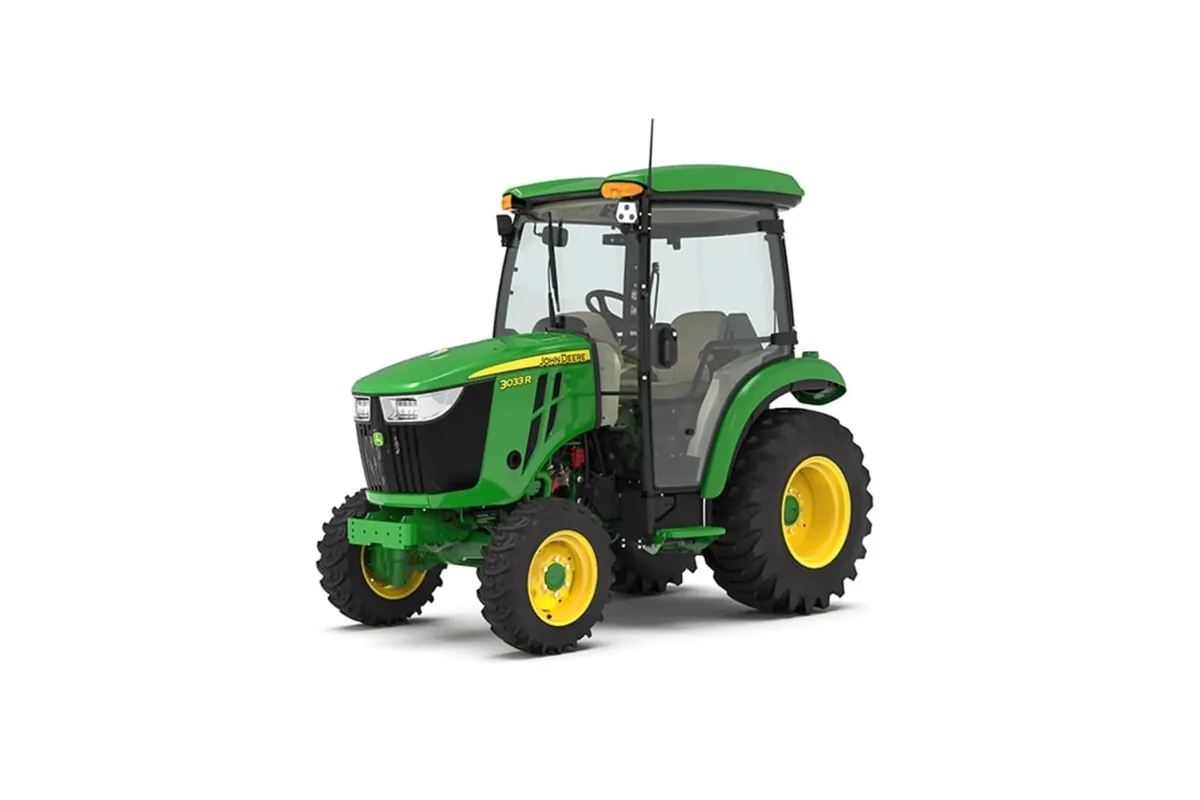
John Deere 3033R
~$32,719MSRP, base build
Compact

John Deere

John Deere 3033R

31.8 hp engine · 23 PTO−28% to the shaft
Loader
1,393 lbs
3-pt
2,194 lbs
Trans
Hydrostatic
Drive
4WD · cab

The cheapest 3R chassis, and the money goes into hydraulics and hitch rather than horsepower: 15.3 gpm against the 3E line's 9.3, a 2,194 lb hitch, the larger 320R loader and a ComfortGard cab on the option sheet. The only 3R without a turbo.

Spec sheet & owner notes
John Deere 3046R
~$39,600MSRP, base build
Compact

John Deere

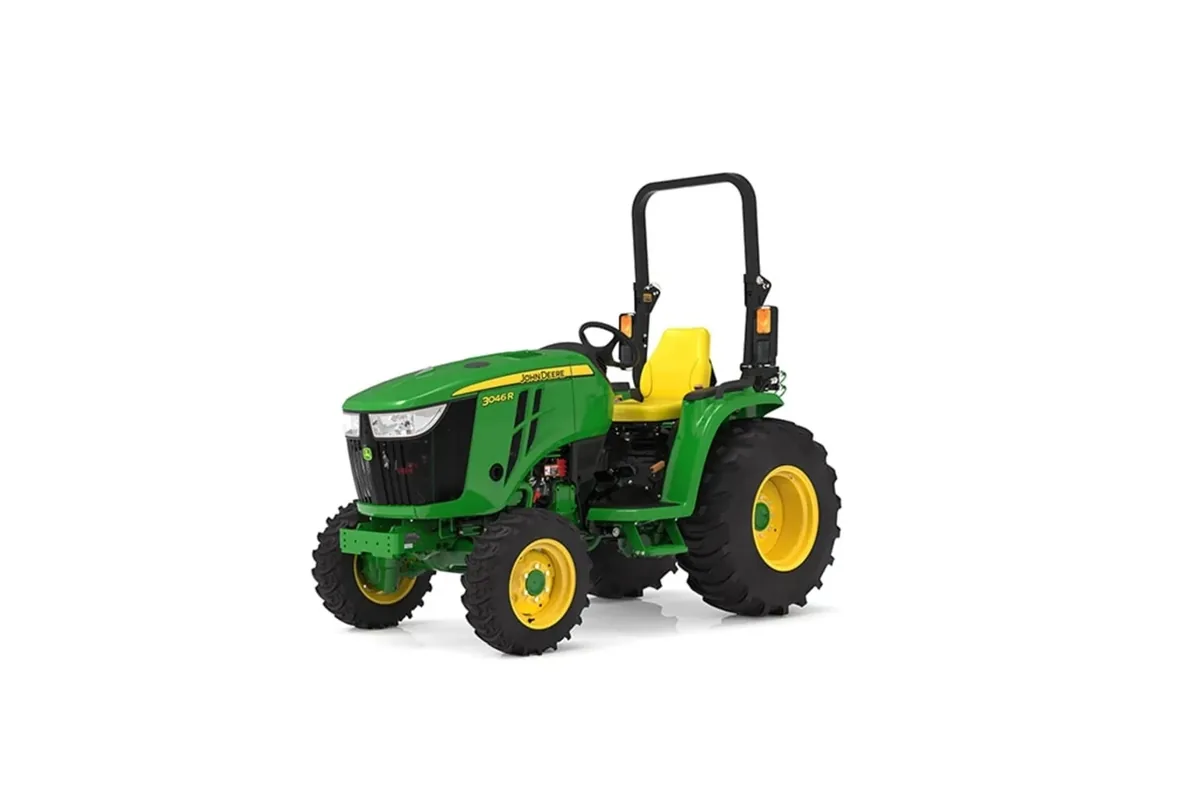
John Deere 3046R

44.7 hp engine · 33.9 PTO−24% to the shaft
Loader
1,393 lbs
3-pt
2,194 lbs
Trans
Hydrostatic
Drive
4WD · cab

The only Deere compact under 4 Family with a turbocharged, intercooled engine: 44.7 hp from 1.568 L, at the head of the 3 Series. eHydro is the sole transmission - the PowrReverser offered on the 3033R and 3039R is not on this model's order sheet.

Spec sheet & owner notes
John Deere 4052M
~$40,265MSRP, base build
Compact

John Deere

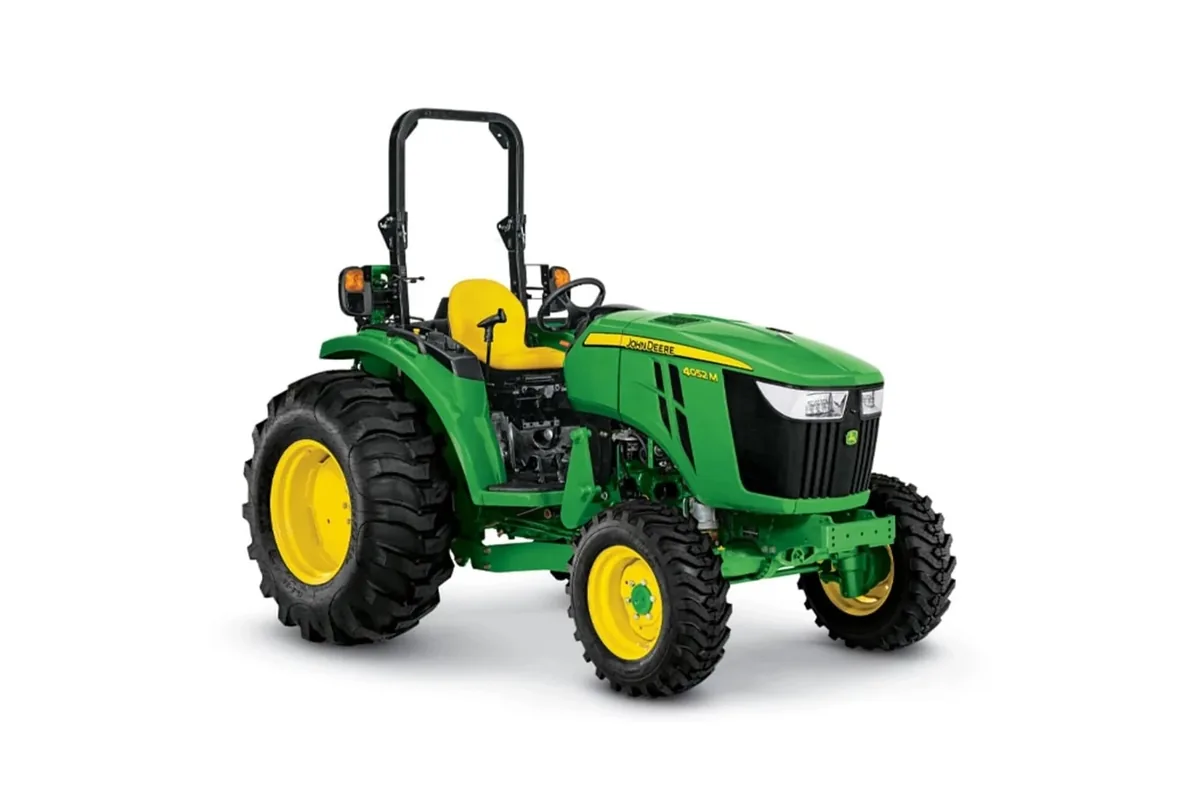
John Deere 4052M

50.8 hp engine · 40.8 PTO−20% to the shaft
Loader
2,396 lbs
3-pt
2,500 lbs
Trans
Power Shuttle
Drive
4WD

Fifty horsepower with a 12F/12R PowrReverser as standard equipment rather than an upcharge, and the 400E loader that lifts 2,396 lb at the pivot pin - nearly double what the 3 Series manages. The trade is the operator station: 4M is open-station only.

Spec sheet & owner notes