John Deere · Utility

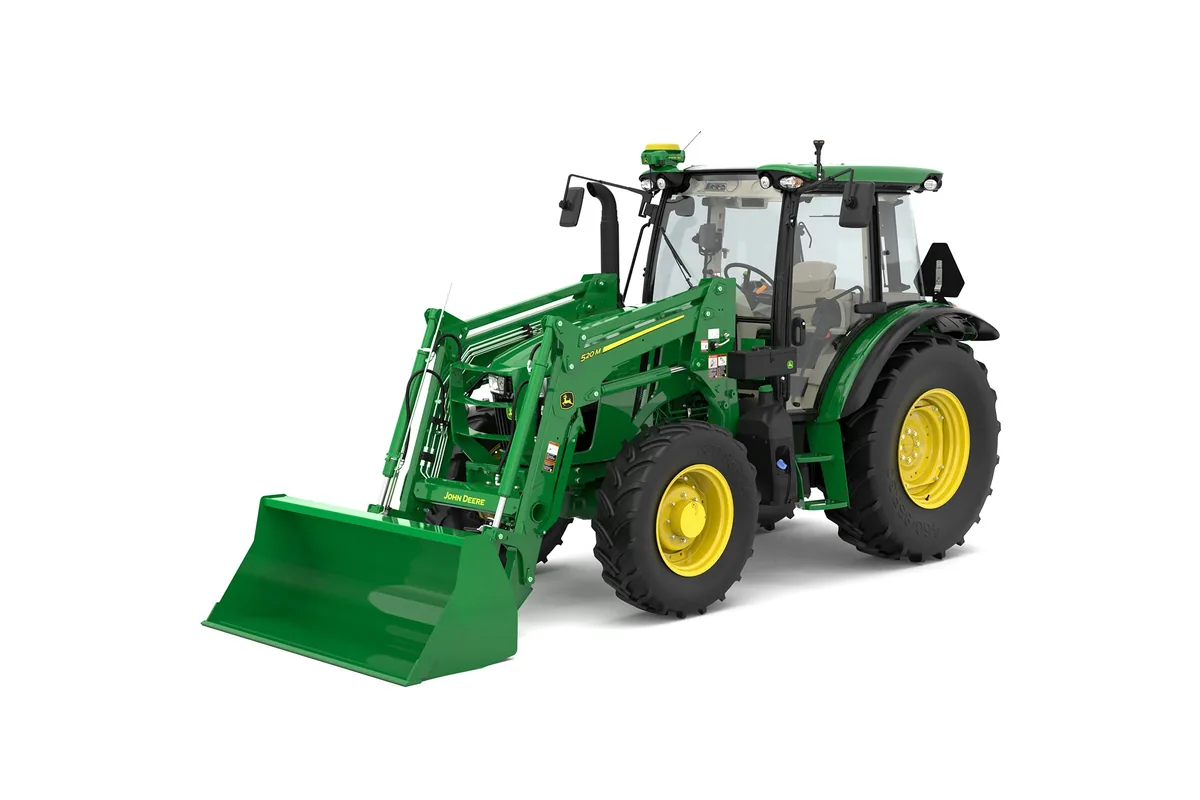
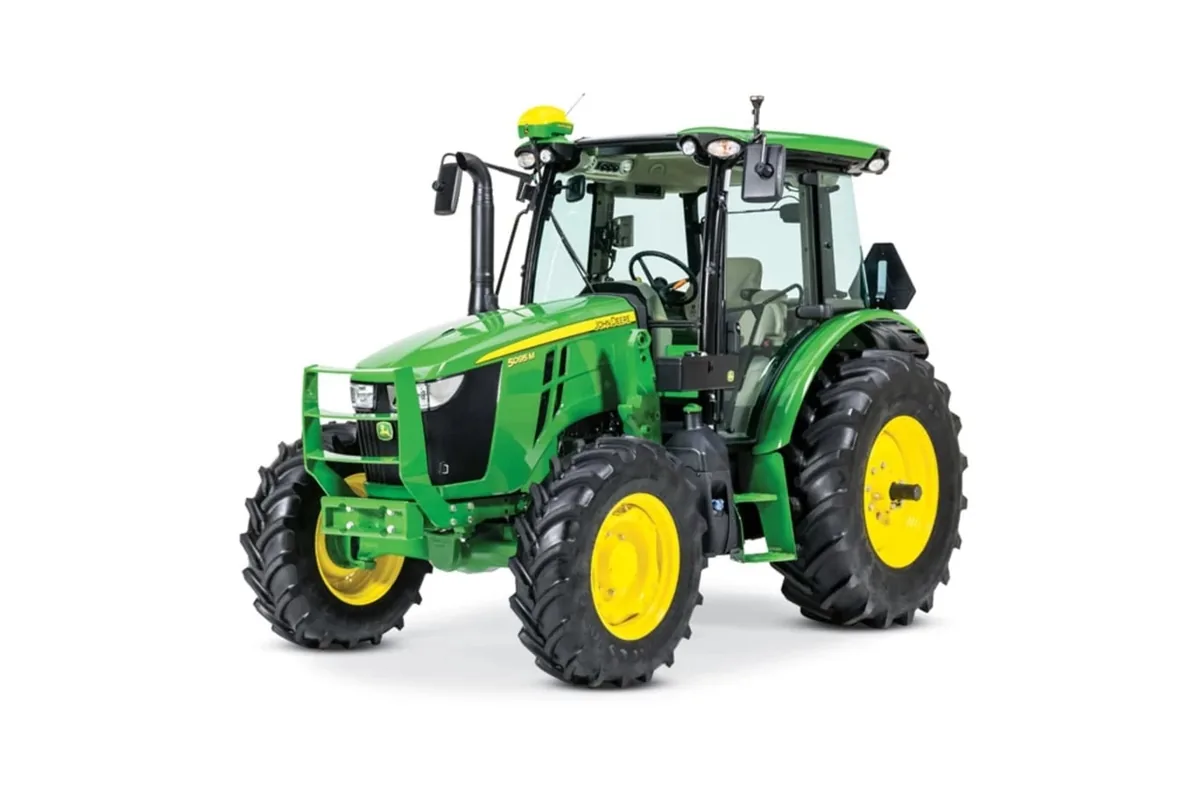
John Deere 5085M

~$78,056

MSRP, base build

John Deere 5085M
Utility
85 hp engine · 70 PTO−18% to the shaft

A different class of machine from the 5E that shares its badge: 4.5 L of PowerTech across four cylinders, a 16F/16R PowrReverser as standard, 5,150 lb of hitch and MFWD included in the base price rather than charged as an option.

Engine
85 hp
PTO
70 hp
Loader lift
3,027 lbs
3-pt lift
5,150 lbs

0.9 PTO hp per $1,000 of list price

As published by the maker

Specifications

Size class
Utility
Transmission
Power Shuttle
Engine
John Deere
Engine hp
85 hp
PTO hp
70 hp
Drive
4WD
Loader lift
3,027 lbs
Three-point lift
5,150 lbs
Hydraulic flow
24.7 GPM
Fuel tank
37.7 gal
Weight
8,298 lbs
4WD
Yes
Cab
Available
Turbo
Yes
Cruise control
No

On the price: The maker's own published starting figure for the base build. A dealer adds a loader, a deck and freight on top.

Lift figures are the maker's and are quoted at whichever point the maker chose; the about page explains why two loaders with the same number do not lift the same pallet.

Comes with

4WDPower ShuttleFront LoaderPower SteeringTurboDieselCab

From owner discussion and long-term write-ups

What owners say

What they like

  • 70 PTO hp from 85 gross is a far better conversion than anything in the 5E line, where a 67.6 hp 5067E sends only 49 hp to the shaft
  • MFWD is included in the base price on Deere's own price page, unlike the 5E where the front axle is a $7,103 extra
  • 24.7 gpm of hydraulic flow, rising to 25.6 gpm with the PowrQuad PLUS or Powr8 transmission
  • 5,150 lb of hitch lift at 24 in. behind the lift points, with a high-capacity option rated to 7,860 lb
  • 37.7 gal of fuel on the open station and 43.7 gal with the cab - this is a machine built to stay out all day
  • Aftertreatment is a diesel oxidation catalyst and SCR rather than a particulate filter, so there is no soot-loading regeneration cycle
  • Four transmissions are offered above the standard PowrReverser, up to a 32F/16R Powr8 with creeper

What they complain about

  • About $78,000 on Deere's published base list makes this the most expensive machine of its power class here, and the cab is a further $16,038
  • Deere does not publish a single powertrain warranty term for the 5M that could be read off its literature, unlike the 5E's five years and the compacts' six
  • Deere's loader prep package lists the 520M, 540M and 600M as compatible without naming one as the match, so the 2,606 lb pivot-pin figure shown here is the smallest of the three - a 540M lifts 3,027 lb at the same point
  • At 8,298 lb it is too heavy for turf work and too large for the tight yards a compact handles easily
  • No cruise control is listed on the standard PowrReverser build

Gathered from owner reports

What owners report

The most useful assessment comes from a lifelong row-crop and cattle farmer who bought one several years ago and admits he expected to dislike it, thinking it too small. It has turned out to be a terrific tractor that gets used every single day. His specific recommendation is worth quoting as a sizing rule: on ground that gets genuinely muddy, he would not go any smaller than this if you need to move round bales in feedlot conditions and be safe doing it, and he considers it the absolute minimum for handling seed boxes and bulk tanks. He rates the loader and its universal attachment system as having worked well on his farm, and owners note that with the matching loader this machine should lift around 3,500 lb. An owner who otherwise runs Kubota draws the dividing line at about this size, saying that once you get above 85 horsepower and into this model Deere has the advantage, while below that he considers Kubota the better machine.

Two practical notes recur. The first is brakes: an owner reports his being mushy, as another Deere 5-series owner had described, and found a reference in the service manual suggesting the specification allows something like four inches of pedal travel - so a soft pedal may be within spec rather than a fault. The second is that this sits above the horsepower threshold where exhaust fluid becomes part of the deal, which is what buyers comparing it against the E-series machines below it are weighing when they choose a smaller tractor to avoid that system. Owners working these daily change the engine oil at least twice a year rather than to a fixed hour figure.

What comes up favourably

  • A farmer with a lifetime on row crops and cattle expected it to be too small and calls it a terrific tractor that is used every single day, having changed his mind entirely after buying.
  • It is the size owners name as the safe minimum for moving round bales in muddy feedlot conditions, and the absolute minimum for handling seed boxes and bulk tanks.
  • With the matching loader it should lift around 3,500 lb, which owners pair with a recommendation to take four-wheel drive rather than treat it as optional.
  • Even owners loyal to other brands concede the ground here - one who runs Kubota says that above 85 horsepower and into this model Deere has the advantage, while rating Kubota better below that.

What comes up as a complaint

  • Brakes feel mushy, and more than one Deere 5-series owner says so - though the service manual apparently specifies something like four inches of pedal travel, so the soft pedal may be by design rather than a fault, and the bleeding procedure is described as complicated.
  • It sits above the horsepower threshold where an exhaust fluid system becomes part of the package, which is exactly what buyers choosing a smaller E-series machine are avoiding.
  • Daily working owners change the engine oil at least twice a year rather than on a leisurely schedule, which is worth factoring into running costs.

Questions worth asking

Is it big enough for a working farm?
A farmer who has spent his life on row crops and cattle says yes, having bought one thinking it would be too small and found it terrific enough to use daily. His sizing rule is the useful part: if you need to move round bales safely in muddy feedlot conditions, do not go smaller than this, and treat it as the minimum for seed boxes and bulk tanks. Owners also recommend four-wheel drive as a given rather than an option at this size.
Are the mushy brakes a fault?
Possibly not. An owner who found his soft looked into it and reports a service manual reference suggesting the specification allows something in the region of four inches of pedal travel, which surprised him. He also describes the bleeding procedure as somewhat complicated. Another Deere 5-series owner independently describes the same spongy feel, so if yours feels soft it is worth checking against the specification before assuming air in the lines.
Should I step down to avoid the exhaust fluid system?
That is the trade buyers are actually making. This model sits above the horsepower band where selective catalytic reduction and exhaust fluid become part of the package, while the E-series machines below it stay under it. Owners weighing the jump suggest that a step up in emissions complexity should buy you a meaningful increase in capability rather than a few horsepower - one rule of thumb offered is at least a 30 per cent gain before it is worth crossing the line.

Summarised from public owner discussion, not from testing. Nothing here was measured by this site, and a report that recurs is not the same as a defect rate.

Cross-shopped against

Line the John Deere 5085M up

Same brand or same size, nearest in price

Related tractors

More from John Deere →
John Deere 5095M
~$82,365MSRP, base build
Utility

John Deere

John Deere 5095M

95 hp engine · 80 PTO−16% to the shaft
Loader
3,027 lbs
3-pt
5,150 lbs
Trans
Power Shuttle
Drive
4WD · cab

Ten more horsepower than the 5085M from the same 4.5 L PowerTech and the same chassis, weight and hitch. Eighty horsepower reaches the PTO, which is the practical dividing line for a mid-size round baler or a 10 ft disc mower.

Spec sheet & owner notes
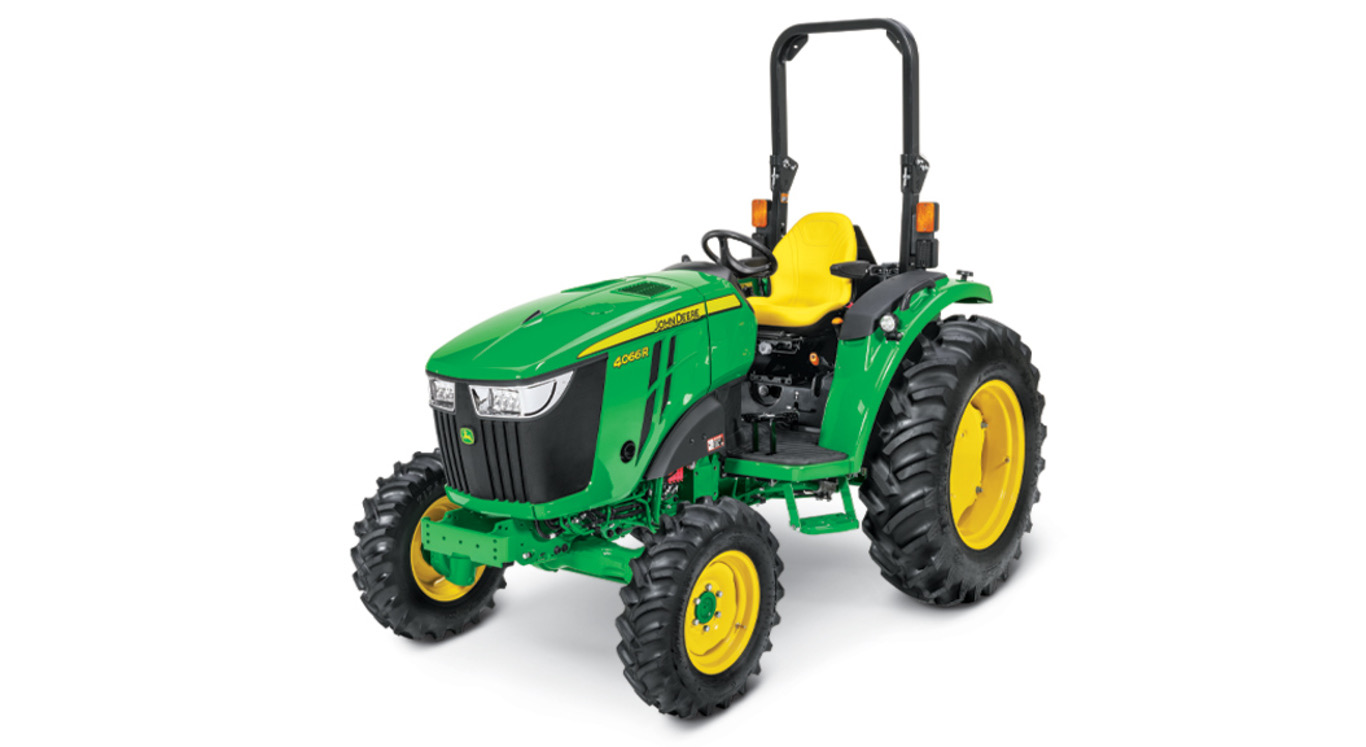
John Deere 4066R
~$51,662MSRP, base build
Utility

John Deere

John Deere 4066R

65.9 hp engine · 54 PTO−18% to the shaft
Loader
2,313 lbs
3-pt
2,500 lbs
Trans
Hydrostatic
Drive
4WD · cab

Sixty-six horsepower with a factory cab on the options list puts this nearer a small utility tractor than a garden machine, and at the ceiling of Deere's compact range. The 17.4 GPM hydraulic system and 3-range eHydro are what the R badge actually buys.

Spec sheet & owner notes
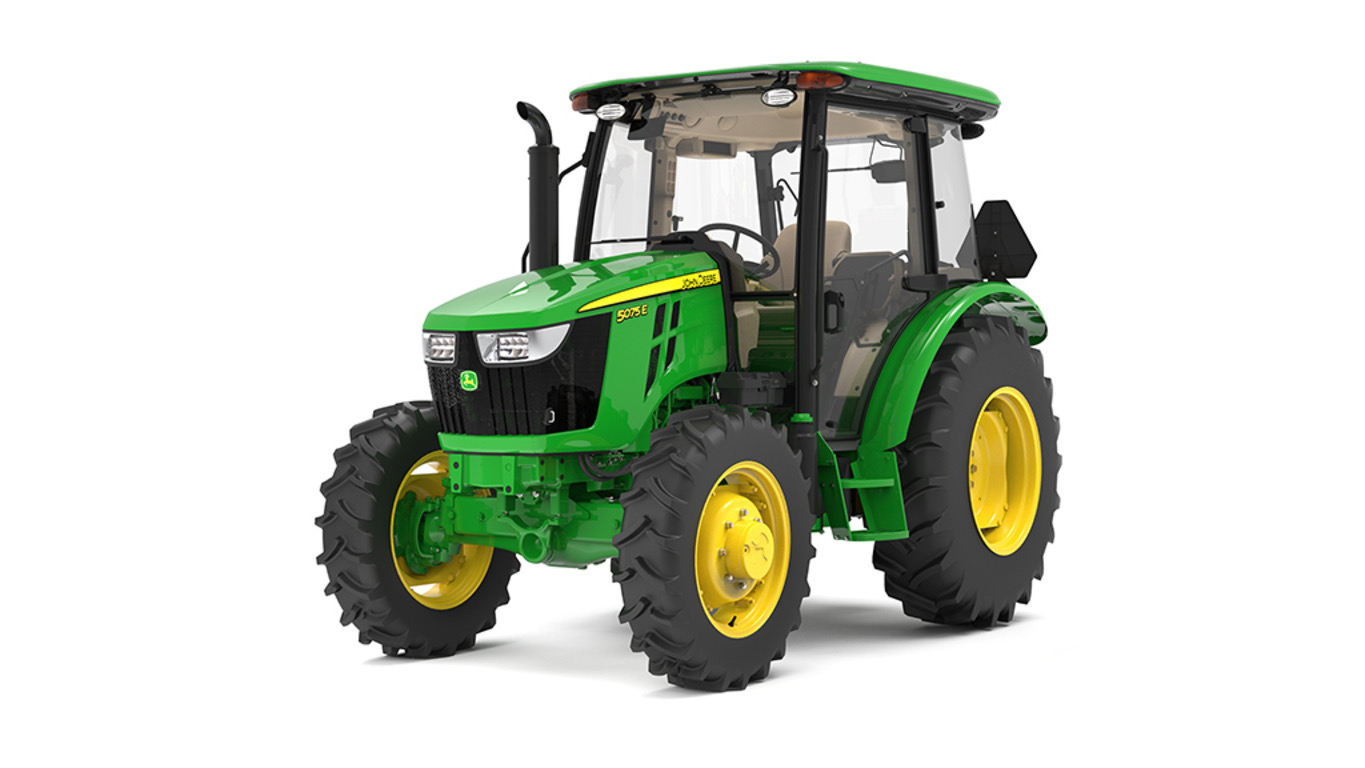
John Deere 5075E
~$37,529MSRP for 2WD open station; Deere lists MFWD separately at $7,103
Utility

John Deere

John Deere 5075E

75 hp engine · 57.6 PTO−23% to the shaft
Loader
2,606 lbs
3-pt
3,192 lbs
Trans
Power Shuttle
Drive
4WD · cab

A genuine farm tractor rather than an oversized compact, running Deere's own 2.9L three-cylinder through a 12F/12R PowrReverser to 3,192 lb at the hitch. The 3-cylinder 5E needs no DPF, no DEF and no regen, which is a maintenance argument by itself.

Spec sheet & owner notes