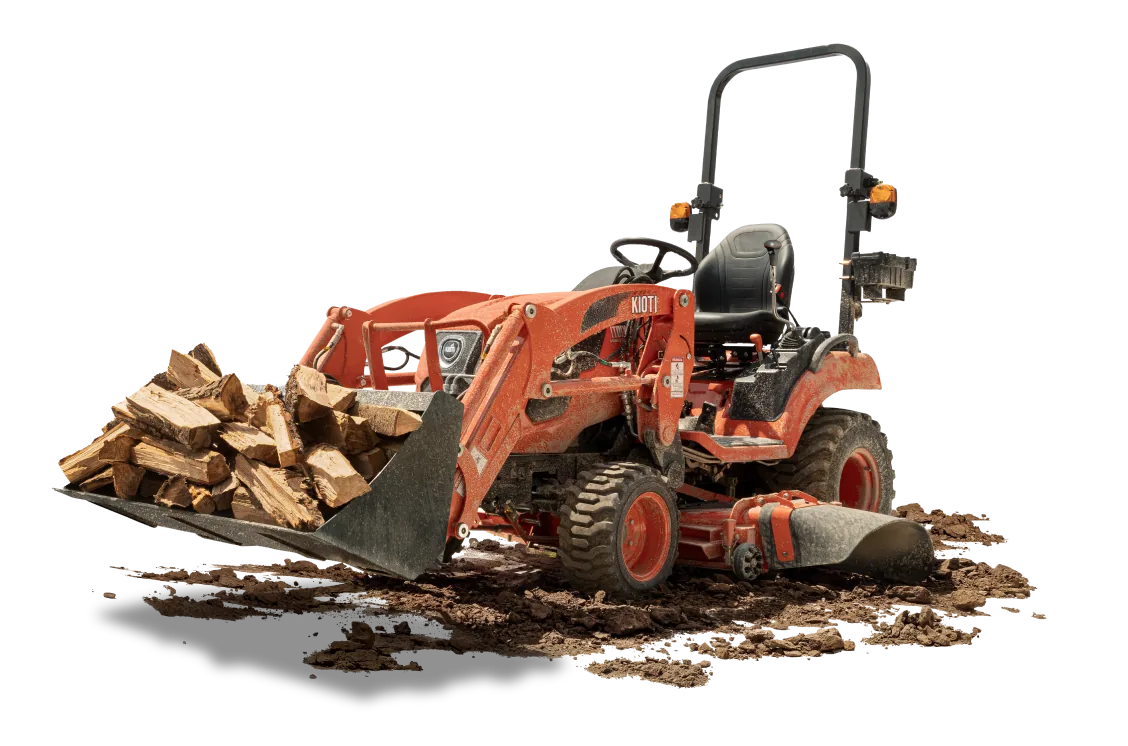
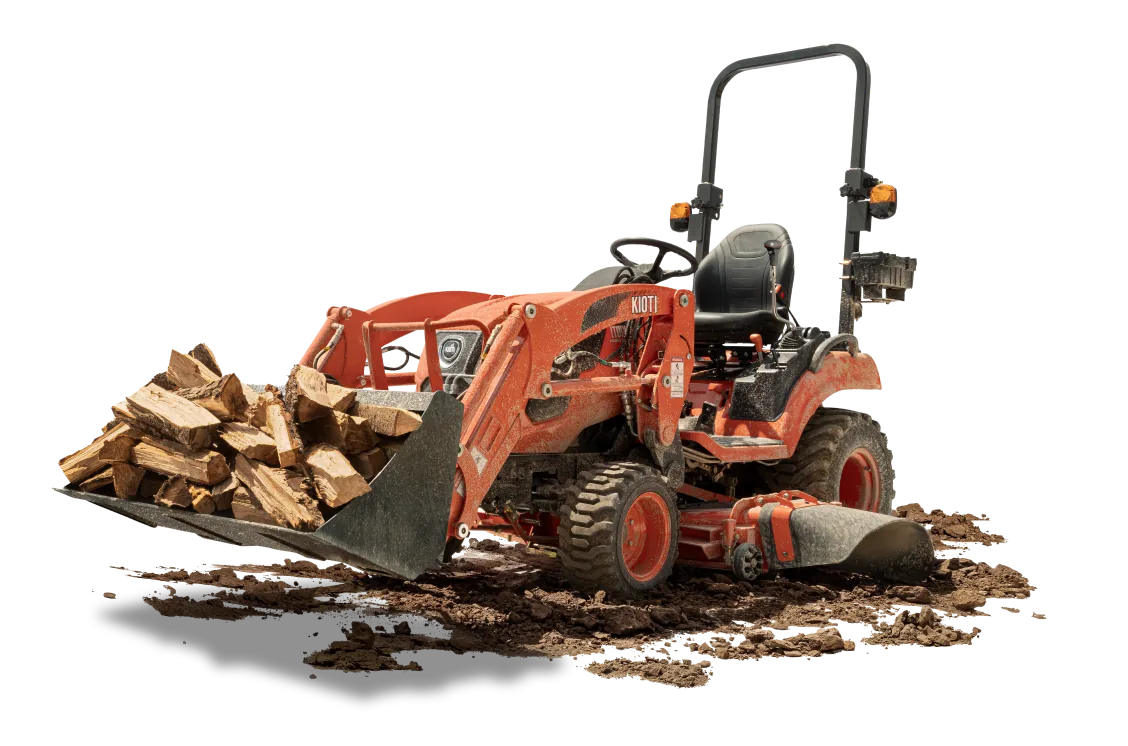
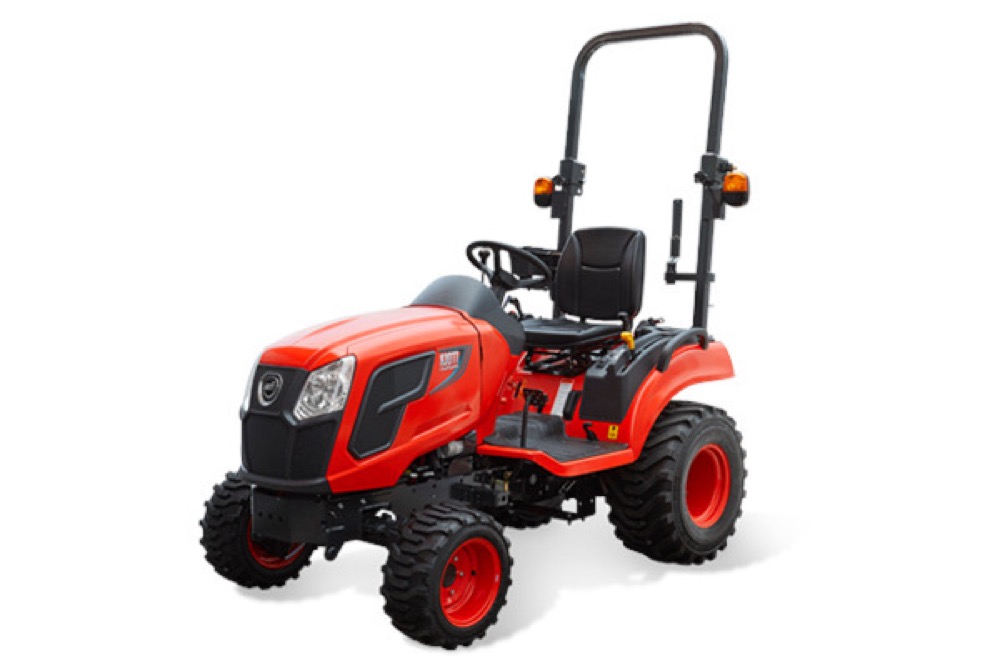
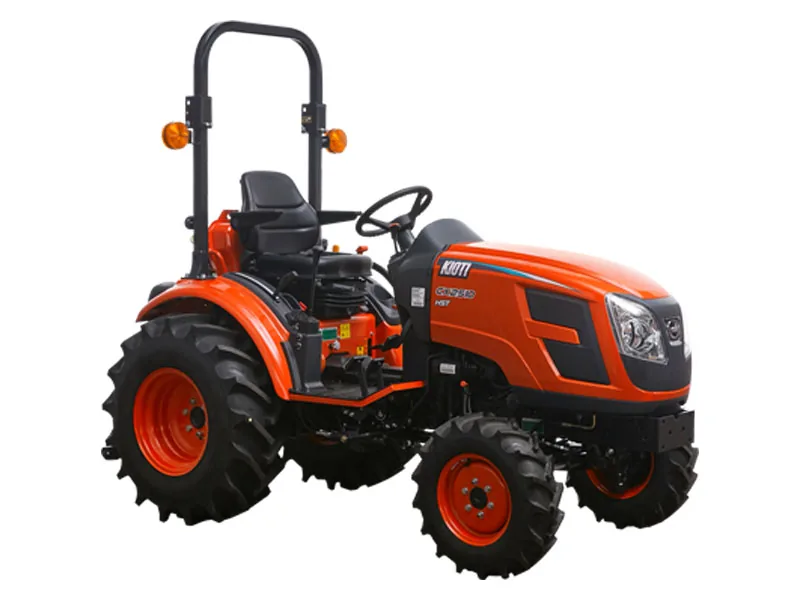
The CS2220 is the sub-compact people buy when the loader number matters more than the badge, and owners back that up with real loads: roughly 800 lb plus the bucket lifted to full height off a flatbed, 4-foot round bales moved with a tiller hung on the back, a crated 500 lb box blade that it did not blink at. The price gap can be dramatic — a Canadian buyer priced one with loader and mid-mount mower $11,000 below a comparably equipped BX2380, and a US buyer paid just over $14,000 cash in late 2022 with loader, third function, mirrors and ballasted tires. Resale has also gone better than the brand's reputation predicts: two owners who moved up to a CX2510 cab report losing only a few hundred dollars on the trade, one taking $13,500 back on a machine he bought for $14,015.
The other half of the picture is a cluster of hydraulic and starting complaints serious enough that owners argue about whether they got lemons. One owner's machine had the pump, priority valve and control valve replaced two or three times each and sat at the dealer for six months before anyone suspected a machining difference in the oil reservoir — and the loaner CS2220 he was given began showing the same symptoms. Another had the hydrostat fail around 50 hours. Hard starting shows up repeatedly and in several shapes: a solenoid that clicks without cranking once the machine is warm, multiple glow-plug cycles needed before it will turn over, one machine that needed a jump when cold. The HST cooling fan slung underneath is a separate known weak spot, found with its bolts backed out on one tractor and sheared clean off on another while its owner cut a trail.
What makes it work anyway is its size. Owners who considered a CK and chose this instead did so because the CS stays off lawns where a compact tears up whatever it drives on, and because it fits places a bigger machine will not. It is a legitimate one-machine answer for an acre to three acres of mixed chores, and with the backhoe it does real digging — one owner trenched in two hours what had taken him three days with a shovel, and dug a 12x12x4 pond over two weekends, though he had to reposition the tractor every four feet because you cannot drive and dig at once. Owners are split on whether that backhoe is worth its $8,300 price against renting, and are unanimous that if you are choosing between this and the cheaper CS2210, you buy this one.
CS2220 or the cheaper CS2210?+−
Owners are unusually consistent here: buy the 2220. The reasons they give are better loader joystick placement, the higher lift capacity, the skid-steer quick attach, cruise control, and more metal where the 2210 uses plastic. Several describe the 2210 as simply outdated at this point. The price difference is small enough that nobody in the evidence argues for saving it.
Is the backhoe worth buying with it?+−
Owners split hard on this. The sceptics point out a backhoe for a 2220 runs about $8,300, when a small imported mini excavator costs $5,000 or less and a rental is around $200 a day — one calls a sub-compact backhoe closer to a toy than equipment. The owner who actually has one disagrees, having trenched and dug a pond with it, and values not having to schedule a rental around the weather. His practical complaint is that you cannot drive and dig at the same time, so you reposition every four feet.
Can it lift a 700 lb load on pallet forks?+−
Not at arm's length. The manual rates 700 lb at 24 inches behind the attach plate versus 1,580 lb at the lower link, so anything on forks loses capacity fast as the load centre moves out. One owner reports comfortably carrying 600 to 700 lb on 42-inch forks with a box blade on the back and 400 to 500 lb of rear ballast, moving slowly. Plan on ballast and low travel speeds rather than on the headline loader figure.
How reliable is it, honestly?+−
The evidence is genuinely divided. Several owners at 50 to 175 hours report no issues at all, including one who yanked out a root ball and regraded 2,000 feet of gravel drive in his first 50 hours. Against that sit an owner whose hydraulic system was rebuilt repeatedly over six months, one whose hydrostat failed at 50 hours, and a scattering of starting faults. What the unhappy owners have in common is that the warranty covered the work; what they lost was use of the tractor.
Does the thin dealer network actually cause problems?+−
It depends almost entirely on the individual dealer, and owners say so directly. One Canadian buyer's dealer offers mobile service, will collect the tractor free under warranty, and handed him a seat-switch part over the counter when cold weather made it stick. Another owner's dealer is friendly and good for parts but he does his own service. A third describes his regional dealers as unimpressive enough to push him toward Deere before he had even visited. Go and meet the service department, not the showroom.
Summarised from public owner discussion, not from testing. Nothing here was measured by this site, and a report that recurs is not the same as a defect rate.