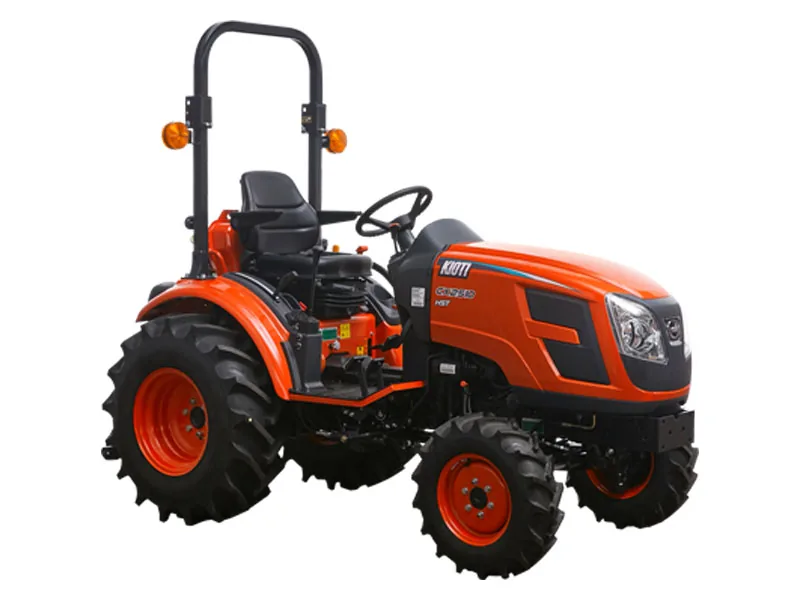
The CX2510 is the machine owners land on when a sub-compact has already disappointed them. One traded a Kubota BX away after deciding it was too narrow and too unstable for anything he could not call dead flat, and that its front tires washed out the moment a turned plow blade met resistance. Others step up from Kioti's own CS line for ground clearance and loader height, often naming the CS's low-slung hydraulic filter as the clearance they did not want. It sits on Kioti's largest sub-compact frame with the same engine as the CK2610 turned down to 24.5 hp — owners note it can be turned back up toward 34 or 35 hp later — and at 2,308 lb it is heavy enough that the loader has ballast built in, though owners still fill the rear tires and say the difference in stability is obvious.
What it will not do is out-mow its PTO. At 19 hp at the rear, one owner's flail bogs the tractor and cuts poorly, and the side-shift flail he wants for mowing under orchard trees is specified for a 20 hp minimum — the ceiling here is the power take-off, not the loader. The 3-point linkage deserves attention too: one owner's lever was stiff from new, his dealer told him it would loosen with use, and at 42 hours the linkage broke in the same place another owner's had. His advice to everyone else is not to ignore a stiff lever. Documentation is thin in a way that catches new owners out — a drive-over deck arrived dealer-installed with no instructions and no manual on Kioti's own site, leaving its owner watching videos to work out how to take it off.
Set against that, it holds up to being used hard. One owner has just over 500 hours on a 2024 in his business and says no regrets; a fencing contractor runs 9, 12 and 18-inch hydraulic post-hole augers off it, with only the 18-inch straining things. The cab draws the strongest praise in the file — a buyer with two previous Kubotas, including a B2601 whose vibration at 2,000 rpm his dealer twice called normal, calls the CX cab the best in the class, and cab owners generally report working long days without the fatigue an open station gives them. The trade-offs they name are worse visibility and a taller, tippier feel on slopes that several answer with wheel spacers. It suits five to fifteen acres of wooded or mixed ground where you want compact hydraulics and hitch capacity in something that still fits between trees.
The CX2510 and CS2220 have almost the same loader rating — what am I paying more for?+−
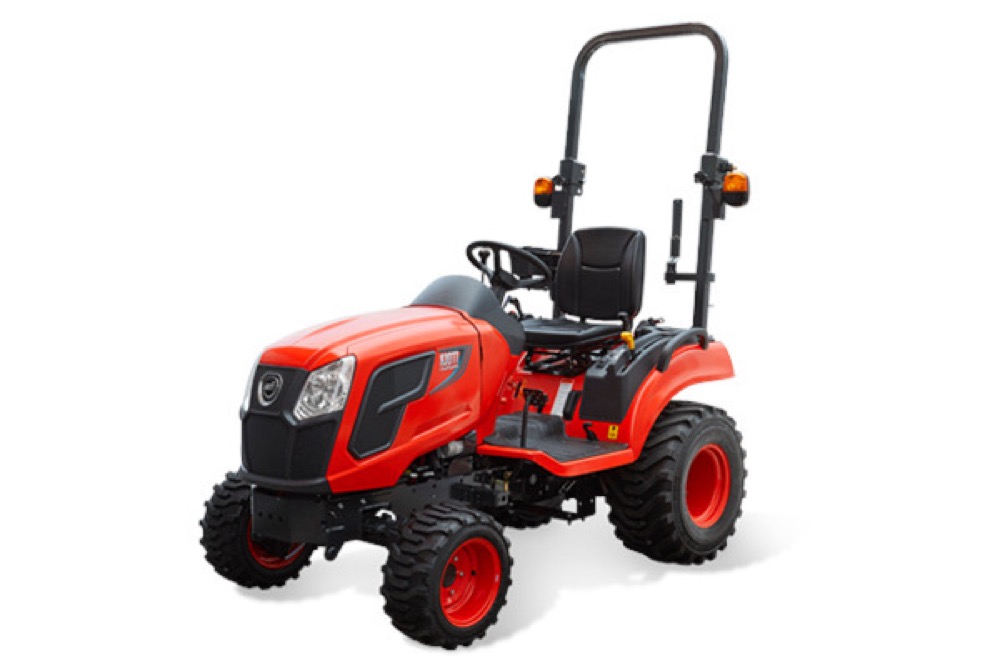
Frame, clearance, reach and pump. Owners who moved from a CS2220 to a CX describe the CX as far beefier in front, comfortable with grapple work and forking, and stable once there is rear weight on it. The practical differences they name are ground clearance, a loader that reaches higher, and enough mass that it does not get shoved around. The cost is turf: the CS treads lighter, and one owner who mows lawns kept that in mind when choosing.
CX2510 or CK2620?+−
Owners split on it and both sides give the same reasoning from different directions. One bought the CK because it was only about $1,500 more and would cover 90% of his jobs against the CX's 80%. Another chose the CX because the engine is the same size, it is shorter and lighter, and he did not want the extra length in his storage bay or in dense woods. The rule of thumb owners repeat is that a CK will do heavier work but will mark up whatever it drives over.
Will it dig out stumps?+−
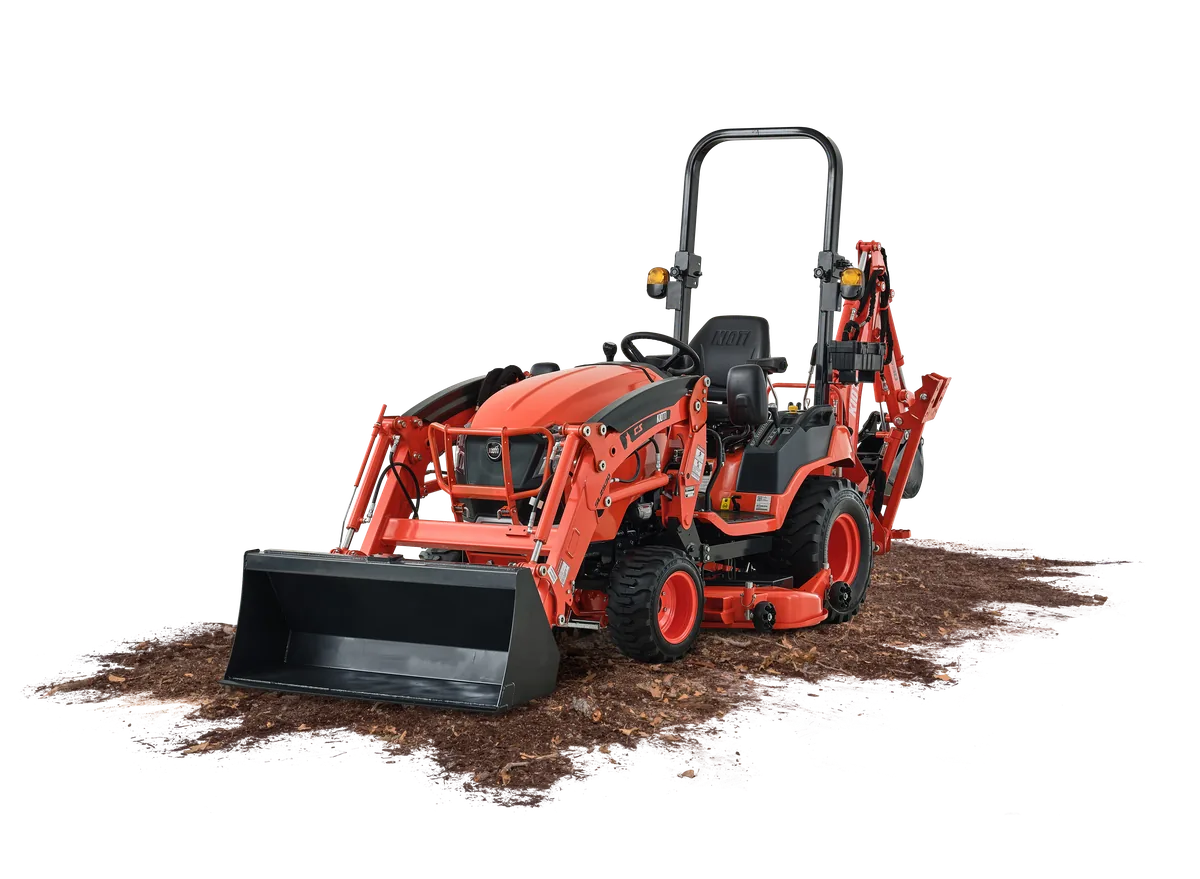
With a backhoe, yes — owners report it digging stumps successfully, and one notes a one-ton mini excavator would struggle where the tractor manages. With the loader alone you are dragging rather than lifting: one owner found an oversized stump too heavy to pick up but was able to pull it out of the hole. The loader will also lose the argument with large boulders.
Is the backhoe attachment worth it?+−
Owners quote about $8,500, and one says his own salesman told him that for that money he could rent an excavator many times over and get better results. The counter-argument owners make is availability rather than capability — a rented machine is useless if it rains on the weekend you booked it. If you have a handful of digging projects rather than a continuous need, the rental case is the stronger one in the evidence.
How is it for snow?+−
Better than a lighter sub-compact, and owners recommend a blower over the bucket if the driveway is long. One with 500 feet of drive and a parking area uses a rear-mount blower to spread snow out rather than build piles, keeping the bucket for the hard-packed material at the road. Owners running Kioti's 54-inch front blower report it going through everything, with the caveat that it is not a quick-attach system like Deere's, so most leave it mounted all winter.
Summarised from public owner discussion, not from testing. Nothing here was measured by this site, and a report that recurs is not the same as a defect rate.