Kubota · Compact

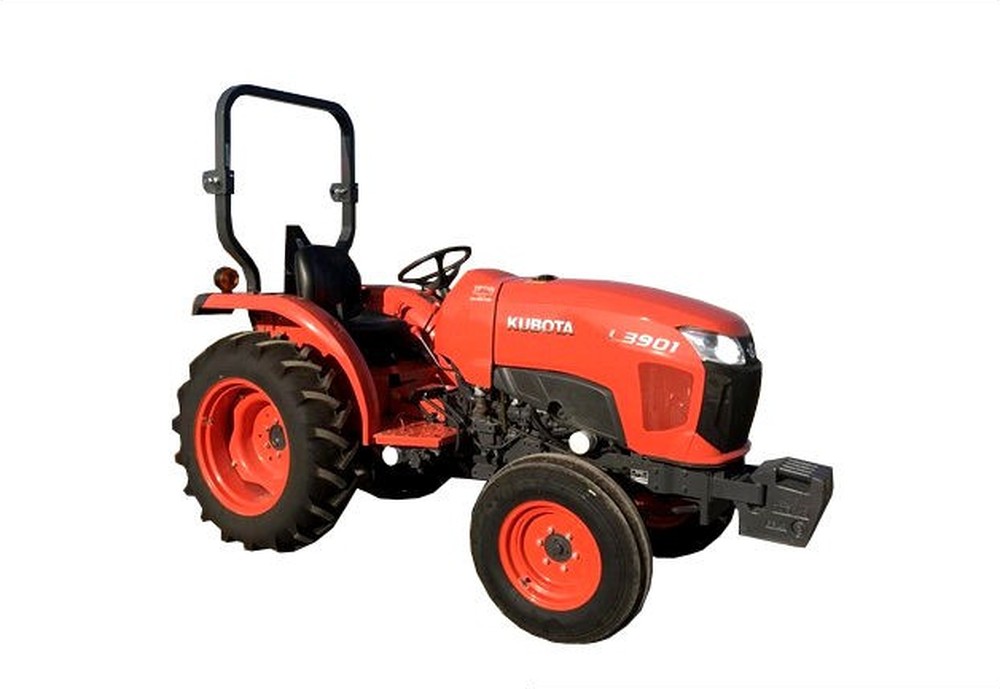
Kubota L3901

Ask a dealer

no published price

No longer in production

No longer built. The maker sells the Kubota L3902 in its place. See the Kubota L3902 The specs and owner reports below still describe this machine, and used ones trade steadily — but a dealer cannot order you a new one.

Kubota L3901
Compact
37.5 hp engine · 30.6 PTO−18% to the shaft

Same Standard L frame as the L2501 with 37.5 hp behind it, which is where that frame starts to earn its keep - 1,985 lb at the hitch against the L2501's 1,389. Now superseded by the L3902, and absent from Kubota's current lineup.

Engine
37.5 hp
PTO
30.6 hp
Loader lift
1,131 lbs
3-pt lift
1,985 lbs

As published by the maker

Specifications

Size class
Compact
Transmission
Hydrostatic
Engine
Kubota
Engine hp
37.5 hp
PTO hp
30.6 hp
Drive
4WD
Loader lift
1,131 lbs
Three-point lift
1,985 lbs
Hydraulic flow
8.3 GPM
Fuel tank
11.1 gal
Weight
2,778 lbs
Warranty
6 yr / 2000 hr powertrain
4WD
Yes
Cab
Open station
Turbo
No
Cruise control
No

On the price: Neither this maker nor any dealer reachable from here publishes a bare-tractor price for this model — every listing found either says “call for price” or bundles a loader. That is how this brand sells, so expect to get a number by asking a dealer rather than by looking it up.

Lift figures are the maker's and are quoted at whichever point the maker chose; the about page explains why two loaders with the same number do not lift the same pallet.

Comes with

4WDHydrostaticFront LoaderPower SteeringDiesel

From owner discussion and long-term write-ups

What owners say

What they like

  • The extra 13 HP over the L2501 transforms it into a genuine workhorse that handles heavy loader loads and tillage without bogging
  • Strong 1,985 lb 3-point lift lets it run big box blades, rotary cutters, and post-hole diggers with ease
  • Kubota's proven in-house diesel and Standard L durability make it a long-term reliability favorite
  • Available in both gear and HST so you can pick the drivetrain that fits your work
  • The larger 11.1-gallon fuel tank keeps it working through long days without frequent refueling
  • Heavy at 2,778 lbs for excellent traction, stability, and pulling power
  • Huge Kubota dealer network and strong resale value protect your investment

What they complain about

  • Crossing 25 HP means it has the DPF emissions system, adding regen cycles and complexity the L2501 avoids
  • The Standard L is fairly spartan - no cruise, basic seat, and fewer hydraulic outlets than the LX or Grand L
  • The loader is the same LA525 as the L2501, so loader lift doesn't improve despite the bigger engine
  • Priced several thousand above the L2501, narrowing the gap to the more refined LX2610 and Grand L models
  • No mid-PTO, so it's not suited for belly-mount finish mowing
  • The hydrostatic version gives up pulling ability to the gear model, which shows up on a grade with a full bucket

Gathered from owner reports

What owners report

Owners are unusually clear about what the extra horsepower is for, and it is not the loader. The framing that recurs is that the whole L2501-to-L3901 range is one tractor with different engines, so the only reason to move up is PTO work — and the owner who did it says exactly that: he went to the 39 because he wanted a wood chipper and a snowblower, and advises picking the implement first and letting it choose the horsepower. The corollary is the machine's most consistent frustration. Owners clearing trees report fighting the loader's limits for days at a time, an owner on five acres wishes he had gone a size up because round bales are a struggle, and an owner who also runs an older Grand L points out that his fifteen-year-old machine's loader lifts roughly double what this one does.

The regen question divides owners cleanly and usefully. Several report it being a non-event handled by raising the revs and carrying on for ten to fifteen minutes; one with 250 hours says he was apprehensive and has had no trouble at all. Another says flatly that it sucks and he would have bought an older model had he known. The most actionable voice sits in between: an owner at 680 hours reports fifteen to eighteen hours between regens in winter and mid-to-upper twenties in summer, and another says dealer advice to stop babying it and simply run at PTO speed all day gave him better fuel economy and far fewer regens.

The rest of what owners raise is practical and worth knowing before you buy. The highest-rated thing anyone has said about this tractor is an explanation that the small pedal is the rear differential lock rather than four-wheel drive, that it engages with heel pressure and needs to be held down, and that most owners' friends had no idea it existed. First-time owners describe everything feeling sketchy off the flat until they loaded the tires and slowed down. Owners of this generation complain about the brake and hydrostatic pedal sharing one side, which the next model fixed. And the fuel gauge's shape catches people out with a consequence: two owners running below half through winter found ice crystals forming around the fuel filler neck.

What comes up favourably

  • The horsepower buys PTO implements specifically, and owners who made the jump say so — one moved up from the 2501 purely because he wanted a wood chipper and a snowblower, and his advice is to choose the implement first and let it pick the tractor.
  • It covers a lot of ground for its size: one owner manages roughly 800 acres of hunting property with his over five years and counts only a handful of moments where he wanted more machine, mostly limits of Category 1 implements.
  • A quick hitch is the upgrade owners are emphatic about — one with six years of ownership calls it the single most important attachment he has bought and credits it with saving his hands from repeated injury.
  • Owners find real savings buying implements from the skid-steer market with a front quick-hitch adapter, since a mini skid steer rated for similar power costs a fraction of tractor-badged equivalents.
  • Kubota dealer service draws genuine praise in owner accounts, including one who had a hydraulic hose made on the spot in ten minutes because keeping a customer's downtime short was treated as the priority.
  • Durability reports are good where they exist: one owner with both a 2005 L-series and a 2020 L3901 calls both very strong and very reliable, with 250 trouble-free hours on the newer one and 600 on the older.

What comes up as a complaint

  • The loader is the bottleneck, not the engine. Owners clearing trees describe fighting its limits for days, an owner on five acres says round bales are a struggle and he wishes he had gone up a size, and an owner with an older Grand L notes his fifteen-year-old machine lifts roughly twice as much.
  • Regen divides owners sharply. Some report it as a non-event — raise the revs, keep working, ten to fifteen minutes and done. One says plainly that it is miserable and he would have bought an older model had he known. Expect roughly fifteen to eighteen hours between cycles in winter and mid-to-upper twenties in summer.
  • A five-foot rotary cutter bogs in thick grass on 30 PTO horsepower — the owner reporting this had previously run the same ground with an old 21-horsepower tractor and a similar cutter without trouble, and suggests budgeting five to six PTO horsepower per foot of cutter width for heavy work.
  • The brake and hydrostatic pedal share the same side on this generation, which more than one owner names as their single complaint about an otherwise loved machine; the following model moved the brake and replaced the PTO clutch pedal with a fender button.
  • New owners describe it as feeling sketchy anywhere but flat ground until the tires are loaded — the standard remedy is a fifty-fifty mix of water and RV antifreeze, going slower than feels necessary, and treating 15 degrees as a hard ceiling.
  • Tires are a real decision here. An owner who ordered ag tires hated them enough to buy stock industrials instead: poor flotation so the tractor sank in mud, and yard damage after even light rain. Another notes the L's rounded turf tires still cup and mark soft ground, worse than his old smaller machine's.
  • The fuel gauge reads full until it suddenly does not, and running low has a winter consequence — two owners found ice crystals forming around the filler neck after habitually running below half.
  • The loader can be bent by its own capability: one owner damaged hydraulic lines lifting beyond capacity, and another ended up with a bent connecting rod between the arms and a blown tilt cylinder seal, leaving the two sides pulling unevenly.

Questions worth asking

Is the L3901 worth the step up from an L2501?
Only if you need PTO horsepower. Owners describe the range as one tractor with different engines — the loader, frame and lift do not change — so the useful way to decide is to pick the heaviest PTO implement you intend to run and let its requirement choose the model. The owner who made the move did it for a wood chipper and a snowblower. If what you actually want is more lifting, owners are blunt that you have to go past this machine entirely.
How bad is the diesel regen in practice?
Owners genuinely disagree. Several treat it as a non-event: the light comes on, you raise the revs, keep working, and it finishes in ten to fifteen minutes. One owner says it is thoroughly unpleasant and he would have bought an older machine instead. The practical middle ground comes from owners who stopped babying the engine: running at PTO speed for the day rather than puttering at low revs gave better fuel economy and noticeably fewer regens, which is also what one dealer advised directly.
What is the small pedal that is not four-wheel drive?
It is the rear differential lock, and the most upvoted piece of advice about this tractor is that far too few owners know it is there. Press down with your heel and hold it — if it does not engage immediately, keep the pressure on and ease the tractor forward or back until you feel it lock in. It releases the moment you lift your heel. Owners describe it as essential for getting unstuck or pulling something genuinely heavy, and no clutch is needed.
Is the L3901 worth buying as a backhoe machine?
Owners split, and the split is about how often you dig. The case for: it saves you when you are in a pinch and do not want a shovel — one owner tore out decorative bushes in single scoops that would have taken half an hour each. The case against, which appears at least as often, is to spend the money on a grapple, a box blade and a better rotary cutter instead and rent a mini excavator for the rare big job. Owners on both sides agree it is not a machine you want to sit on all day.
Should I get a cab?
It depends entirely on whether you go into the woods. An owner who spends every autumn clearing wooded areas argues firmly against one: you will break windows sooner or later, either from branches snapping back off the bucket or from low limbs, which is why municipal brush-cutting tractors run expanded metal over the glass. He also points out the air conditioning compressor takes enough power to make a 40-horsepower tractor feel like 30.

Summarised from public owner discussion, not from testing. Nothing here was measured by this site, and a report that recurs is not the same as a defect rate.

Cross-shopped against

Line the Kubota L3901 up

Same brand or same size, nearest in price

Related tractors

More from Kubota →
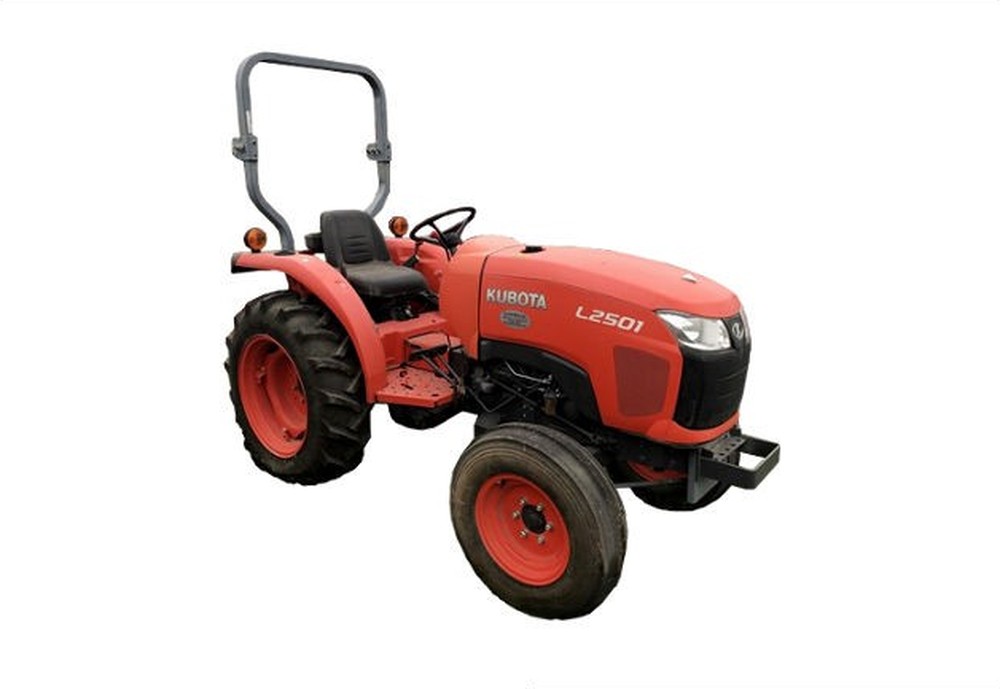
Kubota L2501
~$15,541series starting price
CompactNo longer built

Kubota

Kubota L2501

24.8 hp engine · 20.5 PTO−17% to the shaft
Loader
1,131 lbs
3-pt
1,389 lbs
Trans
Gear
Drive
4WD

Deliberately rated at 24.8 hp to sit under the 25 hp emissions line, so it carries no DPF and never stops to regenerate. Kubota replaced it with the L2502 and no longer lists or prices it; the no-DPF trick is the reason used ones still move.

Spec sheet & owner notes
Kubota LX2610
~$16,450series starting price
CompactNo longer built

Kubota

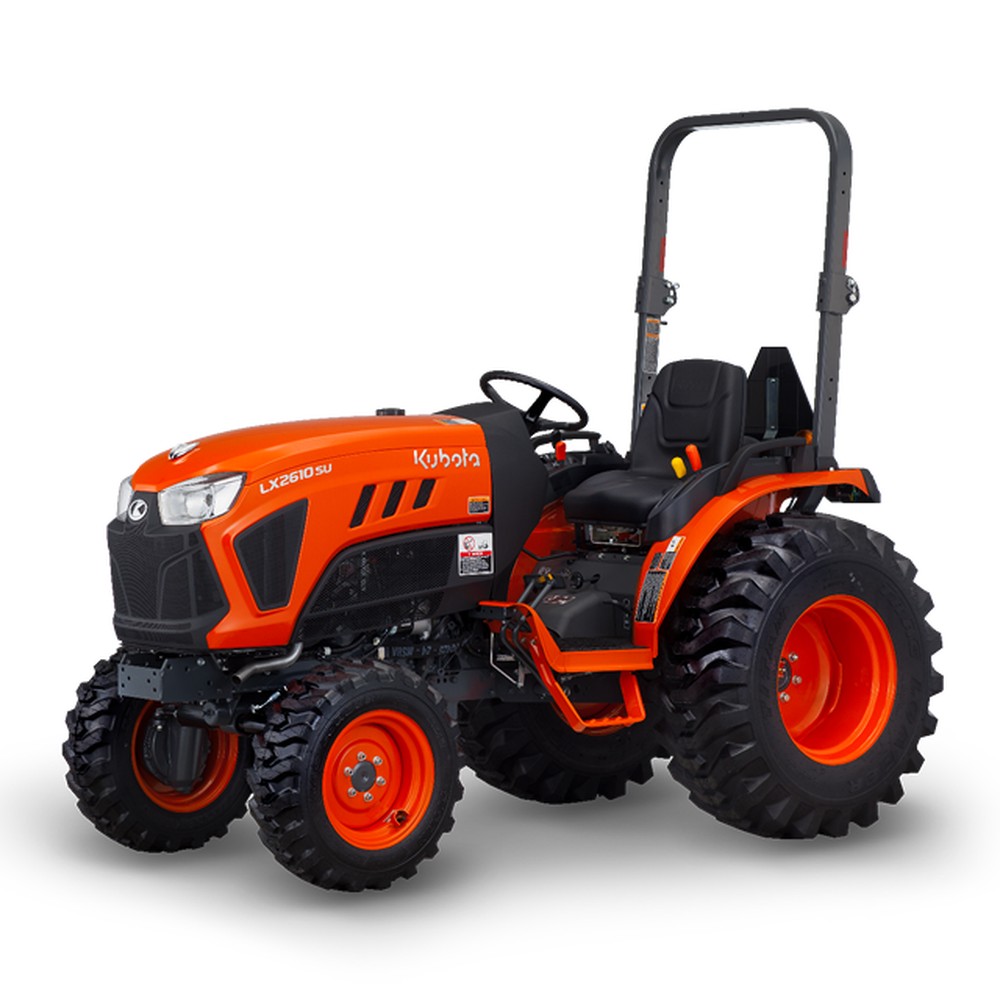
Kubota LX2610

24.8 hp engine · 19.5 PTO−21% to the shaft
Loader
1,067 lbs
3-pt
1,676 lbs
Trans
Hydrostatic
Drive
4WD

Built as the answer to Deere's 2025R: mid-PTO for a belly mower, a full-size operator station and more loader than a B-series, for a few thousand more. The LX2620 replaced it and Kubota no longer publishes a price for it.

Spec sheet & owner notes
Kubota B2601
~$20,017MSRP, base build
Compact

Kubota

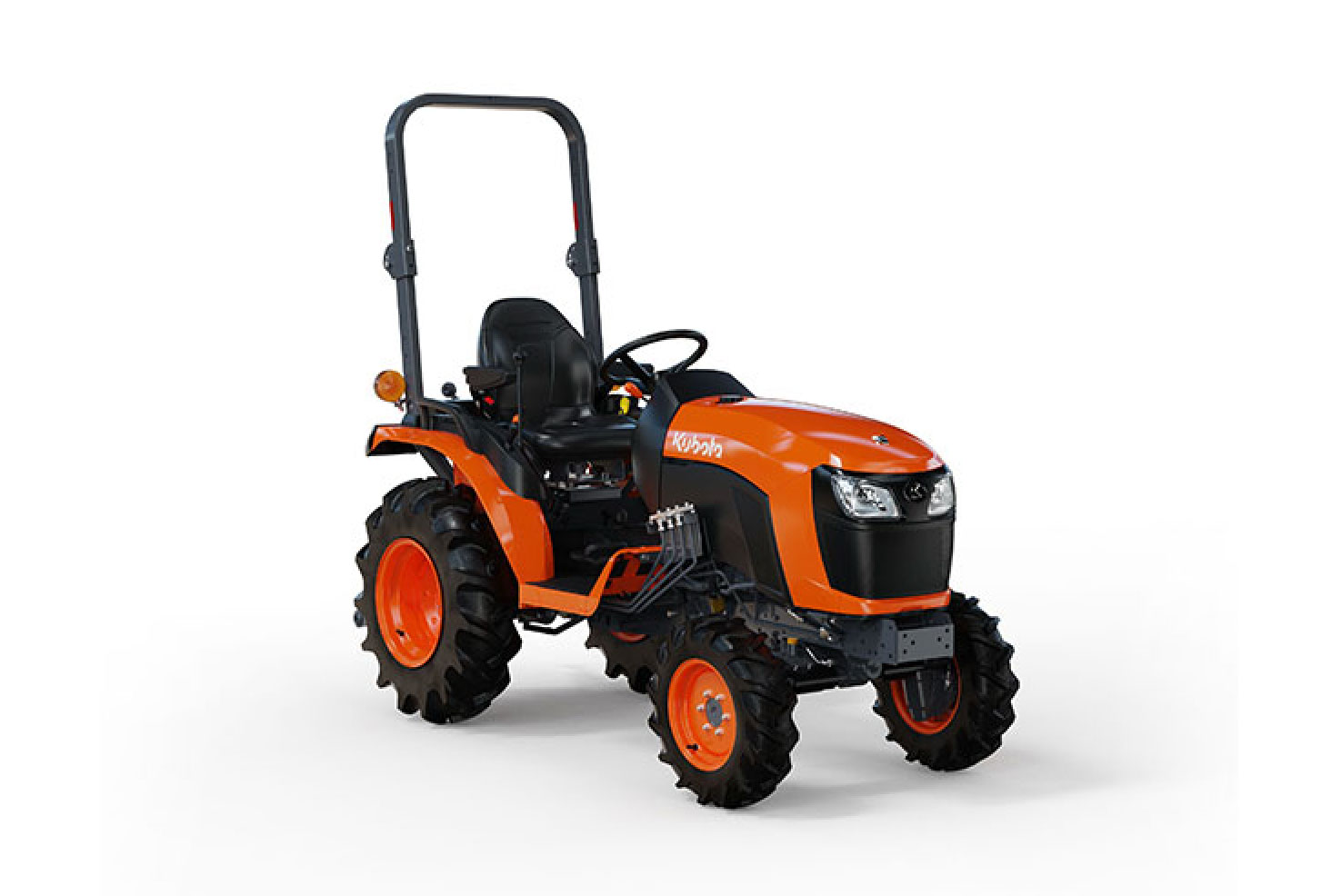
Kubota B2601

24.3 hp engine · 19.5 PTO−20% to the shaft
Loader
948 lbs
3-pt
1,411 lbs
Trans
Hydrostatic
Drive
4WD

Stepping off the BX frame buys a real Category I hitch and a 1,411 lb three-point, roughly double what a BX lifts at the rear. At $20,017 it sits between the BX80 range and the L02 compacts, and it is the smallest Kubota that takes full-size rear implements.

Spec sheet & owner notes