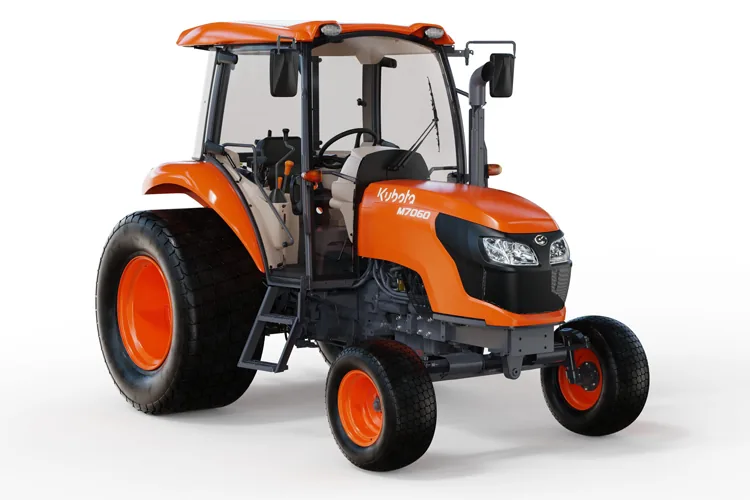
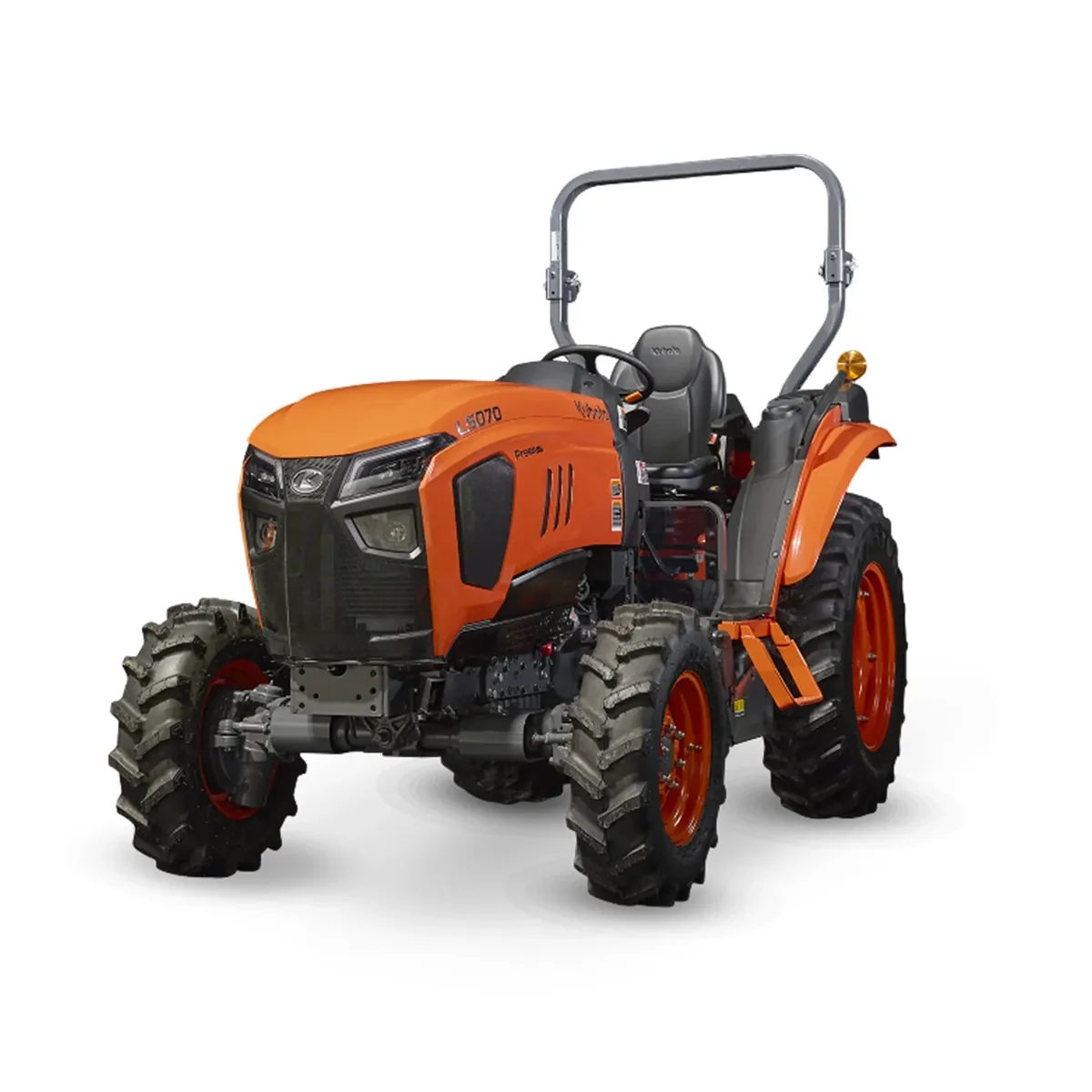
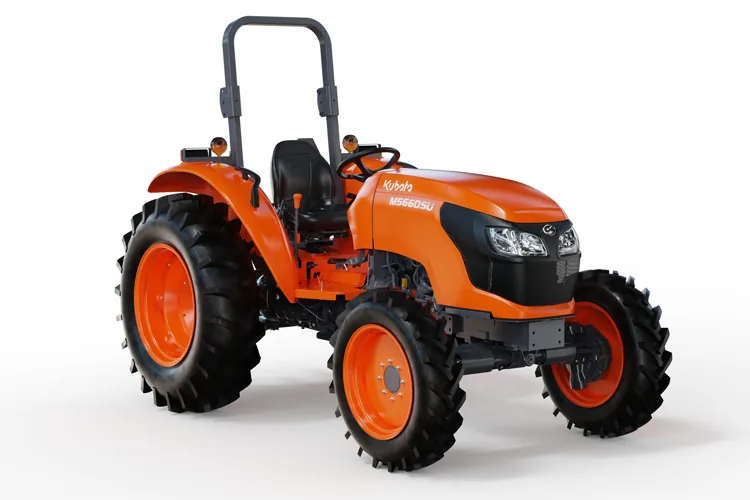
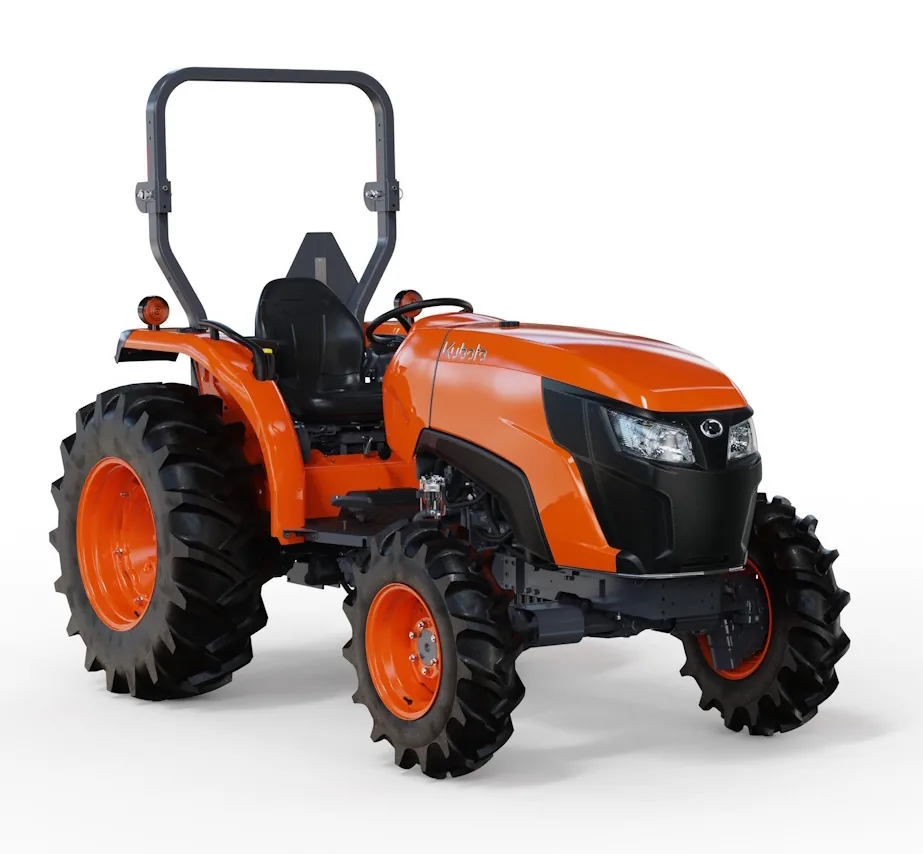
Owners treat this as the point where a tractor stops being a compact and becomes a farm machine, and they are explicit about the distinction. One buyer who was about to sign for an MX6000 walked away because he wanted utility-tractor features instead, and says he is glad he did. The implement list owners report running is the evidence: 8-foot brush hogs, a 15-foot batwing, 8-foot mounted disc mowers, round and square balers, rakes, 7-foot box blades and offset flail mowers. One owner tilling unworked clay says it barely comes off idle and the engine speed does not even fluctuate, where the old Ford he used to do it with worked hard in low first. Turning radius comes up repeatedly as exceptional for the size, which is what lets a 70-horsepower tractor still serve as the chore machine around buildings.
Two things dominate the buying advice. The first is the transmission: owners who bought the 8-speed say, over and over and independently, that they would order the 12-speed next time. They describe the 8-speed as having some gears too slow and others too fast, and point at ground engagement and hay work as where the gaps hurt. The small PTO horsepower penalty the 12-speed carries does not feature in their reasoning at all. The second is the comparison with the M6060 beneath it: a Kubota salesman says dealer cost between the two differs by only two or three thousand dollars and that he never recommends the M6060 for that reason, and owners who liked their M6060 nonetheless name an M7060 with 12 speeds as their next machine.
Emissions hardware is where the record genuinely divides, and it is worth reading carefully because the loudest account is one owner rather than many. That owner, describing the same machine across several discussions, reports a diesel particulate filter that refused to regenerate while working, threw engine codes, and demanded parked regeneration cycles that held the tractor still at high revs for twenty minutes to an hour, along with dealer visits inside the first six months. Another owner flatly contradicts it, saying his regenerates while he keeps working, and credits holding the engine near 2,000 rpm and not shutting it down while hot. Set against that, the reliability reports are quiet and consistent: examples at around 600 hours from new described as trouble-free, and a longer-term owner who says all he has done is fluids and repainting the loader bucket. The weak points owners name are the seat, which someone who has run Deeres rates below them, and cab air filters that are a nuisance to clean on dusty daily work.
Should I order the 8-speed or the 12-speed?+−
Owners are close to unanimous on the 12-speed, and several who bought the 8-speed say plainly that they would choose differently next time. They describe the 8-speed's spacing as leaving some gears too slow and others too fast, and point at ground engagement and putting up hay as where that bites. Nobody raises the small PTO horsepower difference as a reason to go the other way. While specifying it, owners also suggest ordering three rear remotes rather than the single one a base machine can arrive with.
Is the M7060 worth the step up from the M6060?+−
A Kubota salesman answering this says dealer cost between the two differs by only two or three thousand dollars, and that he never recommends the M6060 as a result. Owners who had an M6060 and genuinely liked it still nominate an M7060 with the 12-speed as their next machine, citing the extra power and the transmission rather than any fault with the smaller tractor. Physically they are described as the same size.
How many hours is too many on a used one?+−
Buyers treat this as a utility tractor rather than a compact, and expect it to see 500 or more hours a year in daily farm use, so 1,500 hours on a well-cared-for example is considered reasonable rather than worrying. What does catch people out is price: used examples sit close to new money, and one owner was offered $35K in trade for a five-year-old machine with 250 hours that had cost $48K with the loader.
Will the diesel particulate filter give me trouble?+−
The record splits, and it is worth knowing that the worst account comes from one owner rather than many. He reports it refusing to regenerate while working, throwing engine codes, and requiring parked cycles that tie the tractor up at high revs for twenty minutes to an hour. Another owner reports regenerating while he continues to work, and credits keeping the engine near 2,000 rpm and not shutting it down hot. Ask the dealer how regeneration is handled on the specific machine rather than assuming either outcome.
How does it compare with a John Deere 5075E?+−
Owners who have run both call the Deere simpler and the Kubota better geared - the 12F/12R box rated as fine, where an older 5075E's 9F/3R needed a complete stop to change range and had a stiff four-wheel-drive engagement lever. The Deere cab is described as more spacious and the Kubota's as better laid out. One owner also notes the 5075E is built in India, which some buyers weigh and others do not.
Is it stable working across slopes?+−
One owner in West Virginia runs his up, down and across hills he reckons would shock most people, and credits fluid-filled rear tires plus a mounted rear implement for keeping it planted. Read that as one experienced operator's comfort level on ground he knows well rather than a rating for the tractor. The general practice owners describe is pairing loader work with ballast or a three-point implement before working sideways on a hill at all.
Summarised from public owner discussion, not from testing. Nothing here was measured by this site, and a report that recurs is not the same as a defect rate.