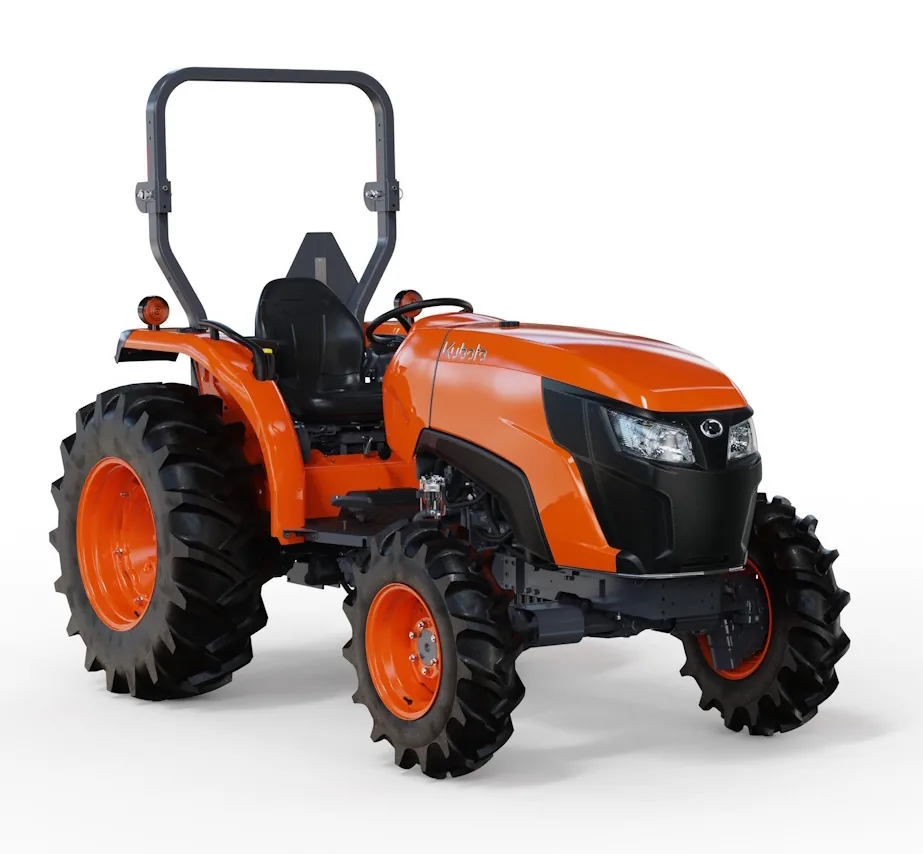
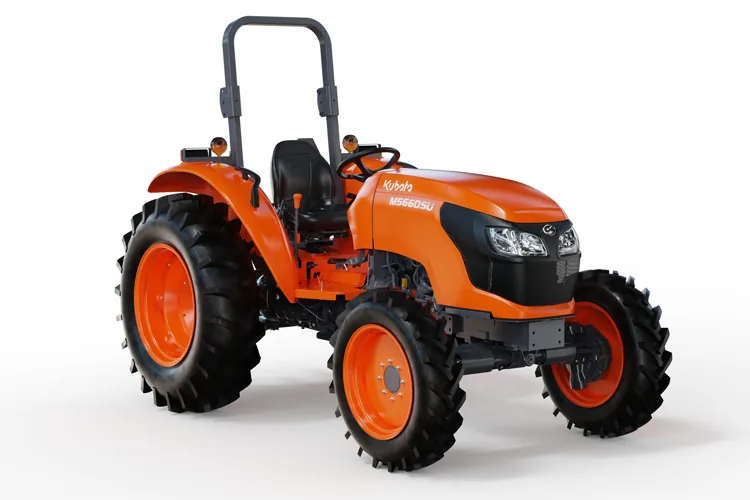
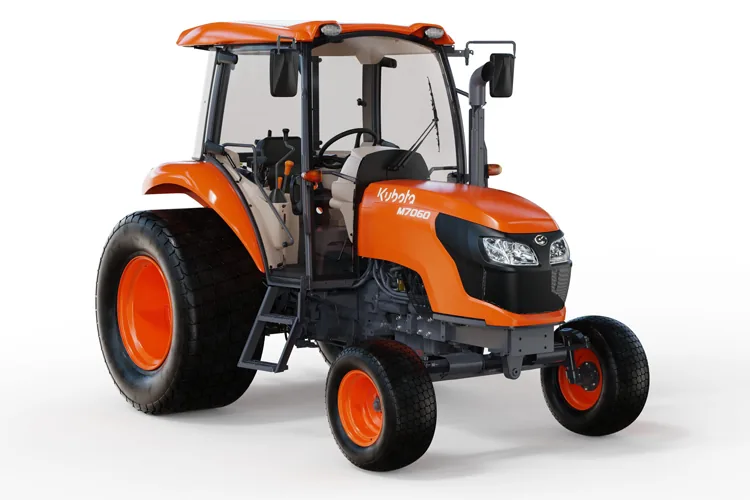
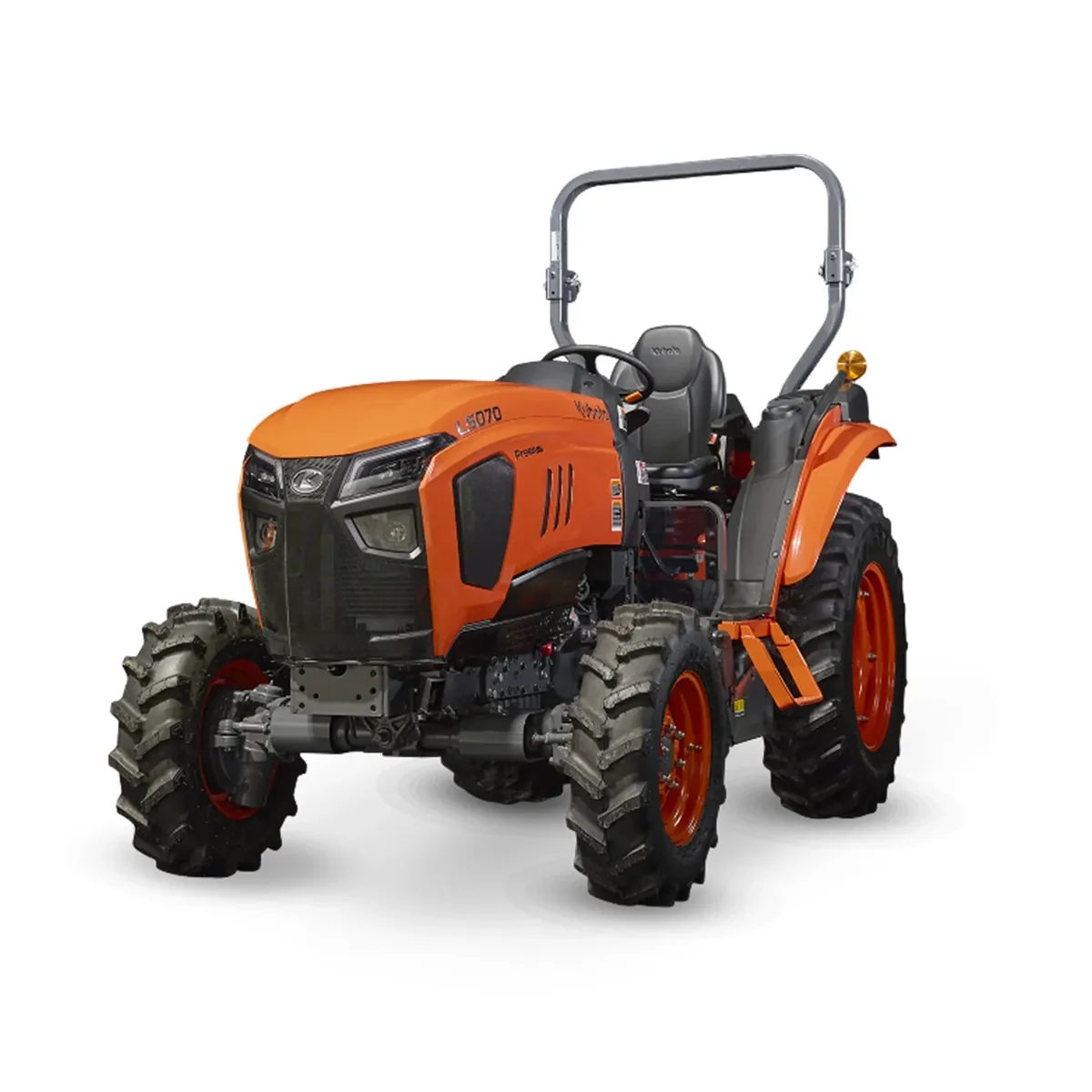
The question owners actually argue about is not whether this is a good tractor but why you would buy it instead of the MX5400 parked next to it. People who have been through that decision describe the two as one machine in two engine tunes on a shared frame, and report the real price gap between them at something like $1,500 to $2,000 rather than anything dramatic. What settles it for most is implement paperwork: owners running a three-point stump grinder or planning a PTO snowblower point out that an implement calling for 50 PTO hp puts the smaller tune in warranty grey area, while this one clears the bar. A Kubota technician who works on them says they very seldom come in for major failures, and a 2020 cab example used hard for manure spreading, snow, brush hogging and stationary PTO work is described by its owner as having broken nothing that was not his own fault.
Ballast is the recurring theme, and it is not optional. Several owners describe the machine picking its own rear wheels off the ground at maximum loader lift before the loader itself runs out. The fix is staged rather than single: loaded rear tires help but are not enough, and one owner went on to a ballast box with 800 to 900 lb of concrete before he could finally reach the loader's relief. Even fully ballasted, owners carrying real weight - one describes 1,500 to 1,800 lb of split firewood on pallet forks with filled tires and an 800 lb implement behind - still call it tippy if you turn or travel too fast. Loader capacity, not engine power, is the ceiling owners report hitting in daily work: one farm using a cab model across manure, snow and brush is now thinking about a skid steer for the heavy end. From the other direction, owners of the L4802 and L4060 say they wish they had bought this instead, citing loader capacity and hydraulics specifically.
Drive choice and cab quality are where opinion divides. Owners doing loader work are emphatic that hydrostatic is the right pick and would not run a gear box near anything they care about damaging, and they report it still pulling an eight-foot rotary cutter without complaint. Owners doing long tillage days say a gear machine suits that better, and one shopper who started on a cab MX6000 ended up on a used M60-series gear tractor instead because he wanted more ground-engagement gears. In high range owners report running short of grunt rather than traction - a manure spreader can be stalled from full throttle, and snow work runs out of power in the middle range - while in low it is traction that gives up first. The cab is widely called worth the money for heat, air conditioning and pollen season, but owners who have sat in a Grand L cab describe this one as basic, and it arrives without side mirrors, an armrest or a radio head unit.
Is the MX6000 worth the extra money over the MX5400?+−
Owners describe them as one machine with two engine tunes on the same frame, and report the real gap at $1,500 to $2,000 rather than anything large. The consensus is yes if you are earning with the tractor or plan to run an implement that specifies 50 PTO hp, because the bigger tune clears that and the smaller leaves you in warranty grey area. If the work is mowing and you do not mind it taking slightly longer, owners say the 5400 is genuinely fine.
How much rear ballast does it actually need?+−
More than most buyers expect, and loaded rear tires alone are not it. Owners report the rear wheels coming off the ground at maximum lift with nothing on the hitch, loaded tires improving it only somewhat, and a ballast box with roughly 800 to 900 lb of concrete being the point where several stopped feeling nervous. Even then, heavy loads are described as tippy if you turn or travel too quickly.
Will it start in deep cold?+−
Owners split on this. One reports his firing at -25C with the block heater unplugged after years of hard use, while another in northern Wisconsin at -20F describes very slow cranking even on a battery maintainer and with jumper cables attached, and suspects the factory battery. If the machine lives outdoors in that kind of winter, plan on the block heater and a strong battery rather than assuming it will cope.
Is the cab worth paying for?+−
Owners who bought one say yes, and point specifically at mowing and snow plowing as the jobs that justify it, along with heat, air conditioning and pollen season. The caveats are that owners used to a Grand L cab find this one basic, that it is awkward around trees - signal lights get torn off - and that mirrors, armrest and radio head unit are not included in the price.
Can I buy it from a dealer hours away?+−
Owners do this routinely and report no regrets. Warranty work is paid by the manufacturer, so a nearby dealer will still service the machine, and several used a written quote from two or three hours out to bring the local price down first. One owner notes his original dealer sold the franchise a year after the sale, which is an argument against paying a premium for the relationship alone.
Should I take Kubota's KTAC insurance with it?+−
Possibly not at the price quoted. Owners consistently find their own carriers cheaper, reporting roughly $40 a month against $86 to $90 for KTAC, and at least one found a third of the price with half the deductible elsewhere. Owners do still recommend insuring it somehow, because the damage a loader tractor takes is exactly what such a policy covers.
Summarised from public owner discussion, not from testing. Nothing here was measured by this site, and a report that recurs is not the same as a defect rate.