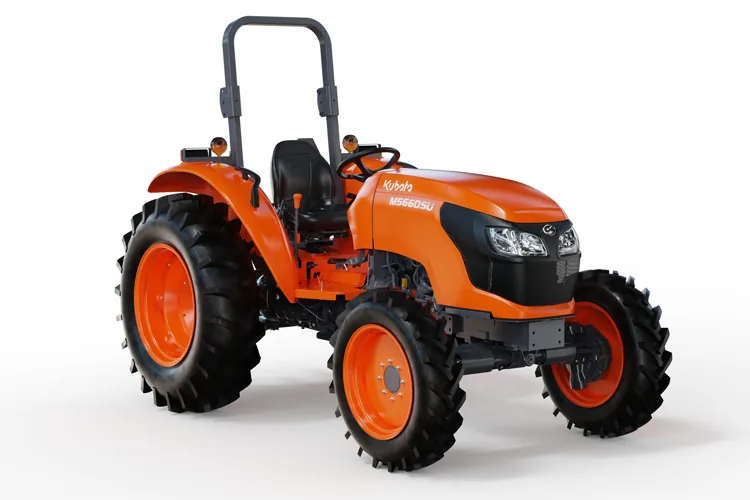
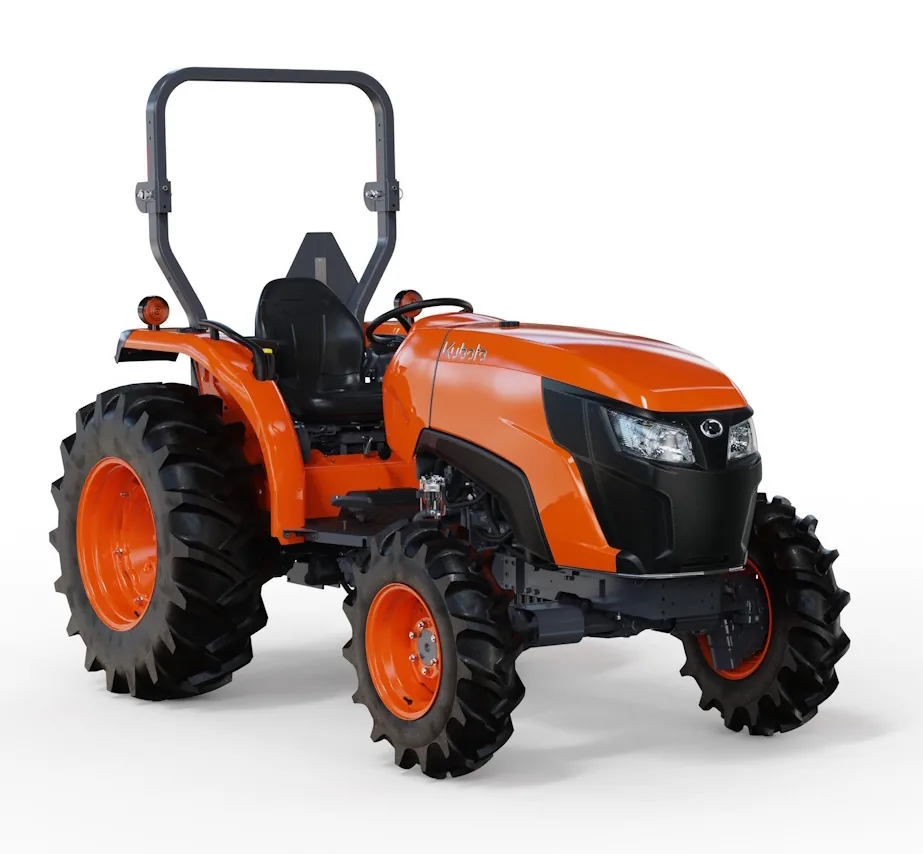
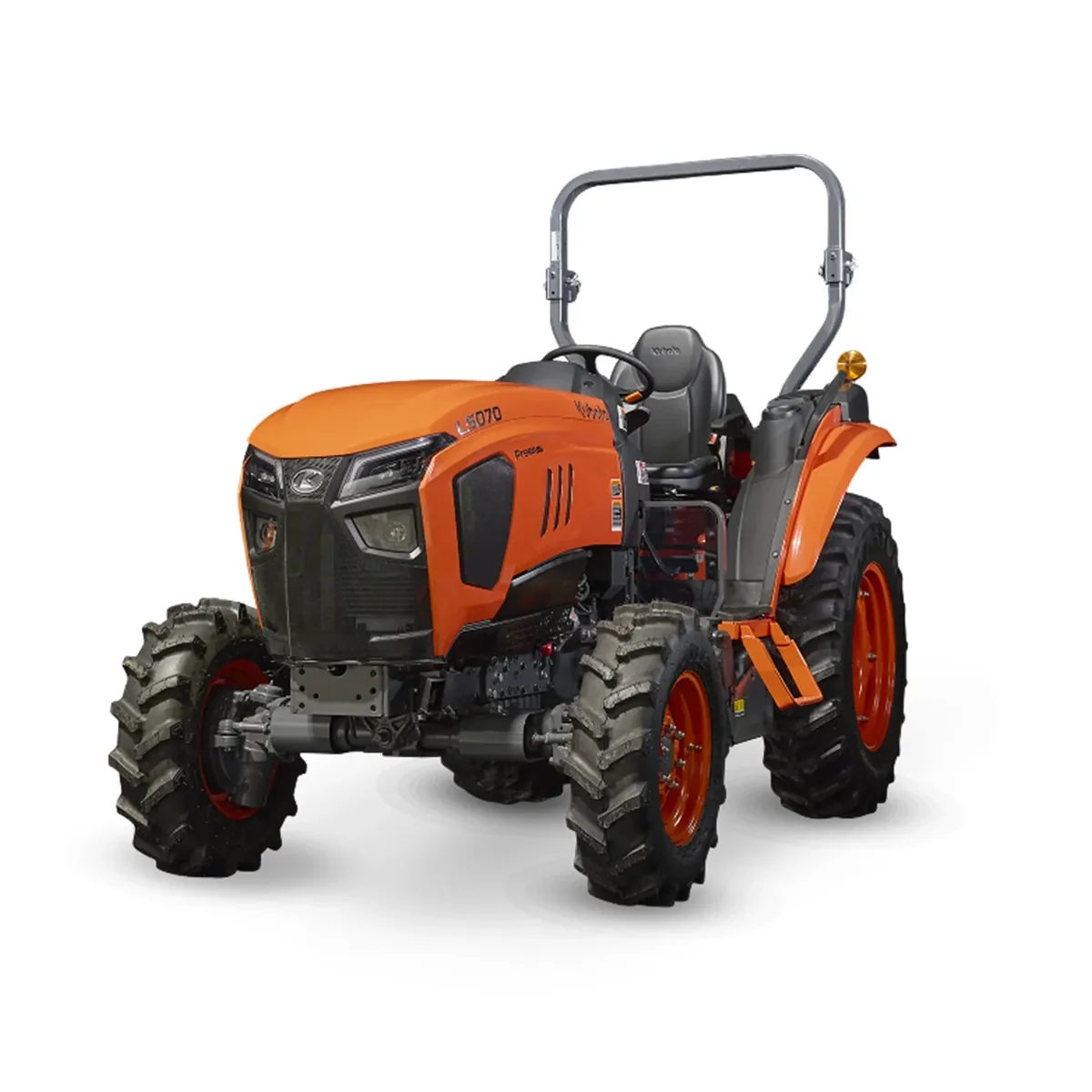
What owners praise here is almost never a specification. It is that the machine is simple enough to work on. An owner who grew up running pre-1970s Internationals, Olivers and Fords says of his 2018 that he could do nearly anything on it himself, that it carries just enough electronics to be comfortable without taking over, and that he would buy the same tractor again. Others describe it in the same terms: a basic old-style tractor with modern comfort, a particulate filter but no exhaust additive to keep topped up, a loader that is strong and smooth, and a machine that simply worked. One reports his starting in real cold without being plugged in and burning clean. Someone who works on these rates the smaller M tractors as solidly built, while warning separately that Kubota's telematics are worth avoiding and that a dealer without good service-information contacts will struggle on diagnosis.
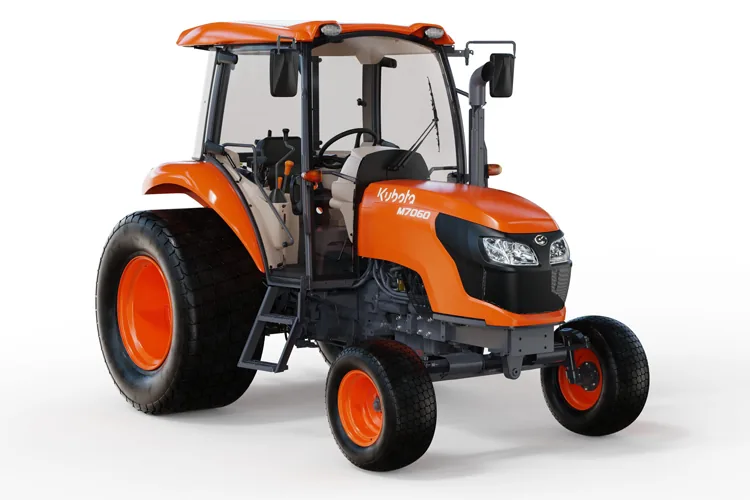
The other half of the picture is that owners keep arriving at the M7060 instead, and the reason is gears rather than power. An owner who ran one with cab and loader across 22 acres of hay calls it a workhorse and good value, and still says his next machine would be the M7060 with the 12-speed - he wants more ratios for ground engagement and three rear remotes rather than the single one his came with. A Kubota salesman puts the dealer-cost difference between the two at only two or three thousand dollars and says he never recommends this model because of it. What the M6060 does buy over the cheaper M5660 below it, as owners point out, is a creeper-type low speed. On capacity it will run large implements but at its ceiling: one owner pulls a 9-foot heavy commercial rototiller and reports it working only at the slowest ground speed the tractor offers, calling the machine the bare minimum anyone should consider behind that implement.
The cautionary account here concerns buying used, and it is worth reading before shopping on hours alone. An owner bought a 2014 example with 600 hours for $28,000 and the engine was finished by 627. It had never run right, going two or three hours before dying through a run of apparently unrelated faults, and throughout the temperature gauge read normal and the display threw no codes at all. The dealer quoted $30,014 for a replacement engine - more than he had paid for the tractor - and $20,000 to $25,000 to rebuild it. An independent mechanic did the rebuild for $15,000 and found the cause: a chunk broken out of the bottom corner of the radiator had let all the coolant drain away. Two other owners separately report random stalling, one finding the water separator full of bubbles, so if one dies unpredictably the cooling system deserves a physical look rather than trust in the instruments.
Should I buy the M6060 or step up to the M7060?+−
The evidence leans to the M7060, and not for the horsepower. Owners who ran and liked an M6060 say their next machine would be the M7060 with the 12-speed, because the 8-speed leaves gaps for ground engagement and hay work. A Kubota salesman says dealer cost differs by only two or three thousand dollars and that he therefore never recommends the M6060, and the two are described as the same physical size. If you find a good used M6060 at the right money the calculation changes - several owners did exactly that and were happy - but at new prices the step up is small.
Are 1,500 hours too many on a used one?+−
Buyers treat this as a utility tractor expected to do 500 or more hours a year, so 1,500 on a well-kept machine is considered reasonable rather than high. The warning worth taking seriously runs the other way: low hours are not proof of health. One buyer got a 600-hour example whose engine was destroyed by 627 hours, and the tell was never the hour meter but that it would not run more than two or three hours at a stretch. Buy on condition and on how it behaves under sustained load.
Mine keeps stalling - where should I start?+−
More than one owner has had this and the fuel system is where they looked first: one found bubbles in the water separator after a couple of months of frequent stalls, another worked through filters and lines without resolving it. Do not stop there. The most serious case here presented as repeated stalling with a normal temperature gauge and no fault codes whatsoever, and turned out to be a broken radiator corner that had drained the coolant. Check the radiator and coolant physically rather than trusting the display.
What size implements will it really handle?+−
Large ones, slowly. An owner runs a 9-foot heavy commercial rototiller behind his, but only at the slowest ground speed the tractor offers, and describes the machine as the bare minimum size for that implement. Owners otherwise rate it as well sized for ground-engaging work, with enough PTO power for most of what a hay operation asks. If you are planning an 8- to 10-foot implement, expect to be working the tractor hard rather than loafing along.
Is the 0% financing actually the best deal?+−
Not necessarily. One buyer was offered a $1,500 rebate for paying cash instead, and his conclusion was that the interest-free loan simply collects the interest up front in the purchase price. Ask the dealer for both the cash-with-rebate figure and the financed figure and compare them directly, rather than assuming an interest-free loan is free money.
Summarised from public owner discussion, not from testing. Nothing here was measured by this site, and a report that recurs is not the same as a defect rate.