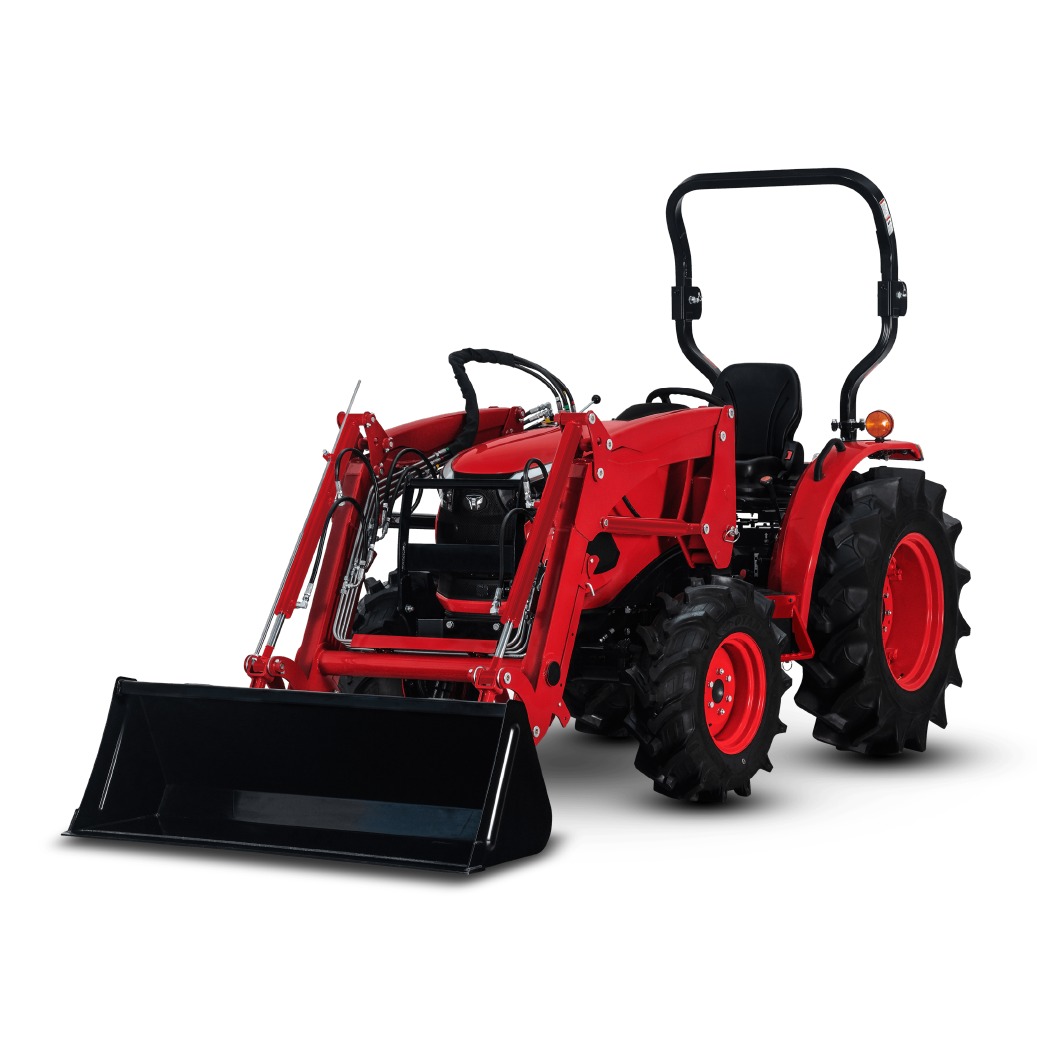
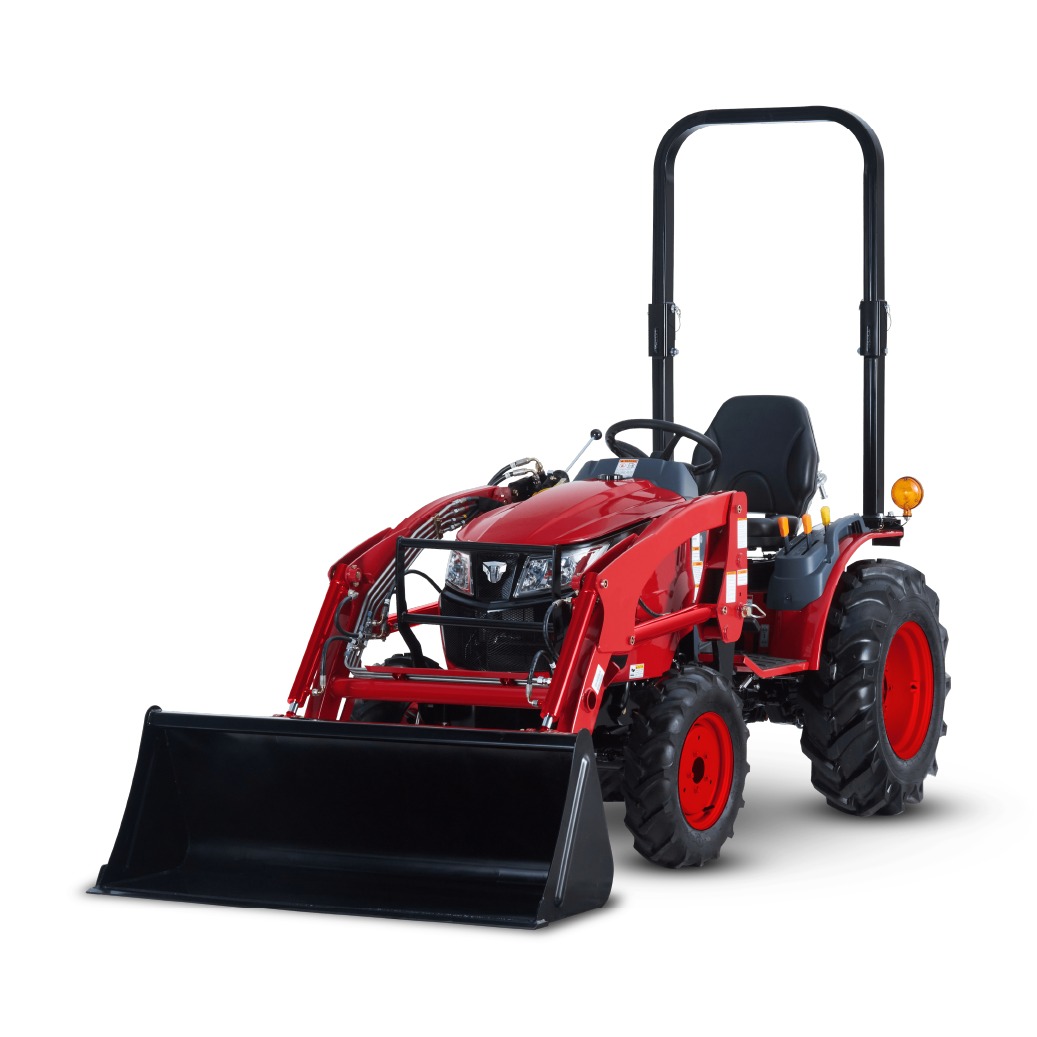
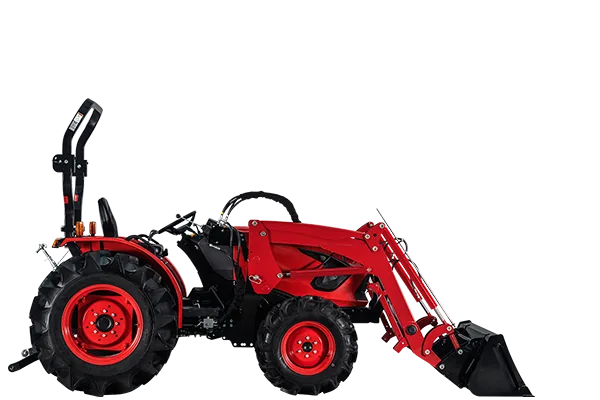
This tractor is sold — and bought — on one number. Owners who chose it over a Kubota or a Kioti almost all say the loader decided it: better than 2,000 lb at the pins and around 2,400 lb on the three-point, on a machine that costs around $22,000 and was quoted $15,000 under an equivalent Kubota in one buyer's case. That capacity comes from the frame rather than the engine, because the 2515 sits on the chassis TYM uses all the way up to 45 hp, with the same loader fitted to the 25, 35 and 40 hp models. The engine is the same one those bigger models use, turned down; owners point out that a screw gets you to 35 hp without emissions equipment and voids the warranty in the process.
And that is exactly where the regret lands. The most-repeated comment from owners who have lived with one is that they should have bought more PTO horsepower on the same frame — a 3515, 4215 or 4815 — because the loader never runs out but the power take-off does. A five-foot rotary cutter is fine until the grass is much over a foot tall, at which point owners slow their ground speed right down, and a flail mower is described as too hungry for it. Several also conclude that a zero-turn is the right answer for finish mowing regardless, and say cutting grass with any tractor is simply inefficient.
The brand question owners keep being asked about is parts. Buyers are told by neighbours and local opinion to buy only Kubota or Deere, and the parts-availability worry follows TYM everywhere. What the evidence actually contains is an owner who needed parts, found the TYM-branded items out of stock, and bought the Bad Boy-branded equivalents instead — same part numbers, because Bad Boy is the same tractor under a different badge. One knowledgeable commenter also separates the range: the 15 and 20 series come from the Branson design TYM bought, and he considers them better built than other TYM machines of that size, while naming problems he has seen elsewhere in the line that do not appear here. On hydraulics the honest comparison is less flattering — a Kubota will run loader lift and tilt together and this will not, and owners describe the three-point stepping up in stages rather than rising smoothly, which they say is common to the Korean brands.
Is the 2,200 lb loader rating real?+−
It is real, but read how loaders are measured before you plan around it. Owners describe three different published figures: breakout force, which is where the pressure relief lets go and is not a useful lifting number; capacity at the pivot pin at full height; and capacity 500 mm forward of that at the bucket, which is roughly 70% of the at-pin figure and the honest one. Owners of this tractor report lifting better than 2,000 lb at the pins with proper ballast, and one runs an 875 lb ballast box whenever he is doing sustained loader work.
Should I buy the 25 hp version or step up on the same frame?+−
This is the one thing owners would change. The frame, loader and lift capacity do not change as you go up the range, so the only thing the extra money buys is power at the PTO — which is precisely where the 2515 runs out. Owners who bought it name the 3515 as the minimum they would choose again and the 4215 or 4815 as what they actually wanted. The argument for staying at 25 hp is avoiding emissions aftertreatment, though one owner notes after the fact that the 3515 has no computers either.
Is it really a Branson, and does the badge affect parts?+−
Yes, and helpfully so. TYM bought Branson, and the 15 and 20 series are the Branson-designed machines — one commenter who follows the range considers them better built than other TYM tractors of similar size, and names problems in other parts of the line that these do not have. Bad Boy sells the same tractor under a third badge, and an owner who could not get a TYM part in stock ordered the Bad Boy version and found it carried the same part number.
What size brush hog and how much ballast?+−
Five feet is what owners run and what they recommend, and it is the size that starts to bog in tall growth, so a six-foot cutter is not the move. For ballast, one owner filled his rear tires with about 30 gallons each of RV antifreeze, adding roughly 250 lb per wheel, and stresses the point people get wrong: fluid in the tires improves traction and side-to-side stability but should never be counted as the rear ballast a front loader needs. A ballast box or a heavy implement on the three-point is the part that keeps the back end down.
Will it handle hills and woods?+−
Owners on hilly ground report it managing fine in low range with a five-foot cutter, and credit four-wheel drive with differential locks for keeping them moving in wet conditions. It is also compact enough to work between trees, which owners with a few acres of forest specifically mention. The caveat that comes with slopes on any machine of this weight is to know when you are going uphill — one owner says you certainly feel it.
Should I mow with it?+−
Owners say no, or at least not for finish mowing. More than one keeps a zero-turn for the lawn and uses the tractor only for knocking a field down at the end of the season, on the grounds that mowing with a tractor is slower, takes more setup and chews up soft ground. One owner who ignored that advice from a friend with 60 acres says plainly that he was wrong to.
Summarised from public owner discussion, not from testing. Nothing here was measured by this site, and a report that recurs is not the same as a defect rate.