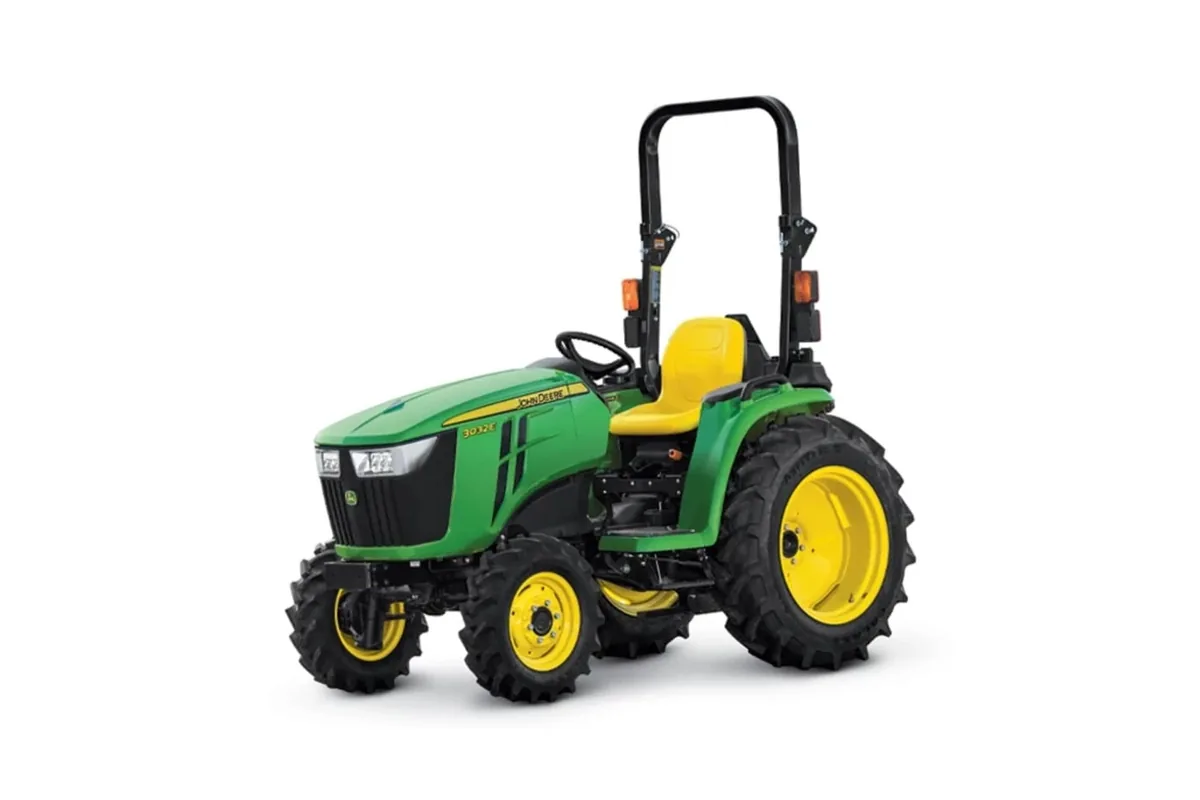
Whether this is enough tractor turns out to depend far more on the jobs than the acreage, and owners on similar land reach opposite conclusions for consistent reasons. One maintaining 40 acres of woods and pasture with a 60-inch brush mower, 60-inch box blade, loader grapple and snowblower says it holds its own without difficulty; another on 40 wooded and hilly acres says it does everything he wants, just not as fast as a bigger machine would. But an owner who sold his after 30 acres is specific about what broke the deal, and none of it is acreage: box blade rippers bogging down, a blade too narrow so grading took several passes and never looked finished, plus struggling or failing outright to lift full square bales and not budging water totes. Long gravel roads and heavy lifting are the two jobs that send owners to the 50-to-60-horsepower range; mowing, brush and snow are not.
The loader is where expectations need managing. One owner measures roughly 750 lb on a fork attachment, load carried as close in as he can get it and the engine at high throttle, and says he is not impressed by that from a 30-horsepower tractor - a rather different number from the pin rating. Pointing the other way, an owner with fluid in the rear tires reports a hay spike lifting 1,000 lb round bales with ease, and rates getting into tight spaces as a real benefit; his only complaint is reach, borrowing a neighbour's tractor to take the top row of bales off a semi load. Ballast and the attachment matter more here than the headline figure. On implement sizing owners converge: five feet works, six does not, with a 6-foot finish mower called too large and a 6-foot flail judged a little much, while the tractor is described as plenty heavy for everything else. It does clear the 25-PTO-horsepower line where the good implement ranges begin, which one owner names as his reason not to go any smaller.
The faults reported are electrical and hydraulic rather than engine trouble. No-start conditions with engine-control fault codes appear across model years, including one straight after a fuel filter change and another after a couple of hours of grading, alongside an electronic PTO that showed engaged on the dash without engaging. Someone who works on these says the fuel pumps fail often. One owner at about 300 hours lost the middle of his three-point's travel entirely - fully up or fully down whatever the lever did, hydraulics squealing at the top - and was quoted $2,000 for the valve. The one worth knowing about is the instrument cluster: an owner chasing repeatedly failed fuel solenoids traced the fault there and found the relays inside are out of production, leaving a complete new cluster as the only route. Running through all of it, and stated outright by owners on both sides, is that the dealer decides the ownership experience more than the paint does.
Is a 3032E enough tractor for 30 to 40 acres?+−
That depends much more on the jobs than the acreage. Owners on 40 acres doing brush mowing, box blade work, loader jobs and snow report it holding its own and doing everything they want, if more slowly than a bigger machine. But an owner on 30 acres sold his over gravel-road maintenance and heavy lifting specifically: the rippers bogged down, the blade was too narrow so grading took several passes and never looked finished, and it struggled with full square bales and water totes. If long gravel roads and heavy lifts are the core of the work, owners point to the 50 to 60 horsepower range.
How much will the loader really lift?+−
Less than the pin figure implies once you put forks on it. One owner measures around 750 lb on a fork attachment with the load carried as close in as he can manage and the engine at high throttle, and finds that underwhelming for the horsepower. In the other direction, an owner running fluid in the rear tires reports a hay spike handling 1,000 lb round bales comfortably. Ballast and which attachment you hang on the front make more practical difference than the published number.
What size implements should I buy for it?+−
Five feet, in most cases. Owners report a 5-foot finish mower working well while calling a 6-foot version too large, and one considering a 6-foot flail concluded the tractor was a little light for that while being plenty heavy for everything else he did. The useful part is that it clears the 25-PTO-horsepower mark where the better implement ranges begin, so you are not stuck with the thin selection built for smaller machines.
What actually goes wrong on a 3032E?+−
Electrical and hydraulic faults rather than engines. No-start conditions with engine-control fault codes show up across model years, as does an electronic PTO reading engaged without engaging, and someone who works on them says fuel pumps fail often. A three-point hitch valve has failed at around 300 hours, quoted at $2,000 to replace. The one to be most wary of is the instrument cluster, because the relays inside are out of production, so a fault there means buying a whole new cluster.
Does the dealer matter more than the brand?+−
On this evidence, yes. One owner who had wanted a Kubota for years walked out of a dealership that would not give him the time of day and was driving a Deere around the lot within half an hour, and several describe buying as among the easiest purchases of their lives. The counterweight is the metal-in-the-oil account above, where a dealer kept the tractor for two months and returned it with a $650 bill and no diagnosis. Owners repeatedly advise choosing the dealer first and the colour second.
Should I hold out for a pre-emissions example?+−
Many owners would, if you can find a sound one. Machines without the exhaust additive system are specifically sought after, and used buyers often set their cutoff by wanting something that does not need a dealer visit just to read a code. The catch is price: a 2014 with 280 hours was being asked $25,000, roughly what new examples with a loader have been discounted to, which is why several owners conclude that buying new and financing makes more sense than paying near-new money for age.
Summarised from public owner discussion, not from testing. Nothing here was measured by this site, and a report that recurs is not the same as a defect rate.