John Deere · Compact

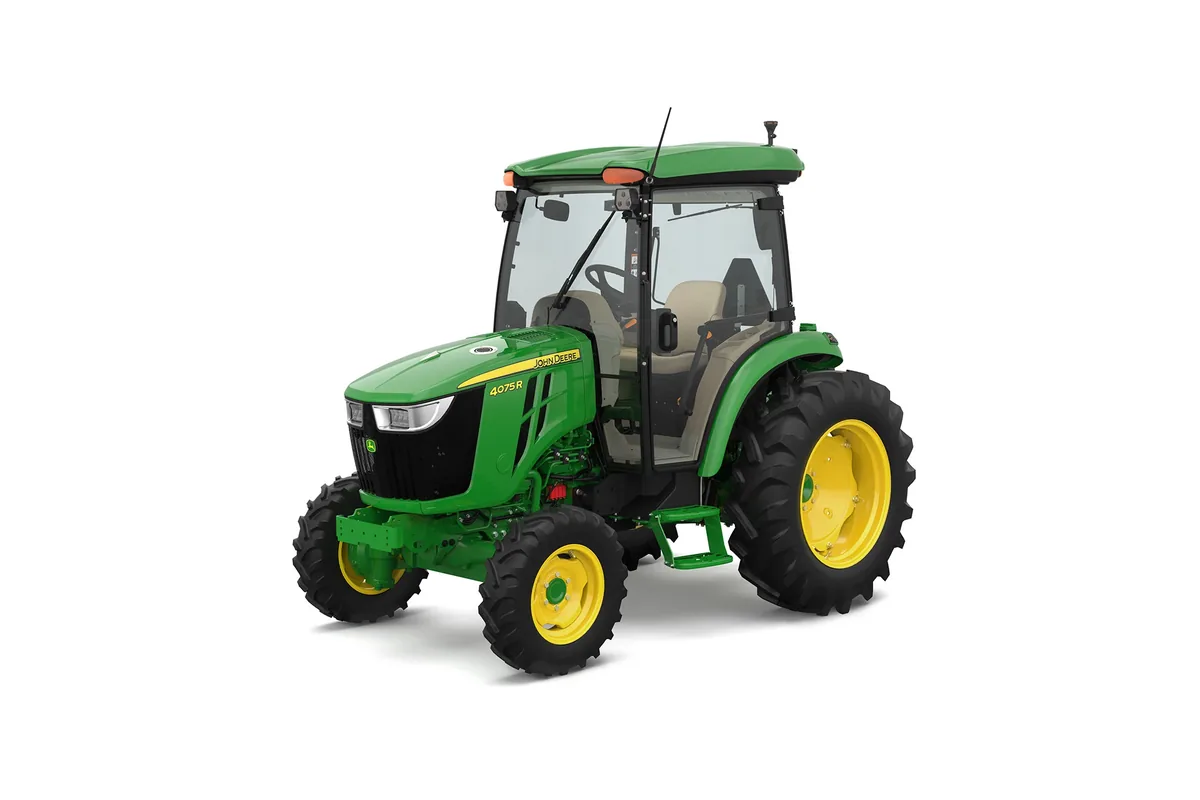
John Deere 4075R

~$68,729

MSRP, base build

John Deere 4075R
Compact
74.3 hp engine · 60 PTO−19% to the shaft

Biggest compact John Deere builds, and the only one that arrives with a cab as standard rather than an option. A charge-air-cooled 2.091 L Yanmar makes 74.3 hp, a heavy-duty front axle is base equipment, and eHydro is the only transmission offered.

Engine
74.3 hp
PTO
60 hp
Loader lift
2,313 lbs
3-pt lift
2,709 lbs

0.87 PTO hp per $1,000 of list price

As published by the maker

Specifications

Size class
Compact
Transmission
Hydrostatic
Engine
Yanmar
Engine hp
74.3 hp
PTO hp
60 hp
Drive
4WD
Loader lift
2,313 lbs
Three-point lift
2,709 lbs
Hydraulic flow
17.4 GPM
Fuel tank
14.7 gal
Weight
4,828 lbs
4WD
Yes
Cab
Available
Turbo
Yes
Cruise control
Yes

On the price: The maker's own published starting figure for the base build. A dealer adds a loader, a deck and freight on top.

Lift figures are the maker's and are quoted at whichever point the maker chose; the about page explains why two loaders with the same number do not lift the same pallet.

Comes with

4WDHydrostaticFront LoaderPower SteeringCruise ControlTurboDieselCab

From owner discussion and long-term write-ups

What owners say

What they like

  • The ComfortGard cab is standard, not an option - Deere's own model page and its government price page both list a single base configuration with no open-station alternative
  • 60 PTO hp from a compact chassis, more than the 57.6 hp a 5075E utility tractor puts out
  • 2,709 lb at 24 in. behind the lift points, a genuine step up from the 2,500 lb shared by the rest of the 4 Family
  • A heavy-duty front axle is base equipment, which is the structural difference from the 4044R and 4052R rather than a marketing line
  • Electrohydraulic rear hitch control with Hitch Assist and LED work lights are standard
  • Charge-air cooling takes the same 2.091 L block that makes 50.8 hp in a 4052R up to 74.3 hp

What they complain about

  • eHydro is the only transmission - no PowrReverser is offered, so there is no gear option and no way to recover the PTO horsepower a hydrostatic costs
  • Deere's published 6-year, 2,000-hour compact powertrain warranty is worded as covering machines of 22.4 through 65.9 engine horsepower, and this machine sits above that band; the applicable term is worth confirming with a dealer before purchase
  • The 440R loader is unchanged from the 43 hp 4044R at 2,313 lb at the pivot pin, so nearly $28,000 of price step buys no additional lift
  • Deere's 440R compatibility list still names only the 4044R, 4049R, 4052R and 4066R, and has not been updated since this model launched
  • Dealer sheets disagree on fuel capacity and weight, some printing the generic 4-Series cab figures of 13.8 gal and 4,675 lb rather than this model's 14.7 gal and 4,828 lb
  • At roughly $68,000 before a loader it costs more than a 5075E utility tractor with more PTO power and a bigger hitch

Gathered from owner reports

What owners report

Almost every discussion of this model turns into an argument for buying something else, and the reasoning is consistent enough to be useful. The cleanest version comes from someone who advises anyone looking at this to ask why they are not considering the 5075E instead, pointing out that with a loader the 5-series machine can come out a few thousand dollars cheaper, particularly now a premium cab can be had on it. The genuine reason to stay here is the transmission: a buyer weighing the two sets out the real trade-off, which is that the 5-series has no exhaust additive system or regeneration but cannot be had with a hydrostatic drive, while this one gives you the hydrostatic and the emissions hardware together. An owner who runs both a 4-series and a larger utility tractor offers the most practical decision rule anyone gives: if you have 30 acres of woods and trails, take this, because the smaller frame is far more manoeuvrable and much easier when working a grapple among limbs; if you have 30 acres of open pasture or hay to cut, take the 5075E, because a bigger machine is far better at heavy loader work, wide rotary cutting and disking.

The one detailed owner account here is a bad one, and instructive for how he responded to it. His machine was enough of a lemon that Deere repurchased it after two months of attempted repairs, and he notes its front lift was less than a smaller 3-series machine managed. He then took an unusually rigorous approach to replacing it, visiting every dealer and asking each to perform a load test - lifting 2,000 lb to 56 inches using his own heavy pallet forks - and reports that very few machines passed, with only Kioti and Yanmar managing it among those he tried. He ended up with a Yanmar, runs close to 1,800 lb of rear ballast on top of filled tires, and passes on a useful trick: for getting logs higher in a stack, pallet forks on a light frame will out-lift a grapple, because the grapple's own weight eats into what you have.

What comes up favourably

  • It is the way to get a hydrostatic transmission at this power level in Deere's range - a buyer comparing it with the 5075E notes that the 5-series avoids the exhaust additive system and regeneration but simply cannot be ordered with hydrostatic drive.
  • The smaller frame is the point. An owner who runs both this size and a larger utility tractor says this is much more manoeuvrable and considerably easier when working a grapple among limbs and brush.
  • For woods and trail work on around 30 acres, owners with experience of both sizes recommend this over the 5-series without hesitation.
  • Owners doing long-distance snow clearing name this power level as the point where a commercial rear-mounted pull blower becomes genuinely efficient, with higher travel speeds and better visibility than a front-mounted unit.

What comes up as a complaint

  • Owners repeatedly suggest buying the 5075E instead, on the grounds that with a loader it can come out a few thousand dollars cheaper, and a premium cab is now available on it.
  • Within its own family it buys engine rather than lift - every model in the line shares the same loader, so the extra money over the cheapest version adds no capacity at all unless you are running PTO implements.
  • Choosing this over the 5-series means accepting the emissions hardware, which is precisely what one buyer comparing them was trying to avoid.
  • One owner's machine was a comprehensive lemon, repurchased by Deere after two months of attempted repairs, and he reports its front lift being lower than a smaller 3-series tractor managed.
  • Open pasture and hay work is not what it is for - owners who have run both say a bigger tractor is far better for heavy loader work, wide rotary cutting and disking.

Questions worth asking

Should I buy this or a 5075E?
The most useful rule comes from an owner who runs both sizes: 30 acres of woods and trails favours this machine, because it is far more manoeuvrable and much easier to work a grapple with among limbs; 30 acres of open pasture or hay favours the 5075E, which is better at heavy loader work, a big rotary cutter and disking. On price, owners point out the 5075E with a loader can land a few thousand dollars cheaper. The reason to stay here despite that is the hydrostatic transmission, which the 5-series does not offer.
Is the extra horsepower over the cheaper models in the family worth it?
Only for PTO work. Every machine in this family uses the same loader, so more horsepower adds no lift capacity whatsoever - a point made both by a Deere salesman to one shopper and by owners answering the same question. Where it does count is driving implements: a higher-rated engine will run a given implement more comfortably and burn less fuel doing it. If your work is loader and three-point tasks, owners say the money is wasted here.
How can I check a tractor will really lift what I need?
Ask the dealer for a load test with your own attachment, which is exactly what one owner did after Deere repurchased his machine. He went to every dealer and asked each to lift 2,000 lb to 56 inches using his own heavy pallet forks, and reports that very few machines managed it. It is worth copying, because a forks frame can weigh several hundred pounds before you pick anything up. His other tip: for stacking logs high, pallet forks on a light frame out-lift a grapple, and running substantial rear ballast plus filled tires is part of making any of it work.

Summarised from public owner discussion, not from testing. Nothing here was measured by this site, and a report that recurs is not the same as a defect rate.

Cross-shopped against

Line the John Deere 4075R up

Same brand or same size, nearest in price

Related tractors

More from John Deere →
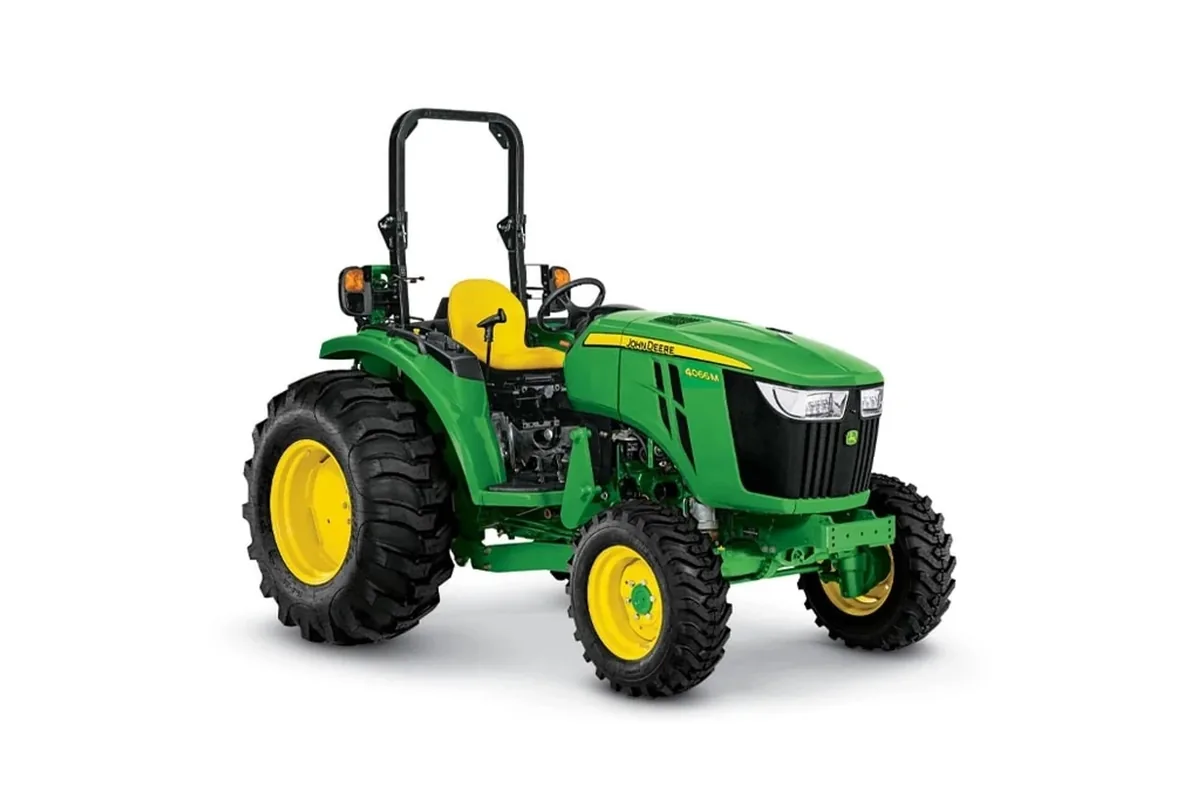
John Deere 4066M
~$47,356MSRP, base build
Compact

John Deere

John Deere 4066M

65 hp engine · 54.2 PTO−17% to the shaft
Loader
2,396 lbs
3-pt
2,500 lbs
Trans
Power Shuttle
Drive
4WD

Largest of the open-station 4M machines: a charge-air-cooled 4TNV86CHT pulling 65 hp from the same 2.091 L block the 4052M uses, and 54.2 hp at the PTO. Hitch, hydraulics and loader are unchanged from the 4052M, so the step buys engine and 228 lb of chassis.

Spec sheet & owner notes
John Deere 4052R
~$44,538MSRP, base build
Compact

John Deere

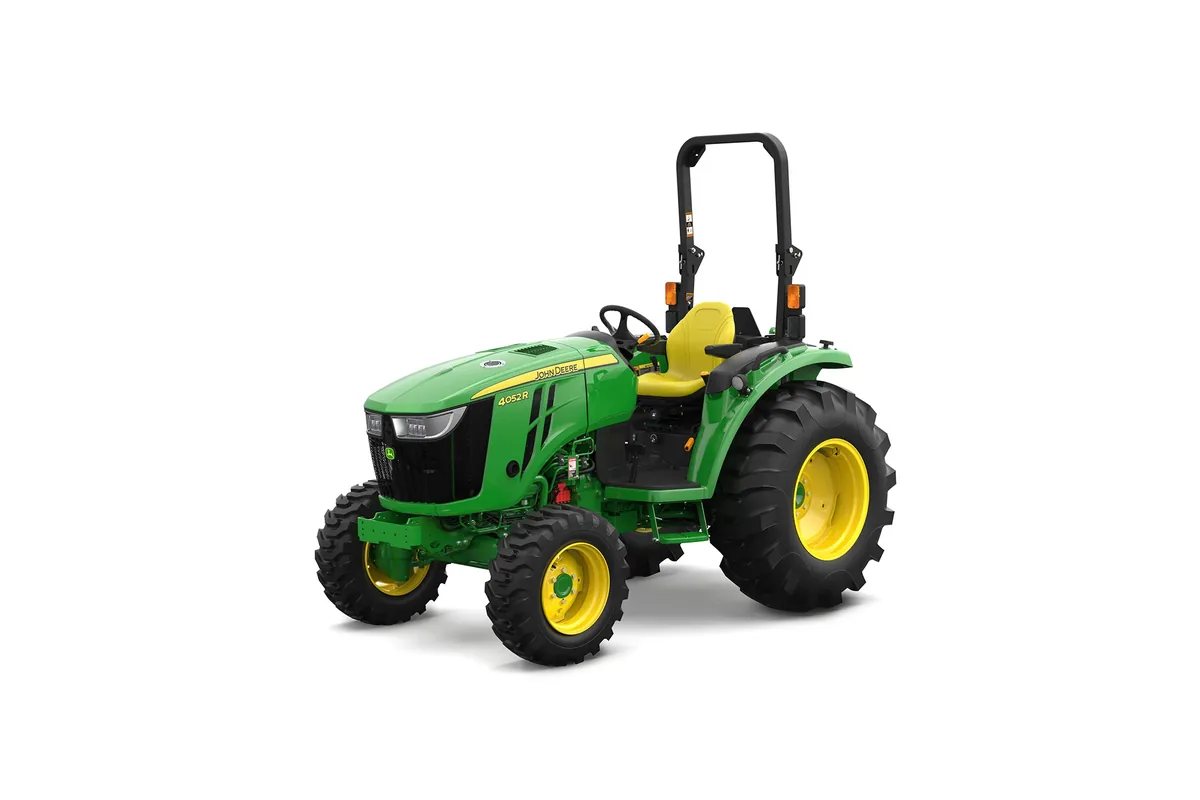
John Deere 4052R

50.8 hp engine · 39.1 PTO−23% to the shaft
Loader
2,313 lbs
3-pt
2,500 lbs
Trans
Hydrostatic
Drive
4WD · cab

Same turbocharged 2.091 L Yanmar as the 4052M, moved into the 4R chassis: eHydro standard, the self-levelling 440R loader, and a premium ComfortGard cab on the order sheet. About $5,600 buys the cab option and the better loader, not more engine.

Spec sheet & owner notes
John Deere 4044R
~$40,864MSRP, base build
Compact

John Deere

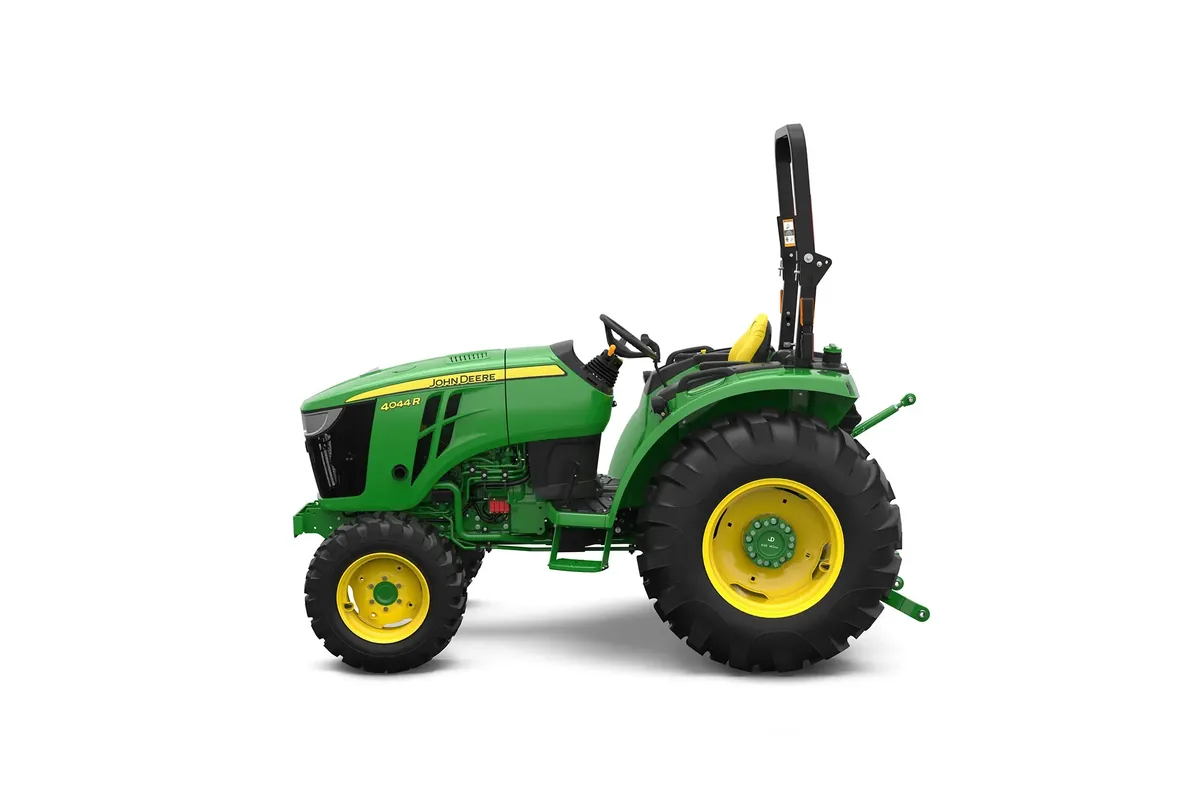
John Deere 4044R

43.1 hp engine · 32.3 PTO−25% to the shaft
Loader
2,313 lbs
3-pt
2,500 lbs
Trans
Hydrostatic
Drive
4WD · cab

Cheapest way into a cab-capable 4 Family machine. eHydro is standard here rather than optional, the 440R self-levelling loader replaces the 4M's 400E, and the 2.189 L Yanmar is the only naturally aspirated engine left in the 4R line.

Spec sheet & owner notes